Concept
Outsider art is difficult to fit into conventional artistic frameworks. It does not belong to a single style or movement and often develops outside of academic education and professional art institutions. The foundation of such creativity is frequently personal experience, and the artworks become an expression of individual perception of the world.
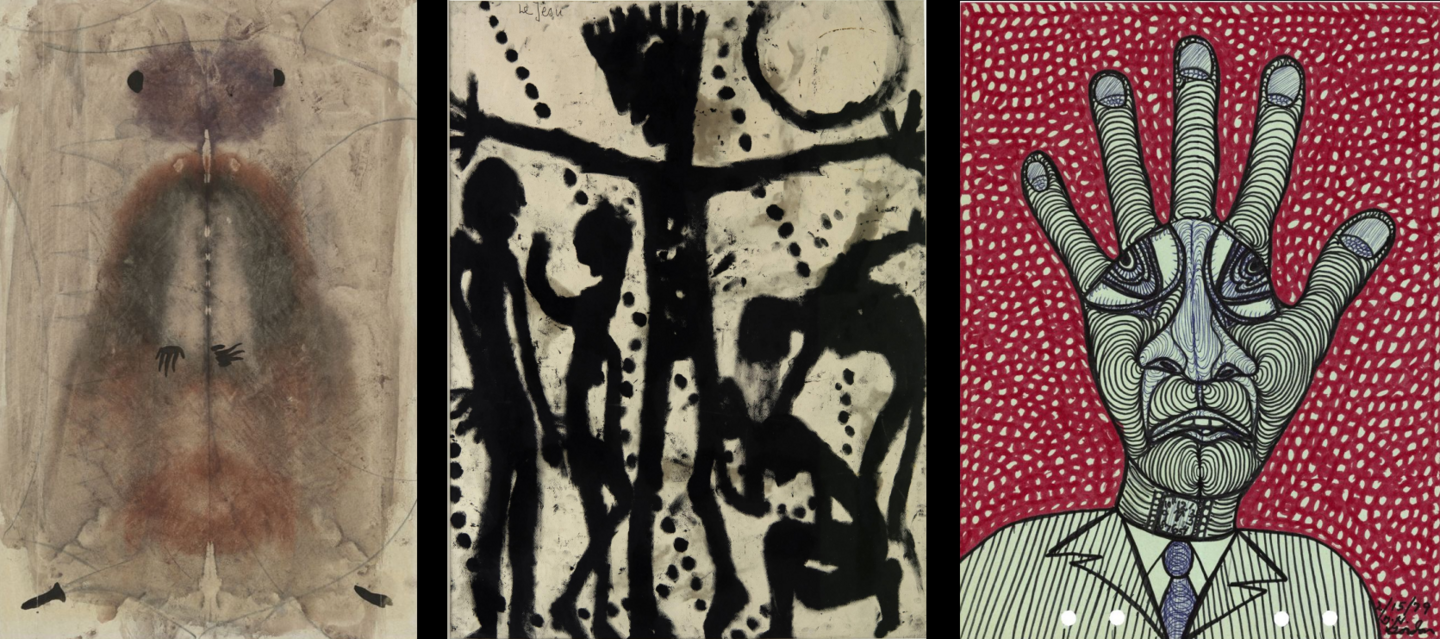
Evgeny Gabrichevsky. Untitled. 1893–1979 / Louis Sutter. Jesus. 1937–1942. / Ted Gordon. Untitled. 1979.
This study examines the concept of creativity as the fulfillment of a spiritual calling. For some outsider artists, faith becomes not only a source of religious subject matter but also the foundation for their engagement with art. Dreams, visions, and experiences perceived by the authors as revelations are embodied in works where Christian iconography merges with individual imagination. Therefore, religious themes are considered here in relation to how these artists interpreted the meaning of their own creative endeavor.
Central to this research is the work of three 20th-century American artists: Gertrude Morgan, Minnie Evans, and Howard Finster. They are united by their engagement with Christian tradition and their connection between artistic practice and personal religious experience. However, each understood their purpose in their own way. For Morgan, painting was an extension of her service; for Evans, it was a means of realizing images that arose in dreams and visions; and for Finster, it was a vehicle for disseminating a religious message. Comparing these approaches allows for an exploration of the link between the understanding of a spiritual calling and the construction of the artistic image.
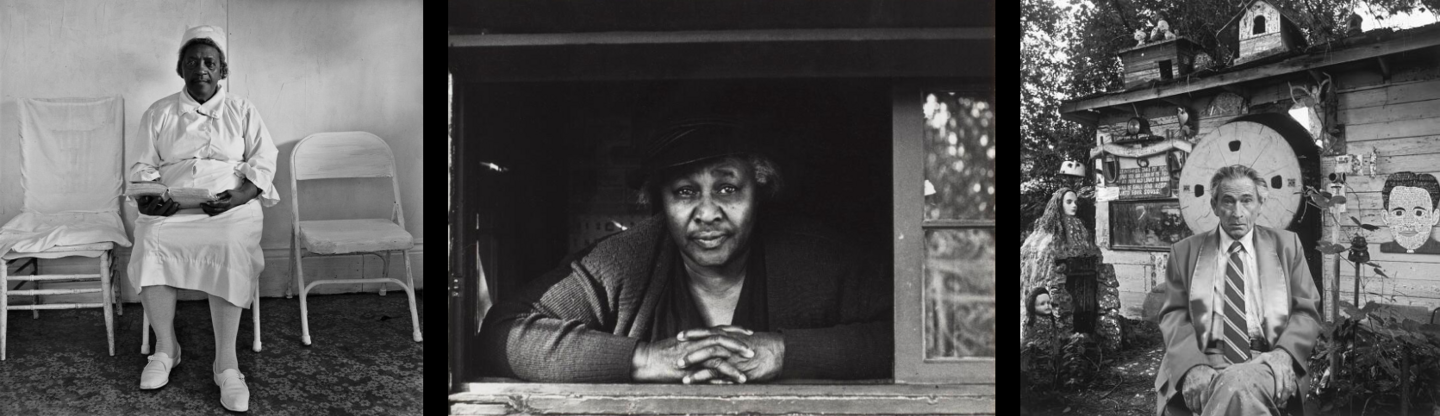
Gertrude Morgan in the prayer room. 1974. / Minnie Evans at the entrance of Earl Garden. 1962. / Portrait of Howard Finster. 1988.
My core research question is: how does the belief in divine purpose shape the artistic practice of outsider artists, and what distinctive features of visual language emerge in works created within the context of personal religious convictions?
The primary research method is comparative visual analysis of the works. The study examines composition, color, figure scale, recurring symbols, fantastic forms, and the interaction between text and image. These observations are correlated with biographical evidence and research into the religious context. This approach allows for a distinction between the artists' documented views and the author’s interpretation of their work.The research structure is built on a biographical principle. Following an introductory chapter dedicated to the relationship between faith and the art of outsiders, the creative output of each of the three artists is systematically examined. This approach enables us to trace how religious beliefs influenced the development of their artistic practice, which imagery and themes gained particular significance, and through what expressive means they were realized.
Navigation Menu
1. Introduction: Faith and Fantasy in Outsider Art
2. Gertrude Morgan: Art as Service
3. Minnie Evans: Between Vision and Imagination
4. Howard Finster: Art as Sermon
Conclusion
Bibliography
Introduction. Faith and Fantasy in Outsider Art
Religious motifs hold a notable place in outsider art. Works by various artists feature depictions of Christ, angels, saints, heavenly spaces, and otherworldly realms. While artists draw upon traditional Christian narratives—such as the Crucifixion, the Resurrection of Christ, the Annunciation, and the Last Judgment—they often lend familiar figures unusual, sometimes fantastical, forms.
Religious themes are also prominent in outsider art. Artists engage with biblical stories and imagery of God, Christ, angels, heaven, and hell, as well as subjects like salvation, resurrection, and the end of the world. For them, religious subject matter serves as a means of interpreting personal experience, expressing faith, and conceptualizing the structure of the world [1, p. 53].
Peres Young. «Christ in the Desert.» 1972.
Piero della Francesca. The Resurrection of Christ. 1463–1465. / Minnie Evans. Resurrection. 1960.
Justin McCarthy. Crucifixion. 1960s. / Émile Lombard. Crucifixion. 1905.
Even while existing outside the professional art scene, outsider artists are not separate from culture. Their worldview is shaped by upbringing, religious traditions, surrounding society, and personal experience. Therefore, turning toward faith does not necessarily mean rejecting conventional notions of the sacred. On the contrary, familiar biblical narratives become the foundation of an individual artistic language.
The nature of this religious engagement, however, can vary. For some artists, religious imagery serves as a means to express their own beliefs; for others, it is a way to embody lived dreams and visions. In certain instances, faith becomes not just a source of subject matter but the very catalyst for creative work. The act of creating imagery is perceived by these artists as fulfilling a spiritual calling.
Sister Gertrude Morgan. Art as Service
In 1934, according to Morgan herself, she received a divine calling to spread the Gospel. In 1956, the artist viewed the creation of religious imagery as another spiritual mandate, and in 1957, following a new revelation, she began referring to herself as the Bride of Christ [6]. Painting became an extension of her evangelistic work, alongside prayers and religious chants [7].
Gertrude Morgan. Self-Portrait. 1970. / Gertrude Morgan. Who Are You, Little Lady? 1956. / Gertrude Morgan. Self-Portrait. 1960.
Drawing on biblical narratives, Morgan subordinates the composition to the meaning of the religious story. Realistic proportions and laws of perspective give way to a conventional representation of space: significant characters are emphasized through scale or placement, while numerous figures may be grouped within a single composition. This structure allows the viewer’s focus to be drawn to the primary images and events.
Gertrude Morgan. Moses surveys the Promised Land. Undated. / Gertrude Morgan. Lazarus, come forth! Undated.
Color plays a crucial role in Morgan’s works. The artist employs bright, contrasting combinations, dividing the space into large fields of color. Figures and architectural forms are depicted abstractly, devoid of realistic chiaroscuro. Saturated colors and repeating elements enhance the emotional expressiveness of the religious imagery.
Gertrude Morgan. Angels. 1965–1970. / Gertrude Morgan. Untitled. Undated.
Another characteristic feature of Morgan’s artistic language is the integration of text and image. Biblical quotes, prayers, and religious invocations are incorporated directly into the composition, often occupying a significant portion of the space. These inscriptions do more than just explain the depicted subjects; they address the viewer, transforming the works into unique visual sermons.
Gertrude Morgan. God, I don’t want to wait. 1970. / Gertrude Morgan. Poem on my calling. 1970.
In the work «Jesus Is My Airplane, ” Morgan merges religious imagery with scenes from everyday life. By depicting herself with Christ in an airplane, the artist transforms modern transportation into a metaphor for the spiritual journey toward the Kingdom of God. According to Morgan, the image came about after a divine instruction to convey a message to people about the fleeting nature of time. The artist recounted that Christ guided her hand to paint the airplane in which they are together [2]. Thus, the familiar image of transportation becomes not only an expression of personal faith but also a means of delivering a religious warning to the viewer.
Gertrude Morgan. Jesus — My Airplane. 1970.
Morgan repeatedly returned to this theme, reinterpreting it across different compositions and various mediums. Researcher Imani Uzuri views the motif of travel as a crucial part of the artist’s religious experience, noting its presence in her paintings, chants, and sermons [6, p. 591]. The recurring image of an airplane connects the concept of a spiritual journey with the idea of divine guidance.
Gertrude Morgan. Untitled. 1956–1980. / Gertrude Morgan. Gertrude and Jesus in a Plane. Undated.
The theme of the spiritual journey continues in the imagery of the New Jerusalem—the heavenly city described in the Book of Revelation. Where Morgan’s works featuring airplanes reference the idea of moving toward the Kingdom of God, here she presents the very space of the heavenly world.
Gertrude Morgan. New Jerusalem. 1970–1974.