Navigation
- Index
- Concept
- Distortion of Space and Scale
- Grotesque of Body, Form, and Appearance
- Rhythm, Technique, and Visual References
- Conclusion
- Gallery
- Bibliography
Concept
My visual study is focused on the visual gags and humor in the animated films by art director Radna Sakhaltuev, created at the Kievnauchfilm studio alongside director David Cherkassky. The focus is on three works: «The Adventures of Captain Vrungel, ” „Doctor Aibolit, ” and „Treasure Island.“ I am exploring precisely how comic effect is constructed through drawing, movement, distortions of space and body, and editing, and why these cartoons still feel so vibrant and funny.The research centers on how the characters' appearances, their plasticity, and the visual techniques—as well as the editing and style—generate humor. By analyzing key scenes, I aim to answer these questions: How do visual gags function in these cartoons? Which techniques does Sakhaltuev most often employ? How does the style and the character of the movements influence the humor? What role does editing play in creating visual comedy? How do references and play with techniques help him achieve the comedic effect, and why do these films still feel fresh and contemporary?
My choice of topic is linked to its importance in the history of animation. Sakhaltuev created a highly recognizable visual language—grotesque, dynamic, and full of unexpected transformations. In «Vrungel, ” he works with cutout animation and abrupt changes in scale. In „Aibolite, ” he intensifies the caricature and bodily humor. And in „Treasure Island, ” he combines drawn animation with live-action inserts, creating a particularly rich visual rhythm. These three films demonstrate how his approach to comedy evolved.
I believe this topic remains highly relevant today. We live in an era where visual humor is once again extremely popular—in short-form videos, memes, and contemporary animation. Studying how Sakhaltaev elicited laughter with almost no words, relying solely on imagery, helps us understand how to build a vibrant and intelligible visual language. His comics still appear witty and free.
I organized my work into three main sections. The first is the distortion of space and scale. For this section, the primary material will be «The Adventures of Captain Vrungel, ” with supplementary examples drawn from „Treasure Island“ and „Aibolit.“ The second section focuses on the grotesque depiction of body, form, and appearance. The main material is „Doctor Aibolit, ” supplemented by examples from two other cartoons. The third section covers rhythm, technique, and visual references. „Treasure Island“ will be the central piece here, and I will draw scenes from „Vrungel“ and „Aibolit“ for comparison. It is important to note that all the techniques I will discuss are used, in one way or another, throughout all the works. For each section, I selected a primary film for analysis purely for ease of study, not because these methods are used exclusively in that film and absent in the others.
Spatial and Scale Distortion
One of Radna Sakhaluteva’s strongest and most recognizable techniques is the manipulation of space and scale. She frequently places an «imaginary camera» at a fixed point and forces the character to move relative to it. Because of this, the protagonist shifts from being tiny to growing to immense proportions, and the visual ratios become heavily distorted. The space surrounding the character appears to stretch and compress.
«Captain Vrungel» directed by David Cherkassky (1976–1979)
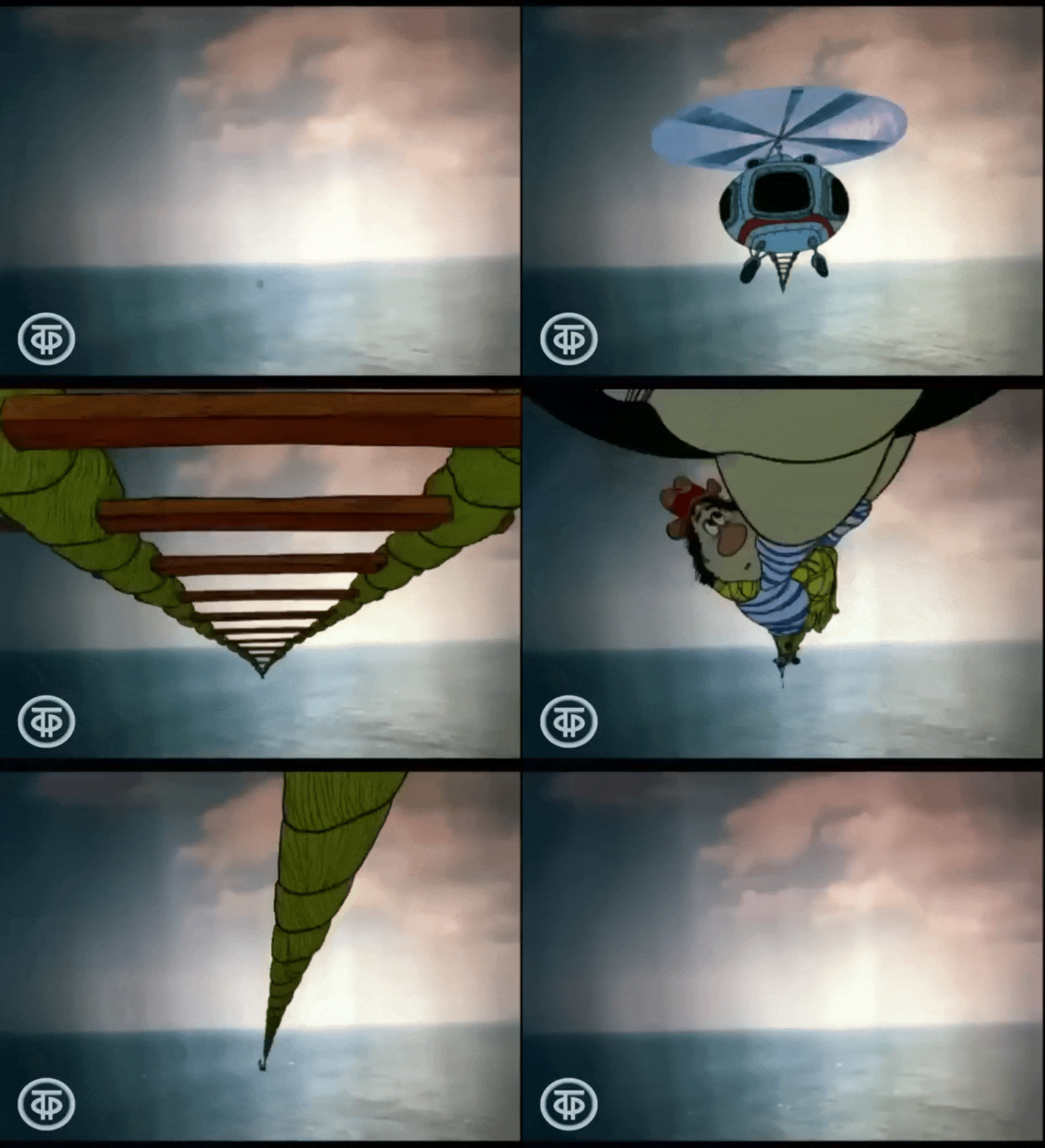
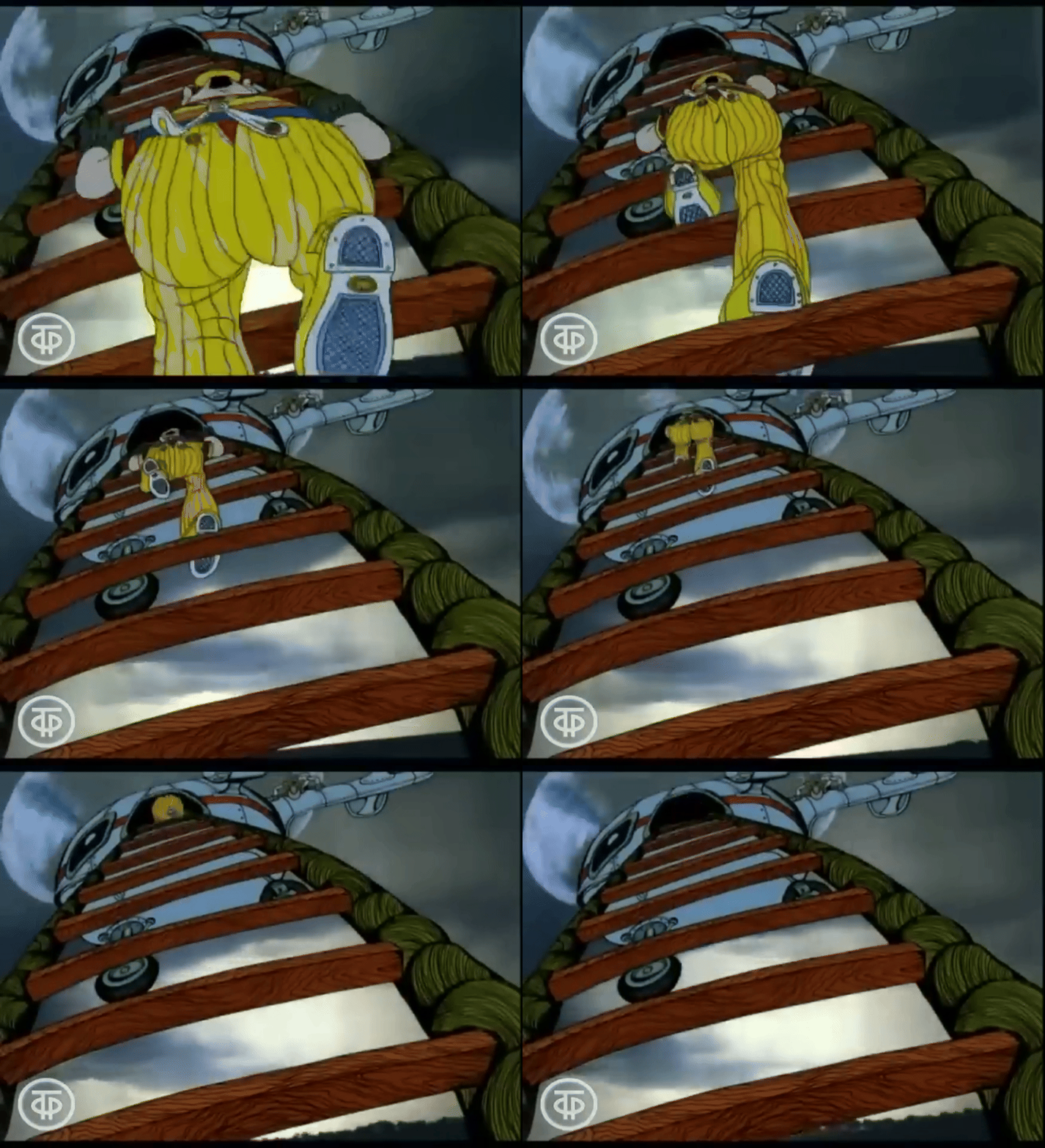
«Captain Vrungel, ” directed by David Cherkassky (1976–1979)
The effect of a spherical, convex space is particularly interesting. It feels as if the world is slightly curved, like the surface of a sphere or a wide-angle lens. Characters and objects in such a frame look strange and comical—their forms seem to subtly «float,» and the perspective becomes grotesque. This technique immediately creates a sense of instability and playfulness.
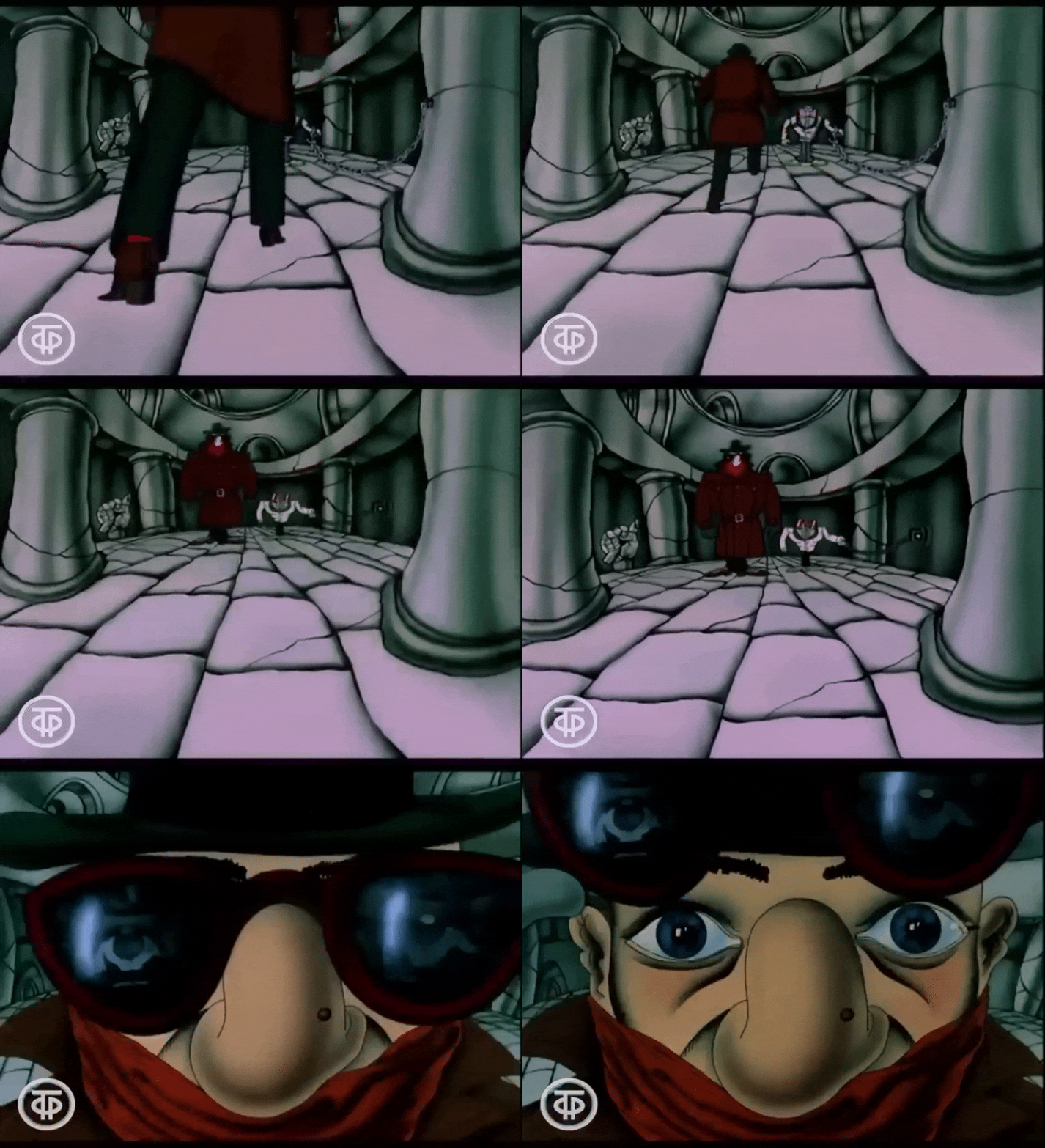
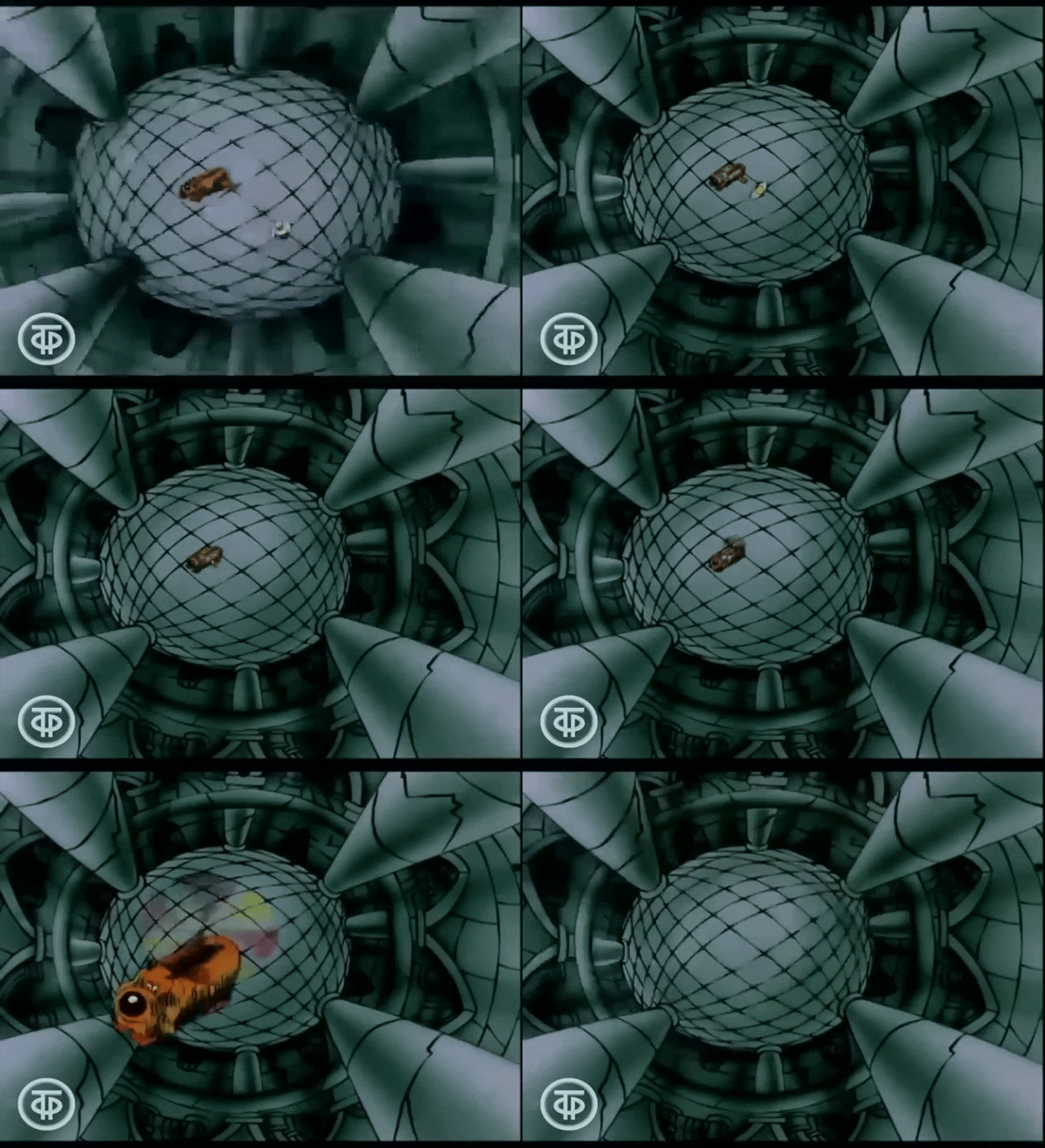
«Captain Vrungel» directed by David Cherkassky (1976–1979)
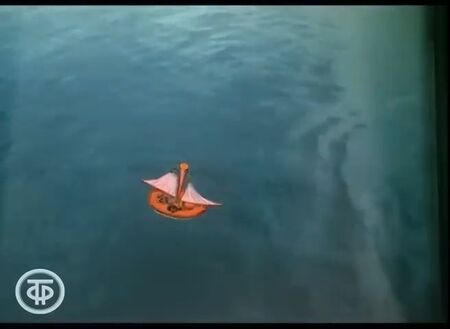
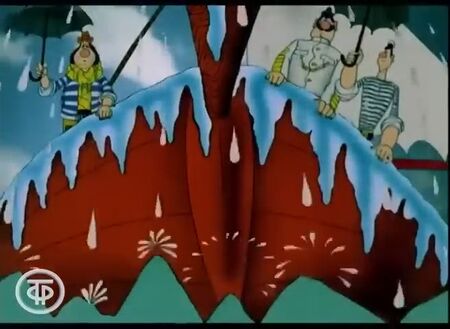
«Captain Vrungel, ” directed by David Cherkassky (1976–1979)
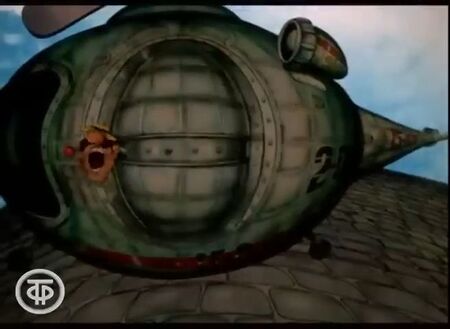
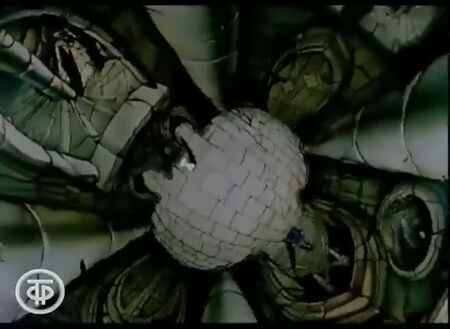
«Captain Vrungel, ” directed by David Cherkassky (1976–1979)
Radna Sakhaltuev uses this technique not only in «Captain Vrungel» but in many other works as well.
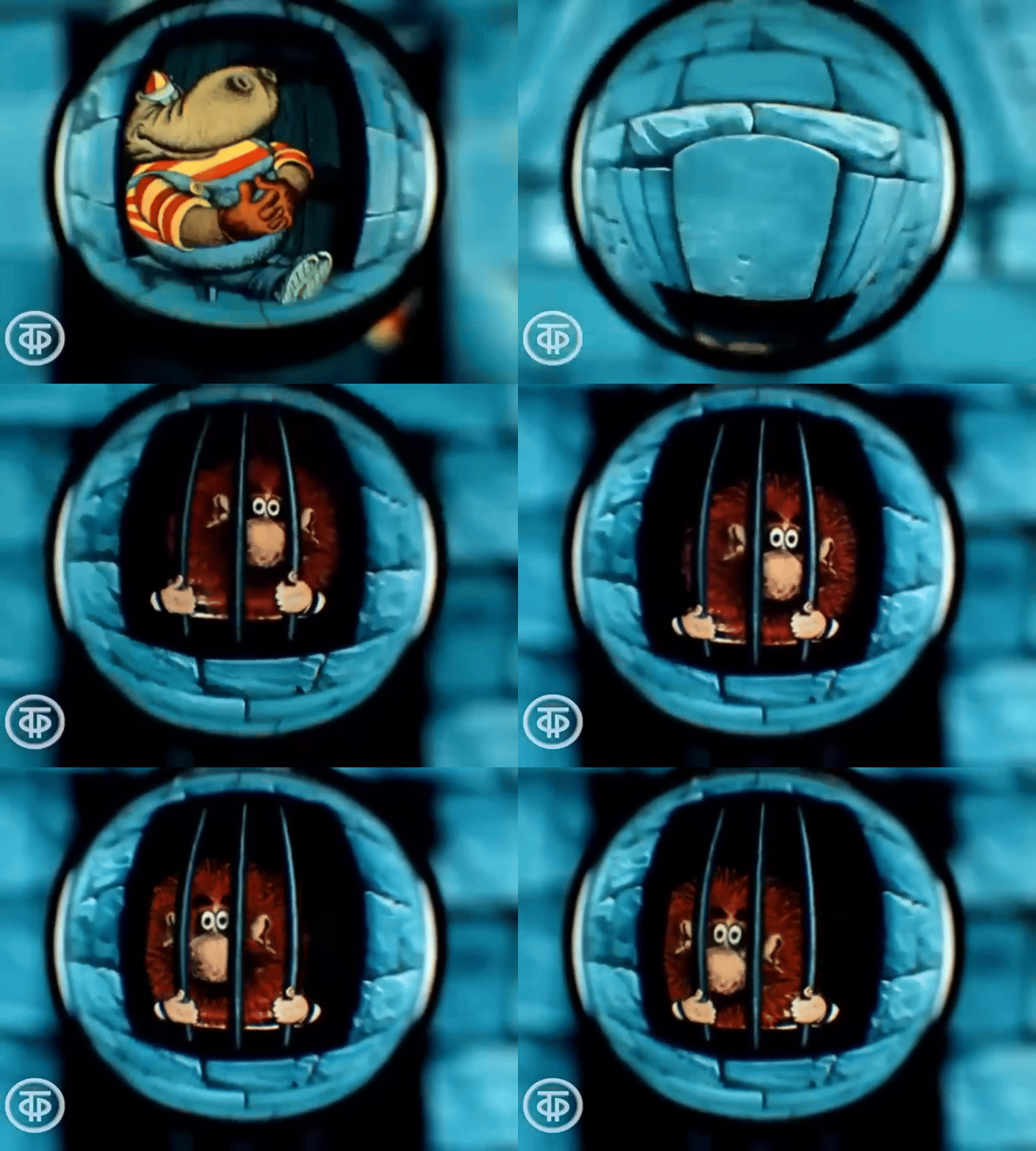
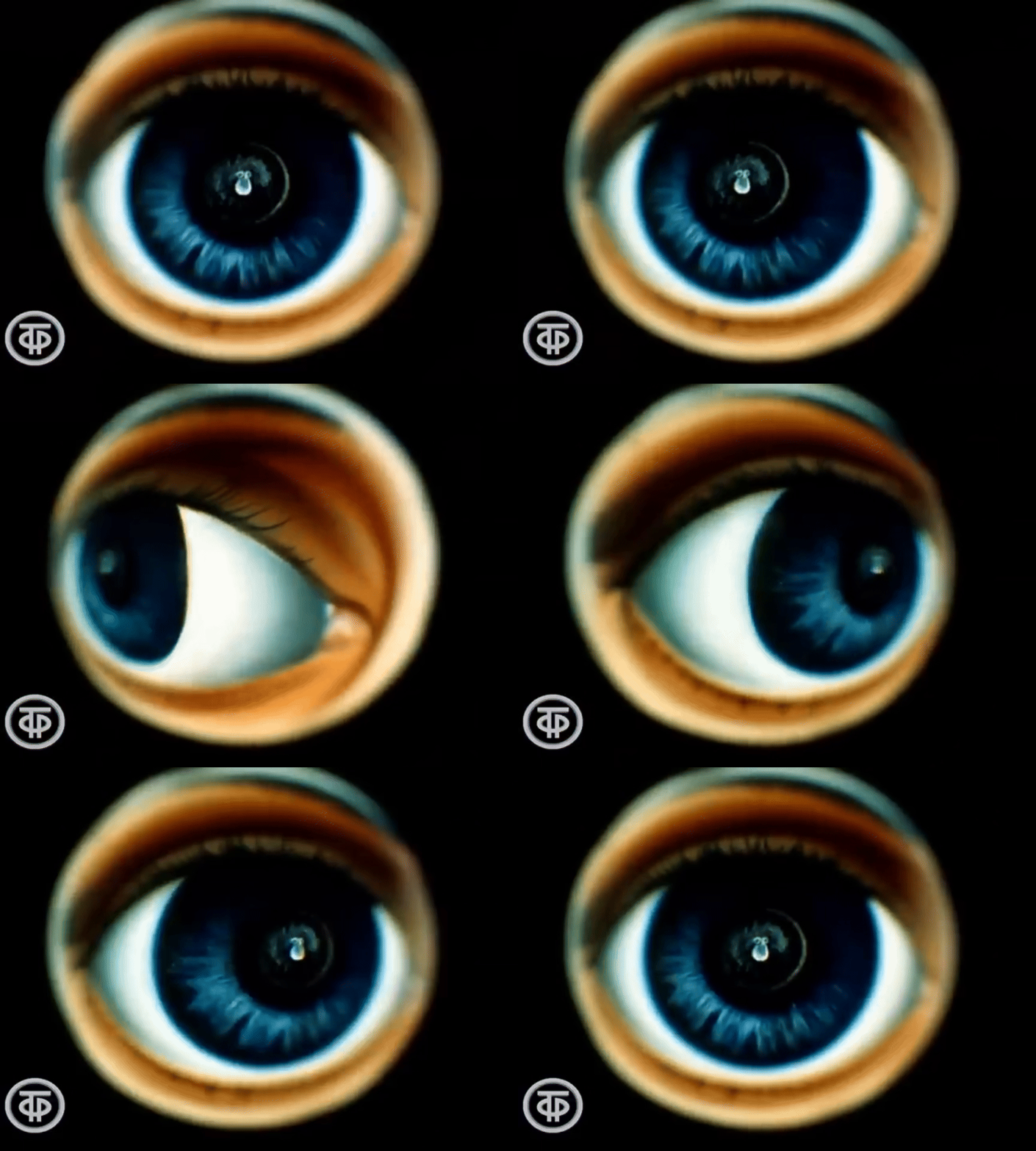
«Doctor Aibolit» directed by David Cherkassky (1984–1985)
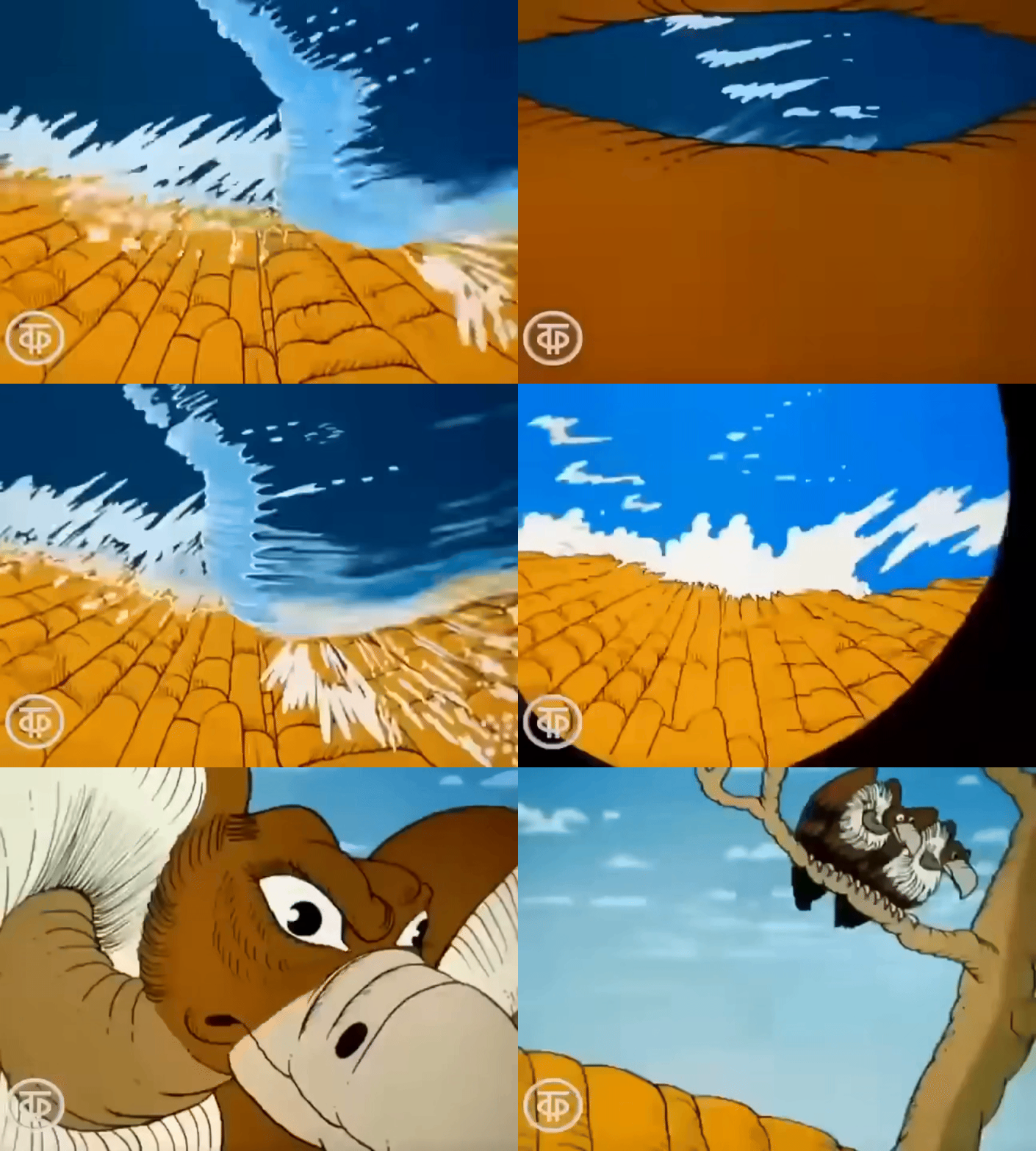
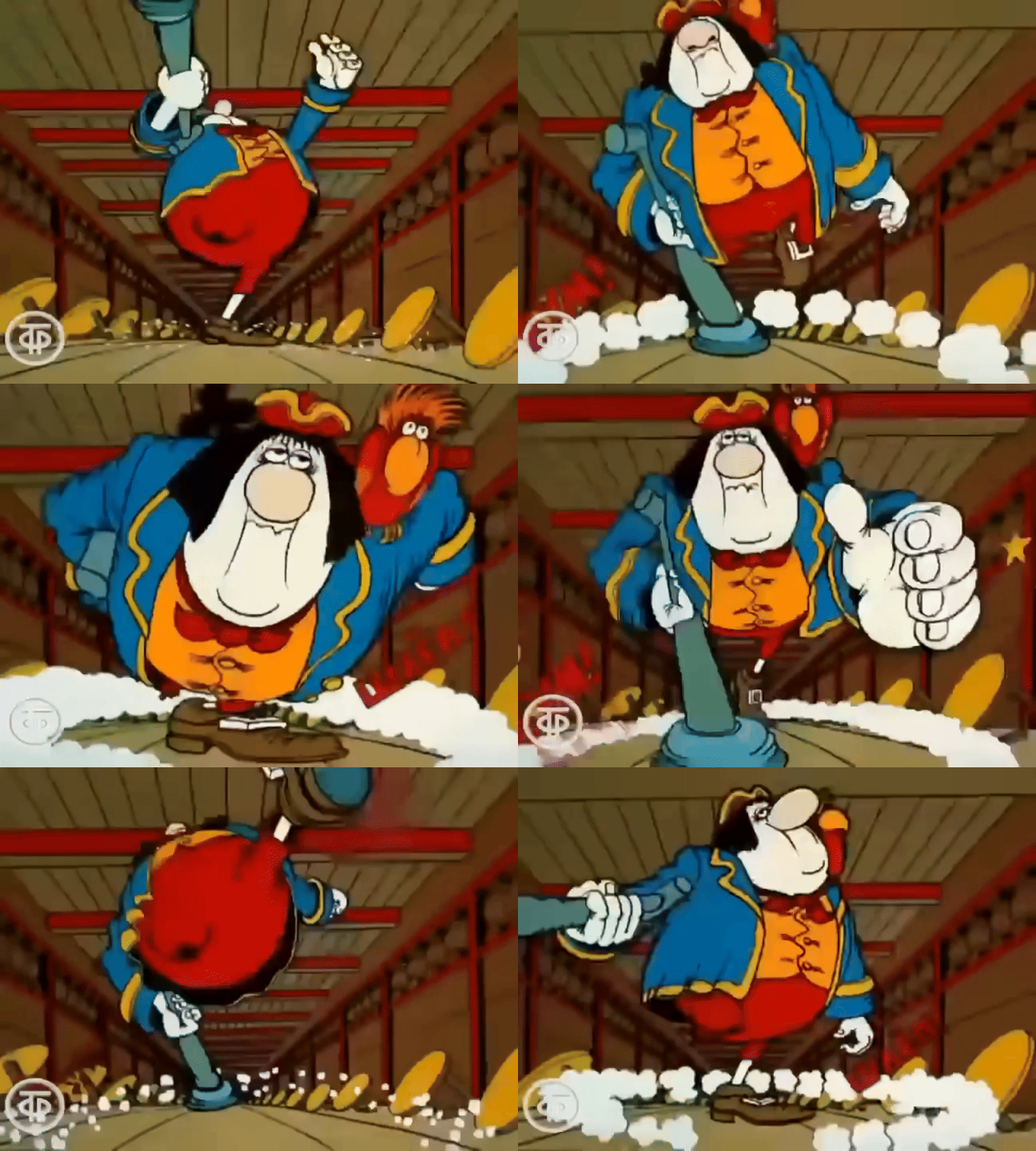
«Treasure Island, ” directed by David Cherkassky (1988)
Particular attention should be paid to how the artist plays with the scale of objects within the frame. A small object can suddenly occupy nearly the entire screen, while a large one can sharply diminish. These shifts in scale function as a self-contained visual gag: the viewer doesn’t have time to adjust to the size, and the image constantly deceives them.
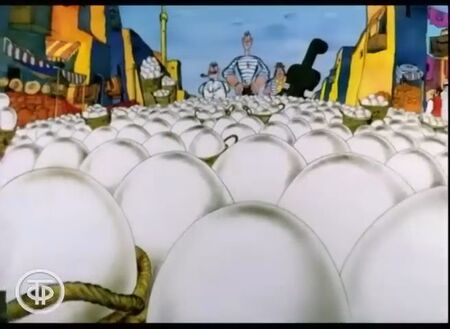
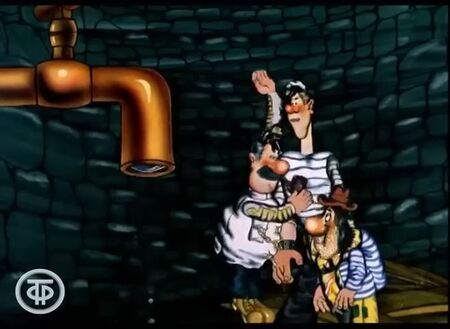
«Captain Vrungel» directed by David Cherkassky (1976–1979)
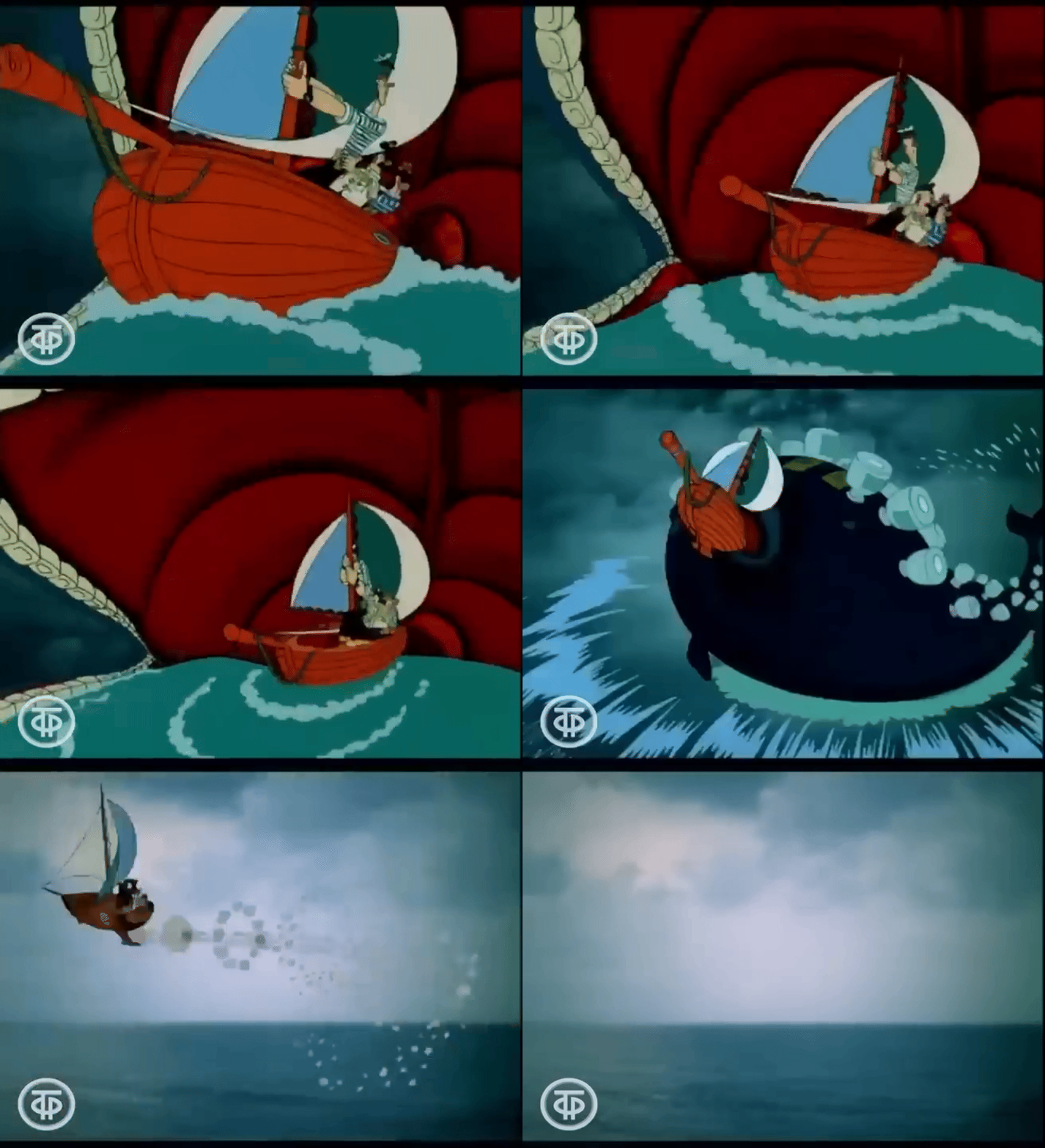
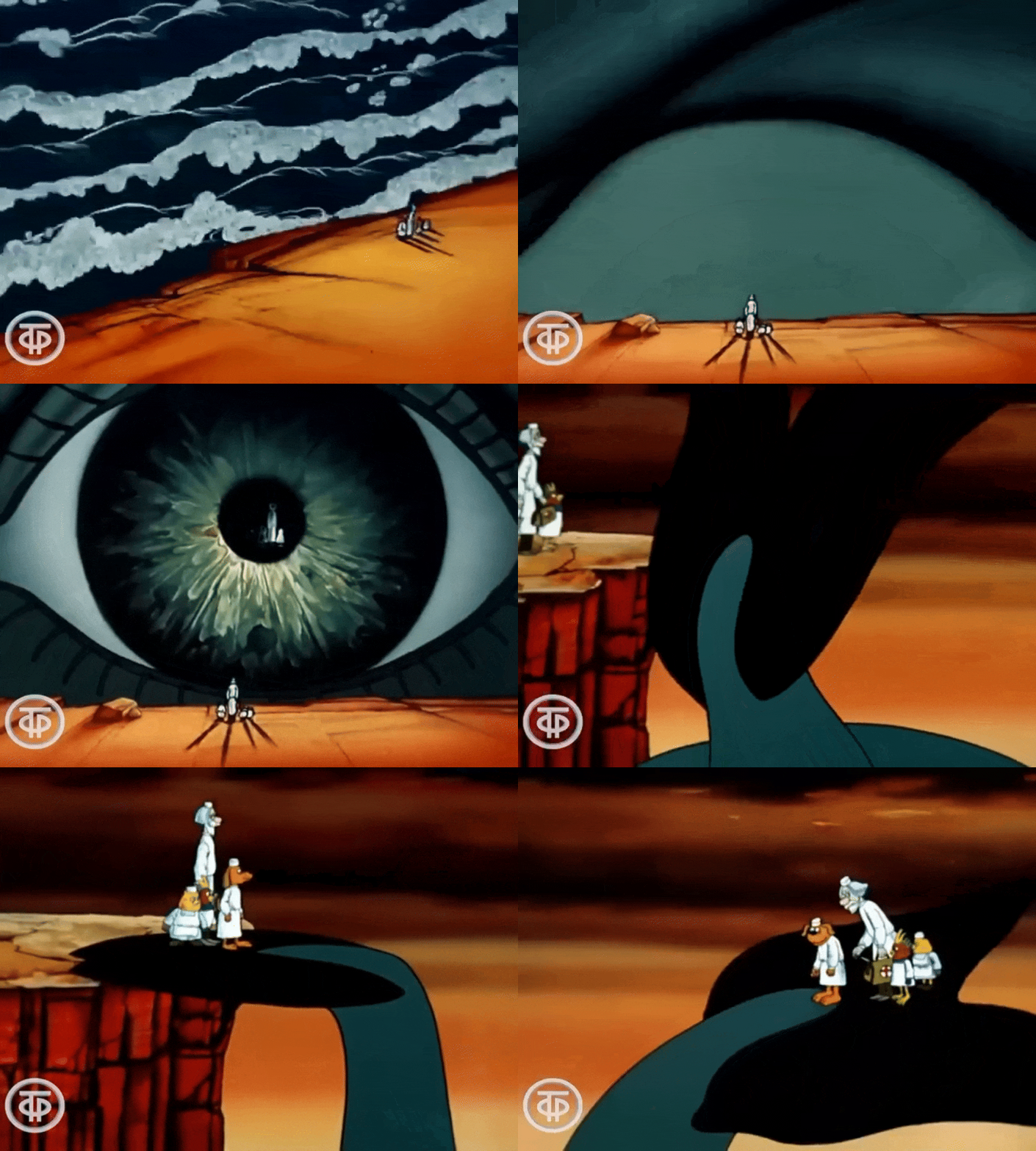
«Captain Vrungel» directed by David Cherkassky (1976–1979) // «Doctor Aibolit» directed by David Cherkassky (1984–1985)
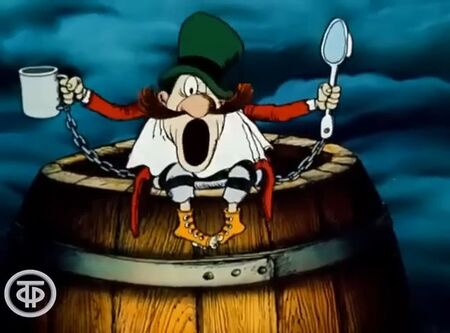
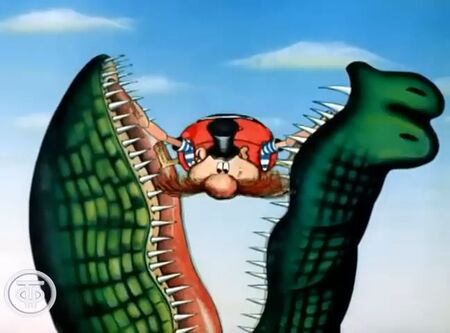
«Dr. Aibolit» directed by David Cherkassky (1984–1985)
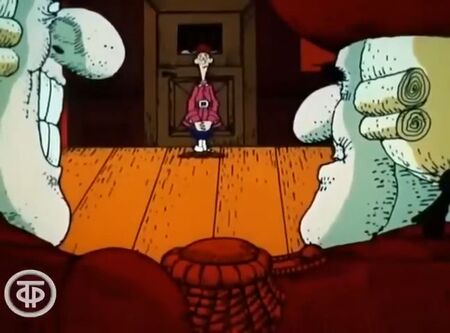
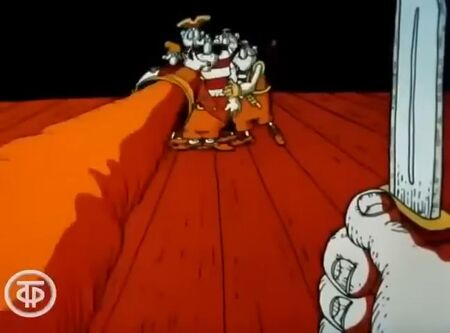
Treasure Island, dir. David Cherkassky (1988)
This technique works so well because it disrupts our habitual perception of space. We are accustomed to the sizes within a frame remaining relatively stable. When Sakhaltuev sharply alters the scale or distorts the perspective, a sense of surprise and absurdity emerges. This sensation—that feeling—is what becomes the source of the humor; the viewer laughs not at the text or the situation, but at how the image itself behaves unexpectedly and freely.
Grotesque of the body, form, and appearance
Radna Sakhalutiev’s second important technique is working with the body, form, and appearance of her characters. She almost never draws her heroes «correctly.» Instead, she intentionally exaggerates and distorts their features so that the appearance itself becomes a source of humor.
«Dr. Aibolit» directed by David Cherkassky (1984–1985)
This is especially evident in «Doctor Айболит.» The bartender was rendered coarse, with a huge jaw and a small occiput, complete with a mustache and aggressive features, yet deliberately short and diminutive compared to the other characters—a choice that evokes laughter rather than horror.
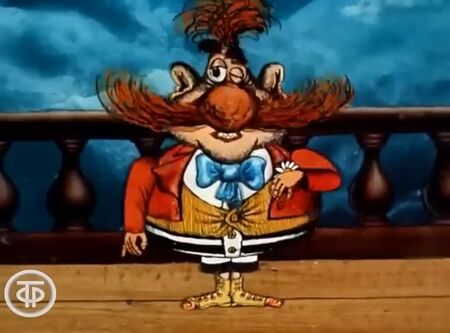
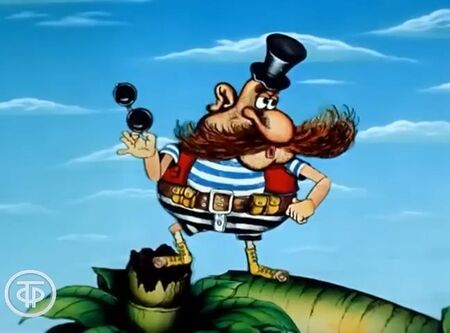
«Dr. Aibolit» directed by David Cherkassky (1984–1985)
Aibolit, conversely, is long and thin, with soft and slightly awkward proportions, yet his appearance is quite benevolent. Varvara, on the other hand, is heavy and hyperbolized—she is much larger than all the other characters, and instead of a neck, she has several chins, which also creates a comedic effect. Based on their appearances alone, it is clear which one possesses which character.







