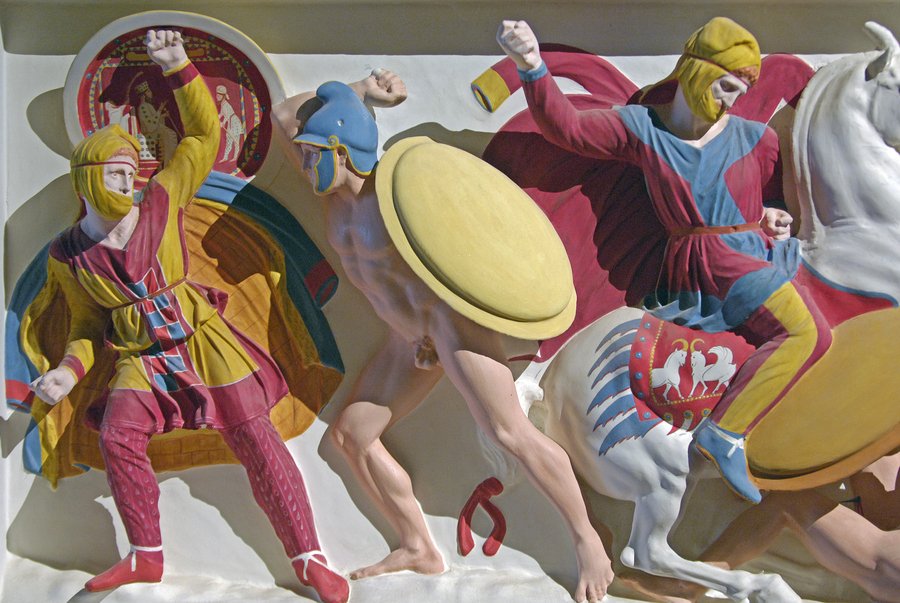
За пределами белого мрамора: цвет в искусстве античного мира
The visual research focuses on studying the polychromy of ancient sculpture—the original color schemes applied to statues, much of which has been lost over time. The common image of antiquity, associated with snow-white marble and monochrome, does not reflect historical reality: sculptures of the past were richly adorned with color, decorative patterns, gilding, and other artistic elements.
The project’s objective is to explore the original appearance of ancient sculpture, trace the reasons for the loss of its coloring, and examine contemporary reconstructions that feature restored pigments. Special attention is paid to surviving traces of paint, scientific analysis of the sculpture’s surface, and experimental color reconstructions.
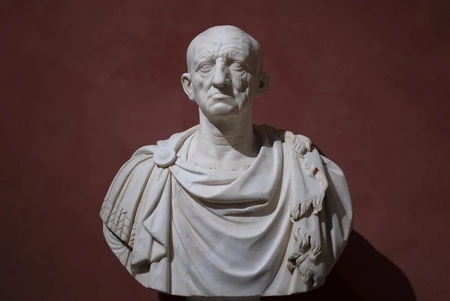
Numerous ancient marble sculptures—statues, reliefs, and sarcophagi—were originally painted in vibrant colors that have since faded. Art historians, particularly during the 18th century, came to perceive white marble as the default, and the association between whiteness, aesthetics, and antiquity soon became established as a canon in Western art.
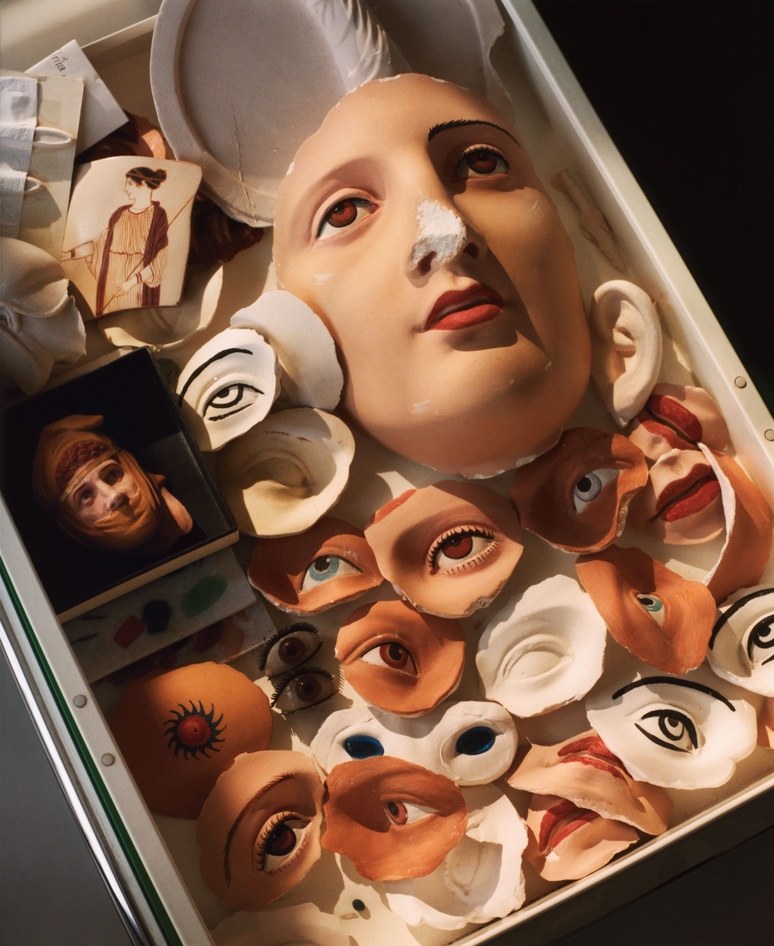
Modern technologies make it easier to recreate ancient polychrome sculptures. Photo: Mark Pekmejian for The New Yorker
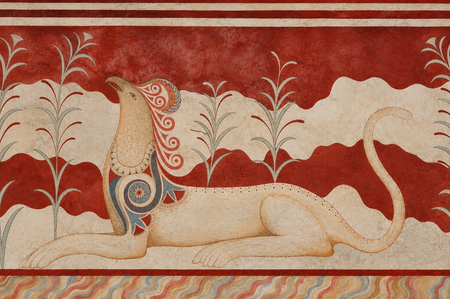
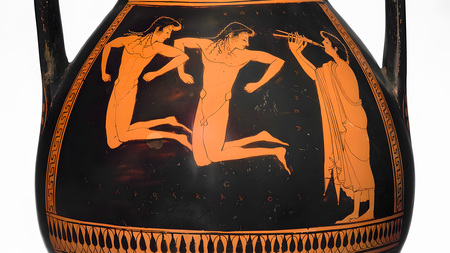
Color provided naturalism to clothing, leather, facial features, and hair; sometimes they were complemented with gold leaf, inlays of stone or glass, or metal details. Bronze statues were also embellished with inlays made of various metals, polished to a dazzling sheen. Due to pollution, weathering, and modern cleaning, this added color is lost today, although in antiquity it served many functions: it made the statues more lifelike and aided their perception when placed on building facades.
Pigments were often made from expensive materials brought from various parts of the Mediterranean, so color also served as a display of privilege and wealth.
Reconstruction process: notes and color study of the so-called Treu head from the British Museum in London, 2019
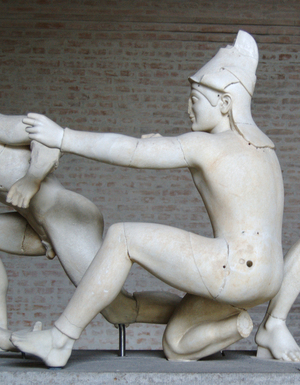
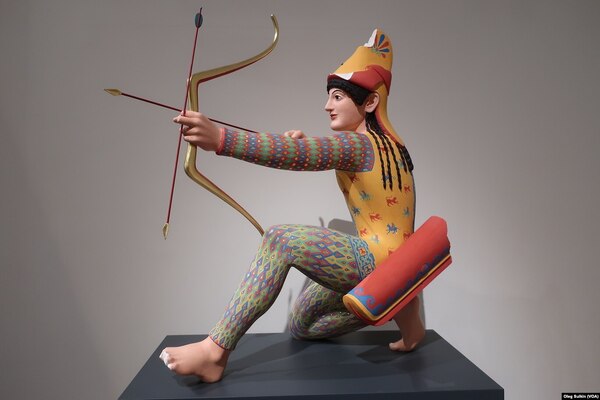
1. Original sculpture «Paris.» 2. Color reconstruction
Technological breakthroughs have made previously impossible things real. The Brinkmann couple’s team is recreating the original appearance of sculptures using ultraviolet and infrared radiation, comparative photography, 3D imaging, and other research methods, alongside an extensive body of factual material from art history.
For instance, they were able to restore the original colors of the statue of an archer from the Temple of Aphai on Egene by comparing this figure to a Persian rider found during excavations at the Acropolis. This comparative analysis helped «revitalize» the rich palette of the ancient artist. The archer’s clothing is adorned with gold flecks—the restorers discovered these on Greek ceramics and Scythian textiles that share a similar aesthetic [1].
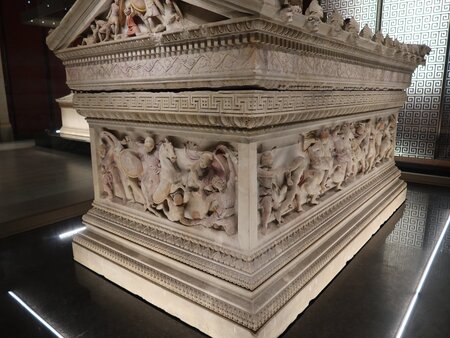
Title: The Sidonian Sarcophagus of Alexander Date of Creation: Approximately 310–300 BCE (often dated to around 312 BCE). Place of Discovery: Sidon (modern Saida, Lebanon). Location: Istanbul Archaeology Museums. Material: Marble, traditionally identified as Pentelic. Dimensions: Approximately 195 × 318 × 167 cm.
Today, the sarcophagus is primarily perceived as a white marble monument. However, its surface was originally adorned with colorful frescoes. Traces of pigments remain on the surface, indicating that the sculptural figures initially possessed a more complex chromatic appearance.
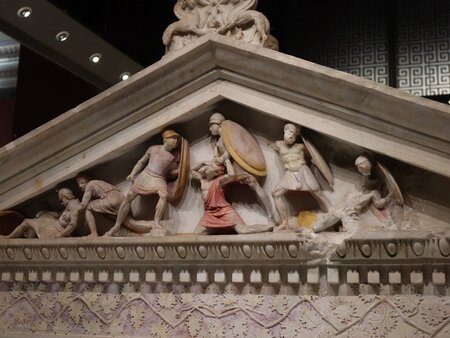
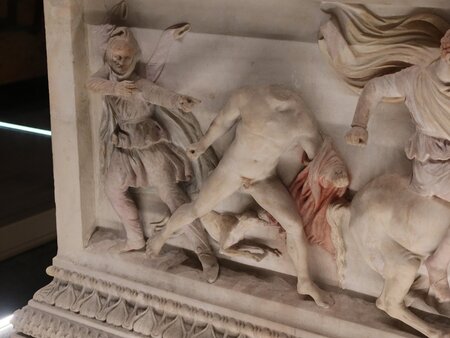
Pigment traces on the sarcophagus surface
In the study of the Vincent Brinckman sarcophagus, 22 different pigments were discovered. Microscopy, ultraviolet radiation, and pigment analysis were used to examine the original painting. [2]
Color reconstruction of a sarcophagus fragment
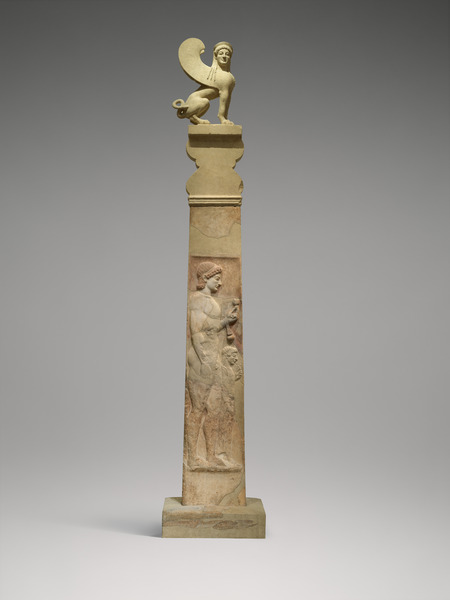
Title: Sphinx finial of the funerary stele of Megakles. Date: c. 530 BCE. Culture: Ancient Greek, Attica. Material: Marble. Original Purpose: Finial of a monumental funerary stele. Location: The Metropolitan Museum of Art, New York.
Applying cinnabar pigment to scaled feathers. Reconstruction process
In 2021, the Metropolitan Museum’s Imaging Department (led by Scott Geffert) meticulously digitized the sphinx from the Megacles monument using photogrammetry. After the data was processed by Ralph Deuke in Munich, Voxeljet (Southern Germany) printed the sphinx in two parts from plexiglass powder using 3D printers. Ulrike Koch-Brinkmann refined the copy in areas of minor damage, covered it with the thinnest layers of marble stucco, and polished it. The result—a reconstruction of the sphinx in its original form and color—was exhibited at the show, «Chroma: Ancient Sculpture in Color.» [3]
Interesting detail: the initially green traces discovered on the surface were found, after analysis, to be a degraded blue pigment—azurite.
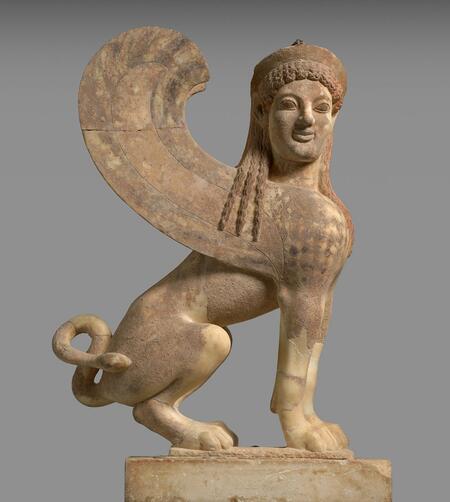
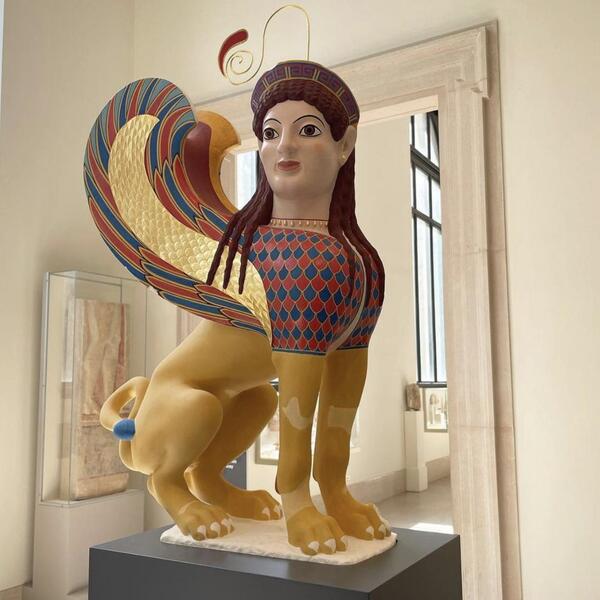
1. Sphinx—the finial of the Mega-kla tomb stele nearby, an original sculpture. 2. Color reconstruction
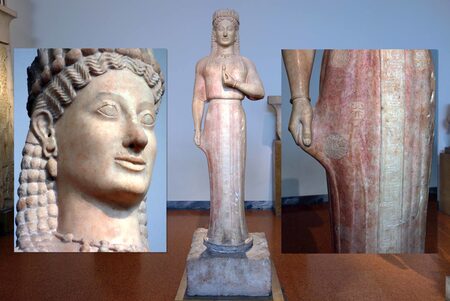
Title: Kore of Phrasikleia (Phrasikleia Kore). Creation Date: approximately 550–540 BCE. Period: Archaic Period. Discovery Location: Merenda (ancient Myrinnunt), Attica, Greece. Discovery Date: May 18, 1972. Material: Paros marble. Height with base: about 211 cm. Artist: Aristion of Paros. Storage Location: National Archaeological Museum of Athens.
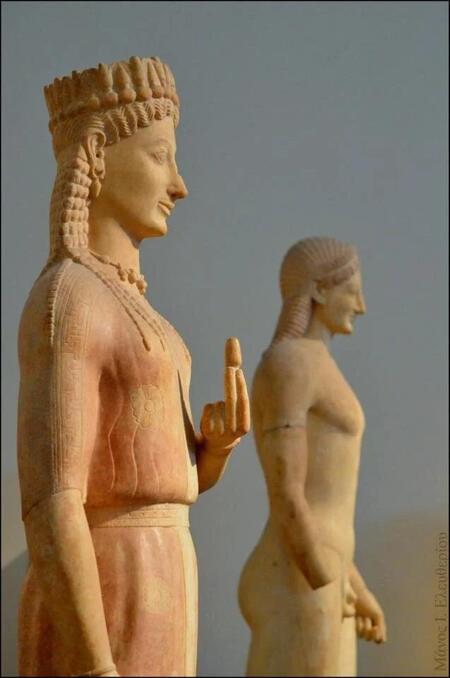
The Phrasiclea and the Kouros The Phrasiclea is not simply a depiction of a young woman; it is a funerary statue created to mark the burial site of a young female.It was discovered by archaeologist Euthymios Mastrokostas in 1972 in the necropolis of the ancient settlement of Mirrinuunt (modern Merende), located about 30 kilometers from Athens.Along with it, a statue of a nude youth—a kouros—was found. Both sculptures were placed in a specially prepared pit, carefully positioned facing each other.[4]
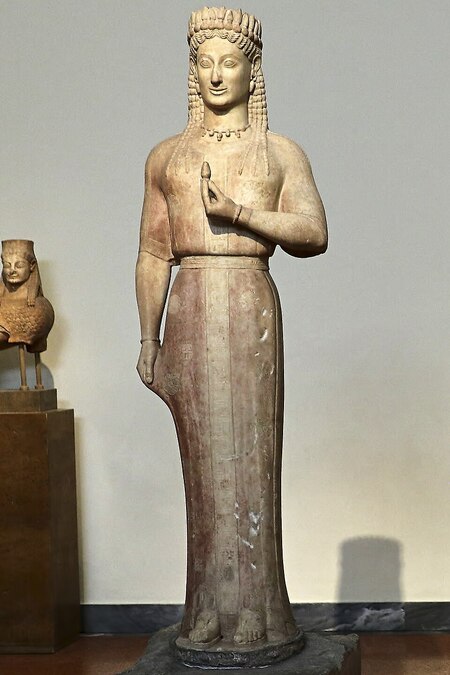
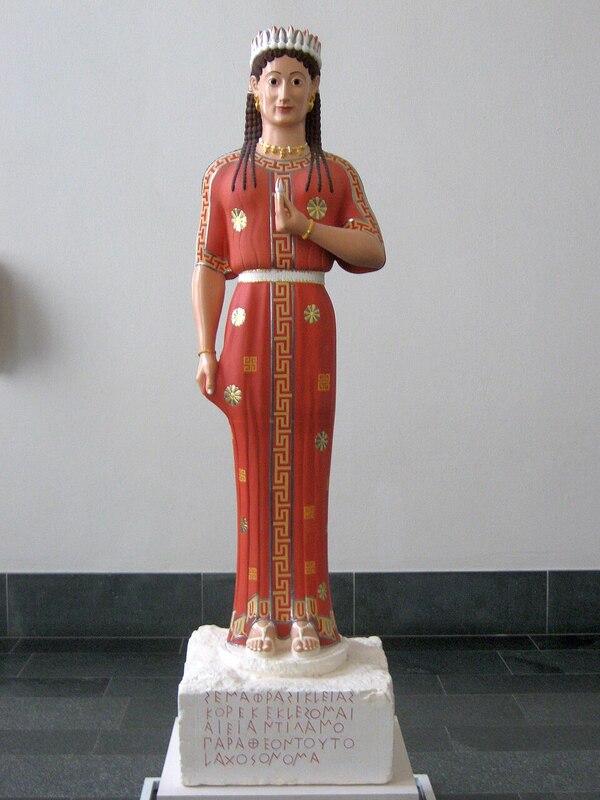
1. Frasiclea’s Bark, original sculpture. 2. Frasiclea’s Bark, colored reconstruction.
A classical Greek inscription, detailing the girl’s name and fate, was preserved on the statue.
In translation, it reads approximately as follows:
«I am the monument of Phrasiclea. I shall forever be called a girl, for the gods determined this name for me instead of a marriage.»
The sculptor’s signature, «Aristides of Paros created me, ” was also preserved on the statue.
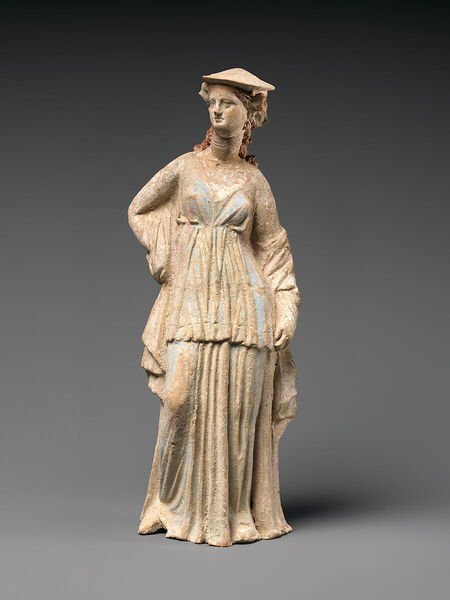
Title: Terracotta Figurine of a Woman Period: Hellenistic Date: Early 3rd Century BCE Culture: Greek, Southern Italian, Tarentine Material: Terracotta Dimensions: 10 3/8 inches (26.4 cm) high Classification: Terracotta
Images of standing draped women represent one of the most common types of terracotta figures from the 4th to 2nd centuries BCE across the Greek world. [5]
After firing, the surface of the figurines was coated with a white primer, over which bright pigments—blue, red, yellow, and pink—were applied. Sometimes, individual details on clothing and ornaments were accented with gold leaf.
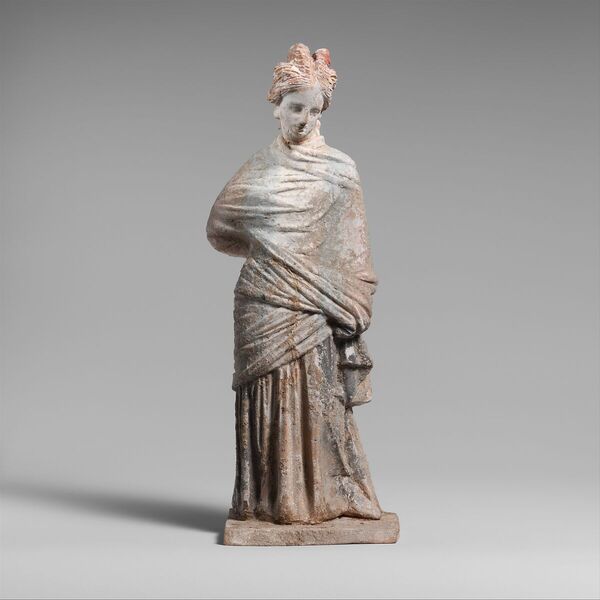
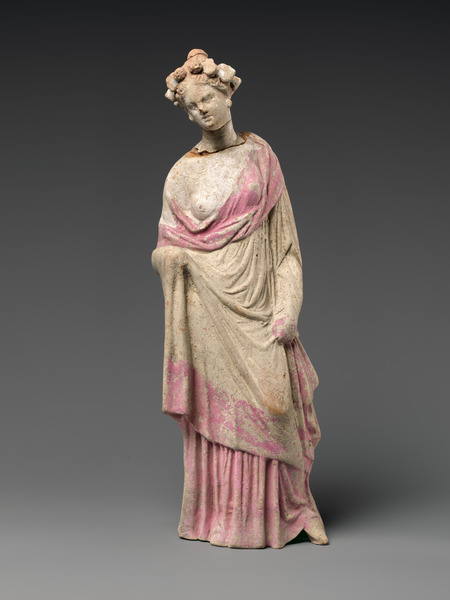
1. Woman in Terracotta Drapery, 3rd Century BCE 2. Terracotta Figurine of a Woman, Late 3rd Century BCE
Even small terracotta figurines were not originally monochrome. Color was an important part of their artistic identity, and its loss has significantly altered our modern perception of ancient sculpture.
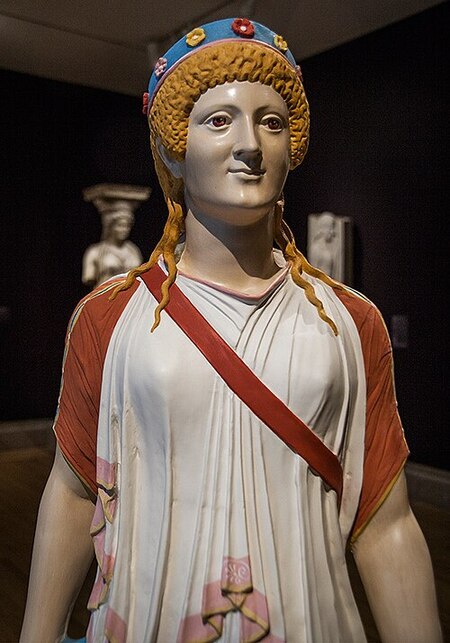
Title: Artemis of Pompeii Period of original sample: Classical Greece. Material: Marble. Discovery location: Pompeii. Date: 1st Century CE.
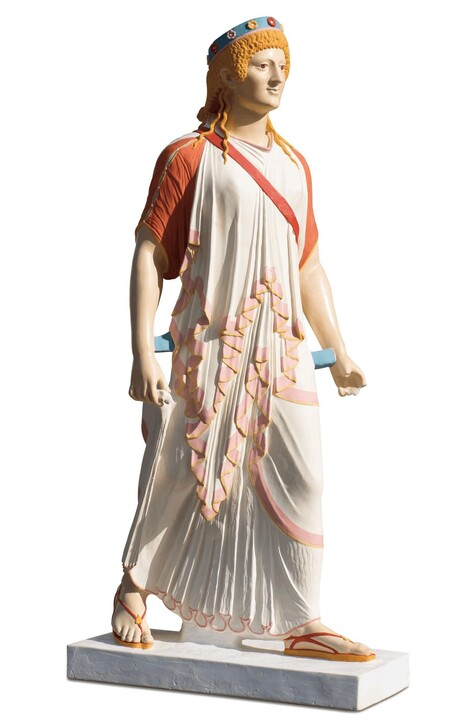
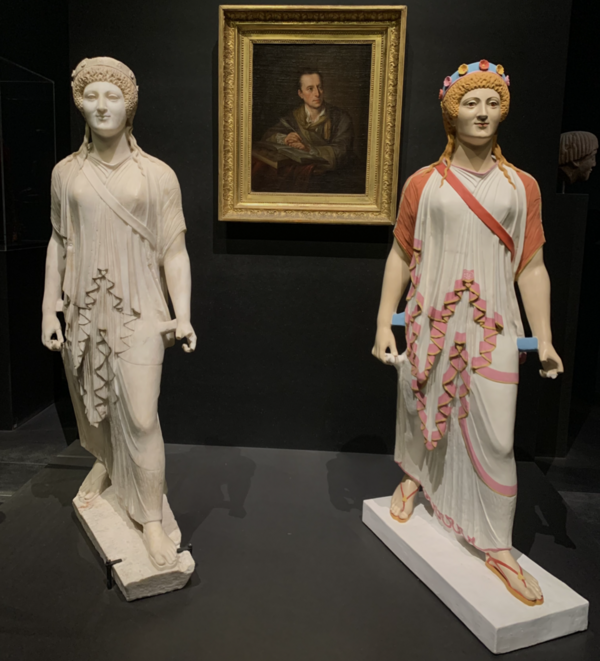
1. Experimental reconstruction of Artemis from Pompeii. 2. Experimental color reconstruction of the so-called Winkelman-Artemis statue from Pompeii next to the original marble statue.