Navigation
1| Concept 2| The Little Horse and the Humpback 3| The Firebird 4| Ivan Tsarevich and the Gray Wolf 5| Conclusion
Concept
After the Great Patriotic War, animation changed significantly. Before the war, animators created non-narrative works set to rhythmic music that dictated character movement, but the art dramatically shifted postwar. Animation became smoother, developed narratives and dialogues emerged, and music served only to complement and set the mood. Works based on fairy tales with a clear moral and roots in folklore moved to the forefront. The fairy tales featuring the Firebird are among these examples.
The Firebird—one of the most iconic and enduring images in Russian folklore—is referenced repeatedly. In fairy tales and Soviet animation, it serves not merely as a backdrop but plays a vital role in the plot. It acts as the catalyst, compelling the hero into action and driving them toward their goal. Its image is highly complex and always stands out against the landscape and other characters. In every animation, it is depicted as vibrant flame; its movements are fluid and varied, with each element of its design moving in its own rhythm. Similarly, across different works, it launches the narrative in distinct ways, yet it never recedes to the background. Artists dedicate detailed attention to it, recognizing it as a central, key character.
«Konyok-Gorbunok» (1947) by Ivan Ivanov-Vano
The choice of topic stems from the fact that the Firebird itself is one of the central figures in Russian folklore. The aim is to explore what role it plays in various animated fairy tales and how its image is depicted. Specifically, we will investigate the artistic techniques animators use to convey the magical quality and vibrant nature of this character, focusing on palette, light, movement, and stylization.
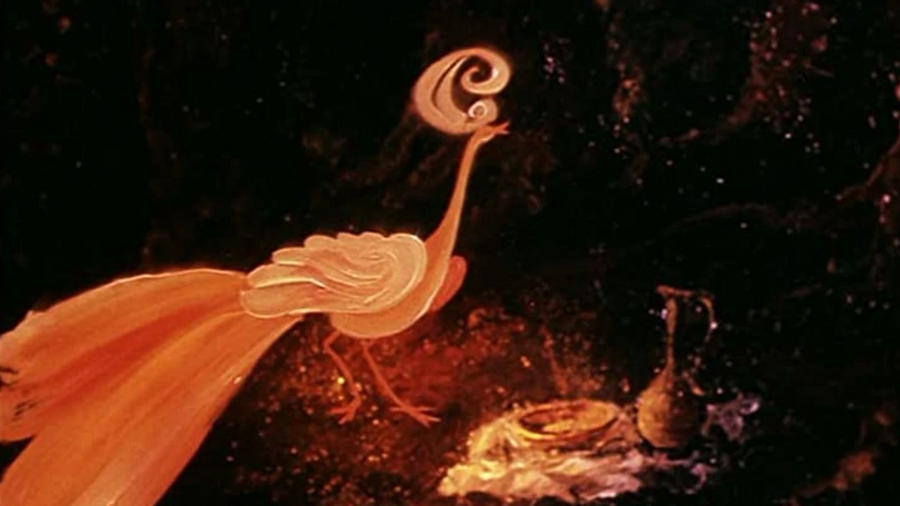
«The Firebird» (1984, Vladimir Samsonov)
The materials were selected from cartoons featuring the Firebird. A total of three sources were chosen; in them, the character is depicted not only using various techniques and styles but also serving different roles in different storylines. This selection helps compare the work of different creators, allowing us to understand what distinguishes them beyond technique and plot, and what role the bird plays in each narrative.
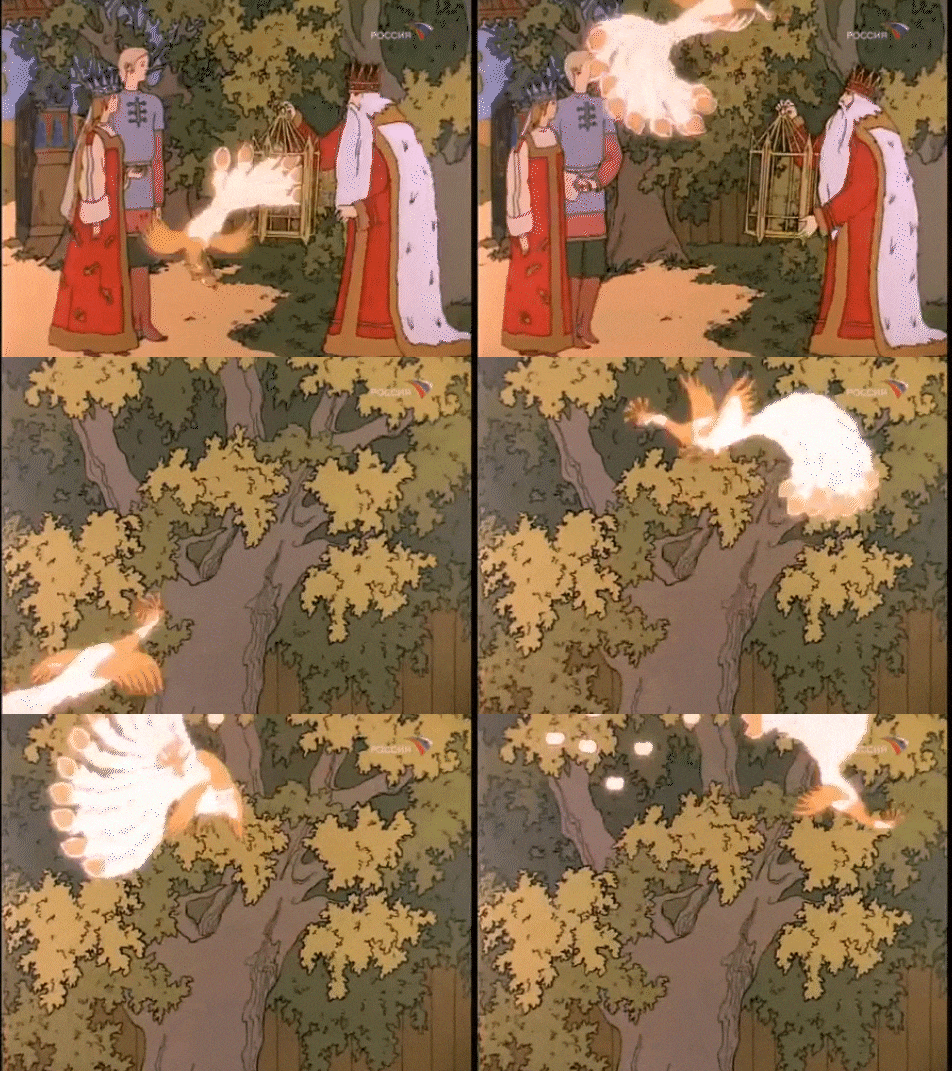
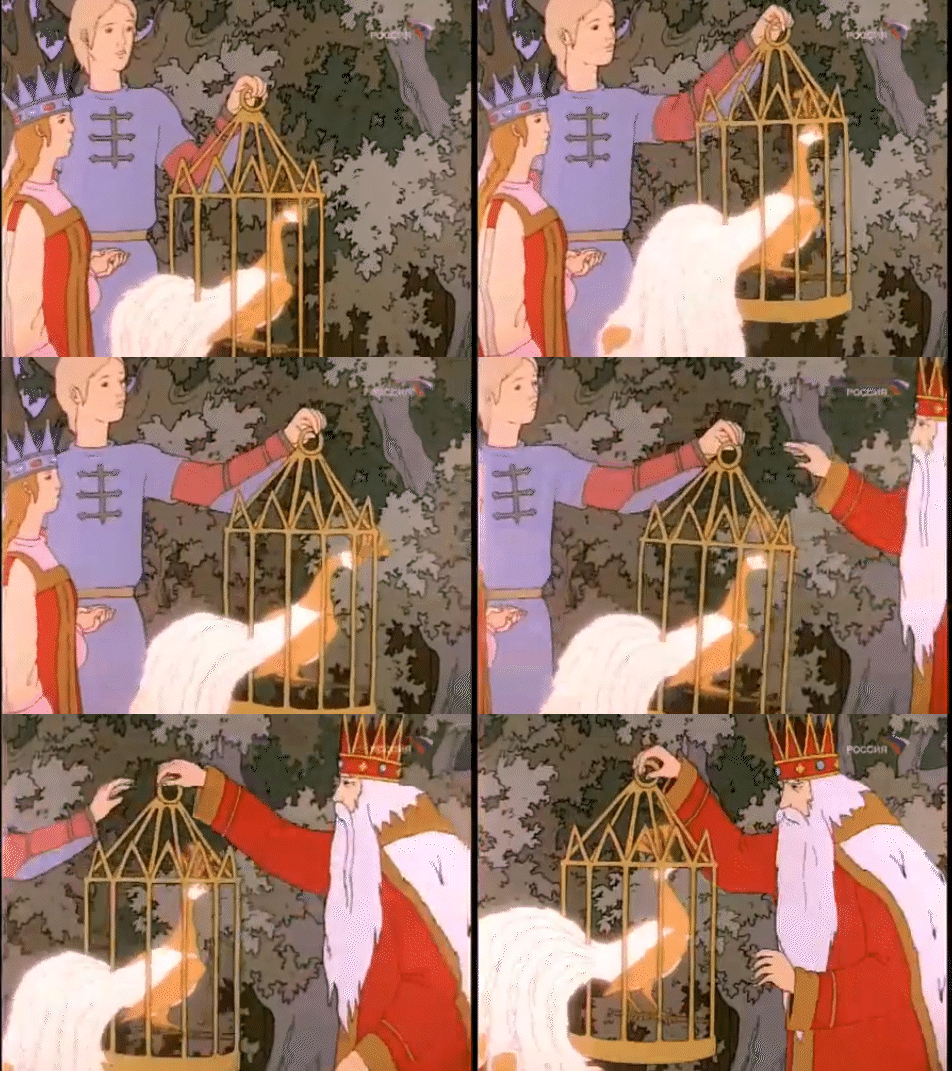
«Ivan Tsarevich and the Grey Wolf» by Galina Barinova (1991)
The research structure is organized not chronologically or by director, but by the function the Firebird performs in the narrative.
— First: the animation «The Horse-Boy» by Ivan Ivanov-Vano (1947); the Firebird feather as the trigger for a chain of tasks.
— Second: the animation «Firebird» by Vladimir Samsonov (1984); the central archetype and the solution to the problem.
— Third: «Ivan Tsarevich and the Grey Wolf» by Galina Barinova (1991); also initiates challenges for the hero, but serves as the main quest.
Key Question: What techniques do the artists employ to repeatedly highlight the Firebird as a central element within the plot and frames of Soviet animation?
Hypothesis: Artists always highlight a character in a story. Consequently, that character never ends up in the background. They are always given character and presence, achieved through various methods depending on the function they serve in the plot. The Firebird is a driving force of the narrative; the hero encounters it, and their fate changes after that meeting. It is a dualistic character—it guides the way while also «incinerating» the characters, yet it ultimately directs and assists them. Its vibrant presence completely overshadows everything around it. This is precisely why it cannot be relegated to the «background»; its role and image are unique.
The Little Horse and the Humpbacked Horse
Evening Moscow, No. 64, 03/17/1948, p. 4.
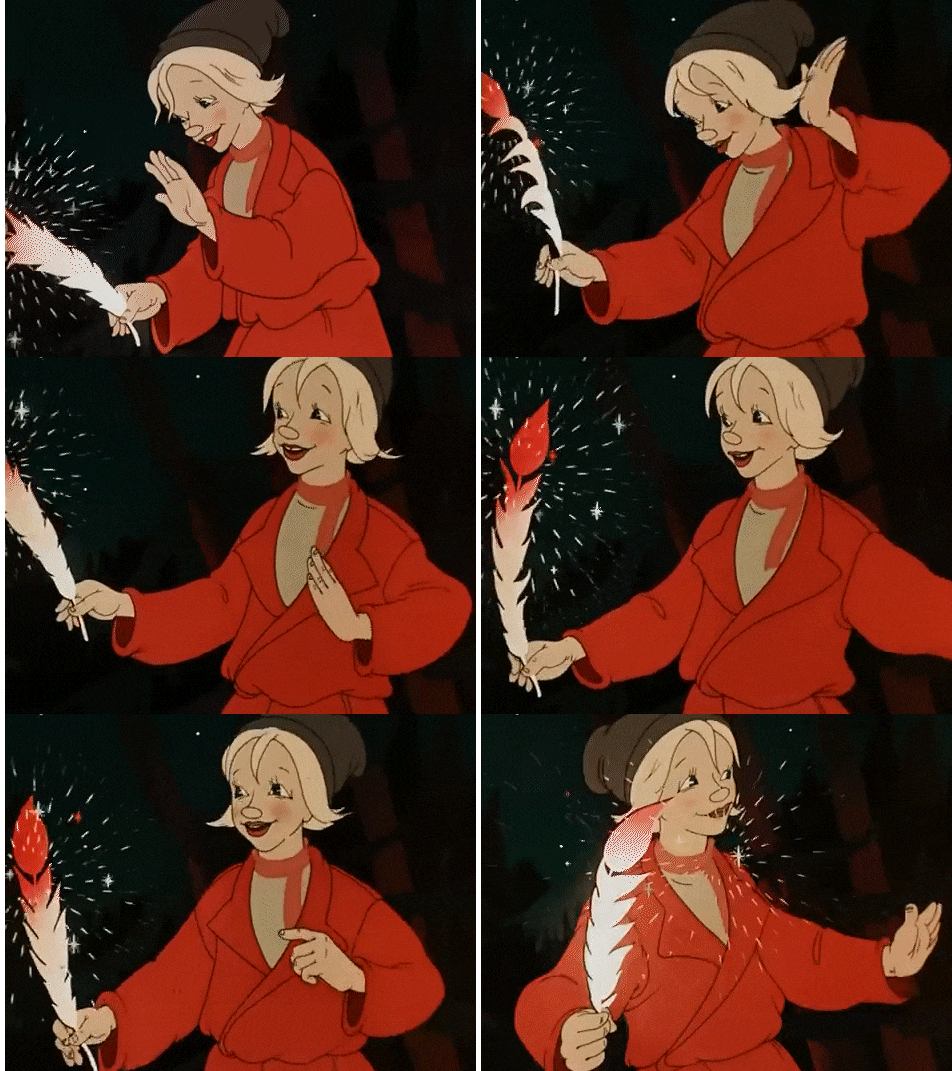
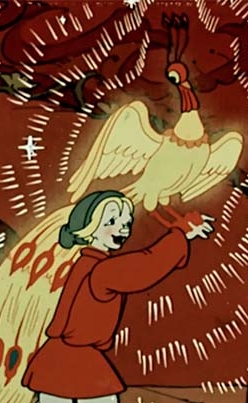
In the animated film «The Little Horseback Rider» by Ivan Ivanov-Vano (1947), the Firebird appears to us not as a character, but as a feather. The feather Ivan finds becomes the central plot element, setting the course for our hero through the Tsar’s assignments. The visual decision was made to depict the feather not as an object, but as a source of light. This is, in fact, a very important key element—the encounter with the Firebird happens indirectly, rather than directly, thus already intriguing the viewers toward meeting the mysterious creature.
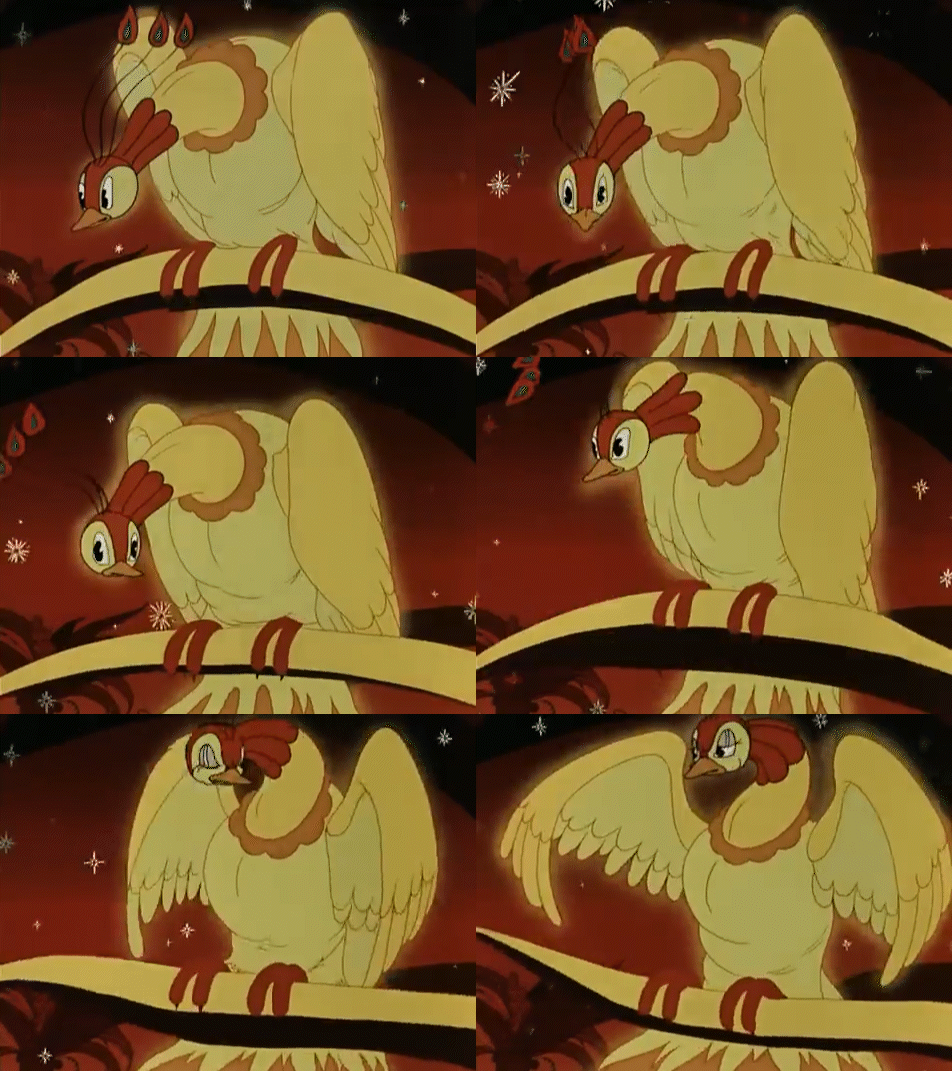
The key point is that we are not seeing a single bird, but an entire flock. Each bird follows its own migration path. While other animated interpretations of fairy tales often feature only one individual in the frame, here the creators chose a different approach. They created an entire «species» that possesses its own hierarchy and natural laws.
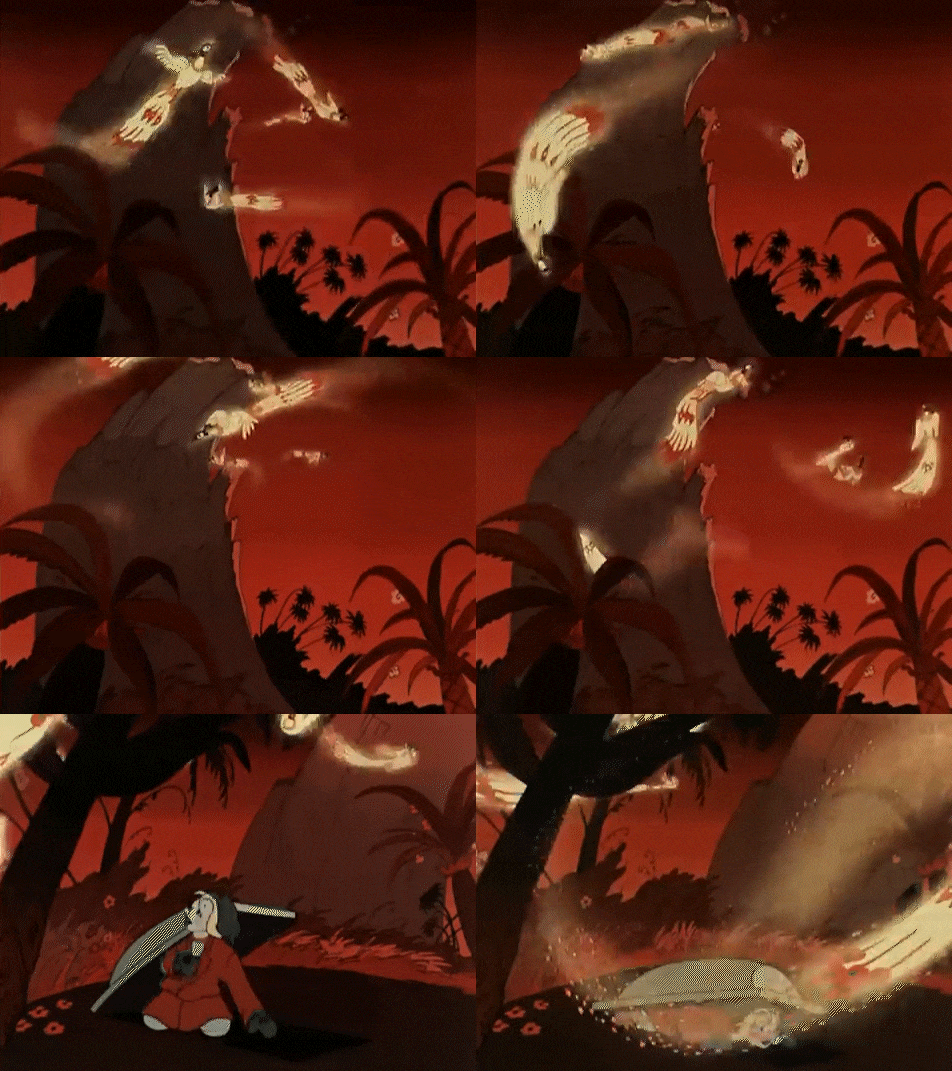
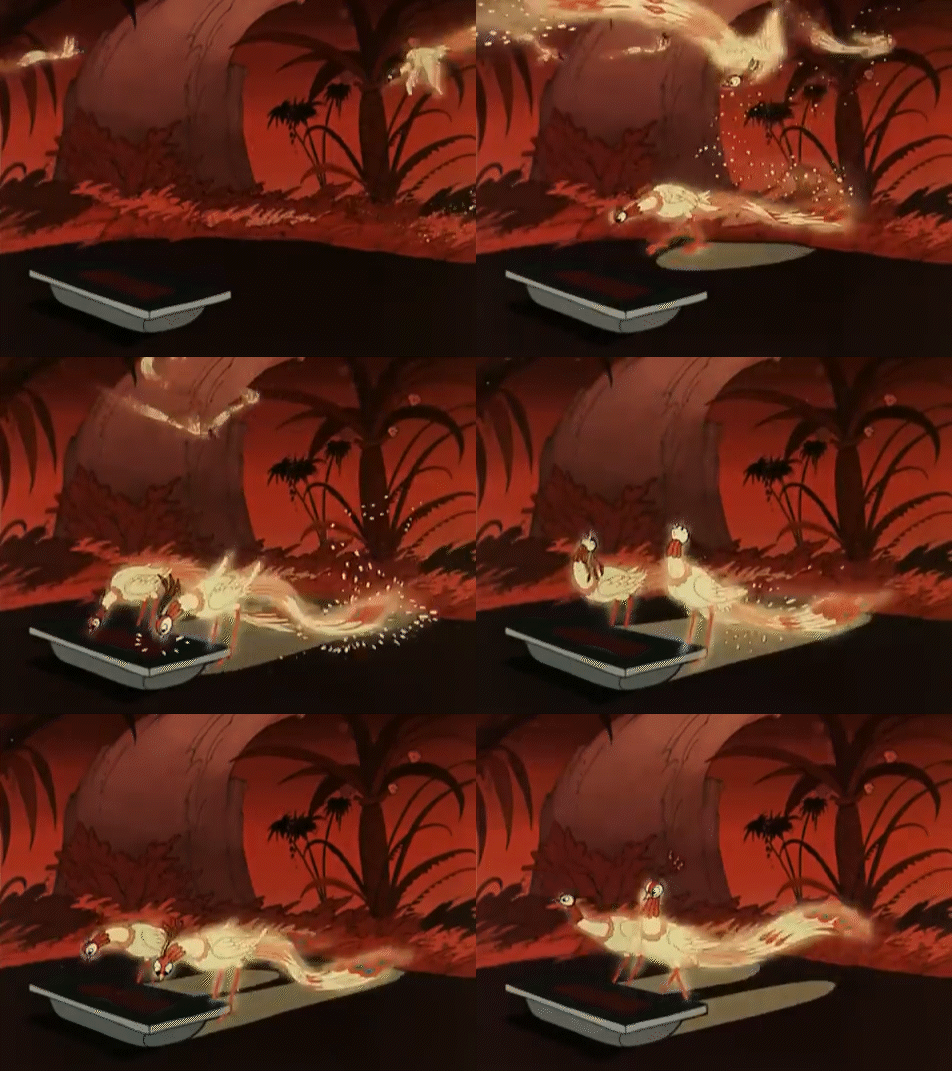
«The Little Horse-Humpback» by Ivan Ivanov-Vano (1947)
This approach resolves many questions: «Why is the bird alone?» «How did it appear?» «Does it live forever?»
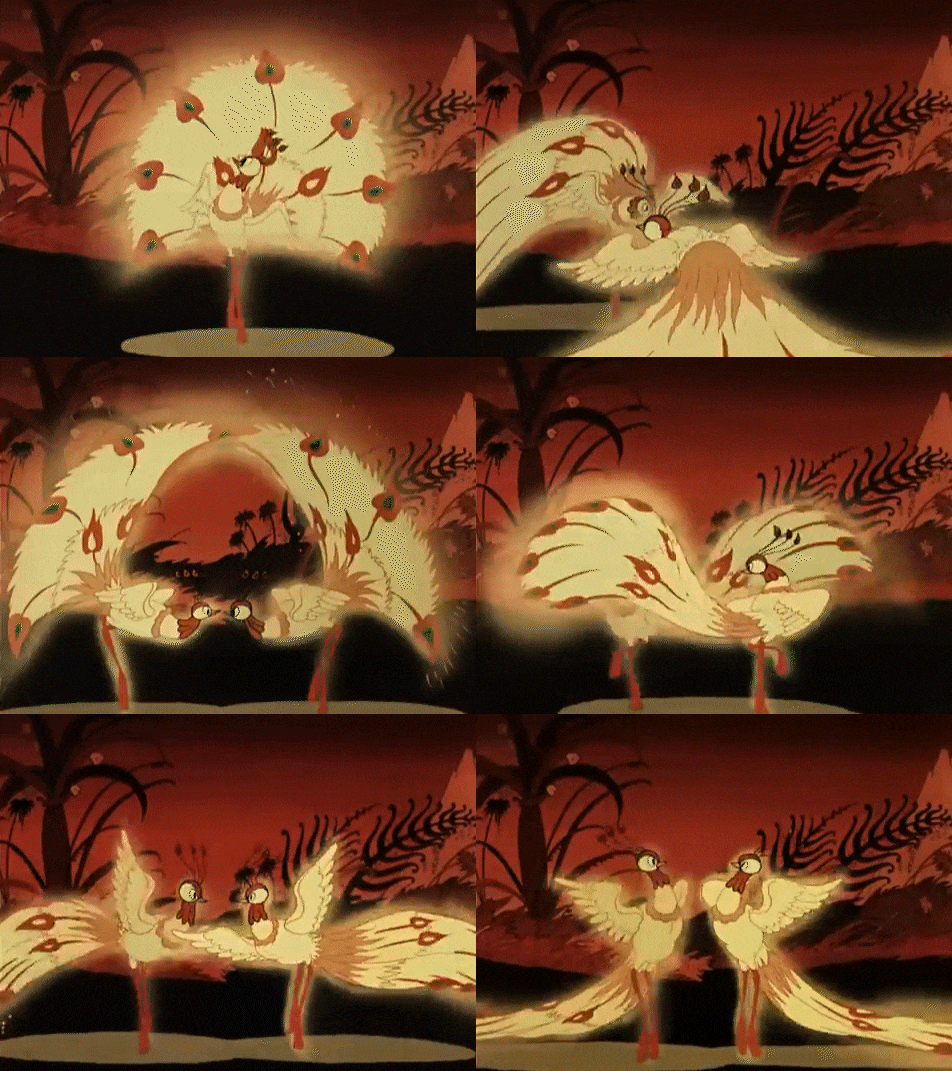
Thanks to this turn, we can observe the mating dance of two Firebirds. The birds' tails have their own plasticity and trajectory of movement, but they do not detach from the body; rather, they are an extension of it.
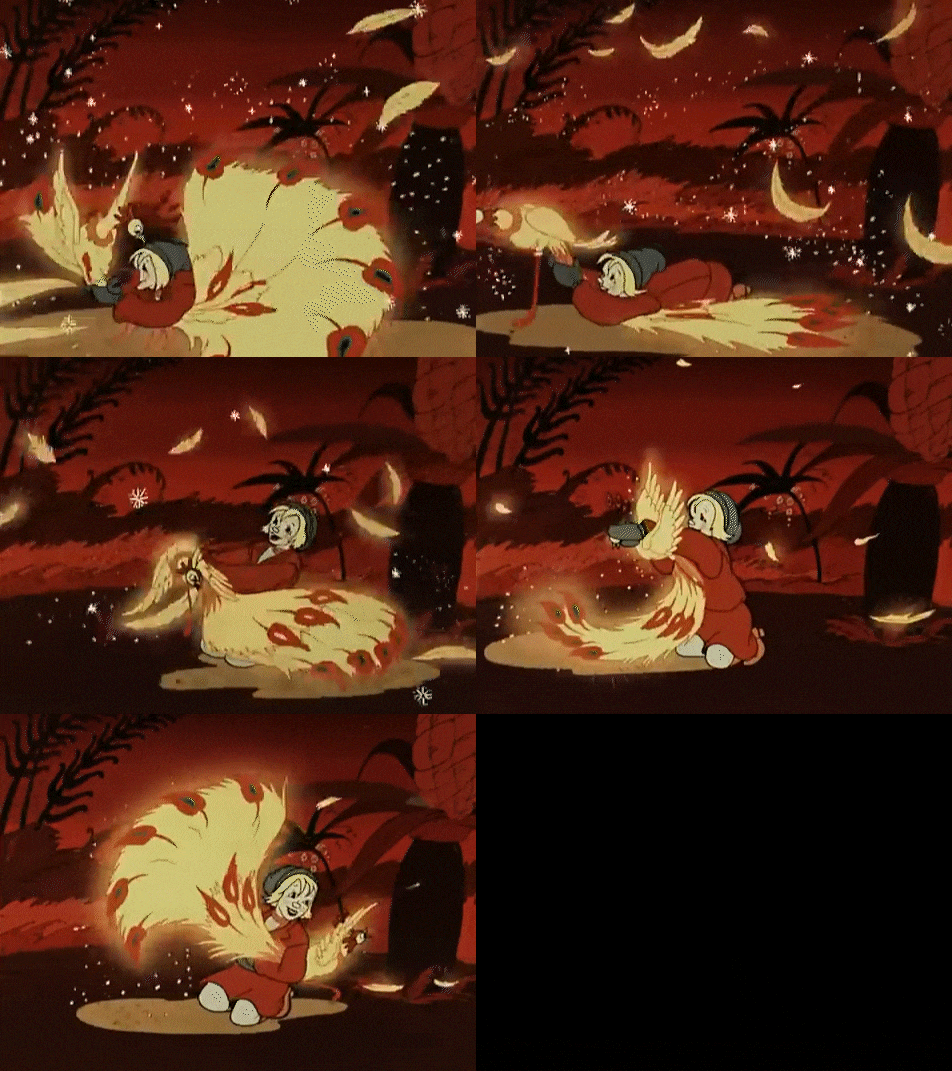
Catching the Firebird happens in a very beautiful and unusual way. To lure the bird, the hero first creates bait, and after an unsuccessful catch, he performs a dance and mimics the bird’s movements, thus attracting one of the individuals. This is a very interesting and significant moment because Ivan doesn’t oppose the mythical world; instead, he tries to fit into it.
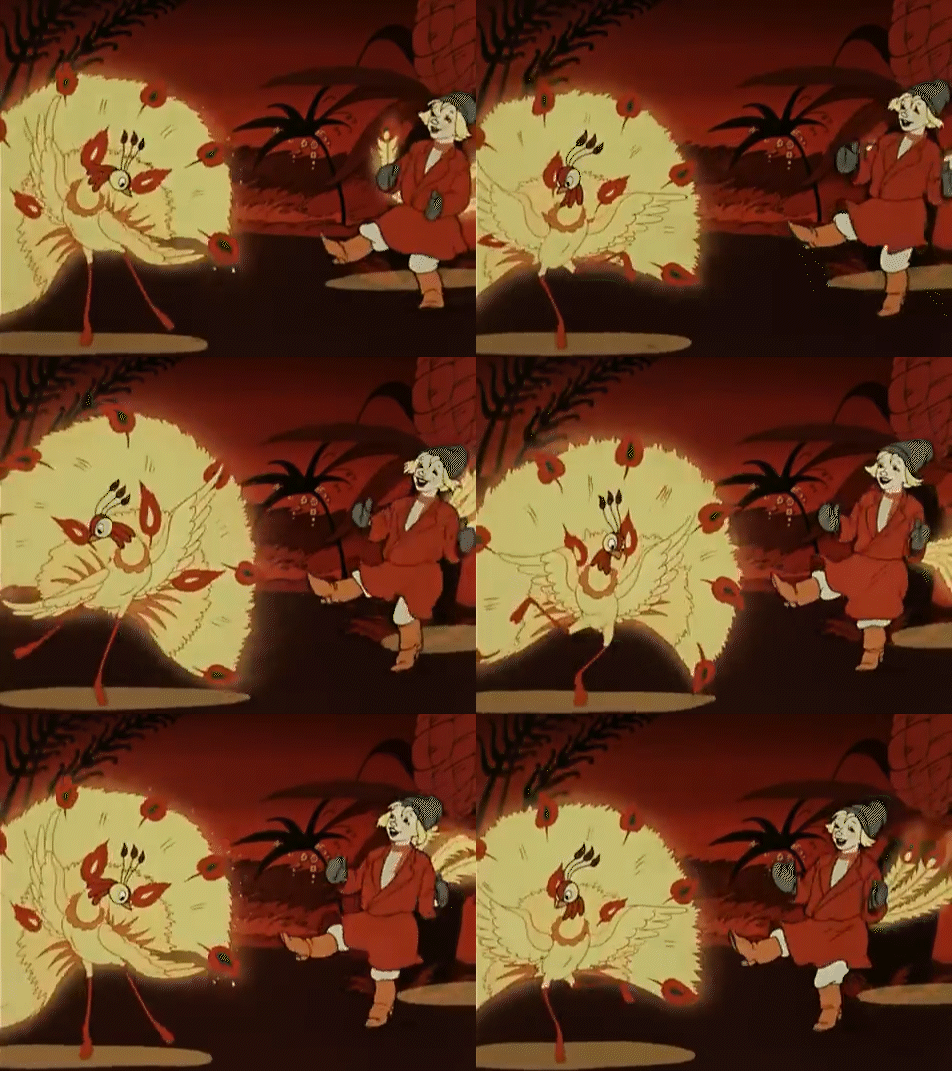
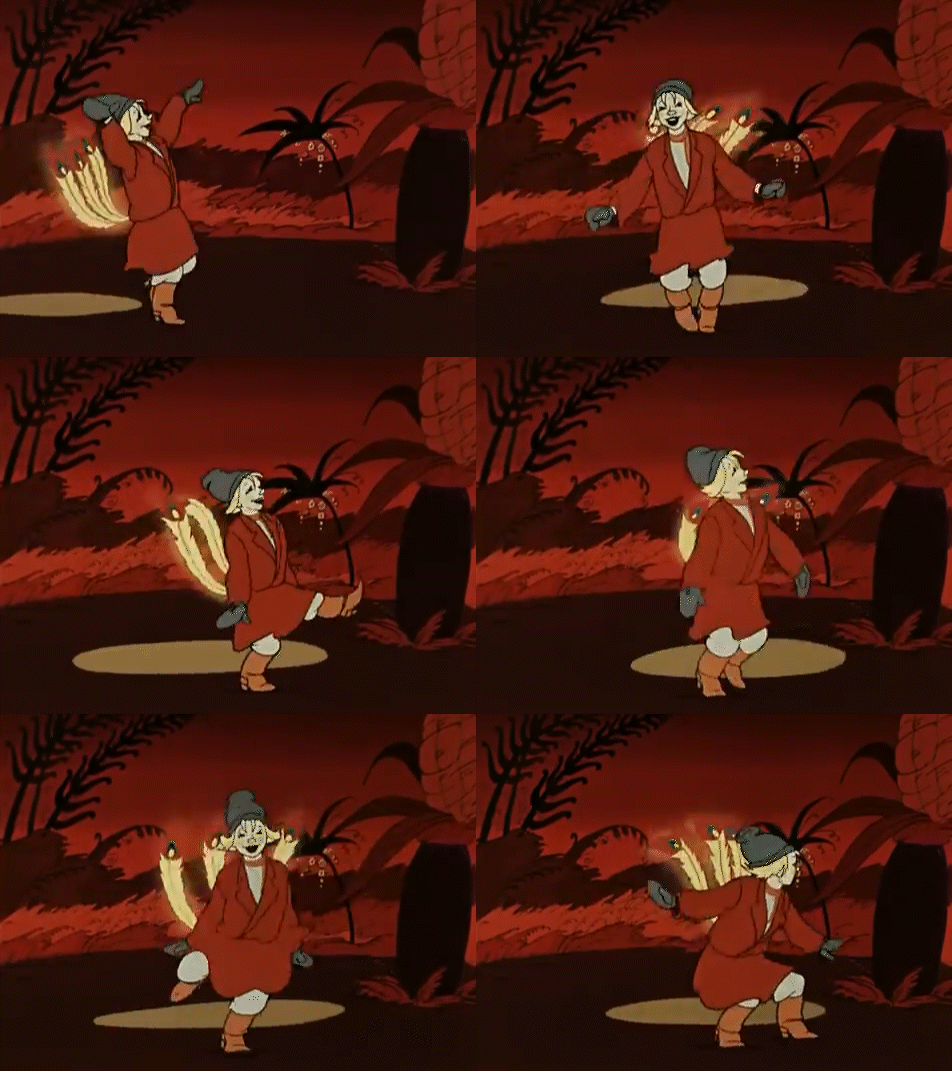
«Konek-Gorbunok» by Ivan Ivanova-Vano (1947)
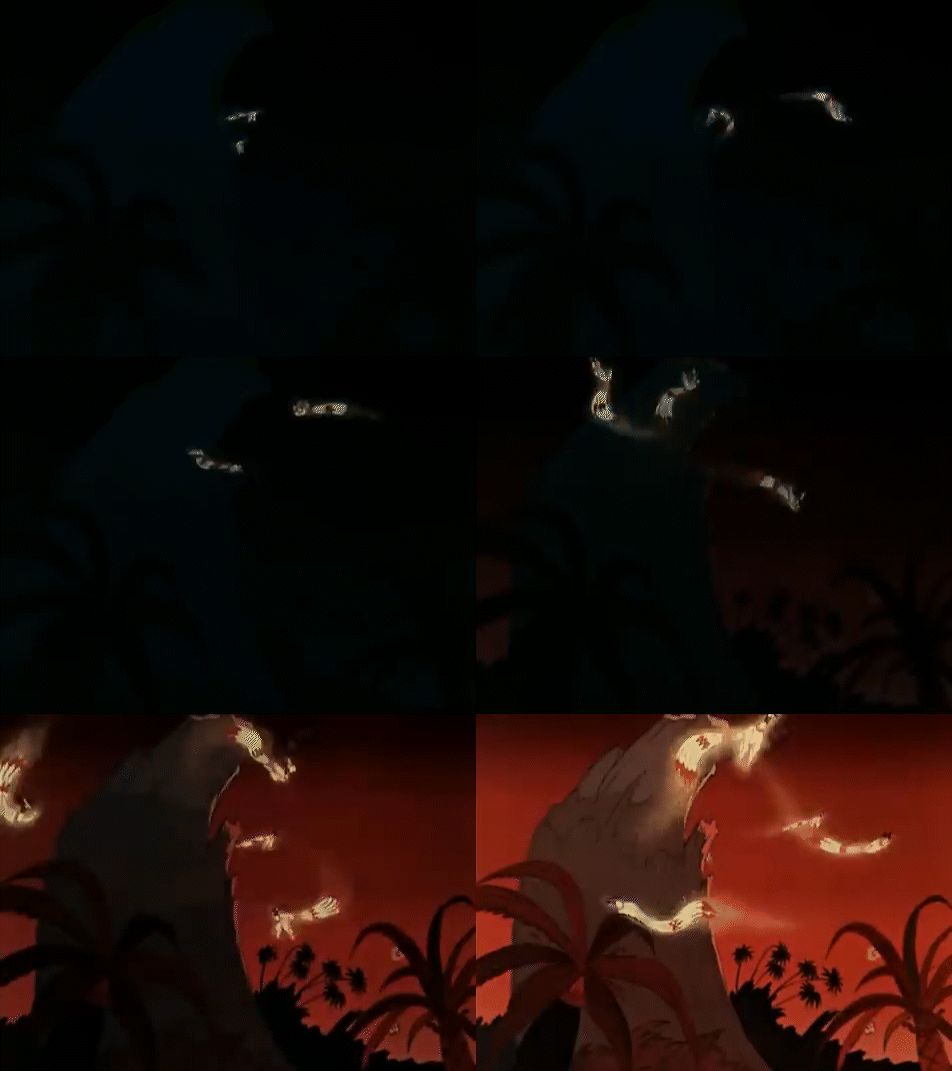
Plastics is one element; the color transfer is the second. The magic of the Firebird is built upon light-color combinations that contrast with the painting’s main palette. In the scene of the capture, the color transfer is resolved through contrast. The night shifts from deep blue to russet after the Firebirds arrive.
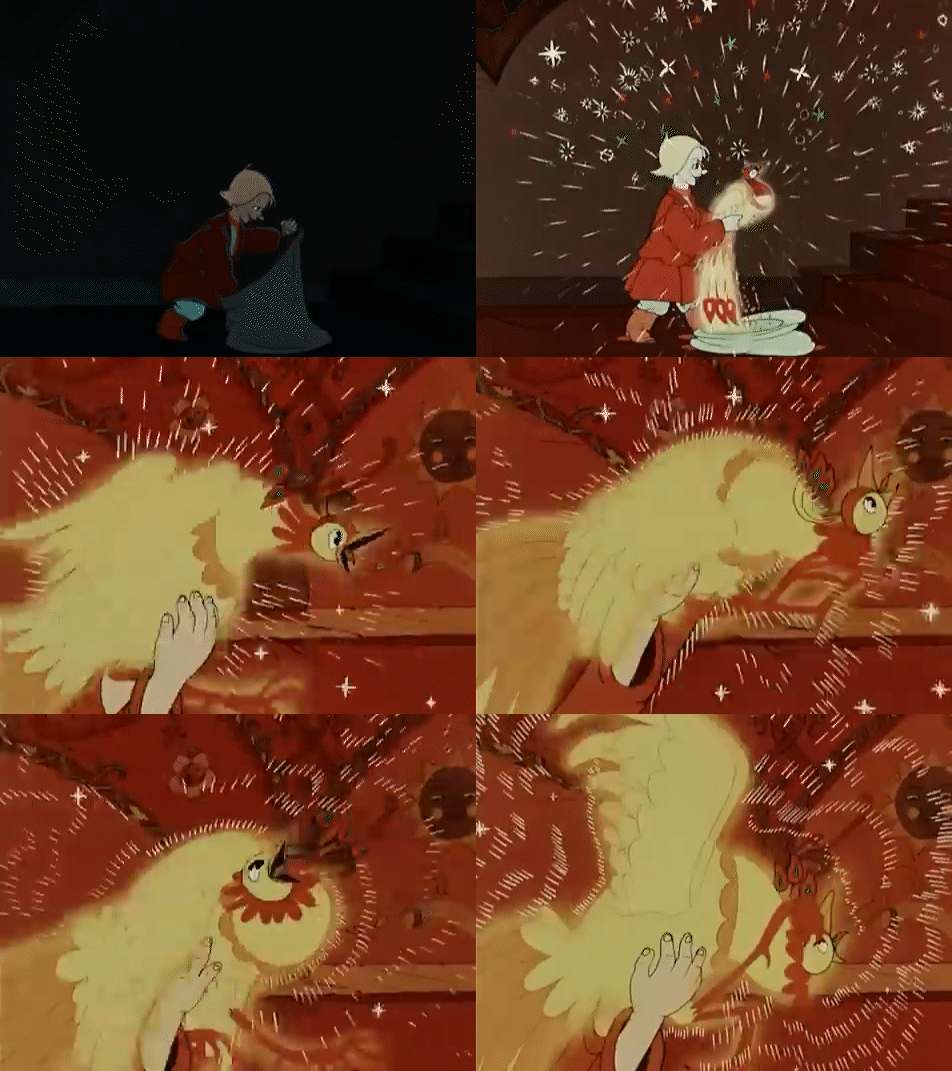
This technique can also be seen in the scene where Ivan finds the feather in the forest and when he brushes the horses at night in the stables. The birds themselves adhere to the logic of luminescence. They are not simply colored in bright hues; they emit light that alters the surrounding illumination. Furthermore, they give off a subtle glow, which also contributes to their luminous effect. Director Ivan Ivanov-Vano recalled that the principle of color contrast was consciously repeated in the «Catching the Firebird» episode after the scene with the feather in the palace, where the flashes of light were also built on a sharp shift in color palette.
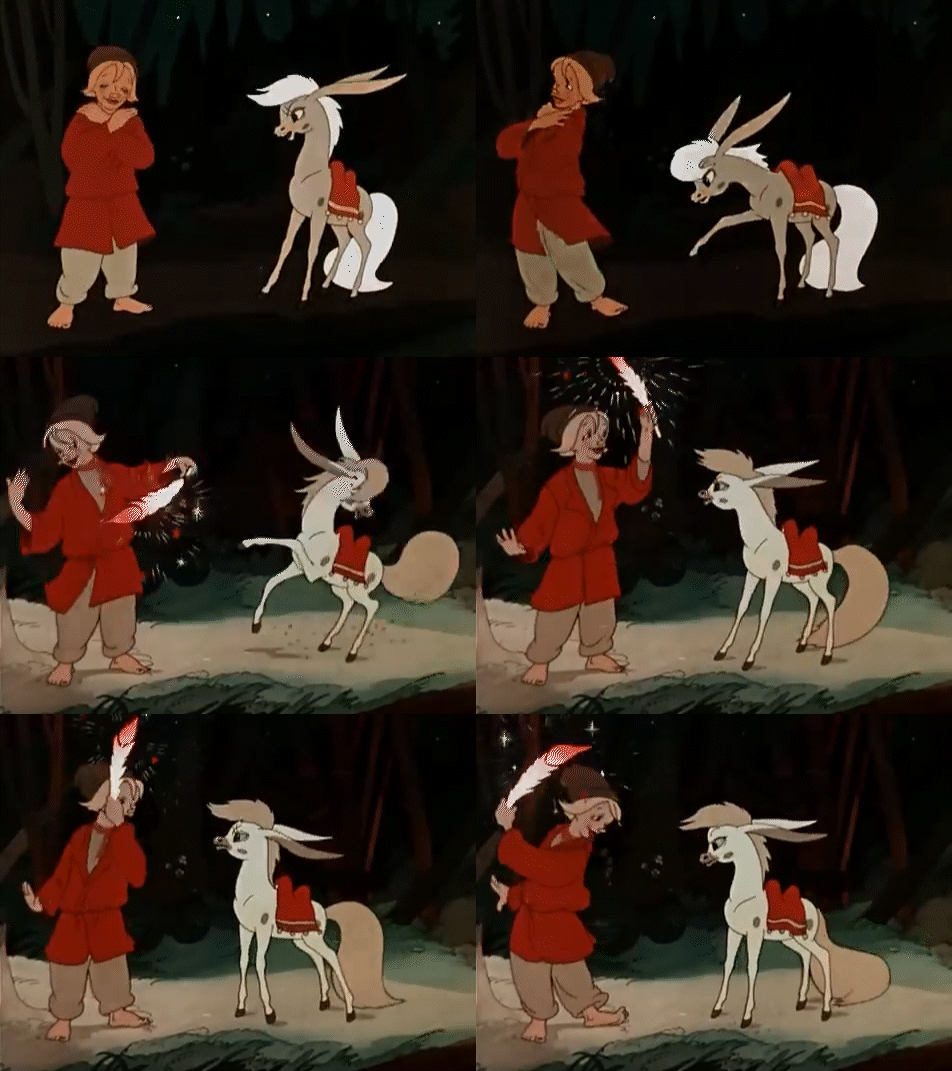
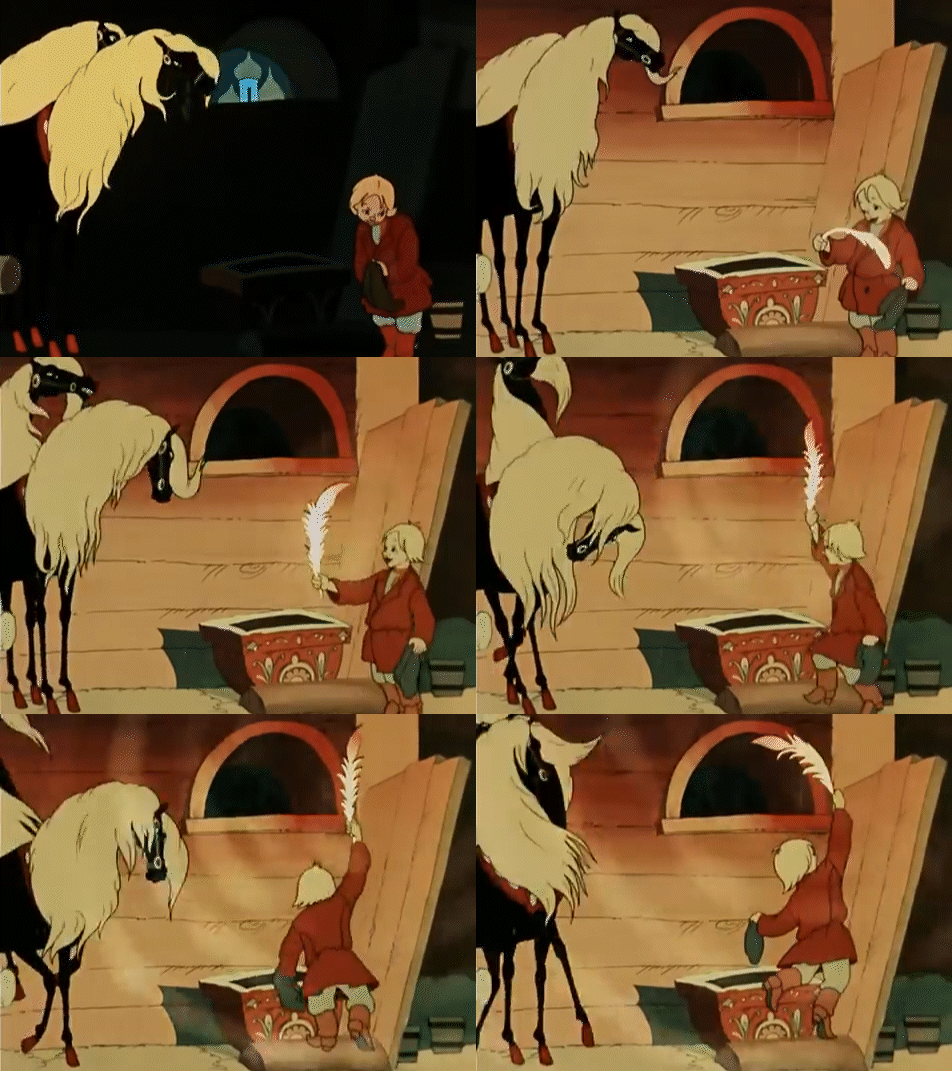
«The Little Horsecutter» by Ivan Ivanov-Vano (1947)
It is important to note that «Konyok-Gorbunok» from 1947 is one of the first full-length color animated films. To capture the full richness of the color palette, it was shot on multi-layer «Agfacolor» film. The artists originally planned to use color to convey the artistic decisions established in the script.
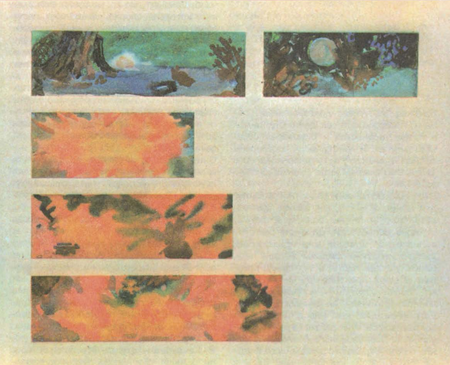
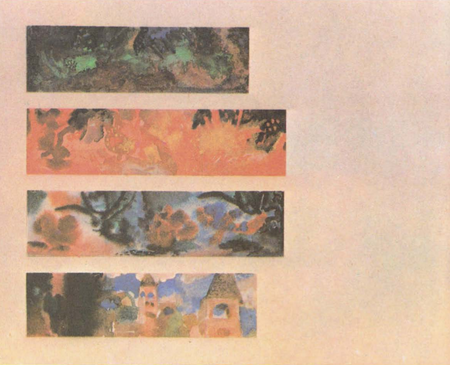
Excerpts from I. P. Ivanov-Vano’s book, «Frame by Frame»
In the 1975 animated film Konyeck-Gorbunok, the Firebird serves the same function as it did in 1947; the only thing that changes is the stylization of the bird itself and the technique used. The feather and the bird are also shown against dark backgrounds, but differently. The colors are duller, and rather than using contrast, the artist attempts to highlight the bird through an image of glowing light surrounding it.
Konyok-Gorbunok 1975
By the 1970s, the original 1947 negative had degraded, and the technology for restoring old film had not yet been developed. Therefore, Ivanov-Vano re-filmed the movie using the surviving storyboards and sketches from the first version. The technique remained hand-drawn, but the production context did its work.