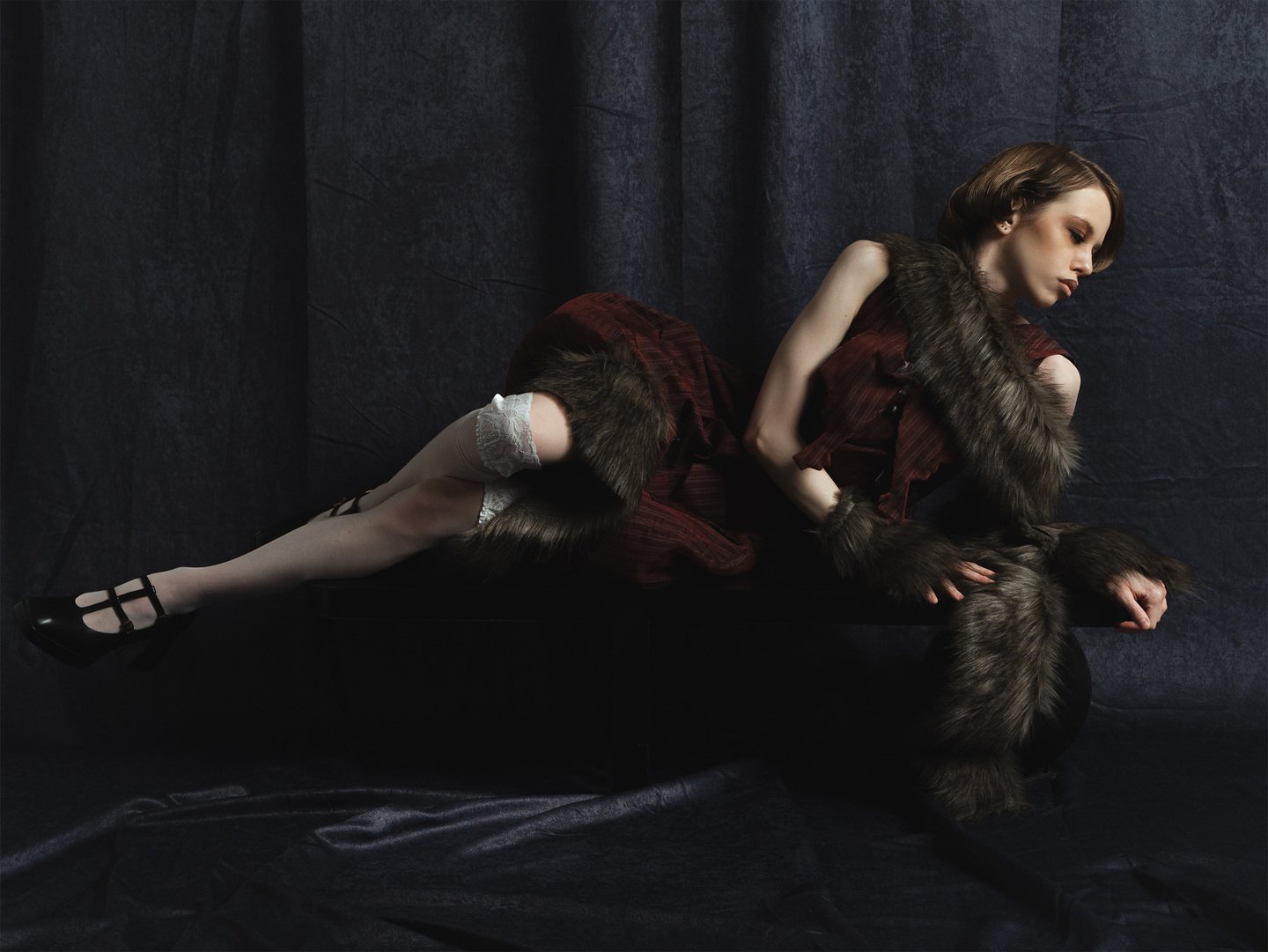
Женщина с пистолетом: коллекция на основе исследования женского образа Америки 20-х годов в визуальной культуре
The America of the 1920s is of particular interest due to the changing gender roles after the First World War, the expansion of women’s political rights, and the development of mass culture.
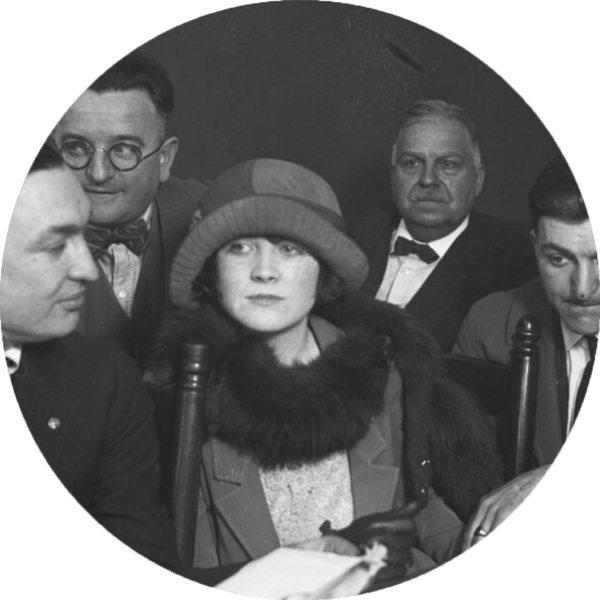
Stories of women accused of murdering husbands or male relatives amidst domestic violence allow for an examination of the conflict between crime, resistance, and the lack of effective protection. Today, this topic remains highly relevant: according to the WHO, approximately 840 million women globally have experienced partner violence or sexual assault during their lives. Using the film Chicago (1927) and its subsequent interpretations as a case study, the research explores how real women’s stories are transformed into criminal narratives and aestheticized figures that combine allure, threat, and public condemnation. This approach allows for a critical re-evaluation of notions surrounding female autonomy, violence, and responsibility within historical and contemporary visual culture.
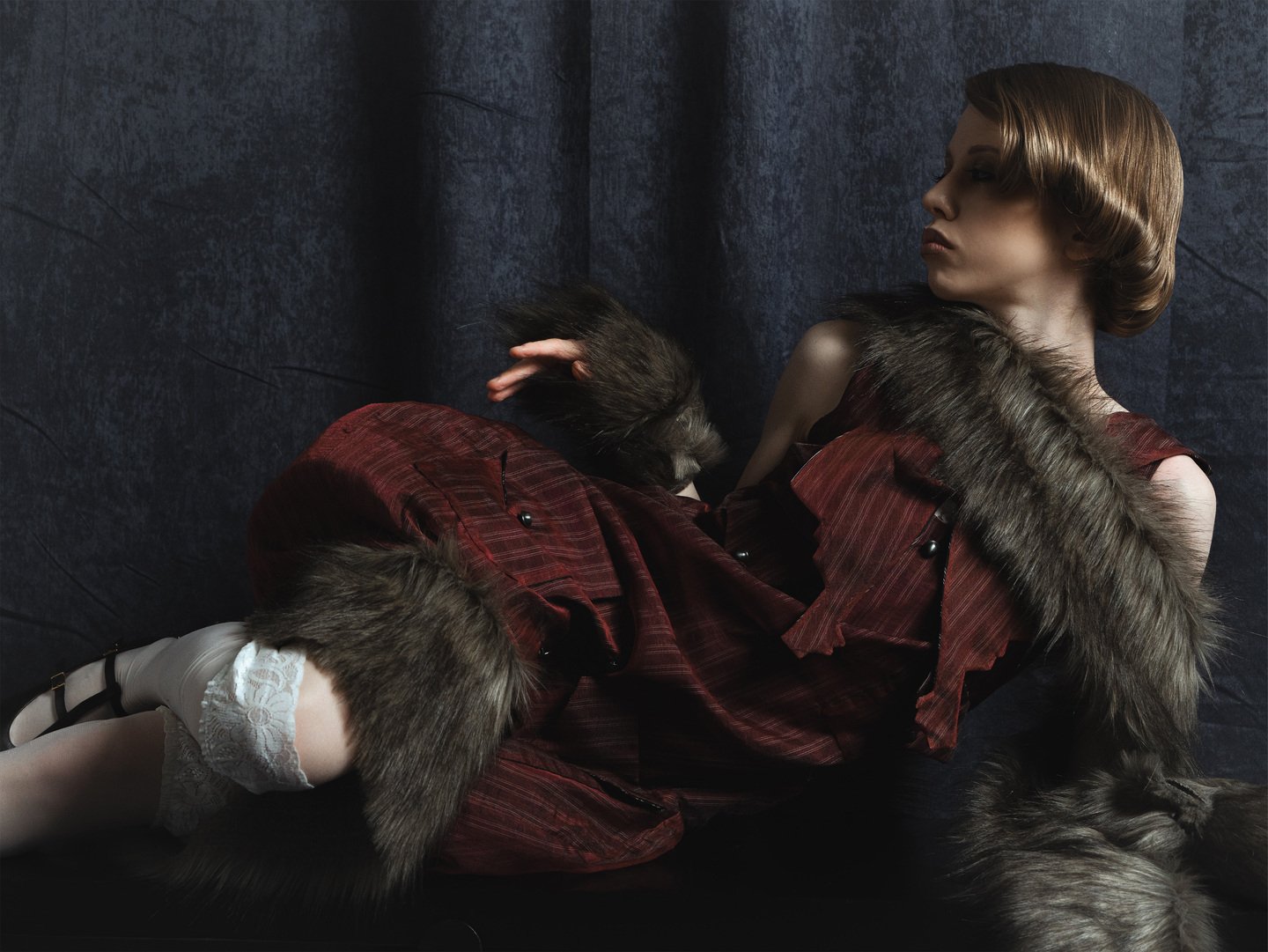
Woman with the Gun
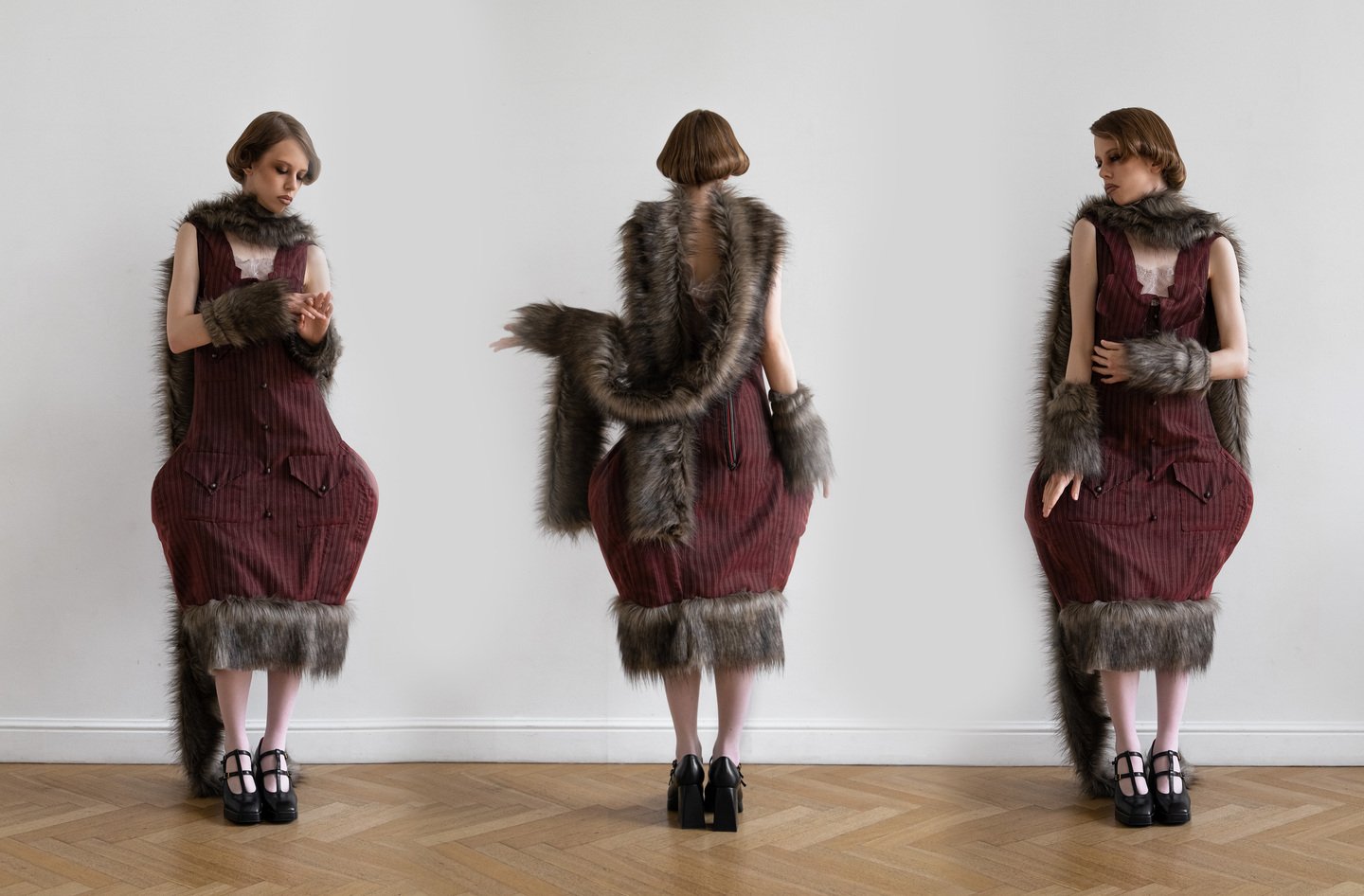
Woman with the Gun—an original clothing collection inspired by the images of women accused of murdering their husbands or partners in 1920s America. The collection blends elements of 1920s women’s wardrobes, silhouettes, details, and color palettes from the American police uniform of the same era, alongside pistol shapes and a striped print referencing prison attire.
Process
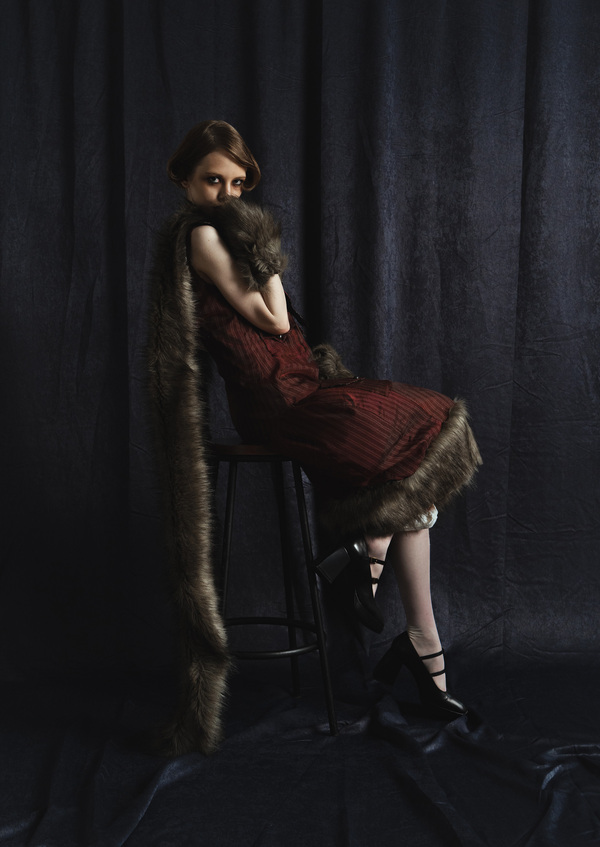
The project begins with an investigation into 1920s America—examining real court cases of women accused of murdering husbands or partners, societal attitudes toward domestic violence, and the shifting roles of women following the First World War. Based on historical documents, newspaper publications, and visual culture, the study explores how the image of the female criminal was constructed in mass culture. The resulting data forms the foundation of the collection’s visual concept, which blends the glamour, beading, and evening silhouettes of the jazz era with elements of prison attire. After sketches are developed, materials are selected, and prototypes are created, the collection is presented through photography and video. Thus, the historical research transforms into a contemporary design statement about the intersection of female resistance, public condemnation, and the visual representation of women.
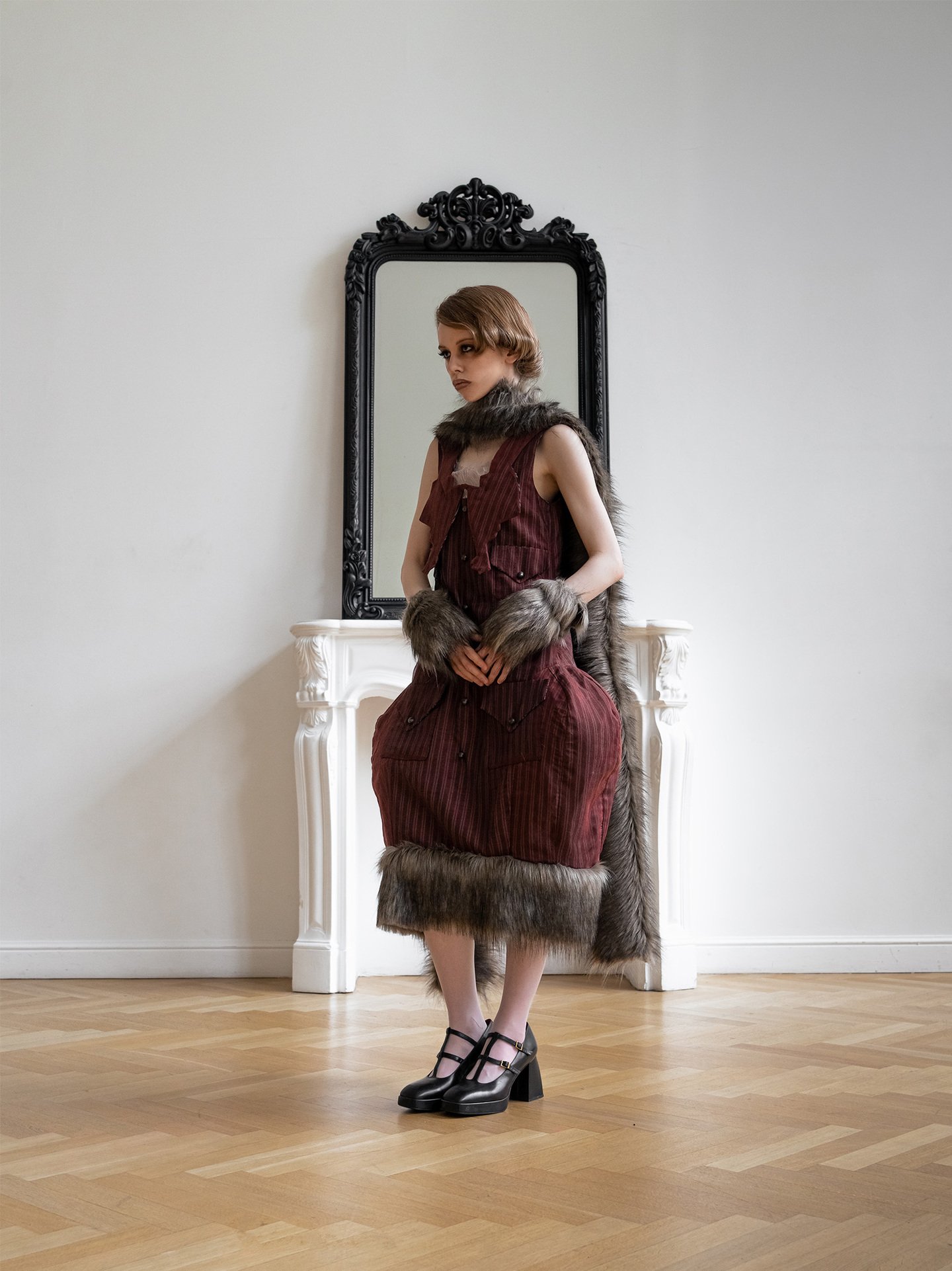
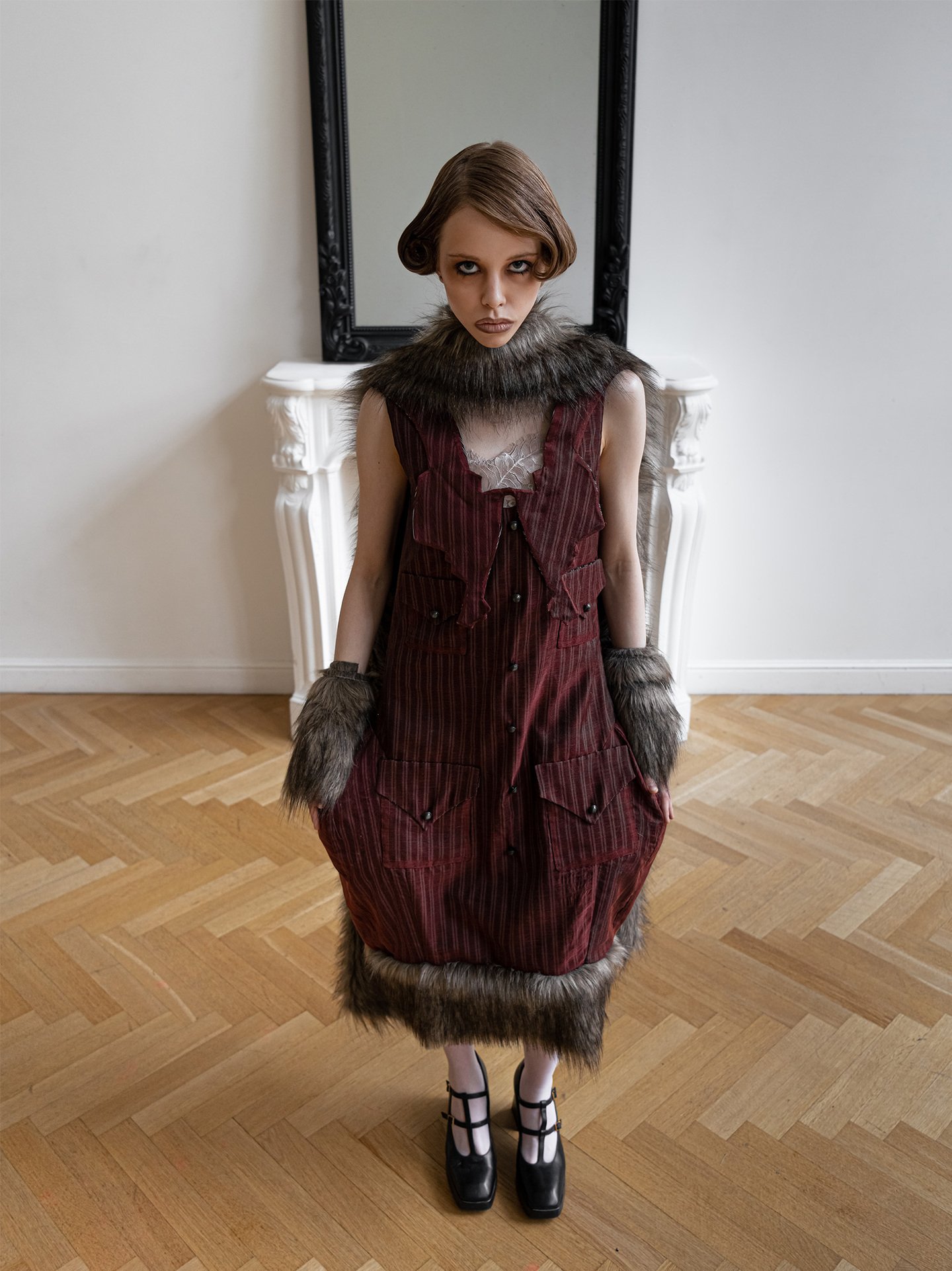
Next step
Following the presentation, the audience can explore the collection through photography and video materials that reveal the connection between the history of American women in the 1920s and contemporary interpretations of their images. Historical sources and visual references that informed the creation of the collection will also be presented for further study. This will allow students to independently investigate the real lives of these women, compare historical facts with their representation in mass culture, and form their own opinions about the boundary between crime, resistance, and self-defense.
Final
Woman with the Gun — a collection on female resistance to domestic violence in 1920s America, exposing the contrast between the era’s glamorous façade and the brutal reality beneath it.