INDEX
- CONCEPT
- THE ARRIVAL OF THE NEW YORK SAMPLE DRILL
- FROM R&B BALLAD TO DRILL BEAT. MY EVERYTHING.
- DANCEHALL IN THE DRILL BEAT — IYKYK
- RAP BALLAD IN THE DRILL BEAT — BEING HONEST
- POP IN THE DRILL BEAT — TALK FACTS
- WHEN A FOREIGN PHRASE BECOMES A HOOK — JHOLIDAY
- WHAT EXACTLY TRANSFERS FROM ONE RECORD TO ANOTHER
- CONCLUSION
- BIBLIOGRAPHY AND SOURCES
CONCEPT
In B-Lovee’s «My Everything,» a fragment from Mary J. Blige’s song is featured, and in his track «IYKYK,» the beat is built around a melody from Wayne Wonder. In both cases, the producers took a sample—a snippet from an existing recording—and integrated it into a new composition. These two tracks initiate an exploration of how early 2020s New York drill engaged with music from other genres.
I’m interested in what happens to a song when only a few seconds are taken from it. The original melody might remain recognizable, but when placed next to other drums and a different vocalist, it is perceived differently. New York drill provides the opportunity to examine this across various examples. Within a single scene, producers incorporated R&B, dancehall, and pop music. I want to understand what each of these genres contributed to the drill’s sound.
I am examining the sample in two contexts—in the song from which it was taken and in the track where it reappears. I am interested in the role it played in the original recording and the role it assumed in the new one. A melody might become the foundation of a beat, a voice might repeat under a verse, or a short phrase might transform into the catchiest part of the song. Using examples from several rappers and producers, I will trace how the sound of New York sample drill was built from these decisions.
I hypothesize that the familiar sample changes the character of the drill track depending on how the producer utilizes it in the beat. If the melody maintains the mood of the original song, it can soften the track’s sound. Conversely, if it contrasts with the drums and rapping, this tension can become the central feature of the composition.
HOW THE NEW YORK SAMPLE DRILL EMERGED
From Brooklyn to the Bronx and Queens. By the early 2020s, New York drill already had a recognizable sound. In Brooklyn, it was popularized by Pop Smoke and producer 808 Melo. In their tracks, the deep bass glided between notes, while short hits landed in uneven groups. On this rhythmic foundation, rappers and producers from the Bronx and Queens began building tracks around familiar melodies and voices.
A familiar recording becomes part of the beat. A sample is a fragment of an existing recording. If the same fragment repeats in a loop, that repetition is called a loop. In sample-driven music, the choice of material became important: producers increasingly took fragments of songs that listeners might recognize. Sometimes the melody played underneath the verses almost constantly. Other times, a short vocal phrase would come to the forefront. How a familiar recording worked within the new track depended on this.
Leave room for samples: one of the artists who developed this approach was Shawny Binladen from Queens. In 2020, he released a mixtape in which the beats were built around samples—Merry Wickmas. Shawny often raps quietly, almost in a whisper. This delivery leaves space for other sounds. In interviews, he explains that he tries to «let the sample breathe» [1]. For him, it is important that the melody from the original recording remains noticeable alongside his voice.
Shawny Binladen and the members of Yellow Tape Boys. Photo by GShotEm.
How Soul Found Its Way into Drill: In WickSeason, Shawny Binladen uses a fragment from «Footsteps in the Dark» by The Isley Brothers. This is a soul recording from 1977. In the new track, it is set alongside the bass and drums of drill. This example demonstrates how a producer can maintain the softness of the original material while completely transforming the surrounding rhythm.
Shawny Binladen. Photo by Antoine Ducham.
The song they listened to at home: for producer Cash Cobain, familiar recordings often come from everyday life. For example, for «My Everything,» he took a song by Mary J. Blige, which his mother loved. When B-Lovee heard the vocals in the finished beat, he also remembered his mother’s music. As a result, the same recording was familiar to both the producer and the rapper before they made the new track.
Cash Cobain. Photo by Alex Hodor-Lee.
From the stage to the first breakdown: in My Everything, Mary J. Blige’s voice meets drill rhythm and rapping B-Lovee. This track will kick off a detailed analysis. I will examine which fragment Cash Cobain took from the song «Everything,» how it repeats in the beat, and how it shifts the mood of the track.
FROM R&B BALLADS TO DRILL BEATS. MY EVERYTHING.
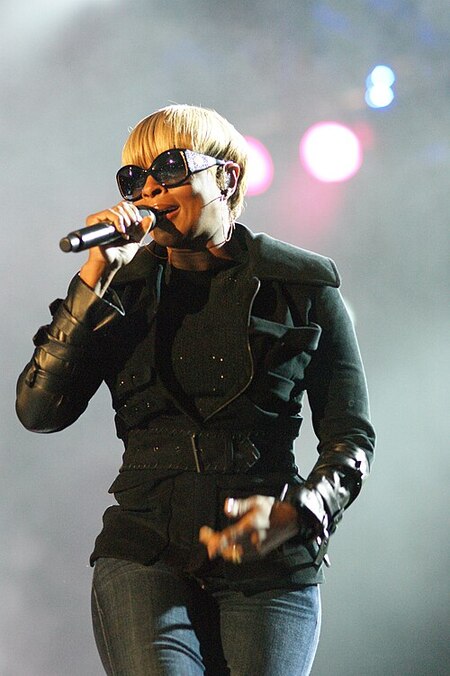
The original song is «Everything» by Mary J. Blige, released in 1997 on her album Share My World. It is a love song featuring a soft guitar riff and smooth vocals. It already contains a link to earlier music, as the composition utilizes material from «You Are Everything» by The Stylistics. Years later, a segment of this same musical line would appear in New York drill music.
Mary J. Blige at the Bumbershoot Festival, 2010. Photo by Amber.
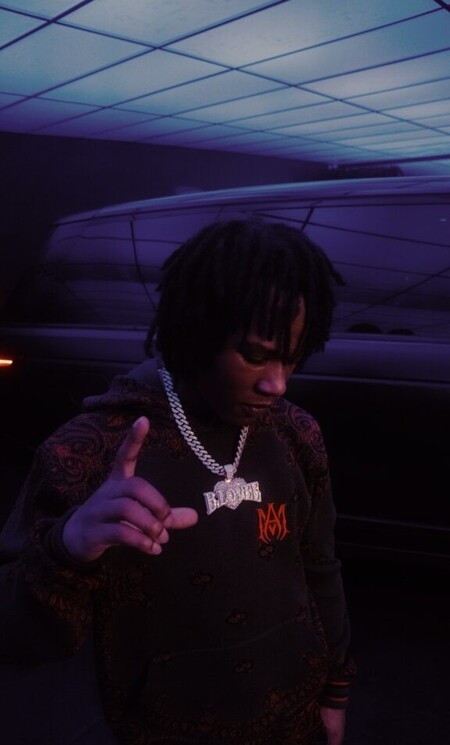
In 2021, B-Lovee released «My Everything.» Cash Cobain took a vocal snippet from Mary J. Blige for the beat, along with a guitar melody from her recording. These sounds took on a new role. They underpin the melody in a track where B-Lovee’s vocal performance is front and center. The recording now features two distinct voices—one singing, the other rapping.
B-Lovee. Photo by Eddie Cheaba, 2022.
How Cash Cobain Chooses Music: In the previous post, B-Lovee shared that he recognized a song in a beat that his mom used to listen to. Cash Cobain has a similar habit of drawing on recordings familiar to him since childhood. This helps explain the abundance of R&B in his beats. In an interview, the producer described his approach like this:
«When I create something with an R&B influence, I tend to draw inspiration from the music my mother played—music that resonates with an older audience» [2].
What moved from one recording to the next: Cash Cobain sped up the vocal fragment and guitar melody. In the song «Mary J. Blige,» her voice drives the composition—she sings both the verses and the chorus. A short clip of her part appears in the drill track. It returns in the beat to support B-Lovee’s rapping. Thus, the voice that was the primary focus in the original song becomes part of the musical accompaniment.
The vocals and guitar from «Everything"—with Cash Cobain speeding up the fragment—become a recurring part of the beat.
In «My Everything,» the softness of the vocals and guitar remains. Alongside them, Cash Cobain places sharply defined drums, while B-Lovee raps in short, accented phrases. The singing voice stretches out, and the rap emphasizes individual words. Due to this contrast, the sample softens the melodic part of the track while simultaneously making the crispness of the rapping more noticeable.
Three layers that hold the contrast in My Everything:
Sample — smooth vocals and guitar melody; Drums — sharp accents; Recitative — short phrases with emphasized words.
A familiar sample can draw people from other genres into a drill track. B-Lovee noticed this through the reception of his releases. In his story, song recognition became one of the reasons his rap appealed to older listeners.