«Photography must have a mystery. Otherwise, the ambiguity of its perception will be lost, ” — Boris Smelov
There are cities whose soul resides not in the granite paving stones or the symphony of facades, but in the in-between spaces—in the trembling light of a lamppost on wet cobblestones, in the phantom breath of fog over the Neva, in the silent dialogue between the modern age and the past. St. Petersburg is precisely such a city. And there was an artist who managed not only to see this soul but to capture it onto the plane of photographic paper, transforming a fleeting moment into an eternal image.
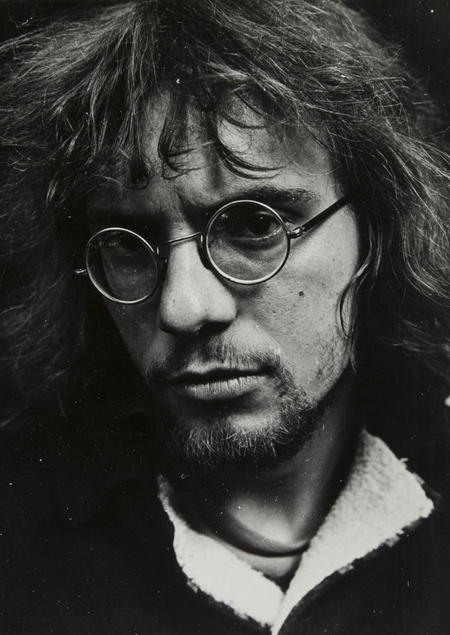
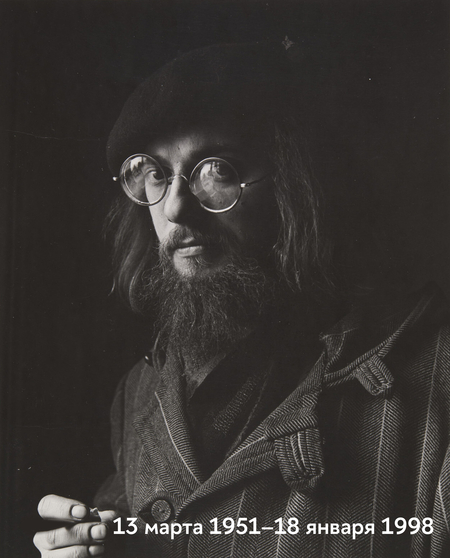
Boris Smelov, «Pti-Boris”—the founder of unofficial Soviet photography and a delicate lyricist with a camera in hand.
His legacy is not an archive of a bygone era, but a timeless, „frozen poetry“ where light serves as the primary narrator. Under the pressure of ideological constraints, when art was expected to serve solely propaganda and agitation, Smelov created his own alternative Leningrad—a mythic city, a city of memories, a city of dreams.
Smelov successfully captured on film that «Dostoevskian St. Petersburg» which researchers and critics had written about. His photographs recreated an atmosphere of a double life, torn between a grand future and a forgotten past, between the anticipation of happiness and the sorrow of loss. He photographed not the ceremonial «Lenin’s City,» but an intimate, enclosed, almost domestic Petersburg. His shots captured streets filled with silence, alleyways preserving the secrets of vanished eras, and communal apartment rooms burdened by want and boredom.
It was in this approach that Smelov’s affinity for the phenomenology of «Dostoevskian-ness» was revealed. The writer and photographer converged on one point—both searched for the hidden truth about the human soul, about pain, loneliness, and contradictions. Smelov immortalized the city of Dostoevsky, reflected in the faces of passersby, the somber apartment entrances, and the secluded corners of courtyards. His landscapes are an attempt to capture the glimmer of the Eternal City.
Yet, the most important thing is that Smelov did not document reality; he recreated it, finding magic in the mundane and revealing eternity in the momentary. This was a triumph of artistic vision over the conventions of officialdom. As a result, a new aesthetic was born—tender, melancholic, piercingly beautiful—which has forever entered the pantheon of Russian art as a standard for artistic photography.
The research is structured to systematically reveal Boris Smelov’s artistic vision, his worldview, and his connection to «Dostoevskianism.»
The study utilized original archival materials, publications in specialized journals, and reminiscences from Smelov’s colleagues and students.
Boris Smelov is one of the key figures in Soviet photography of the second half of the 20th century. His work reflects significant cultural processes and societal shifts during the Khrushchev Thaw and the era of late socialism. Smelov’s photographs are distinguished by profound artistic imagery, documentary precision, and emotional depth, revealing the inner lives of Soviet people from that period.
Sections:
— Exterior and Interior — Leningrad—a city-myth, a city-memory, a city-dream — Portraits — Conversation about life through still life — Circumventing censorship — The spread of Pyty-Boris’s work
How did Boris Smelov manage to create universal urban images, overcome Soviet censorship restrictions, and engage in a dialogue with world photography?
«I consider myself a representative of emotional, intuitive photography, and when I shoot, I trust my feelings more than preconceived notions. However, don’t mistake this for mysticism—many of my photos are dreams, and sometimes, years later, I suddenly see them in reality. And it’s a joy when the camera and film are with me at those moments,» — Boris Smelov
External and internal
Boris Smelov’s photographs, capturing sculptural groups and ancient figures, have become true icons of «Dostoevskianism» in photographic art. It is in these images that the main characteristics of his creative touch and his unique ability to transform an ordinary scene into a genuine parable are reflected.
Apollo with a spider, 1978
The ancient head of a philosopher, situated amidst the foliage of the Summer Garden, embodies the ideas of tragedy, the attainment of wisdom, and the inevitability of decay. The vegetation encroaching upon Seneca’s face suggests a loss of orientation in the modern world. The feeling of helplessness and disillusionment in the search for a stable foundation strongly resonates with the problem of a Dostoevsky protagonist seeking truth and confronting the indifference of his surroundings.
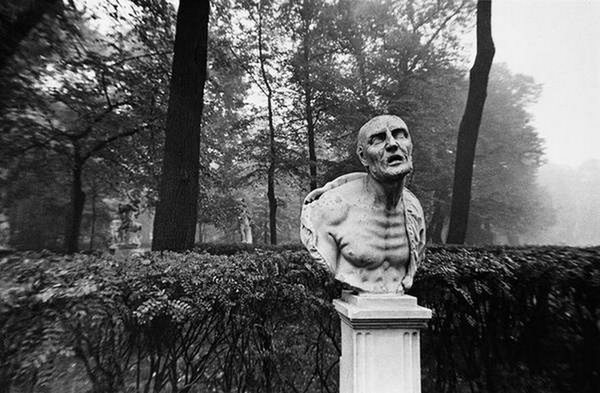
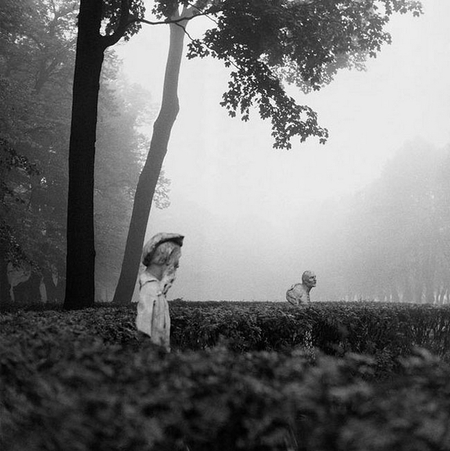
Seneca, 1970 / Morning in the Summer Garden, 1972
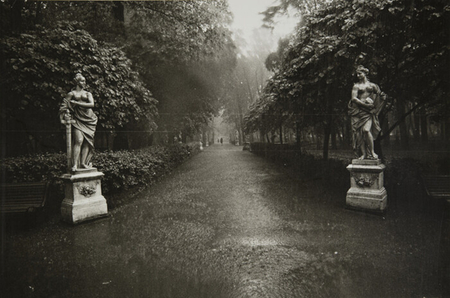
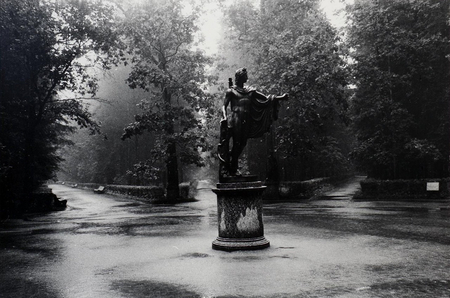
Summer Garden, 1979 / Sculpture, 1980s
Saint Petersburg, 1996
The photographs of the sculptures seem to reveal an internal crisis—an awareness of personal catastrophe, the inability to maintain the height of ideals, and the necessity of accepting earthly conditions.
Leningrad—a mythical city, a city of memories, a dreamlike city
Boris Smelov’s landscapes of Leningrad possess a layering and rich semantics that make them among the most compelling elements of his work.
A characteristic feature of Smelov’s Leningrad landscapes is the creation of an atmosphere of mystery and mysticism. He favored photographing foggy days, early morning hours when mist covers rooftops and gray tones envelop the streets. This quality lends his photographs a poetic quality and draws the viewer into a unique world.
Almost all the landscapes are rendered in shades of gray, black, and white, which intensifies the impression of the urban environment. The softness of the gray tones imparts a dreamlike gentleness to the buildings, streets, and canals, sometimes bordering on melancholy. This choice of color adds not only mystery but also tenderness and fragility to the city’s image.
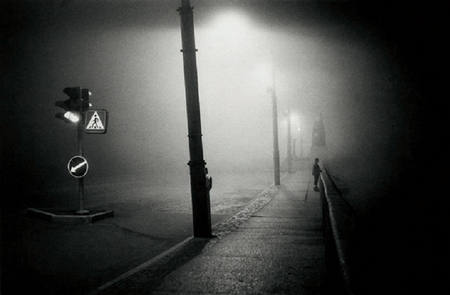
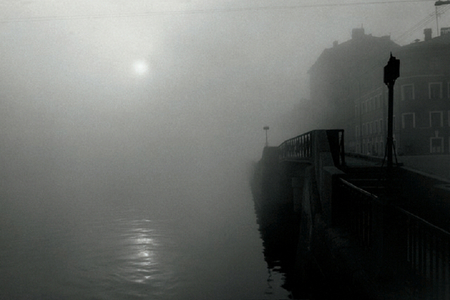
Fisherman, 1985 / Path in the Fog, 1985
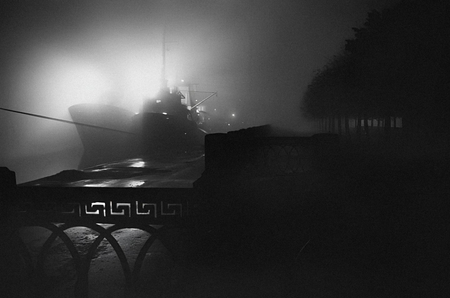
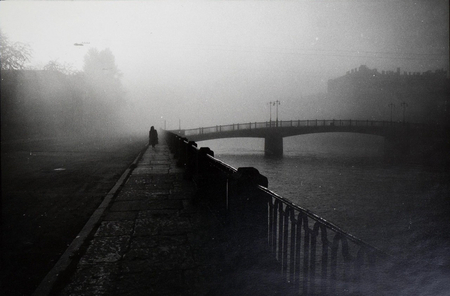
Ships at Lieutenant Schmidt Embankment, 1985 / Fog, Leningrad, 1980s
He knew how to compose his photographs to draw attention to the horizon line, the horizontal lines of roofs and avenues, and the vertical lines of facades and arches. Boris constructed his compositions so that the viewer’s eye would glide smoothly along the lines, immersing itself in the harmony of space and proportion.
Winter Leningrad, 1985
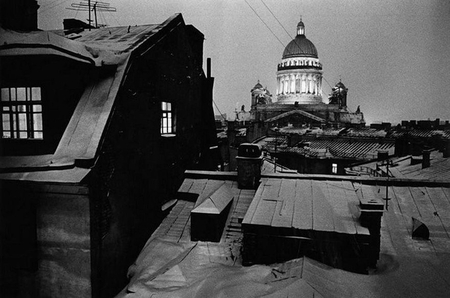
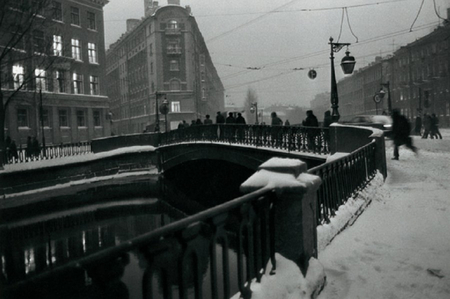
Light on the Roof / Twilight, 1983
«Borya loved to shoot against the rules of technically sound exposure. He preferred liminal states. His photography was almost always 'on the edge of breaking the rules'—at the transition from evening to night, night to dawn—and he loved the unpredictability of weather and light during the change of seasons,» — Alexander Kitaev, Soviet and Russian photographer, artist, curator, and photography historian
Fontanka in winter (pipes). Leningrad, 1984.
Looking Down, 1975
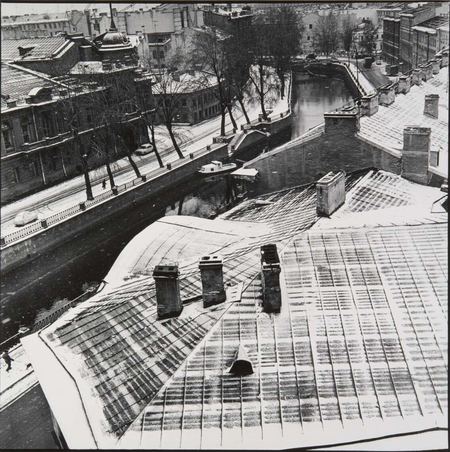
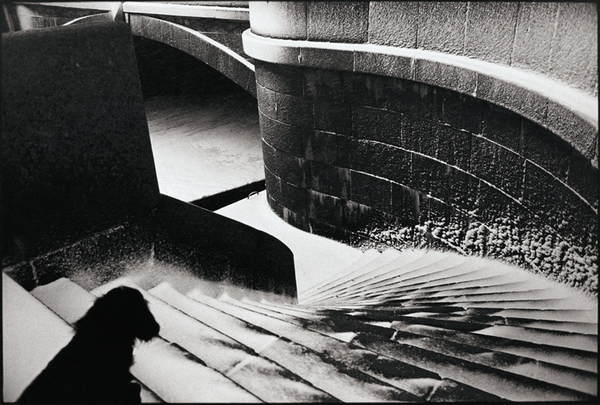
Griboyedov Canal in Winter, 1981 / Nikolaevsky Bridge, 1995
He was meticulous about the details—whether it was the window frames, the decorative elements of the façade, or the rust on the metal structures. Often, it is these small details that allow the viewer to sense the scent of time, feel the aroma of antiquity, and connect with the past.
Buildings, squares, bridges, and embankments present themselves not merely as objects for contemplation, but as participants in a drama that has endured war, reconstruction, and everyday change.
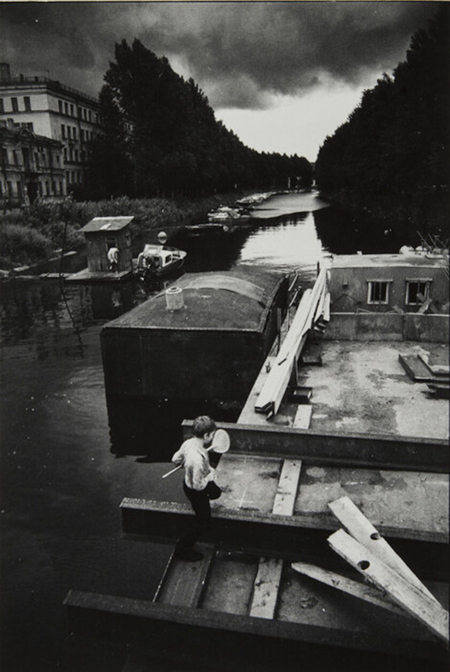
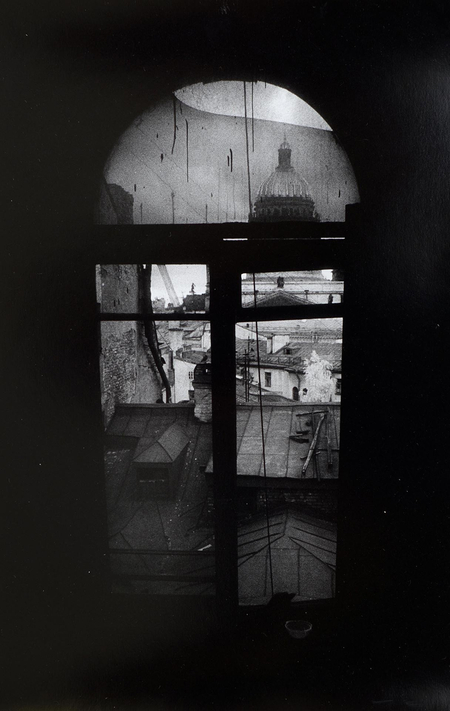
Boy with a net, 1976 / Window, 1980s
Spring frog hunting. Rumyantsev Garden on Vasilievsky Island, 1994.
Many of his photographs appear deserted, desolate, and almost uninhabited. The scarcity of people creates a feeling of coziness and silence, as if inviting the viewer to wander through the city alone. The atmosphere of a quiet night, dim lantern light, and sparse traffic is amplified by the presence of ancient buildings and monuments, as if suspended in time.