Legend — Dreams on the Edge of the Cliff: The Art of the Khabarninsky Gorge
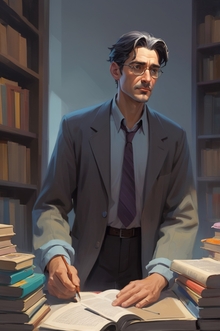
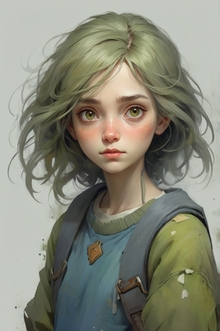
Nikita was an average high school student from Tambov, immersed in preparing for the Unified State Exam (EGE), just like all his peers. His days were scheduled minute by minute: mornings began with reviewing math formulas and tables, followed by school, homework, and evenings spent reading and studying for exams. He was a diligent, top-performing student, and it seemed his future was solely focused on getting into a prestigious university. Nikita’s parents always hoped he would become a successful economist, so his future was decided in advance: HSE in Moscow, a career at a major company, stability, and respect. In truth, Nikita didn’t object, as he knew he had an aptitude for math and economics. But deep down, he was drawn in a completely different direction—he dreamed of becoming an artist.

This internal conflict, which Nikita tried to ignore, kept him restless. He would draw in his free time, but he knew art wasn’t serious—it wasn’t a career path. Everything related to painting felt like an unattainable dream, impossible against the backdrop of reality, where he had to take exams and get into university. Then, at some point, Nikita came across an announcement for a grant for young artists. The competition was held in Italy, and the winners received a chance to study at one of the top art academies. This was his dream, but Nikita was certain that none of his family would support him. He didn’t even dare to talk about it seriously.
However, everything changed after a school trip to the Khabarninsky Gorge. It was a place where Nikita first truly realized that drawing was his calling. The nature, the majestic mountains, and the unique landscapes he observed inspired him like never before. He painted without thinking about time, capturing every moment, every feeling. After this trip, he understood that he could no longer live according to other people’s expectations. He had to follow his heart and become an artist.
Returning home, Nikita took his painting and decided to show it to his parents. He hoped they would understand him and at least partially support him, even if they didn’t completely agree with his decision. But his parents' reaction was entirely different: his mother and father, in their own words, couldn’t comprehend how he could forgo «guaranteed success» for something uncertain that, in their view, would bring him nothing but disappointment. They insisted that he continue studying for exams and not lose the chance to enroll in HSE. This was a real blow to Nikita. He felt that his long-silenced dream had been rejected, and he found himself once again at the crossroads of his desires and his obligations.
But Nikita was not ready to give up. He gathered all his determination and decided to try again. This time, he did not rely on his parents' support; he decided to act independently. He applied for the competition in Italy, completely confident that his work deserved recognition. Of course, he worried that none of his loved ones shared his dream, but inside, he knew this chance was his only opportunity. Inspired by the results of his work, he could not afford to remain on the sidelines.
Some time passed, and Nikita received a letter: he won the competition! His painting was highly acclaimed, and he was offered a scholarship to study in Italy. This news completely turned his life upside down. His parents, despite their initial disapproval, could not hide their pride in their son. They realized that Nikita, no matter what, had made a choice that mattered to him, and perhaps that choice would bring him true happiness.
Ultimately, Nikita moved to Italy, and his life took a completely new turn. This wasn’t merely a trip to another country—it was a long-awaited journey toward self-discovery. He realized that the most important thing in life is to follow one’s calling, even if the path seems difficult and often misunderstood by others. Dreams that once seemed unattainable became reality thanks to his determination and self-belief. This experience taught Nikita that true happiness isn’t about meeting others' expectations, but about listening to his inner voice, despite all the hardships.
Object Information Sheet — Khabarninskoye Gorge
Khabarninskoye Gorge is a place where the velvet mountains meet the majestic Ural River. This natural monument begins downstream from the village of Khabarnoye. One of the most remarkable rapids on the Urals originates here. The gorge has become a recreational area of Eastern Orenburg. The toponym may have derived from the Arabic word «khabar"—meaning «news» or «message.»
Essay — Cinema at the Heart of Novotroitsk
The essay I wrote previously about the cinema museum in Novotroitsk prompted me to write the legend of the Khabarninsk Gorge. The theme of art and cinema inspired me to pen a legend—a dream on the edge of a cliff: the art of the Khabarninsk Gorge.


The Film Museum in Novotroitsk is a unique cultural institution that has become a true hub for film and history enthusiasts. It was founded through the initiative of local enthusiasts who aimed to preserve the memory of significant events in cinematography and popularize culture among young people. The Film Museum in Novotroitsk was established back in 1966, marking a significant moment in the region’s cultural life. Amid the active development of the film industry in Russia, the museum became a venue for storing and exhibiting historical artifacts related to domestic and international cinema. A key starting point is the year 2005, when the film «Not by Bread Alone» by director Stanislav Govorukhin was shot in Novotroitsk. As a result, the school in the village of Akkermanovka, where the museum was opened, became a central character in the film. Thus, by 2016, the opening of the Film Museum became more than timely.
Film is an art form that has captivated people for over a century with its magic, capable of transporting viewers into worlds filled with emotion, stories, and inspiration. The creation of the Film Museum in Novotroitsk is a noteworthy event that not only underscores the significance of cinema as a cultural phenomenon but also serves as an important platform for preserving and popularizing historical heritage.
Firstly, Novotroitsk is a city with a rich history where cinematography has always held a special place in the lives of its residents. For many, film has become a genuine window to the world—a way to glimpse the lives of others, and to become acquainted with different cultures and traditions. In this context, the Film Museum acts as a link between the past and the present, helping to preserve the memory of the great films, directors, and actors who left their mark on history.
Second, the establishment of the New Troitsk Film Museum was a response to the growing need for cultural education and the development of the local community. The museum not only houses exhibits but also organizes exhibitions, lectures, workshops, and film screenings, fostering an interest in cinema among young people. This represents a vital step toward cultivating a cultural environment where creative ideas can flourish and new talent can find inspiration.
The New Troitsk Film Museum has become an important part of the city’s cultural life, promoting an appreciation for cinema as an art form. Thanks to the efforts of its founders, the museum has become not just a repository of past memories but also a crucial educational resource for future generations. Thus, it can be confidently stated that the creation of the New Troitsk Film Museum is the result of united efforts by creative individuals striving to preserve and enrich the cultural heritage of their nation.