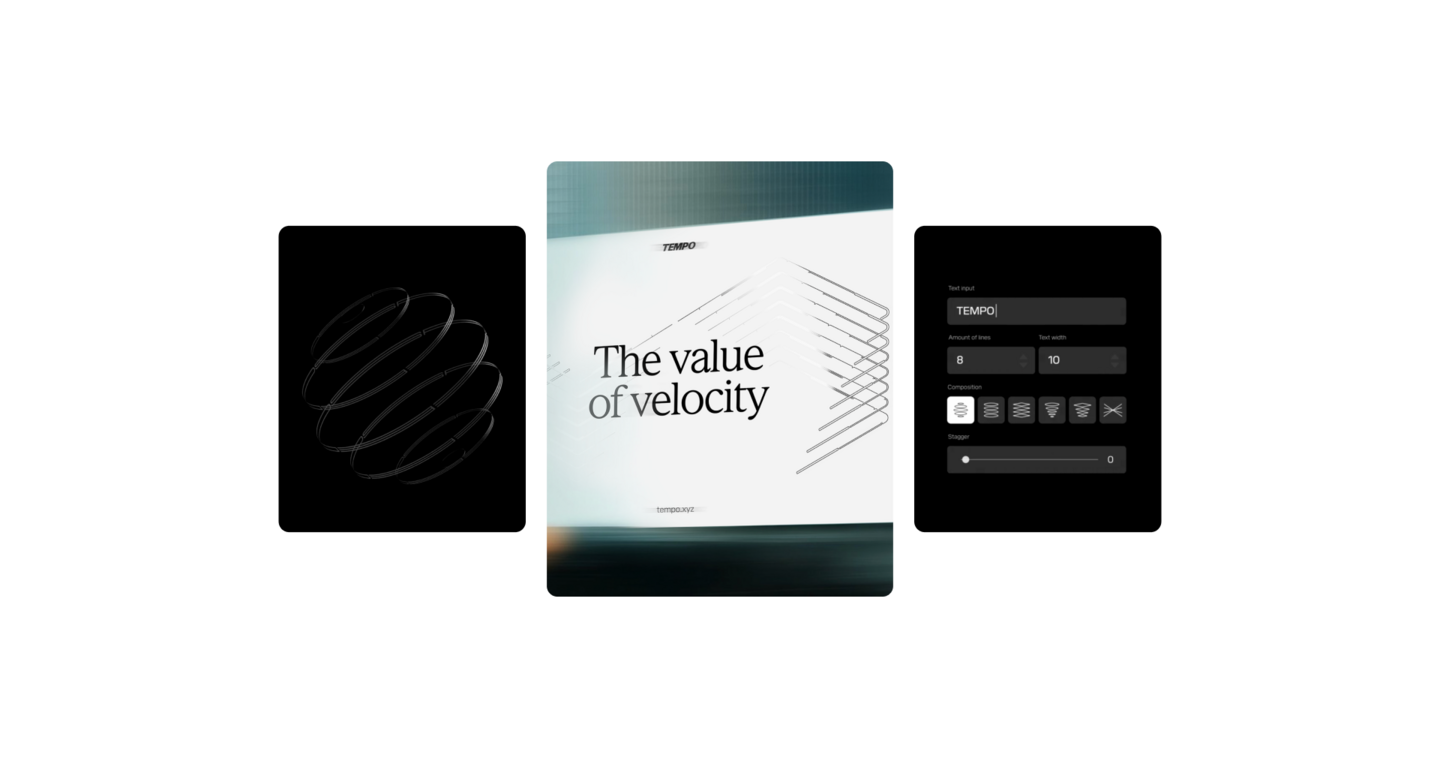
Generative Identity
Курс для бренд-дизайнеров по созданию автоматизированной генеративной графики для брендинга.
In this course, students will study contemporary methods for creating automated graphics within branding identity and develop a full identity concept based on the approaches learned.
What is this course about?
When a client cannot afford a large team or the constant involvement of an art director, graphic automation tools help simplify the creation of consistent brand visual materials. A procedural approach allows you to set the rules and parameters by which graphic variations are created, reducing the need to manually draw each one.
After completing the course, students will be able to apply procedural graphics tools when developing brand identity.
Who is this for?
For experienced brand designers looking to expand their toolset and learn how to apply procedural graphics in their projects.
Course Duration — 4 Weeks. Number of Contact Hours — 32 academic hours. 8 sessions of 4 academic hours, twice a week. Online format.
Prerequisites
To complete this course, students should have a foundational understanding of graphic design principles, composition, and typography, as well as experience working in graphic editors. Before classes begin, you must install the following software: Cinema 4D, Cavalry, and Touch Designer. Preliminary familiarity with their interfaces is recommended—the course will primarily focus on graphic creation techniques.
PRO
Upon completing the course, students will be able to:
— Create generative graphics using generation tools — Consciously select generative graphics as an identity tool and understand the boundaries of its application — Apply generative graphics in working with typography, backgrounds, and brand superstructure — Utilize generative graphics as an identity tool capable of maintaining consistency across different formats
Thematic Plan
- INTRODUCTION Why generative graphics skills are essential for brand designers and what challenges they help solve. An analysis of projects, sources of inspiration, and approaches to creating generative graphics. Data sources and methods of controlling the graphics: random values, procedural noise, sound, images, and video. Practice: compiling references, and proposing several application areas for generative graphics.2. VIDEO-BASED GRAPHICS Using video as a data source for generation: motion, color, and brightness. Methods for converting video material into graphics. Practice: a series of animated posters created using video-reactive graphics.3. VARIABLE FONT-BASED GRAPHICS Variable font parameters as the foundation of a graphic system. Altering typographic composition by controlling weight, scale, rhythm, and repetition. Practice: a series of posters based on a dynamic typographic system.4. CAVALRY Leveraging Cavalry’s capabilities to create graphic presets. Fundamentals of node-based operation. Practice: a series of looping animated posters.
VIBE CODING Formulating a task for a neural network, creating a simple generator, and iteratively refining the results. Adjusting parameters and saving images. Practical Application: sourcing graphics and developing a simple web tool based on them, applying the graphics across various media.
APPLICATION IN BRAND IDENTITY Finalizing the concept and defining the final project theme. Adapting the graphic system assets for different formats while maintaining recognition and readability. Work review and feedback. Practical Application: outlining usage constraints and rules for the graphics, and developing discovered techniques while preserving the visual concept’s integrity.
DEVELOPMENT AND REFINEMENT Adapting the graphic system for various formats, ensuring recognition and readability. Work review and feedback. Exploring the range of variability for the graphic technique and its rules of application. Practical Application: formulating guidelines for tool usage, and evolving the graphics on different media.
FINAL PROJECT PRESENTATION Finalizing the tool. Presenting a mini-identity and demonstrating the method of graphic generation.
Discussion of the visual solution—its alignment with the brand brief and its potential for future application.