Biography
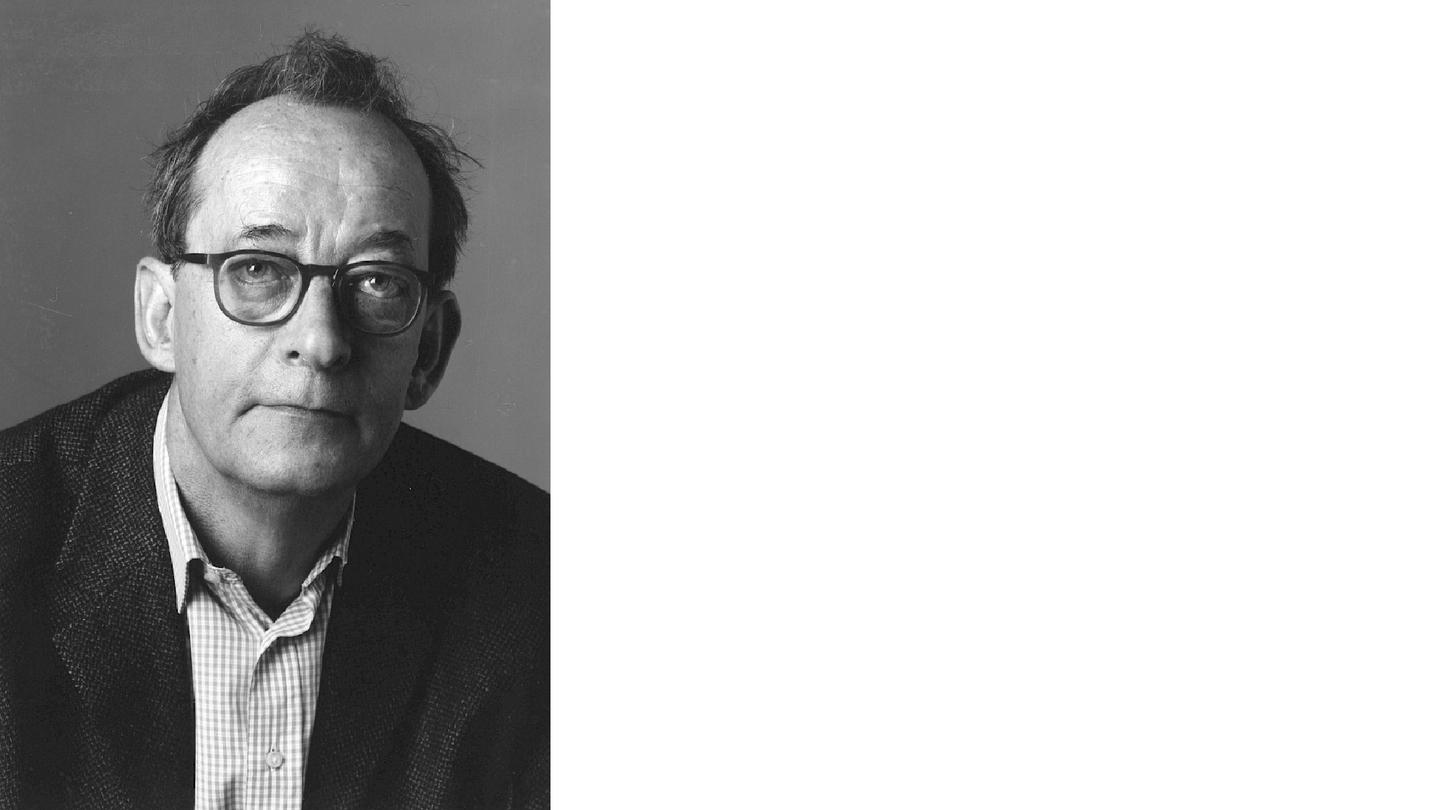
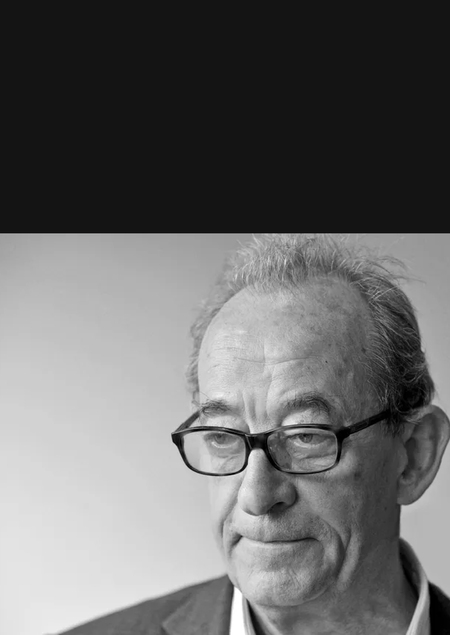
Caspar König (1943–2024) — a German curator and museum director who significantly influenced the development of contemporary art and exhibition practices. Born in Mettingen, Germany, König began his professional career in the 1960s working at art galleries in Cologne and London. Interestingly, König did not receive a formal art history education: his knowledge and approach to art were primarily shaped through practical experience—working with exhibitions and direct engagement with artists.
«I haven’t even studied art history. I don’t have academic degrees or anything like that. I’m more of an amateur—a hobbyist in the best possible sense of the word.»
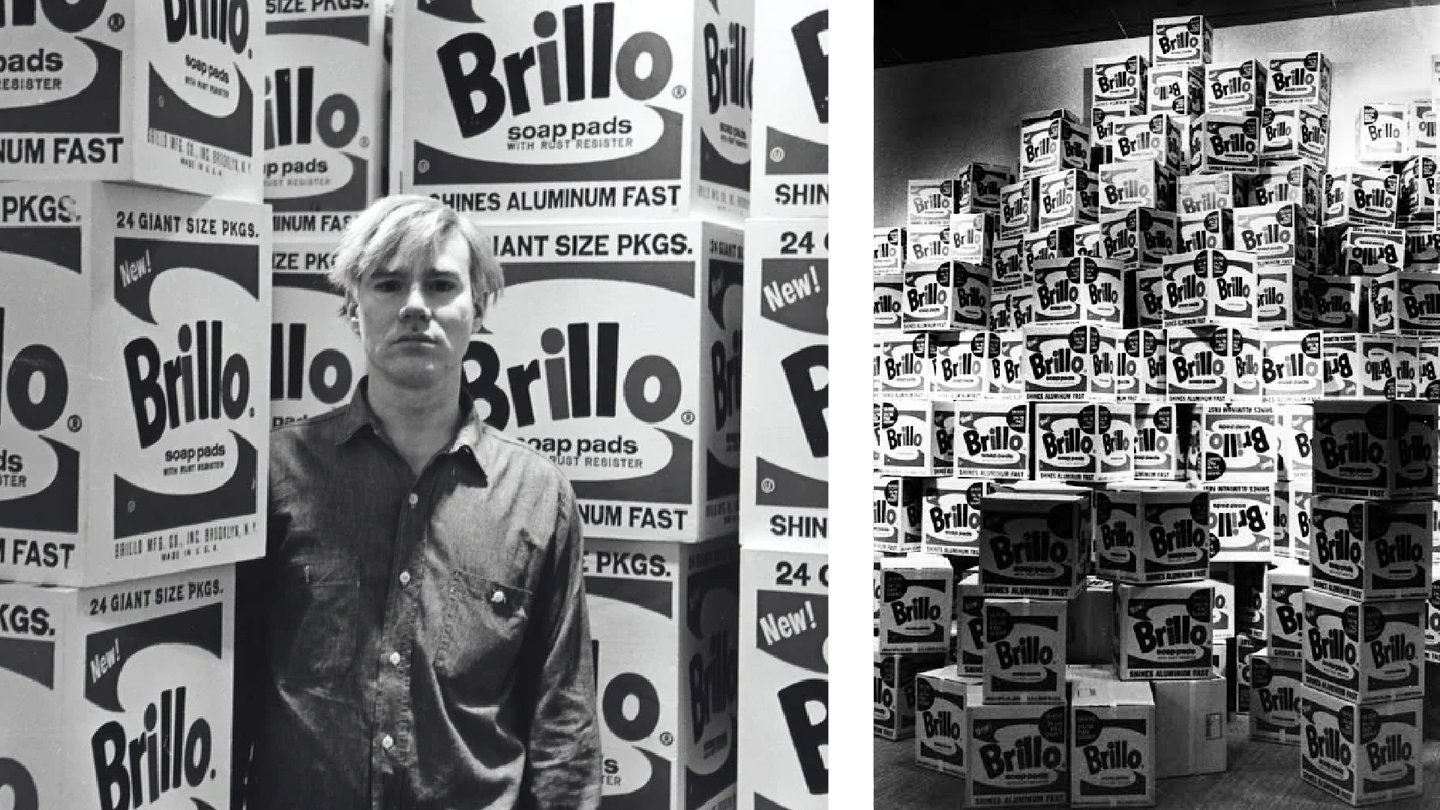
Brillo Soap Boxes in Andy Warhol’s Retrospective at Moderna Museet, Stockholm, 1968.
In the mid-1960s, he moved to New York, where he connected with representatives of American minimalism and conceptual art. These relationships played a crucial role in his subsequent career. As early as 1968, König organized one of the first major European museum exhibitions of Andy Warhol in Stockholm.
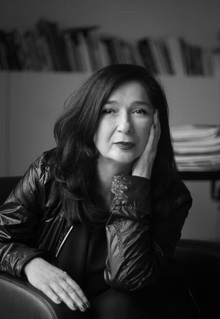
Photo by Caspar Koenig, 2023
In addition to his exhibition work, König engaged in teaching and directing artistic institutions. He founded the Portikus exhibition space in Frankfurt, taught at Städelschule, and headed the Museum Ludwig in Cologne from 2000 to 2012.
König was not inclined to formulate his own curatorial theory in the form of a manifesto. His ideas manifested directly within the exhibitions themselves. For him, it was crucial not merely to present works of art, but to create conditions where they entered into a dialogue with each other, with the space, and with the viewer.
Core Ideas of Curatorial Practice
The Koenig mentorship method was built upon dialogue with artists, experimentation with space, and a continuous re-evaluation of how art exists within an institution and interacts with the viewer.
For König, the exhibition was not an illustration of established theory, but a way to investigate space, works, and personal expression.
Characteristics of the Curatorial Method— Practical Experience Over Academic Schooling Köning entered curatorship through gallery work, exhibition installation, and dialogue with artists.— International Connections He worked at the intersection of the European and American art scenes.— Personal Collaboration with Artists He viewed the artist as an active participant in creating the exhibition.— Format Experimentation He explored new ways of interaction among art, the viewer, and the exhibition space.— Publishing Activities He considered artist catalogs, documentation, and books an essential part of curatorial practice.
Sculpture Exhibition in Münster
Kosima von Bonin / Tom Burr, Benz Bonin Burr. Temporary Installation, forecourt of the LWL-Museums für Kunst und Kultur, 2017
Skulptur Exhibition in Münster 1977 (The Sculpture Exhibition in Münster) ran from July 3 to November 13, 1977, in the German city of Münster.The project was organized by Klaus Büsman and Kasper König. Büsman was responsible for the exhibition overall, while König supervised contemporary art projects in public spaces. The exposition covered the Westphalian State Museum, the palace garden, and various public areas of the city.It was this exhibition that initiated the famous Skulptur Projekte Münster series, which was subsequently held every ten years.
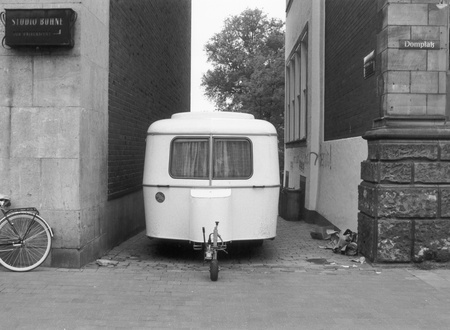
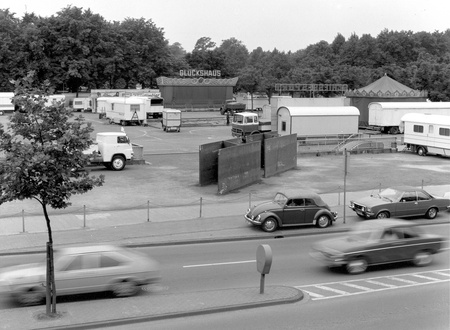
1. Michael Asher, Westfälisches Landesmuseum für Kunst und Kulturgeschichte, 1977 / 2. Richard Serra Untitled, 1977
The idea for the exhibition stemmed from the tension between contemporary art and the urban environment. In 1973, George Ricke’s kinetic sculpture installation in Münster provoked local residents. Instead of abandoning such experiments, the curators decided to transform this conflict into a catalyst for dialogue about art.
The exhibition aimed to demonstrate that sculpture can exist not only within a museum but also within the fabric of daily city life. Artists were tasked with creating works that responded to a specific location—its architecture, history, and unique characteristics.
The central idea was to make the city itself a part of the exhibition, turning any random passerby into a spectator.
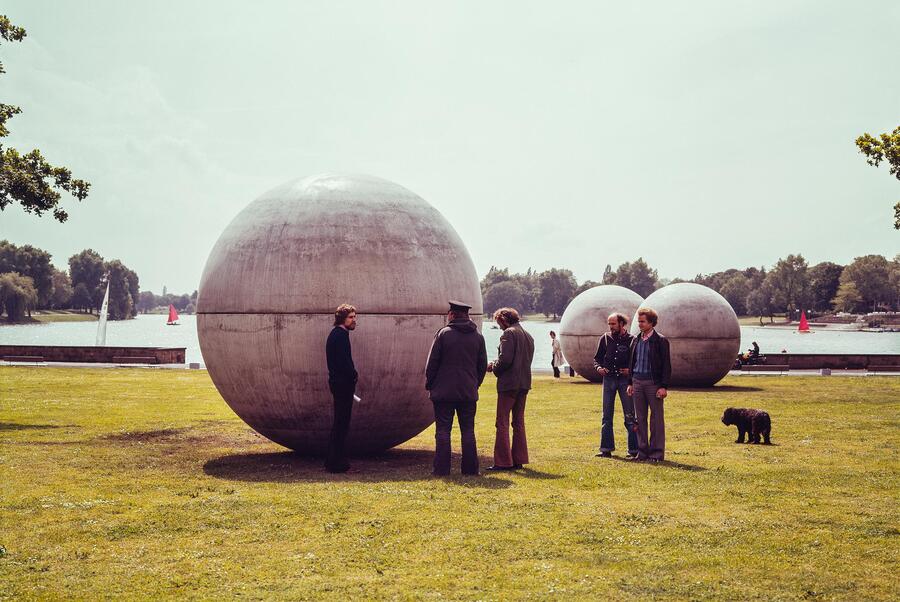
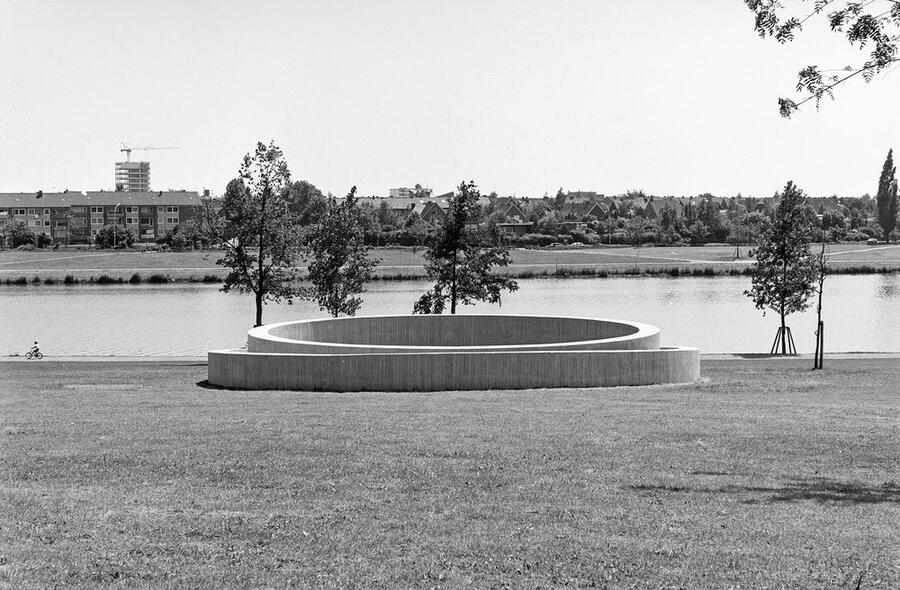
1. Oldenburg Class, Giant Pool Balls, 1977 (archive photo) / 2. Donald Judd, Untitled, 1977 (archive photo)
The main innovation was the approach to organizing the exhibition. It consisted of three parts: a historical overview of sculpture in the museum, a display of contemporary works in the palace garden, and projects created specifically for the urban space. The last part, which König was responsible for, proved to be the most significant for the development of curatorship. The artworks were placed in the streets, and the artists worked with specific locations, making the surrounding environment a part of the artistic concept.The exhibition also changed the role of the viewer. To experience the works, visitors had to move through the city and find them independently. Furthermore, art was encountered not only by interested museum patrons but also by ordinary city residents.For König, this was an important curatorial experiment—the exhibition transformed from an exposition of objects into an exploration of the relationships between art, space, and society.
Henry Moore, Sculpture in Three Parts: Vertebrae, 1968–69
Nine artists were invited to create projects within the urban space:
Carl Andre, Michael Asher, Joseph Beuys, Donald Judd, Richard Long, Bruce Nauman, Klaus Oldenburg, Ulrich Rükem, Richard Serra
Most of the participants represented American art, particularly minimalism and conceptualism. They were united by an interest in space, materials, and how the viewer perceives the work.
Iconic Works:Claes Oldenburg — Giant Pool Balls (1977). Three enormous concrete spheres, reminiscent of billiard balls, were installed on the shore of Lake Åssee. The work became one of Münster’s symbols.Donald Judd — Untitled (1977). Two concentric concrete rings on the hillside by the lake. One is oriented horizontally, while the other mirrors the slope of the land. Through simple geometric form, Judd offered the viewer a new way to perceive the landscape’s characteristics.Michael Asher — Mobile Residential Trailer (1977). The artist placed a standard trailer in various locations across Münster, changing its position weekly. Here, the artwork became less about the object itself and more about its presence within the urban environment. The work raised the question of why we perceive the same object differently depending on the context.Joseph Beuys — Unschlitt / Tallow (1977). The artist created a massive sculpture from fat and wax-like materials, based on the shape of the empty space beneath a pedestrian ramp. This work transformed an inconspicuous architectural volume into an artistic object, linking the physical properties of the material with ideas of change and transformation.Karl Andre — 97 Steel Line for Professor Landois (1977). A line of 97 steel plates lay on the ground near the lake. Since people could walk along it, the viewer interacted with the sculpture not only visually but also physically.Bruce Nauman — Square Depression (1977 project). The artist conceived of a square depression in the earth shaped like an inverted pyramid, into which a viewer could descend. The work was not built in 1977; it only appeared in Münster in 2007 and became an important example of how sculpture can alter the perception of one’s own body and space.
Westkunst
Westkunst. Contemporary Art Since 1939 took place from May 30 to August 16, 1981, in the exhibition pavilions of the Rheinhallen in Cologne, Germany.Kaspar König and art historian László Glözer served as curators. It was one of the largest exhibitions of its time—nearly 800 works by approximately 200 artists.
The main goal of the exhibition was to reinterpret the history of Western art after 1939. Koenig and Glozer wanted to show that modernism did not end with the start of World War II, but continued to evolve, shifting under the influence of new historical circumstances. The starting point was 1939—the beginning of the war and the period when the center of artistic life gradually moved from Europe to the United States. The curators traced the development of art from European avant-garde and American abstract expressionism to pop art, minimalism, and conceptual art.
The idea was to present contemporary art as a continuation of modernist history, rather than a complete break from the past. Furthermore, the exhibition offered not a neutral overview, but its own interpretation of art history.
The exhibition comprised twelve historical sections and a separate section titled «Heute» (Today), dedicated to young artists. In addition to artworks, the display featured archival documents, reconstructions of historical exhibitions and artists' studios, as well as specially created films. Architecture played a crucial role. Oswald Mathias Ungers designed a temporary museum within the vast exhibition pavilions, complete with its own system of halls and passageways. The space guided the visitor’s movement and helped weave different historical periods into a cohesive narrative.However, Westkunst also attracted criticism. It was accused of having a predominantly Western view of art, giving insufficient attention to female artists, and excluding many artistic practices outside of Europe and the United States. The connection between the contemporary section and the commercial galleries that funded it was also a point of contention.
The exhibition featured artists from several generations and movements.Among the masters of Modernism were Pablo Picasso, Paul Klee, Piet Mondrian, Marc Chagall, and Max Ernst.Post-war American art was represented by Jackson Pollock, Mark Rothko, Barnett Newman, Willem de Kooning, Jasper Johns, and Robert Rauschenberg.In the sections dedicated to 1960s–1970s art, Andy Warhol, Claes Oldenburg, Joseph Beuys, Dan Flavin, Sol LeWitt, and Richard Serra participated.The contemporary section, Heute, showcased Anselm Kiefer, Isa Genzken, Jenny Holzer, Jeff Wall, Thomas Schütte, Michael Asher, Francesco Clemente, and others.
Notable Works: Thomas Schütte — Westkunst Modelle (1981). The young artist created three architectural models—Schiff («Ship»), Kiste («Box»), and Bühne («Stage»).Michael Asher — My Contribution to Westkunst (1981). The artist placed tables and chairs, provided by commercial galleries participating in the exhibition’s funding, in the show. His work served as an example of institutional critique within the exhibition itself.Jeff Wall — Movie Audience (1979). A photographic work consisting of seven images presented in three light boxes.Joseph Beuys — Works from the Block Beuys complex. The exhibition featured several of the artist’s works from the Darmstadt collection, including Gummierte Kiste («Rubberized Box») and Warmer Stuhl mit Filzsohle, Eisensohle und Magnet («Warm Chair with Felt Sole, Iron Sole, and Magnet»).Constant — L’animal sorcier (1949). The work by the Dutch artist, associated with the COBRA movement, was included in the historical section of the exhibition. Its expressive, free-form painting showcased one of the alternative paths of European art development after the war.