Essay
If you look at the map of the Northern Priazovye region, the Berdyansk Spit appears as a thin, almost weightless arrow cast across the warm water. This is a unique creation of nature—a narrow strip of land 18 kilometers long, falling within the city limits of Berdyansk. At times, it narrows to an ascetic 40 meters, transforming into a fragile path over the water; other times, it flares out for two kilometers, covering an area of about seven square kilometers. This remarkable landscape, which is part of the Priazovye National Nature Park, has a primary sculptor: the Berda River. For centuries, as it flows into the sea east of the base, it has diligently built up these shoals, patiently creating a natural bridge between the mainland and the endless expanse of water.
Here, on a narrow strip of sand and shell fragments, time moves differently. You feel this acutely when the steady murmur of the surf comes on one side, and on the other—you feel the saving, reliable firmness of the earth. Amidst these windswept expanses rises one of Azov’s oldest lighthouses—the Lower Berdyansk Lighthouse—which took up its ceaseless watch as early as 1838. It stands here like a grizzled veteran who has survived countless centuries. Its saving light has guided ships through thick fogs and severe storms for decades, a reminder that even in the deepest darkness, there is always a true beacon. This stone tower is not merely an engineering structure; it is a symbol of hope and constancy against the backdrop of fleeting time.
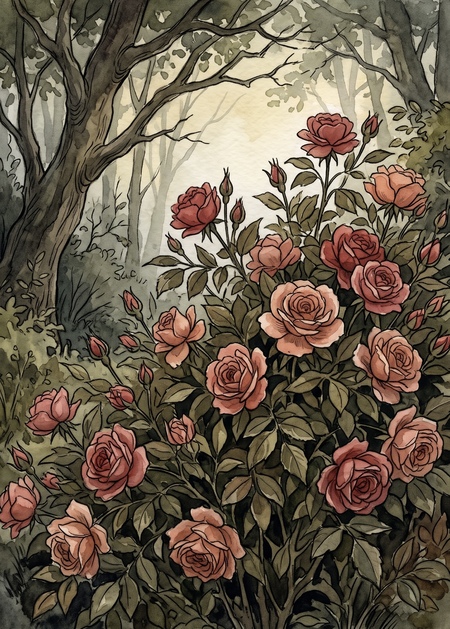
However, life on the sandy spit has not been frozen in stone and legend. In 2023, the territory of the «Mayak» Center for Creation underwent an astonishing transformation. In these harsh coastal lands, humans introduced a delicate yet incredibly strong beauty—over two thousand rose bushes. At first glance, gentle buds and the fierce sea wind seem incompatible. But it is precisely in this paradoxical contrast that the true philosophy of this place lies. The planted flowers are a metaphor for a gentle regard for the native land, living proof that humans are capable not only of taking resources from nature but also of creating a man-made oasis around themselves. The Berdyansk Spit is a focal point. Here, an ancient river meets the sea, an old lighthouse preserves the memory of the past, and scarlet roses symbolize new life and creation. This is the subtle thread that firmly connects history, nature, and the human pursuit of beauty. And as long as this lighthouse stands and these roses bloom, the spit remains not just a geographical feature on a map, but the living, breathing heart of the Sea of Azov coast.
Legend
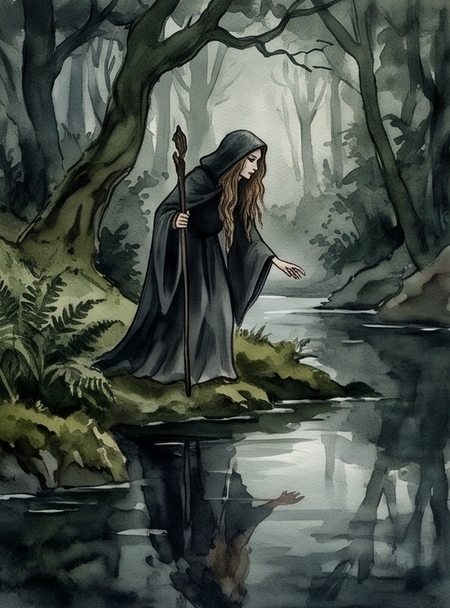
They say every sea has its own soul. The Sea of Azov, the shallowest and warmest, has a soul that is feminine, capricious, and tender. The ancient Greeks called it Maeotis, the mother of the Pontus. The Scythians, who roamed its shores, believed that the sea was not water, but the tears of a giantess mourning her beloved. Perhaps it is because the water in it is so warm and gentle that it remembers the touch of human sorrow. Or perhaps it is because it is so shallow—barely reaching the bottom. And whatever was hidden eventually comes to light. On the northern shore, where the Berda River discharges into the Azov, lies a narrow strip of land, exhausted by its long journey: the Berdyansk Spit. Eighteen kilometers of sand and shell fragments, stretching from forty meters to two kilometers wide. It pierces the sea like an arrow loosed from a giant’s bow. Elders recount that this spit was created by a sorceress, mighty and willful. She fell in love with a hero, but he did not return her affection. In her anger, she hurled a golden key from her heart at him. The key flew past, fell into the sea, and transformed into an island. And following it, the sandy spits flew out. This is what ancient lore tells.
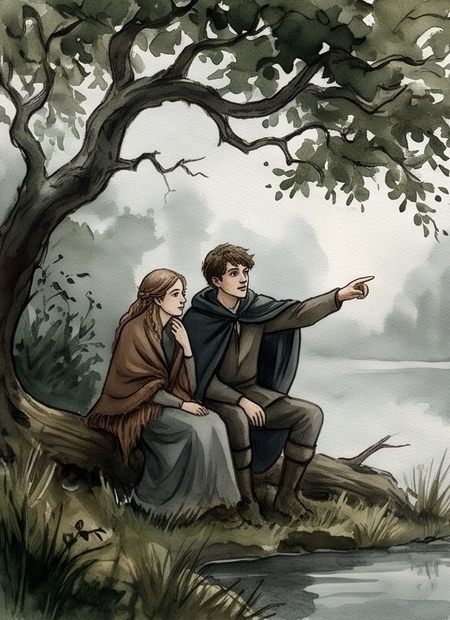
However, there is another legend. One that arose later, after the lighthouse was already standing on the spit, and grass, which locals nicknamed «tryn-trava,» grew under the oaks. This tale is about the roses—now more than two thousand on the territory of the «Lighthouse» Creative Center—and about a love that proved stronger than time itself. Back when Berdyansk was still called Novonogaisk, and later Berdy, two tribes lived on the spit. The Scythians, fierce warriors who often buried gold in kurgans. And the Meots, peaceful fishermen and farmers. A feud had long simmered between them—not even over land, but over the right to claim the shore as their own. The Scythians believed the spit belonged to them because their horses were the first to gallop across its sand. The Meots, however, maintained that the waters here belonged to them because their nets were the first to fill with Azov fish. Among them were two people. A girl from the Meot tribe, with eyes the color of seawater and braids that smelled of steppe grasses. And a young man from the Scythian tribe, with hands accustomed to the bow and the horse, and a heart that knew no fear. The girl gathered shells at the far end of the spit, where the lighthouse had not yet shone, and only the outlines of the future tower could be discerned in the mist. The young man came there on horseback to be alone, far from the noisy fires and warlike songs. They met by chance and immediately understood that the tribes' feud had nothing to do with them. Their secret meetings took place under the oaks that grew opposite the tent entrance, where, centuries later, the «Don» pavilion would be erected. Those crooked, gnarled trees were called sorcerers by the elders. They believed spirits resided in the branches, guarding the lovers. Beneath them grew grass that no one trod upon or pulled. This was because they knew: tryn-trava bestowed strength and opportunities upon those who treated it with reverence. Do not trample it, do not litter, do not pluck it. And it will reveal what is hidden from others. The girl told the young man about the fish living in the Azov Sea, about the dolphins that occasionally swam here, and about how her mother healed people with herbs and mud from the lagoons. The young man told her about Scythian gold, about the bowls and plaques that adorned horse harnesses and quiver bands, and about the kurgans where ancient kings rest.
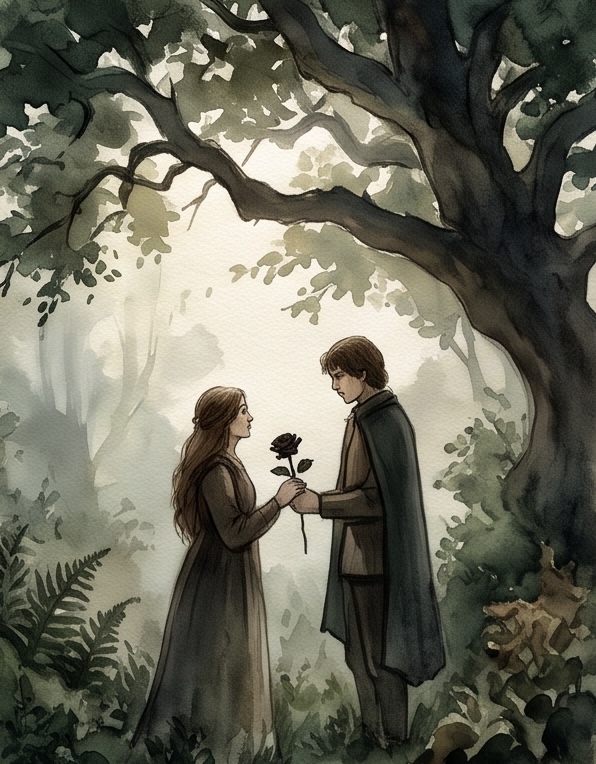
One day, he brought her a small golden disc engraved with a griffin. The girl hid it against her chest, close to her heart. But the feud did not sleep. The Scythians discovered that their young man was meeting with a girl from an enemy tribe. The news reached the Meots. Both sides demanded blood. «Traitor!» some shouted. «Shame!» others echoed. The young man was ordered to forget her. The girl was told to marry the chief’s son. The lovers refused. And then the tribes decided: let the sea judge. If the young man could walk from the cape to the island floor and return unharmed, the girl was his. If not, both would die.
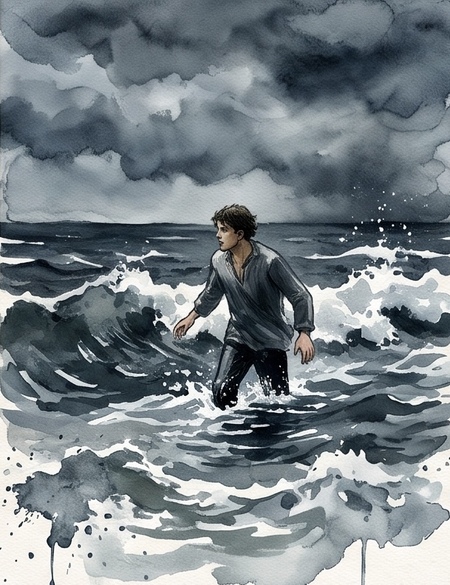
The Azov Sea is the shallowest in the world. Its depth varies from 0.9 to 14 meters. But walking the bottom of even such a body of water is no stroll. The young man suspected this. He also understood something else: the sea spirits do not favor those who disturb the peace. Yet, he agreed. For her. For anything. At dawn, when the sun had just risen above the horizon, dyeing the surface the color of molten gold, he stepped into the sea. The girl stood on the shore, clutching a golden griffin. She did not cry. She believed. And the wizard oaks whispered to her: wait, he will return. The young man walked across the muddy bottom. The water yielded before him, allowed him passage. Fish swam nearby, unafraid. Dolphins, who had ventured to these waters, circled around, as if guarding him. An hour passed, then two, then three. The bottom rose and fell, but the traveler did not lose his way. When he reached the island—the one that was once the sorceress’s golden key—he knelt and kissed the earth. And then he saw her. The rose. The only one on the entire island. White, with crimson streaks, as if someone had swept across the petals with a brush dipped in blood. He plucked it carefully, like a child, and tucked it into his coat. Then he turned back. The return journey was harder. The sea sensed that someone had dared to challenge it. The waves rose, and the wind whistled. But he kept going. The traveler thought of her—of her eyes, her hands, her laughter. And the elements retreated. They understood: before them was not just a warrior, but a man led by love.
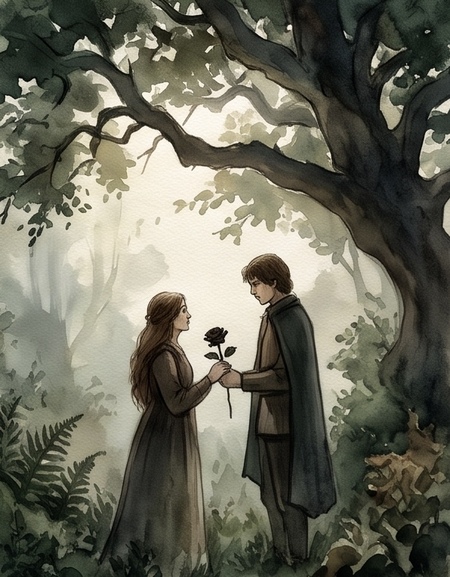
When he reached the shore, the sun was already sinking toward the horizon. The young woman rushed to him. The lovers embraced. The wizard oaks rustled, and the yarrow beneath their feet bloomed with white and pink flowers. For the first time in all their lives. The youth pulled out a rose, and it shone in the rays of the setting sun like a small miracle. But their happiness was short-lived. The Scythians and Meots, upon seeing him return, were enraged. They decided: the sea had betrayed them, and demanded the death of both. The captives were seized and brought to the very end of the spit, where the Lower Berdyansk Lighthouse would later be built. And there, on the sand, among the shells, they were fated to die. The lovers looked at each other. And then the hero understood: death is not the end. He begged the spirits of the oaks and the yarrow for one kindness. Let their love not disappear—let it remain on this earth forever. The spirits heard him. In the moment the spears were about to pierce their hearts, the captives vanished. The roses intertwined with the sand, taking root. Centuries passed. The lighthouse was built on the spit—the Lower Berdyansk Lighthouse, one of the oldest on the Sea of Azov. Its octagonal tower with a red stripe in the center has been guiding ships for over sixty years. And nearby, on the grounds now called the «Lighthouse» Creation Center, more than two thousand rose bushes were planted. No one knows exactly where this tradition came from. But the old-timers say: these are the very roses that grew from the love of the youth and the young woman.