
Project Concept
In contemporary visual culture, the eroticized body often exists in fragments. Individual forms become signifiers of desire, appeal, and objects of consumption. They can be reproduced, assessed, and sold. The person themselves gradually disappears behind the recognizable image.
Two pieces of colored felt begin with overtly corporeal, sexual forms. Separated from anatomy, they cease to be mere fragments of the human body and acquire their own character. What was once an object of another’s gaze transforms into an independent entity.
The softness of the felt preserves the feeling of flesh. Bright colors, sharp contours, and a mosaic structure reduce organic forms to something resembling logos, emblems, or stained glass. But this external simplicity is deceiving: these images are erotic and humorous, appealing and strange.
Body > Sign > Being
Body → Part of a human Sensibility SexualitySign → Fragmentation Simplification Desire, consumptionBeing → Character Ambiguity IndependenceCulture transforms a person into a collection of signs. These canvases transform the signs back into living beings—but they do not return them to the person.
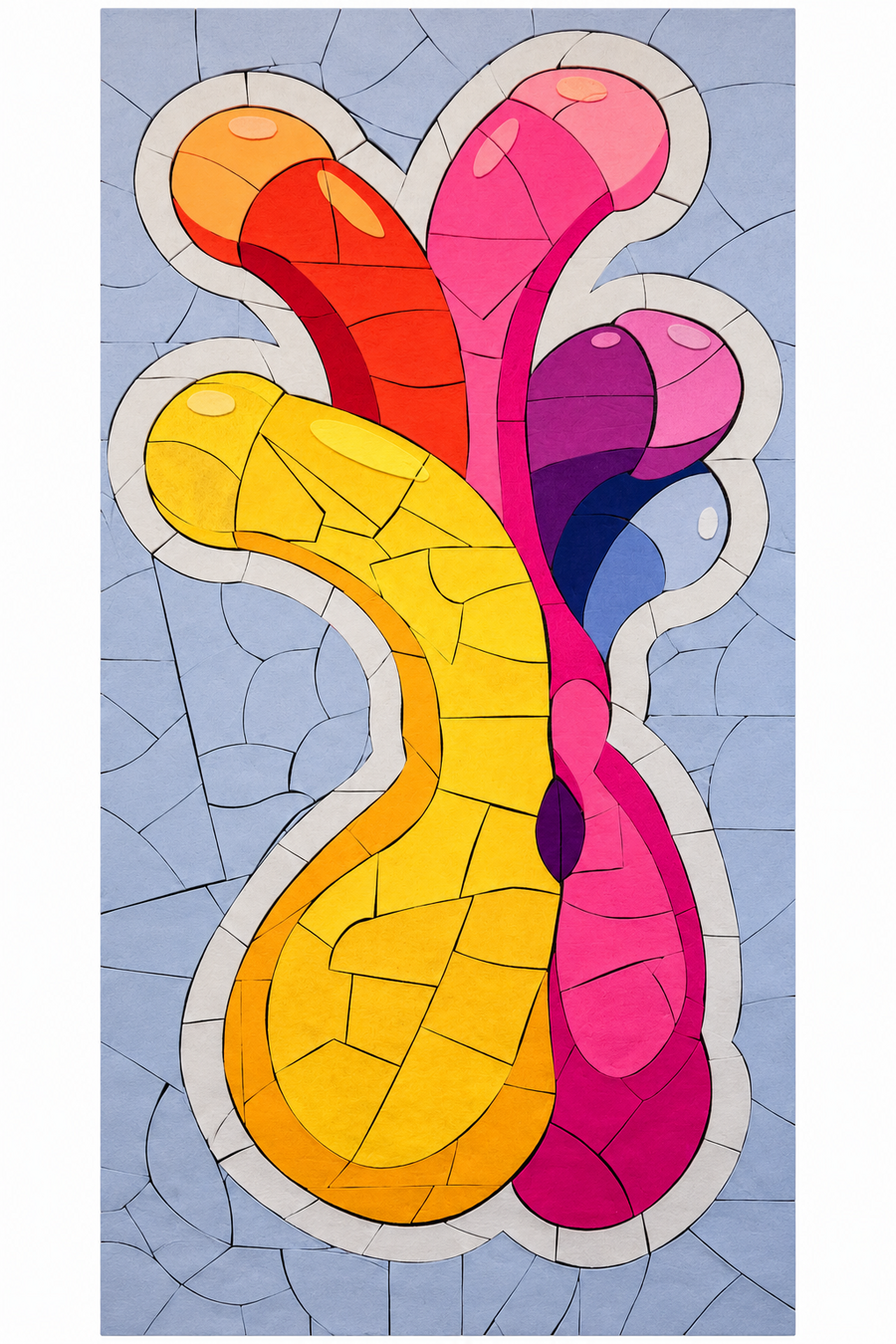
Colored felt · 200 × 100 cm
Several bodily forms intertwine, losing their original anatomical definition. Each retains its own direction, color, and character.
Colored felt · 200 × 100 cm
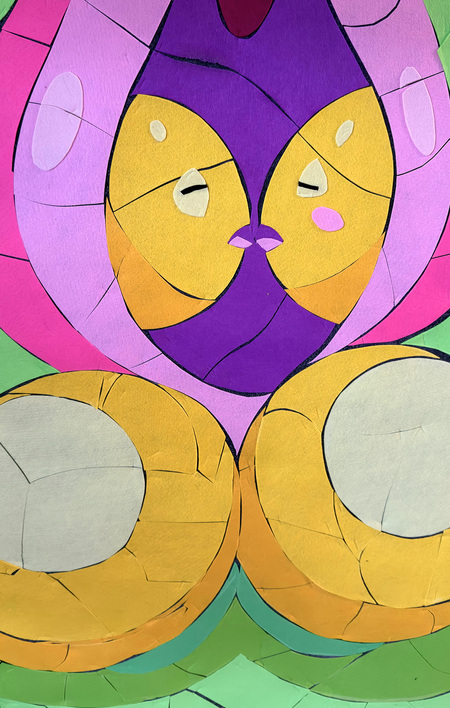
Symmetry and an elongated vertical form evoke a living creature. Sexual characteristics and facial expression blend together—familiar anatomy transforms into something entirely fantastical.
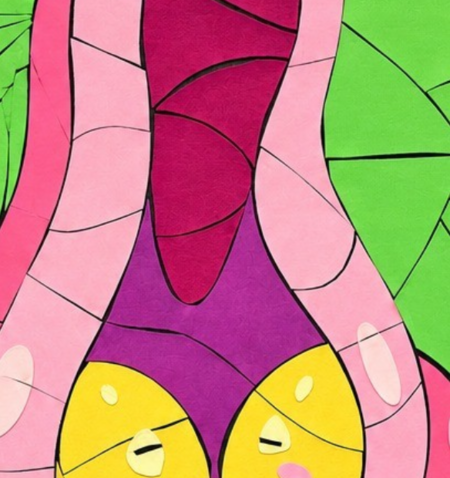
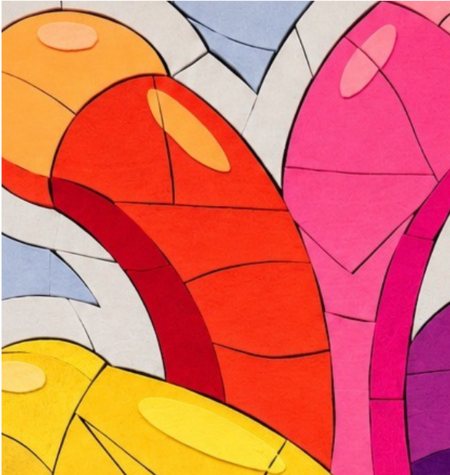
Softness Felt retains the feeling of skin—warmth and tactility.Color A vibrant palette renders erotic forms almost friendly.Contour Each form is divided into fragments, like a sign or stained glass.
Context in Art
From an Object of Desire—to an Autonomous Entity
BODY
Objectification, erotic form, the transformation of the body into a collection of objects and images.
SIGN
Reproduction, visual simplicity, graphic code, recognizability.
ESSENCE
Individuality, the refusal to be an object of someone else’s gaze, the image’s life of its own.