«Art Versus the System, or Art Within the System? The Politics of Contemporary Art Through the Lens of Hito Steyerl’s Ideas.»
Introduction
Contemporary art is often perceived as a realm of freedom: the artist speaks out against injustice, critiques power, and raises pressing social issues. However, Hito Steyerl, in her article «The Politics of Art: Contemporary Art and the Transition to Post-Democracy, ” offers a more complex perspective. According to her view, art does not exist outside of the system—it is deeply embedded within neoliberal economics, the market, politics, and power relations. Therefore, the central question is not whether art can be political, but rather how politics is already present in its production, financing, display, and reception.
The triumph of the law? — Why not make it a matter of taste? Checks and balances? — Checks and balances! (The wordplay refers to «Checks and balances» and «Cheques and balances»). Good management? — Poor curation!
Politics Isn’t Just About Subject Matter Typically, art is deemed political only when it overtly addresses war, poverty, racism, migration, or protest. Steyerl does not deny the significance of such works, but she views this approach as too narrow. The author suggests viewing art as a space of labor, conflict, and the collision of interests. In this sense, politics begins not with the depiction of injustice, but with questions: who is funding the exhibition, on whose labor is it built, who profits from it, and what power dynamics does the museum or gallery reproduce—and how valuable are those relationships to one another? Steyerl emphasizes that political art often avoids discussing its own conditions of production, leaving the labor of artists, assistants, interns, and technical staff invisible. Thus, even a work dedicated to oppression might be created within conditions of exploitation. This does not negate its value, but it compels one to wonder: is it truly opposing the system, or is it merely making the system more appealing and «progressive»?
Art and Post-Democracy Steyerl’s central concept is «post-democracy.» This describes a situation where democratic forms persist, yet real power increasingly concentrates in the hands of elites, corporations, financial institutions, and oligarchic groups. Steyerl argues that contemporary art does not merely reflect this transition; it actively participates in it. She writes about the «global Guggenheim» and international biennials as cultural tools that serve the interests of new elites and help shape the attractive image of cities, states, and capital. Art becomes part of urban branding, investment, prestige, and «soft power.» This gives rise to Steyerl’s unsettling irony: «if contemporary art is a response, then the question sounds like this—how do we make capitalism more beautiful?» In other words, art has the capacity to transform inequality, speculation, and the concentration of power into an aesthetically expressive, intellectually prestigious, and socially acceptable commodity.
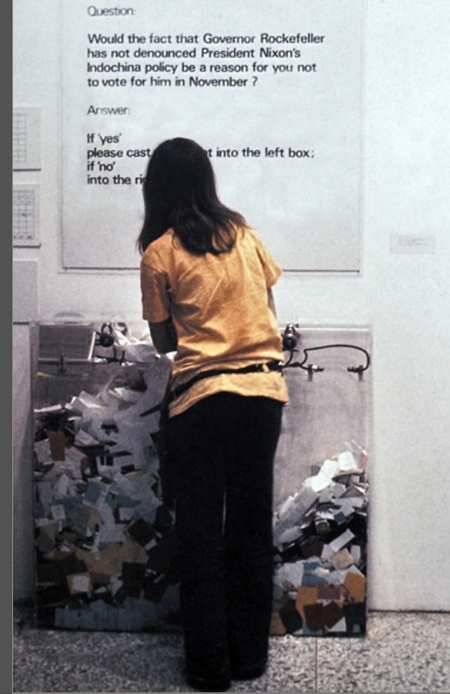
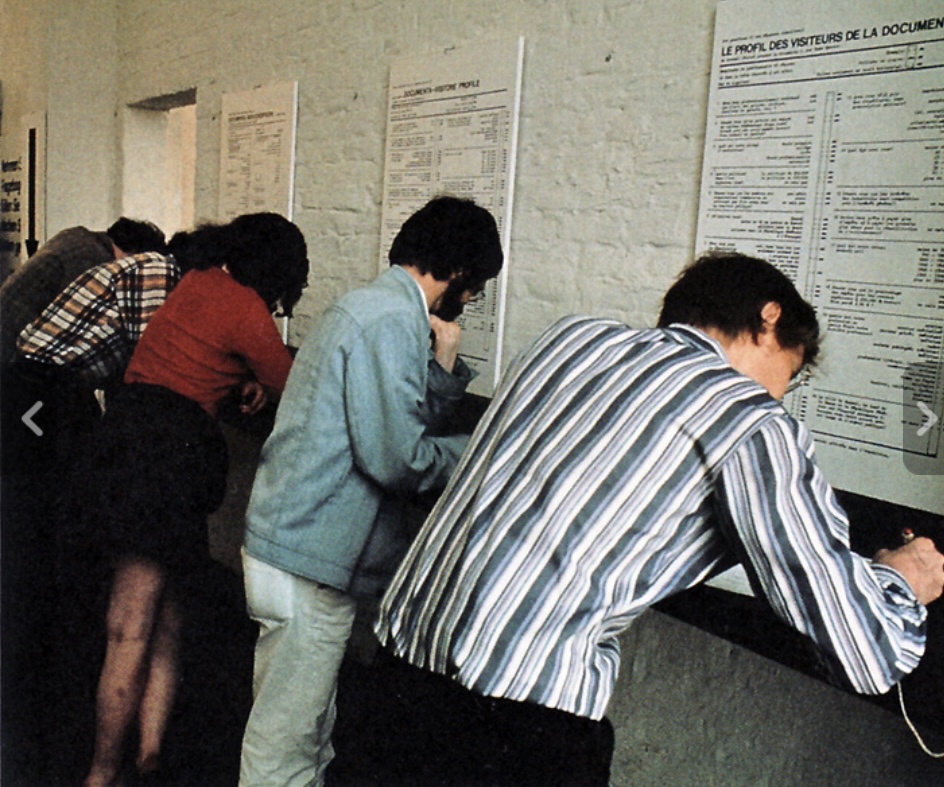
Key CollaboratorsKey figures who aligned with Hito Steyerl’s concept include artists such as Hans Haacke and Martha Rosler—pivotal players who shared the belief that art is dependent on political and social roles.Hans Haacke (b. 1936) is a German conceptual artist and one of the leading founders of institutional critique in contemporary art. His political and artistic commentary is based on exposing the hidden connections between art, power, capital, and the state. Haacke’s most significant project was the installation «MOMA Poll» (1970)Its core concept involved setting up two transparent ballot boxes with the question: «Will the fact that Nelson Rockefeller is voting for Nixon influence your vote for Rockefeller in November?» Visitors dropped ballots labeled «for» or «against.» The work vividly demonstrated the political involvement of the museum’s trustees.The central idea of «MOMA Poll» is to expose the invisible links between art, major capital, and government policy. Haacke positioned this work as «System as Art,» where the elements of the piece include the poll itself, the viewer’s course of action, and the visual feedback provided by the filling ballot boxes.