January 30 | Monday
ARREST OF 11 MEMBERS of the Military-Industrial Committee working group
Official Statement
Founded in November 1915 in Petrograd, by a working group of elected Petrograd workers' delegates who belonged to revolutionary parties and were affiliated with the Central Military-Industrial Committee, the group immediately adopted a distinct position within the committee. Instead of dedicating its efforts to defending the country, it began to address the central organization of the working movement in the empire, setting its goal as transforming Russia into a social-democratic republic…
Russkoe Slovo (Bulletin of January 30)
Lately, the participants of the conspiracy have begun to act bolder and more persistently, which has led to facts that leave no further doubt regarding the criminal and dangerous nature of the organization. Consequently, 11 members of the working group have been arrested… The case has been handed over to prosecutorial supervision to initiate a preliminary investigation…
Meeting of Members of the State Council and Duma Attendees: Members of the State Council — Baron V. A. Miller-Zakomelsky, A. I. Kuchkov, V. I. Gurko, S. F. Oldenburg, and M. A. Stakhovich, and Members of the State Duma — A. I. Konovalov, P. N. Milyukov, M. S. Adzhemov, I. I. Efremov, V. A. Rzhevsky, S. I. Shidlovsky, N. S. Chkheidze, and A. F. Kerensky. …Having heard detailed reports from A. I. Kuchkov and A. I. Konovalov, the meeting unanimously recognized that the working group’s actions… contained nothing that would justify repression…
The Chairman of the Central Military-Industrial Committee, A. I. Kuchkov, and the Deputy Chairman, A. I. Konovalov, informed the authorities that should the committee’s working group be brought to court, they wished to share responsibility with the group…
France: The Betrayal of Capitalism Paris. When the war broke out, the «Carbid» company continued to supply carbide, calcium, and carbamide to German factories through intermediary German firms… The industrialists secured the assistance of the most influential lawyers, and eventually, the republic’s prosecutor, Leguve, after reviewing the evidence compiled by the investigators, …decided there was no crime in the matter. …The Minister of Justice, for his part, explained that he had instructed the prosecutor to pursue this case to the end, a case that bore undeniable signs of treason. The Chamber of Deputies unanimously endorsed the minister’s statement. …Before the war, major banks and prominent industrialists in France… were draining French capital into Germany, completely disregarding the fact that this capital would one day serve the enemy in manufacturing munitions against France. The case of the «Carbid» company proves that… the true international conspiracy is organized not by workers, but by capitalists and industrialists, often cloaking their avarice in a mantle of loud patriotism. The «Carbid» company case clearly demonstrates the necessity of nationalizing all industries involved in national defense in every country.A. Werner
Darkness on the streets
Since yesterday, much of Moscow has been shrouded in darkness. On the central streets—Tverskaya, Petrovka, and Kuznetsky Most—which have electric lighting, it was bright, but even the adjacent alleys, let alone the outskirts, were frightening in their eerie gloom.
January 31 | Tuesday
Morning Russia, No. 31 On the Social World The immense economic hardships created by the war can either be eradicated or significantly alleviated through rational organization of the home front—an effort impossible without the harmonious cooperation of all societal forces… The war demanded maximum strain; every worker and every hour was accounted for; consequently, the idea of mandatory market regulation became timely… …This entire process… proved infinitely difficult in politically and economically lagging countries. This once again exposed the fallacy of the idea—one that was passionately defended before the war—of the economic advantages of a naturalistic national economy over a developed capitalist one in the context of modern warfare. Our generation had to engage in organizing, right in the middle of the war, a situation where everything had to start from scratch—and it was here that we had to experience the abyss separating social Russia from bureaucratic Russia. Social Russia decided to rely on the spontaneity of the nation: it mobilized all the country’s vital strength to participate in organizing the home front. The response to the call to «save Russia» from the workers was its triumph. …Everyone who monitored the work of workers’ groups in the provincial committees knows what crucial organizational work they accomplished. Based on the awareness of the necessity for social peace, they… numerous times facilitated the peaceful resolution of conflicts, and often prevented their very emergence… And now everything has gone to waste…
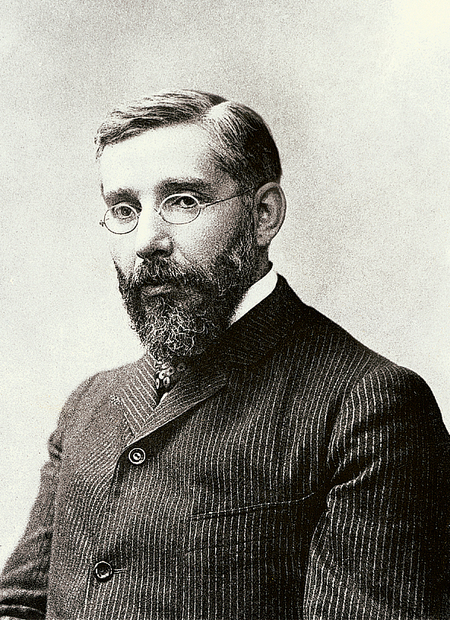
Moskovskie Vedomosti, No. 25 By His Majesty, the King of England, the Moscow City Head M. V. Chelnokov was awarded the Order of St. George and Michael
The census of Moscow begins today…
The Moscow City Governor announces that the mandatory decrees regarding the payment procedure for load bearers and the surface tax on cargo transportation throughout the city of Moscow are canceled.
Yesterday, in the Siberian Bank, located in China Town, a young man dressed in the uniform of a military lieutenant appeared, presenting a check issued on behalf of the Joint Stock Company «Supplier» for payment of 320,000 rubles. The clerk who accepted the check discovered that it was counterfeit. Investigative police officers were immediately called by phone, and they arrested the «officer.»
On the night of January 30, G. I. Kutuzov, 42 years old, who was crossing the ice of the Moskva River opposite Khamovnitskiy Lane at 42, fell into an ice hole and began to drown, but was rescued by the night watchmen Afonin and Tarasov, who rushed to his aid.
Photo: M. Chelnokov
The Right Direction …Currently, the ministry includes a minister who is unafraid of displaying or exercising this authority, or of accepting personal responsibility for his actions. I am speaking of the Minister of Agriculture, upon whom fell the heavy duty of providing food for the entire multi-million-strong army and the urban population of the rear… A. A. Ritikh took a number of measures that defied established norms and newspaper opinion… These measures, as is known, mainly concerned staple products—butter, cheese, livestock, eggs, and so on—and consisted of abolishing all restrictions on delivering these products to the capital, canceling taxes, and generally introducing free trade in the aforementioned products. This measure was a complete success…Dm. Bodisko
Russian Word, No. 25 Ban on Confectionery in Moscow The Administrator of the Ministry of Agriculture sent a telegram today to General I. I. Morozovsky, Commander of the Moscow Military District, proposing that Moscow prohibit the baking of sweet rolls, kulich, pastries, and so on, following the example of Petrograd.
Village and City Novocherkassk. Voters from the gathering of settlers in the Golubinsky hamlet lodged complaints with the first Don District Ataman regarding irregularities in the seizure of livestock. The voters stated that the hamlet residents were prepared to give the army their last head of livestock, but they considered feeding the city dwellers with meat «an insult to themselves.» «We ourselves do not eat meat, ” the complaint reads. „We believe that city dwellers will not die without it. If the last livestock is eaten in the cities, there will be nothing left to plow, and we might be left without bread…“
02/01 | Wednesday
Petrogradskaya Gazeta, No. 31 Day by Day Yesterday, the following officials traveled to Tsarskoye Selo: War Minister Major General M. A. Belyaev, Foreign Minister N. N. Pokrovsky, and Interior Minister A. D. Protopopov.
25 New Pharmacies in Petrograd
Despite massive population growth—which accelerated significantly during the war—not a single permit for opening a new pharmacy has been issued in Petrograd over the past few years.
Under the existing rules of pharmacy monopoly, the privilege to open new pharmacies can only be granted such that each existing pharmacy in Petrograd serves a known number of residents.
According to this calculation, it is possible to open between twenty-five and forty new pharmacies in Petrograd… Petrograd’s Capital Medical Administration has received an extremely large number of petitions for privileges.
Public Canteen On February 2nd, at 2 o’clock in the afternoon, a new public canteen for 1,000 meals opens on Vasilievsky Island, established by the XVII City Guardianship, at the corner of 3rd Line and Maloy Prospekt, in building No. 3–60. The canteen is intended to serve workers, students, and educated functionaries residing in the area where the canteen opens. It is with pleasure that we note this bright development against the gray backdrop of Petrograd’s City Administration activities…
General Meeting and Elections at the Academy At the general meeting of members of the Imperial Academy of Arts held on January 30th, it was resolved to grant the sculptor M. G. Manizer’s request for an overseas trip now, before the end of military operations. In the closed ballot held at the conclusion for candidates for rector, the former rector, Prof. L. N. Benuea, was nominated by an overwhelming majority (31 votes) for a new five-year term.
Combating Alcohol Sales The city governor receives daily complaints regarding the sale of alcoholic beverages in restaurants and private apartments. These complaints are most often filed by the wives of workers, who report that their husbands are drinking away their wages and note that they have received no assistance from local or investigative police… Acknowledging the inadequacy of the police response, the city governor proposed taking the most decisive action when complaints are filed.
Closure of Tea Houses By yesterday’s order, the city governor has closed tea houses for selling alcohol substitutes: M. Baranskaya — Bol. Pushkarskaya St., No. 53, and Laizina — Petergofskoye Shosse, No. 56.
Major Theft Yesterday, thieves ransacked a manufacturing store on Lesnoy, Second Murinsky Ave., No. 54. Goods valued at 5,000 rubles were stolen.
Life in the Suburbs Costs More Than in the Capital A resident of Sablino reports that a pound of sugar sells for 1 ruble and 60 kopecks! That is almost five times more expensive than in Petrograd… What can local residents do? Going to Petrograd is pointless because the sugar ration cards issued for Sablino are not valid in the capital. They are forced to pay bandit prices…
Theatrical Echo
Why Do State-Funded Performers Fall Ill? In the Alexandrinsky Theatre, there is a draft from the balconies; in the Mariinsky, there is a stark difference between the temperatures of the restrooms and the stage—in short, in all state theaters, performers risk catching a cold or falling ill easily.
The Alexandrinsky Theatre troupe decided to send a delegation to the Director of the Imperial Theatres, requesting a temporary salary increase—like all civil servants—due to the extreme cost of living.
A. P. Pavlova is retiring
Unknown Artist. Anna Pavlova
Ballerinas continue to retire. Following Vaganova, Sedova, and Egorova, A. P. Pavlova will conclude her service and retire this year in the spring. Ms. Pavlova, as is known, is currently in America and is officially on leave. …There is no doubt that whether Ms. Pavlova is considered retired or not—the management will always be pleased to welcome her back to the Imperial Stage and will gladly offer her the opportunity to perform as a touring artist…
Russian Will, No. 31 The Oil Fairy Tale (from our own correspondent) About two months ago, news spread across all newspapers that a massive oil gusher had sprung up in the Grozny oil district, on the lands of the Chechen village of Novye Aldy… The village of N.-Aldy is located near the city of Grozny; it is a relatively small settlement with 250 courtyards and three thousand residents. …The Aldy residents hardly suspected that the earth beneath their feet, which they had farmed for ages, held millions. …So many prospectors rushed to develop the oil on the Aldy lands that the villagers couldn’t keep up with their demands for the lessees… A ten-acre plot of land, instead of the former five thousand, was being leased for 20–25 thousand rubles and more. Furthermore, the Aldy residents were entitled to a share of the profits from the oil if it was discovered… The Aldy villagers then set conditions: the party granted the right to exploration had to install electric lighting in the village if successful; another was obliged to pave the streets; a third was required to build a school, hospital, and other facilities. Within a few days of the gusher bursting, the Aldy residents received over three million rubles. And their potential income, so to speak, is boundless… …From their initial earnings, the villagers donated one hundred thousand rubles to support the war efforts…
02.02 | Thursday
Russian Volya, No. 32 | Birzhevye Vedomosti, No. 16076 (Morning Edition) | Petrogradskaya Gazeta, No. 32
Military Dispatches As spring approaches, activity is slowly picking up on our front. For now, this is reflected in intensified reconnaissance operations across all fronts. In the Riga district, the enemy, having halted an offensive that failed to reach its intended conclusion, has spent the last few days heavily reinforcing its new positions on both banks of the Aa River. To the south… operations on the northern and western fronts are merely episodes of combat reconnaissance, signaling no new major operations… On the right flank of the Romanian front, serious fighting has resumed… The fierce battle lasted two days, not quieting even at night. Contested heights changed hands, but by the end of the second day, under the pressure of the superior Austro-German forces, we ceded two heights four versts east of Iacobeni and retreated one verst—to the next line of heights, where we subsequently established a foothold. On the remaining sectors of the Romanian front, no offensive actions have yet been detected…
Stock Market Chronicle Demand for dividend stocks is growing more intense every day… At today’s exchange, some stocks rose 6–7% compared to yesterday, and one stock—specifically Black Sea steamship shares—soared by more than 20 percent…
Arrest of a Counterfeiter Last night, police officers from the branch office of the Primorskaya Railway arrested a long-sought adventurer, P. F. Filippov, age 72, at a luxurious mansion near the Razdelnaya station. Filippov had perpetrated several scams across various Russian cities. Recently, Filippov had been selling fake credit tickets. He would typically travel to Petrograd, where he would deceive trusting individuals, offering them to buy batches of credit tickets manufactured in a special way. One of Filippov’s latest victims was S. A. Seleznev, a former mechanic from the Pathilov plant, who had acquired three-ruble credit tickets worth 1,000 rubles from the elder a few days prior for 800 rubles. Seleznev successfully cashed the purchased credit tickets at the State Bank and decided to buy more credit tickets from Filippov worth 25,000 rubles, promising him 10,000 rubles for them. However, by sheer coincidence, Seleznev discovered that the three-ruble tickets Filippov had given him for 1,000 rubles were genuine. Before paying Filippov the promised 10,000 rubles, he reported the alleged scheme to the police. Filippov was arrested after being implicated in 10 similar fraudulent activities.
Female Artists—Candidates for Academy Membership At a general meeting of members of the Academy of Arts, a fundamental question was discussed: could female artists be elected as academicians? It was determined that the Academy’s charter contained no provisions forbidding this. Consequently, Ostroumova-Lebedeva, Schneider, Bela-Voskardovskaya, and Serebryakova were proposed for election as academicians.
From Moscow (From the Special Correspondent) During a recent meeting of members of the Moscow Patriotic Union, chaired by V. G. Orlov, it was decided to send a telegram to Minister of Internal Affairs Protopopov. The telegram would state that the Patriotic Union hoped he could disrupt the impending criminal revolutionary plots organized by the Zemstvo Union and the Military-Industrial Committee through the strictest and harshest measures. It was also resolved to request that attention be paid to the activities of A. I. Guchkov, who was strongly advocating for the workers of the Military-Industrial Committee and shielding them from suspicion. Furthermore, Protopopov’s entire policy—which was currently aimed at dismantling the worker groups within the Military-Industrial Committees—was fully approved.
Upcoming Performances
Rehearsals for «The Masquerade» are resuming at the Alexandrinsky Theatre. The play will be rehearsed both morning and evening with a scheduled premiere on February 25th. Parallel to «The Masquerade, ” rehearsals for Maxim Gorky’s „The Petty Bourgeois“ will take place for the Literary Fund production. „The Case“ and „The Death of Tarelkin“ are planned to follow „The Masquerade“ in March.
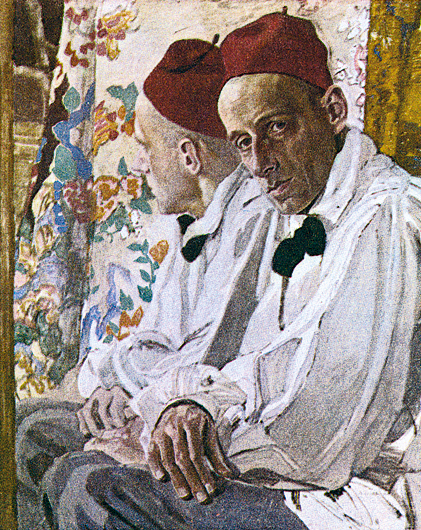
Meyerhold and «The Kretchinsky Wedding» …On February 3rd, the role of the Kretchinsky Wedding will not be played by Mr. Yuryev, but by the former performer, Mr. Korvin-Krukovsky… It is worth noting that Mr. Meyerhold was only able to «restore» the first act of «The Kretchinsky Wedding.» As for Acts 2 and 3, in which Raspluyev participates, V. N. Davydov stated that the «staging» of the original production was approved by the author himself, and he would not allow any changes to it. Mr. Meyerhold was left with no choice but to ruin the first act, in which V. N. Davydov is not involved.
Illustration: A. Golovin. Portrait of V.E. Meyerhold