Navigation
1. Concept 2. Formation of Biblical Iconography 3. Biblical Iconography Through Humanity and Its Position in Society 4. Biblical Iconography Through Staged Reenactment 5. Biblical Iconography Through Scale and Photomontage 6. Conclusion 7. Literature
Concept
Biblical narratives have long remained a cornerstone theme in European painting. Scenes such as the Fall of Man, the Sacrifice of Isaac, the Annunciation, the Last Supper, and the Crucifixion have been depicted countless times by artists across different eras. Gradually, recognizable compositional structures developed for these narratives—arrangements of figures, gestures, objects, and symbolic attributes—that helped convey the substance of the biblical episode. Despite variations between works from the Medieval, Renaissance, and Baroque periods, many iconographic principles persisted and continued to be employed in subsequent centuries.
With the advent of photography, biblical themes took on a new mode of representation. Staged photography allowed artists to reference the compositions and subjects of religious painting, maintaining the recognizability of the image while altering the historical setting and attributes. Biblical events began to be portrayed in contemporary interiors, urban spaces, and everyday circumstances. Even without traditional religious iconography, the imagery could retain a connection to the original narrative.
As part of this research, I intend to examine biblical iconography in painting and its reinterpretation in contemporary staged photography. I am interested in the narratives from the Old and New Testaments that allow for the tracing of retained or altered historical principles. For source material, I will refer to Adi Nes’s «Biblical Stories» series, where Old Testament characters are portrayed as people living on the streets of a modern city, David Lashapel’s projects dedicated to the photographic reconstruction of the «Passion of Christ.» Additionally, I will examine David Mac’s photo collages from the «Precious Light» series, which merge biblical events with imagery from the contemporary world.
I want to determine which visual elements allow the viewer to recognize a Biblical narrative regardless of the era or artistic medium, and which alterations lead to a new interpretation. The central question remains the transformation of Biblical iconography when moving from religious painting to contemporary photography, and what role historically established composition plays in this process. I hypothesize that contemporary artists utilize Biblical iconography not only as a reference point for compositional recognition but also as a means of reinterpreting traditional imagery. By retaining individual elements, they transplant Biblical narratives into the context of modern culture. In this way, familiar images begin to address everyday themes: social inequality, violence, human vulnerability, compassion, and faith. Furthermore, changes in composition, setting, and mode of depiction become one of the primary means of transforming the original meaning. Biblical iconography is viewed as a visual language that contemporary artists employ to create new interpretations.
For the research section, I plan to structure the work around individual biblical narratives and their iconographic characteristics. Initially, I will examine Old Testament scenes from Adi Nes, followed by New Testament scenes by David Lashapel and photographic collages by David Mac, which address narratives from both covenants. For each chapter, contemporary works will be compared with historical religious paintings. Special attention will be paid not only to composition and symbolic attributes but also to the underlying reason artists choose specific biblical subjects. This comparison will allow us to see how traditional iconography transforms into a medium for artistic commentary on the modern world.
Forming Biblical Iconography
Biblical narratives gained recognizable modes of depiction in painting. Artists selected a specific moment from the story and conveyed it through the arrangement of characters, gestures, actions, and symbolic objects. These elements helped not only to identify the subject matter but also to understand its content.
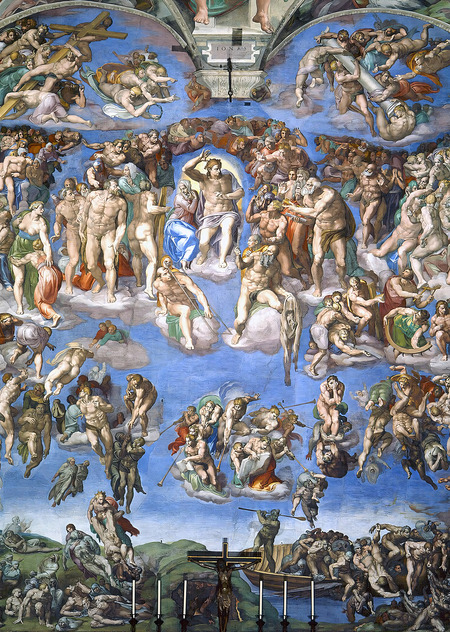
«The Last Supper,» Leonardo da Vinci (1495–1498)
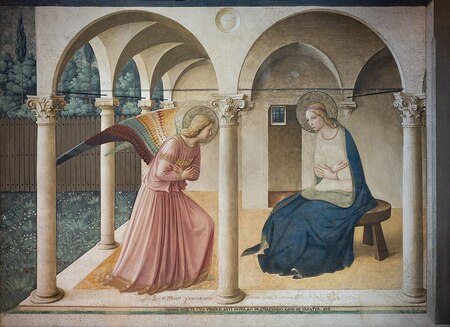
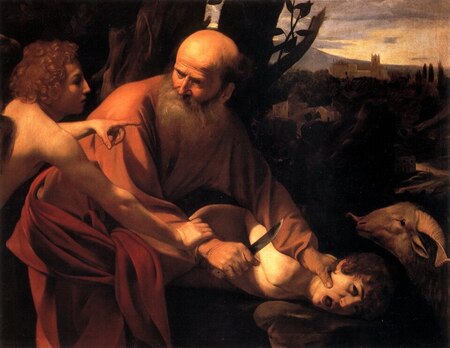
«The Annunciation» by Fra Beato Angelico (1440–1450) | «The Sacrifice of Isaac» by Merisi da Caravaggio (1601–1603)
Leonardo da Vinci portrays the apostles' reaction to Christ’s words on betrayal; Fra Beato Angelico depicts Mary’s encounter with the Archangel Gabriel; and Merisi da Caravaggio considers the angel’s intervention in the sacrifice of Isaac. In each case, the composition highlights key characters—specifically, moments in the narrative—determining where the viewer’s attention is focused: on actions or relationships.
The biblical image not only depicted individual events but also connected them to one another. In the medieval «Poor Bible,» New Testament scenes were juxtaposed with Old Testament prototypes. This arrangement allowed one narrative to be interpreted through the lens of another, thereby establishing an additional layer of meaning.
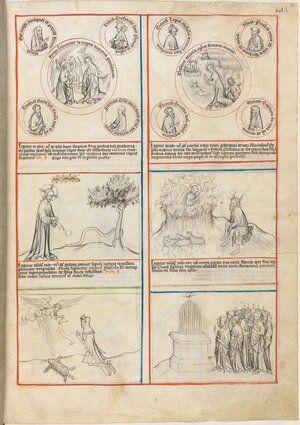
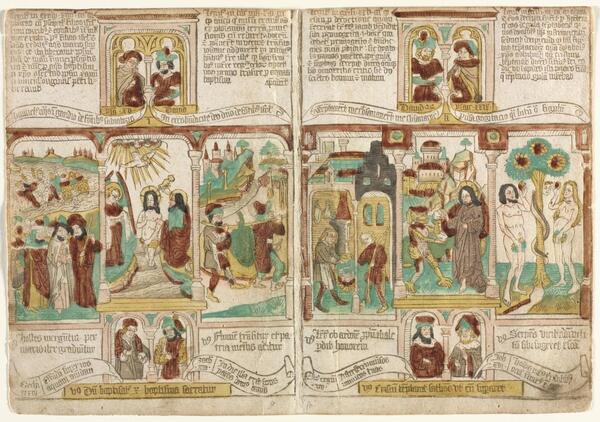
«The Metten Bible of the Poor» 1414–1415 | «Poor People’s Bible» 1465
Biblical iconography has always been more than just a way to depict religious events—it has been a medium for interpretation. Artists could reveal the content of a familiar narrative in various ways, by selecting a specific moment, composition, or symbolic detail.
This principle has evolved in contemporary photography. By referencing religious imagery, artists transplant these figures into new contexts to comment on the modern world. Although the composition might be preserved, the original meaning is altered to better address contemporary realities.
«Untitled, ” Adi Nes (1999)
Biblical Iconography Through the Human and Their Position in Society
In the «Biblical Stories» series (2003–2006), Israeli photographer Adi Nes transplants Old Testament characters into a modern urban setting. He reinterprets divine trials, showcasing ordinary people grappling with poverty, exile, and loneliness.
The photographer explained that he aimed to create a contemporary Bible by selecting the most human and vulnerable moments of life. To achieve this, he draws upon religious painting—preserving specific compositions, gestures, and figure poses—yet his work speaks to violence, inequality, and human relationships in contemporary society.
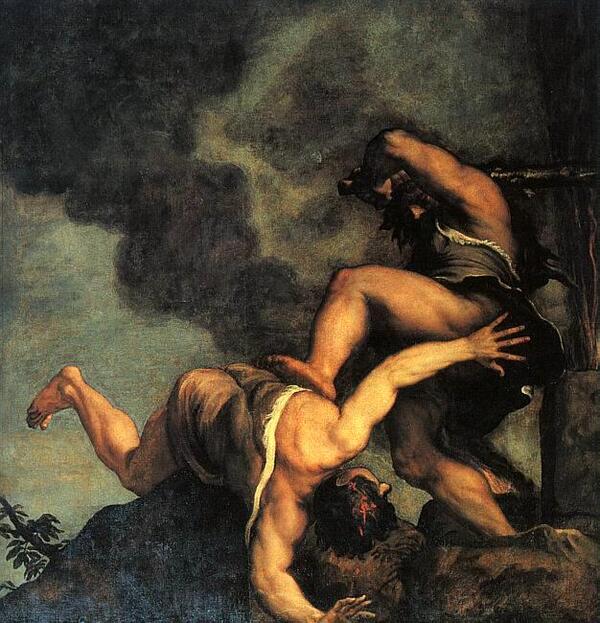
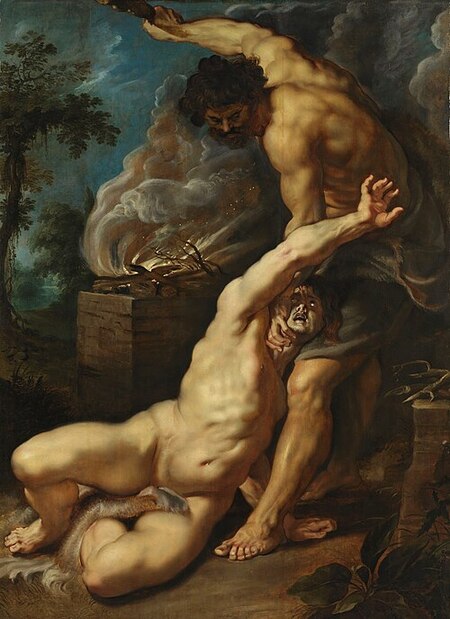
«Cain and Abel, ” Titian Vecelliio (1542–1545) | „Cain Killing Abel, ” Paul Rubens (1608–1609)
The story of Cain and Abel establishes murder as the consequence of the first fraternal confrontation. Titian Vecellio and Paul Rubens depict the culmination of the conflict through the tension of the bodies and composition—where Cain towers over his brother, and the gestures emphasize the imbalance of power.
Adi Nes transfers a similar compositional tension into the contemporary urban environment. He retains the dynamic of the aggressor over the victim and the intense struggle, but he removes the religious iconography. Biblical fratricide transforms into an image of modern violence. The roles of the characters are ambiguous. The tattoos on the body of the prone man further complicate the image, recalling the mark of Cain. This creates a deliberate uncertainty that disrupts the conventional division between perpetrator and victim.
«Cain and Abel, ” Adi Ness (2006)
In another piece of the «Biblical Stories» series, Adi Nes depicts the consequences of conflict, but instead of a religious motif, the image features urban life. Warm light highlights a nearly nude figure against a cold, city backdrop. The two photographs explore a single biblical narrative: violence and its aftermath. The historical plasticity of the body is maintained, yet the tragedy is transposed into contemporary society.
«Abel,» Adi Nes (2006)
In the story of Cain and Abel, Adi Nes portrays violence and its consequences while retaining the recognizable plasticity of historical imagery. However, in other photographs, he addresses events where the traditional climax is virtually absent, and the focus shifts from the biblical trial itself to the human condition.
«The Sacrifice of Isaac, ” Rembrandt (1635)
In religious narratives, the culmination of the sacrifice of Isaac is often referenced—the intervention of an angel halting Abraham. But what happens after that?
According to the artist, his interest lay in Abraham’s condition after the trial, once the heroic event was in the past. In the photograph, the father is pushing his son in a shopping cart amidst plastic bottles. Religious attributes are replaced by objects of modern poverty. The biblical test of faith transforms into a story of a child’s dependence on his father, their poverty, and the uncertainty of the future. The space of divine intervention is occupied by the necessity of caring for another person.
«Abraham and Isaac,» Adi Nes (2006)