
Research Concept
Typically, the brand itself is the center of the advertising campaign: its product, advantages, and recognizable visual characteristics. However, the history of advertising also features a different approach, where the competitor becomes the main subject of the promotional message.
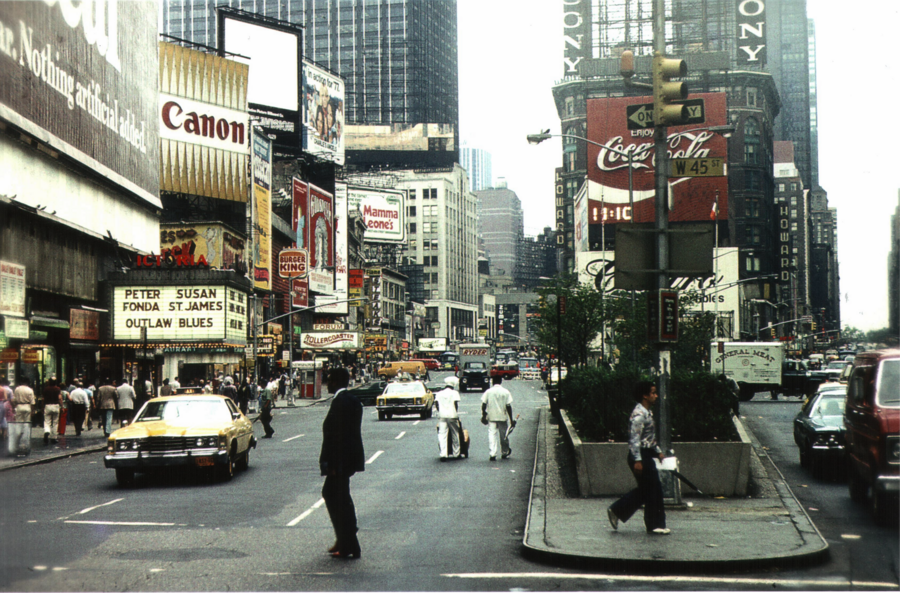
Advertising billboards on Times Square. New York, 1977.
Brands borrow other companies' logos, corporate colors, packaging elements, and even advertising characters, placing them into an unfamiliar context. These familiar images change their original meaning and begin to work in the interest of another brand.
I became interested in how a distinct visual language is formed during competitive advertising, and why the meaning of some advertising campaigns cannot be fully understood without knowing the competitor’s brand identity.

The core of the research rests on the hypothesis that a competitor can function not only as a market rival but also as an autonomous expressive medium. Its image transforms into a metaphor, a character, an object of parody, and, in some cases, a promotional vehicle.
(Excerpt from the animated film «Logorama.» François Allo, Hervé de Cressy, Ludovic Uplen. H5 Studio, France, 2009.)
For this research, I selected advertising campaigns from the second half of the 20th century and the beginning of the 21st century. Through these examples, I trace the evolution of comparative advertising—from the direct comparison of product features to visual irony, parody, and intervention within a competitor’s advertising space.In this work, I utilize comparative and semiotic analysis, paying close attention to the composition of the advertising materials, the nature of visual borrowings, and the shifting meaning of recognizable imagery.
Research Objective
Identify and systematize the visual techniques by which brands incorporate the image of a competitor into their own advertising communications.
Categories
[1] From Comparison to Confrontation
[2] Adopting Another’s Image
[3] The Competitor as Character
[4] Advertising as Dialogue
[5] Capturing Advertising Space
[6] The Boundaries of Advertising Confrontation
[7] Conclusion
[8] Bibliography
[9] Image and Video Material Sources
[1] From Comparison to Confrontation
A product’s presentation is shaped not only by its intrinsic characteristics but also by how it differentiates itself from other offerings in the market. When a brand speaks of superior quality, an accessible price, or ease of use, it inherently implies the existence of a competitor, even if it does not name them directly.
In comparative advertising, this contrast becomes more explicit. The presence of another brand may be indicated by its name, product imagery, distinctive packaging, or specific recognizable details.
In American advertising, the practice of directly mentioning competing brands gained widespread traction in the 1970s. In 1979, the U.S. Federal Trade Commission published a document supporting comparative advertising, provided the information contained within it was accurate. This comparison was intended to help consumers make more informed choices.Over time, a competitor’s presence in advertising acquired another function. Beyond comparing products, brands began using its image to shape their own positioning.
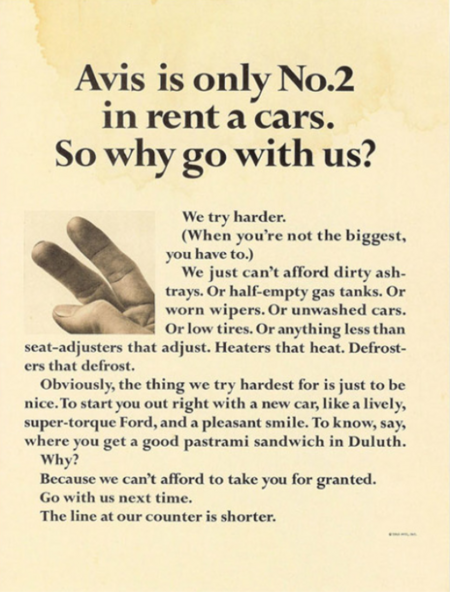
In the early 1960s, the American car rental company Avis was trailing its main competitor, Hertz. The agency Doyle Dane Bernbach suggested that instead of hiding Avis’s second-place position in the market, they should make it the central theme of their advertising campaign, «We Try Harder.» Instead of claiming leadership, Avis openly acknowledged its position. The need to compete with a more successful company was precisely what explained why Avis needed to pay closer attention to customer service and put forth more effort.
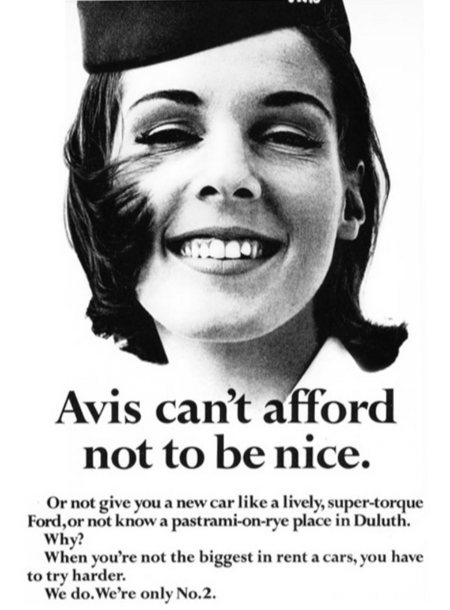
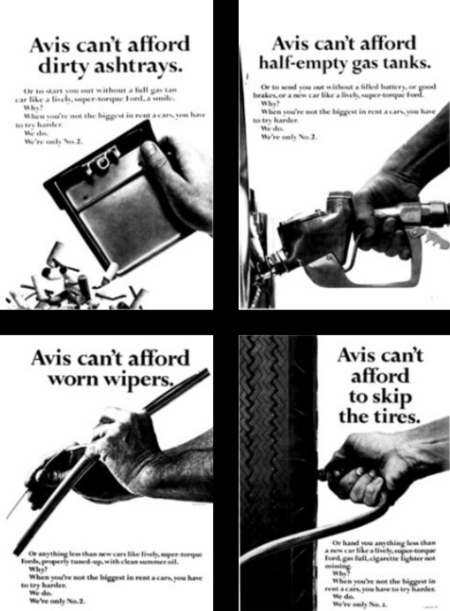
Avis advertisements from the «We Try Harder» campaign. Doyle Dane Bernbach, USA, 1960s.
This concept was also reflected in the design of the advertisements. Large headlines, restrained imagery, and sufficiently substantive text shifted the focus from the product’s external appeal to its argumentation. The advertising explained more than it demonstrated.It is interesting that to establish this contrast, it was unnecessary to depict Hertz cars or use the company’s logo. The mere fact of a leader’s existence already worked in Avis’s favor. Through this, the company transformed a circumstance that is usually kept hidden into the foundation of its own positioning.
In 1966, Hertz responded with a series of advertisements.
Avis’s positioning then became the focus of its competitor. A public advertising dialogue arose between the two companies.
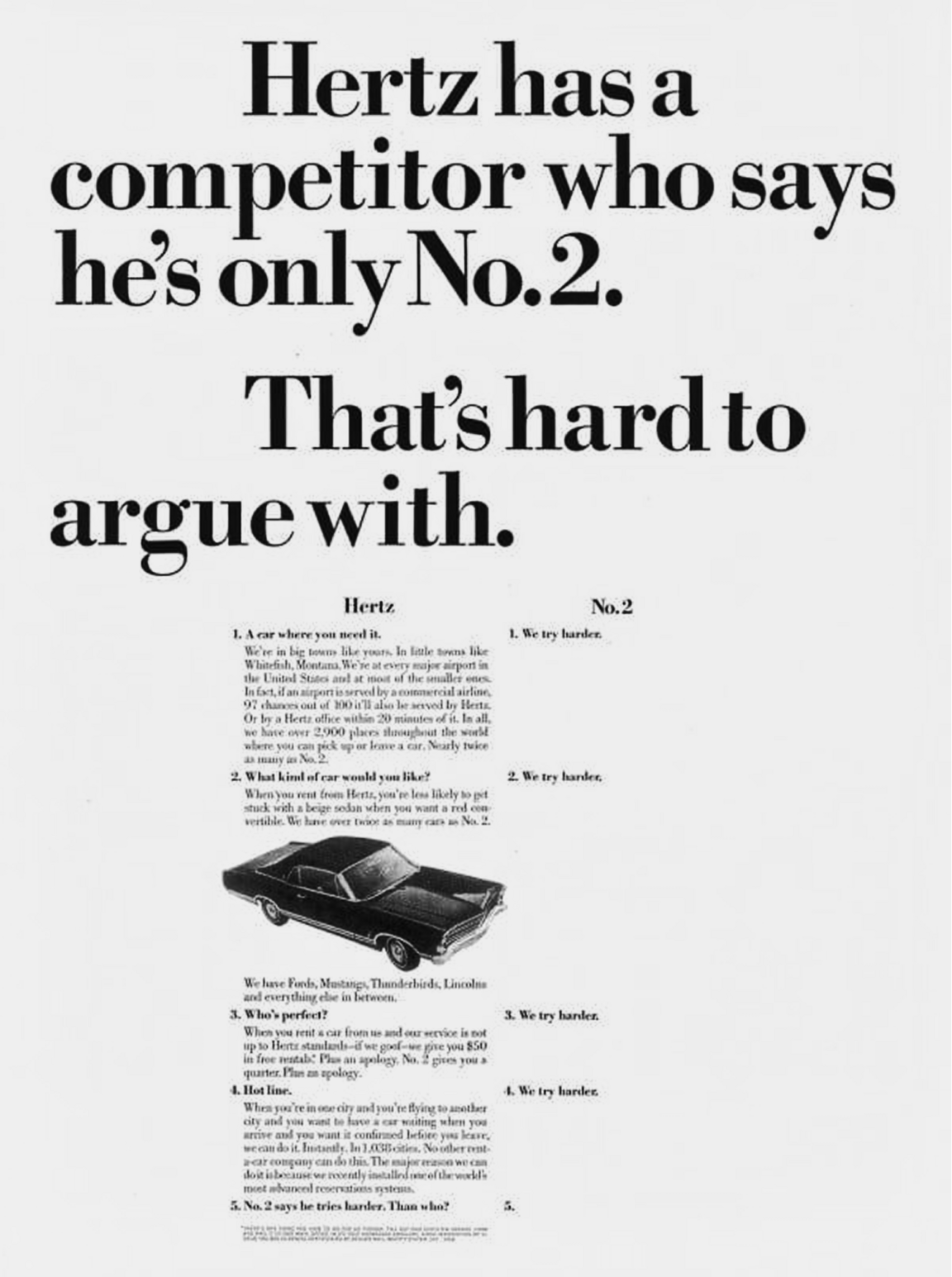
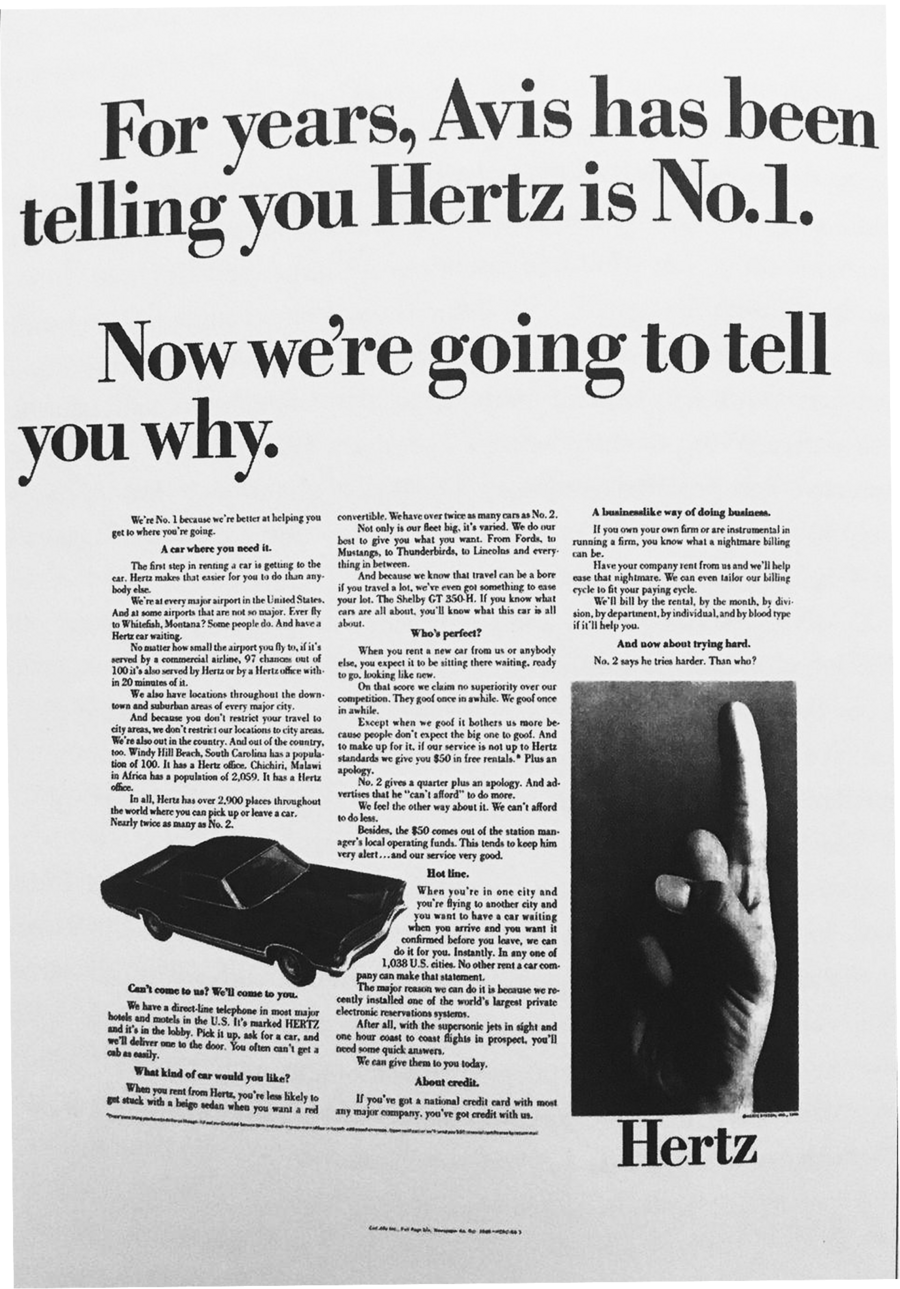
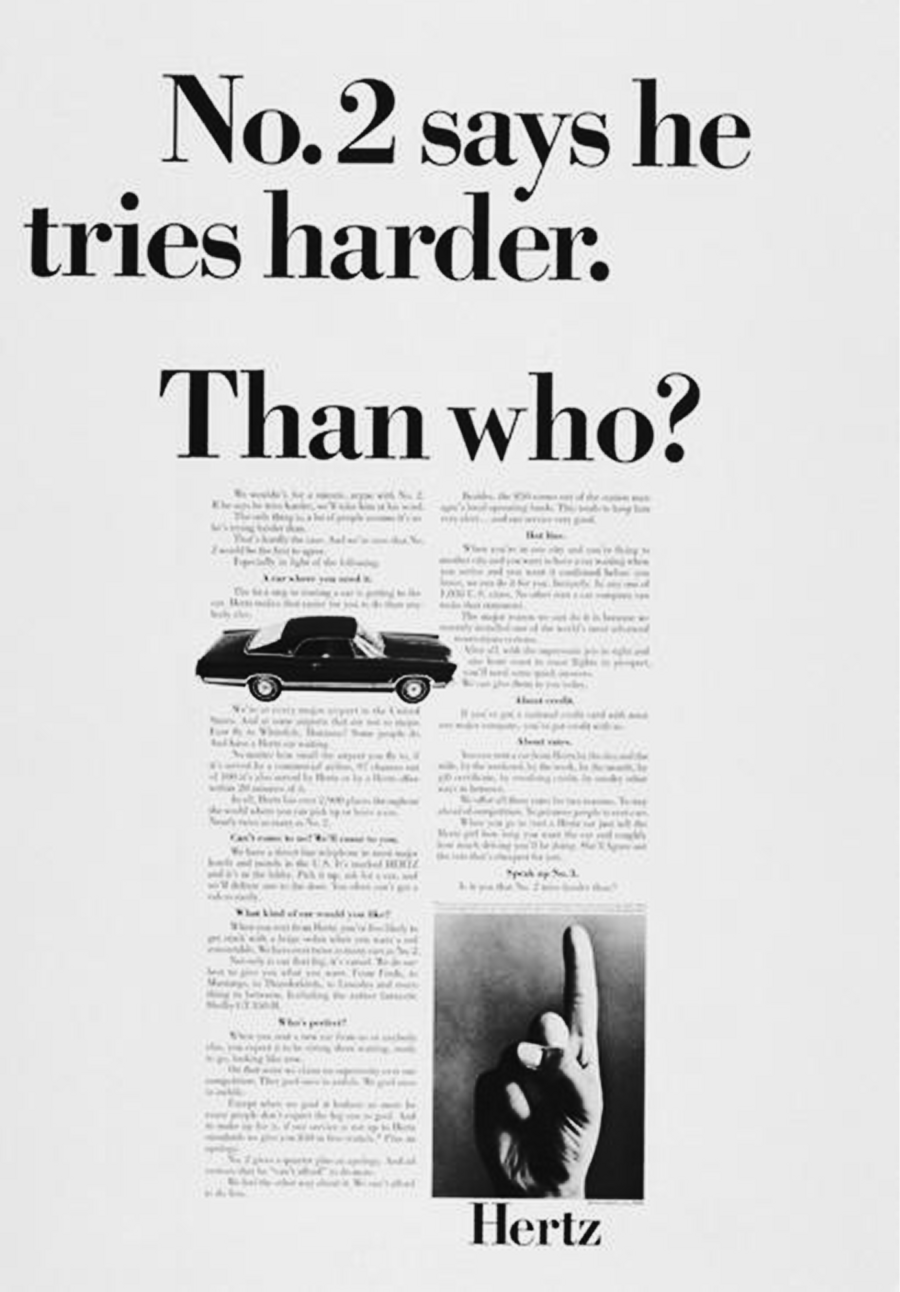
Hertz vs. Avis advertising battle, USA, 1966.