INDEX
[1] Concept. [2] Illustrative Series [2.1] The Body That No Longer Fits. [2.2] John Tenniel: The Persuasiveness of the Impossible. [2.3] Arthur Rackham: The Body Within a Strange World. [2.4] Comparison. [3] Conclusion. [4] Bibliography. [5] Image Sources.
CONCEPT
The human figure in illustration can be recognizable yet anatomically impossible. The head swells, the neck elongates, the limbs cease to correspond with the torso, and the figure becomes too large for the surrounding space. Such alterations are not necessarily errors or conventions of the drawing. Instead, they can become an independent method of constructing an image. This study examines the deformation of the human figure in illustrations for Lewis Carroll’s Alice’s Adventures in Wonderland. This material allows us to view the violation of proportions as a recurring principle. Alice’s body is constantly changing, and every change disrupts her relationship with objects, space, and other characters.
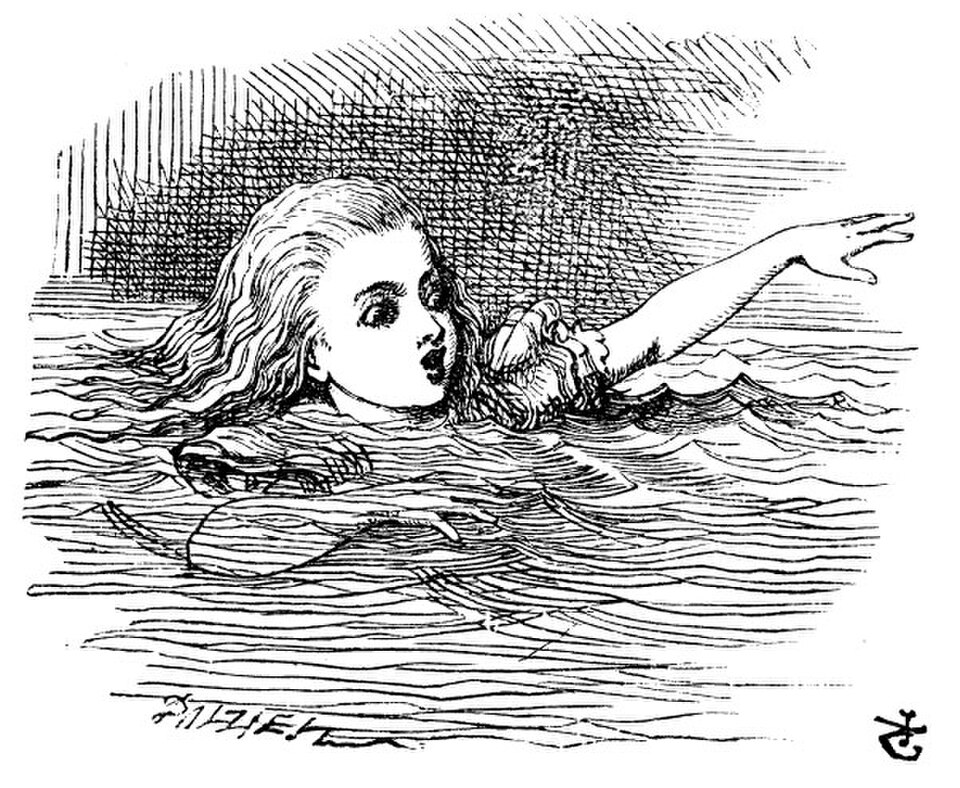
John Tenniel, 1865
The central question of this visual study is how the illustrator renders the impossible body convincingly and what role distortion plays in narrative development. The working hypothesis is that the disruption of proportions becomes especially impactful because recognizable character traits are retained. The face, hairstyle, and dress allow the viewer to continue perceiving Alice as a singular individual, even as her size and structure change. For comparison, illustrations by John Tenniel from the 1865 edition and Arthur Rackham from the 1907 edition have been selected. These works span different periods in the history of British book illustration and offer divergent approaches to depicting the fantastic. This comparison is not constructed as a search for a more precise reading of Carroll, but rather as an analysis of autonomous visual choices.
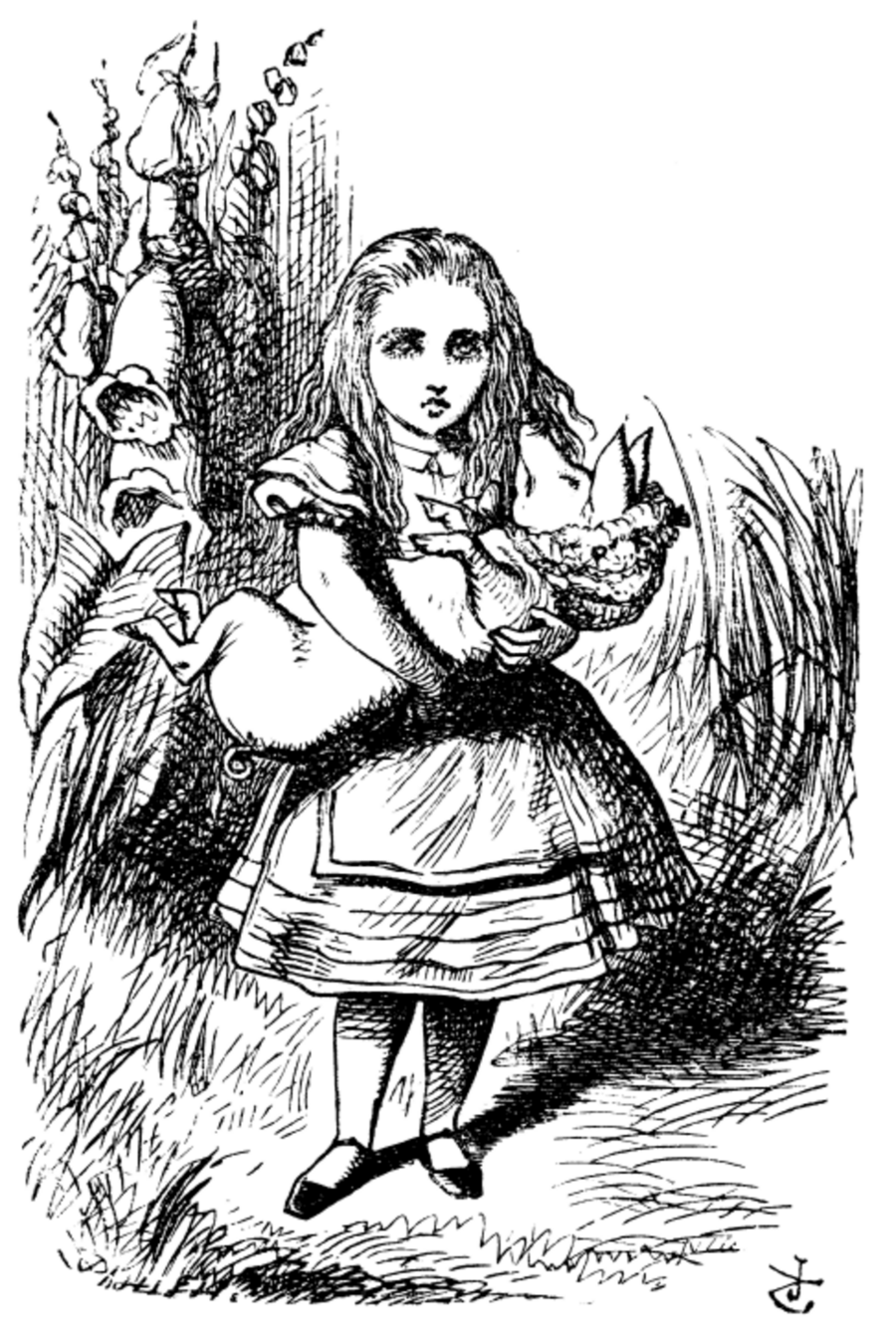
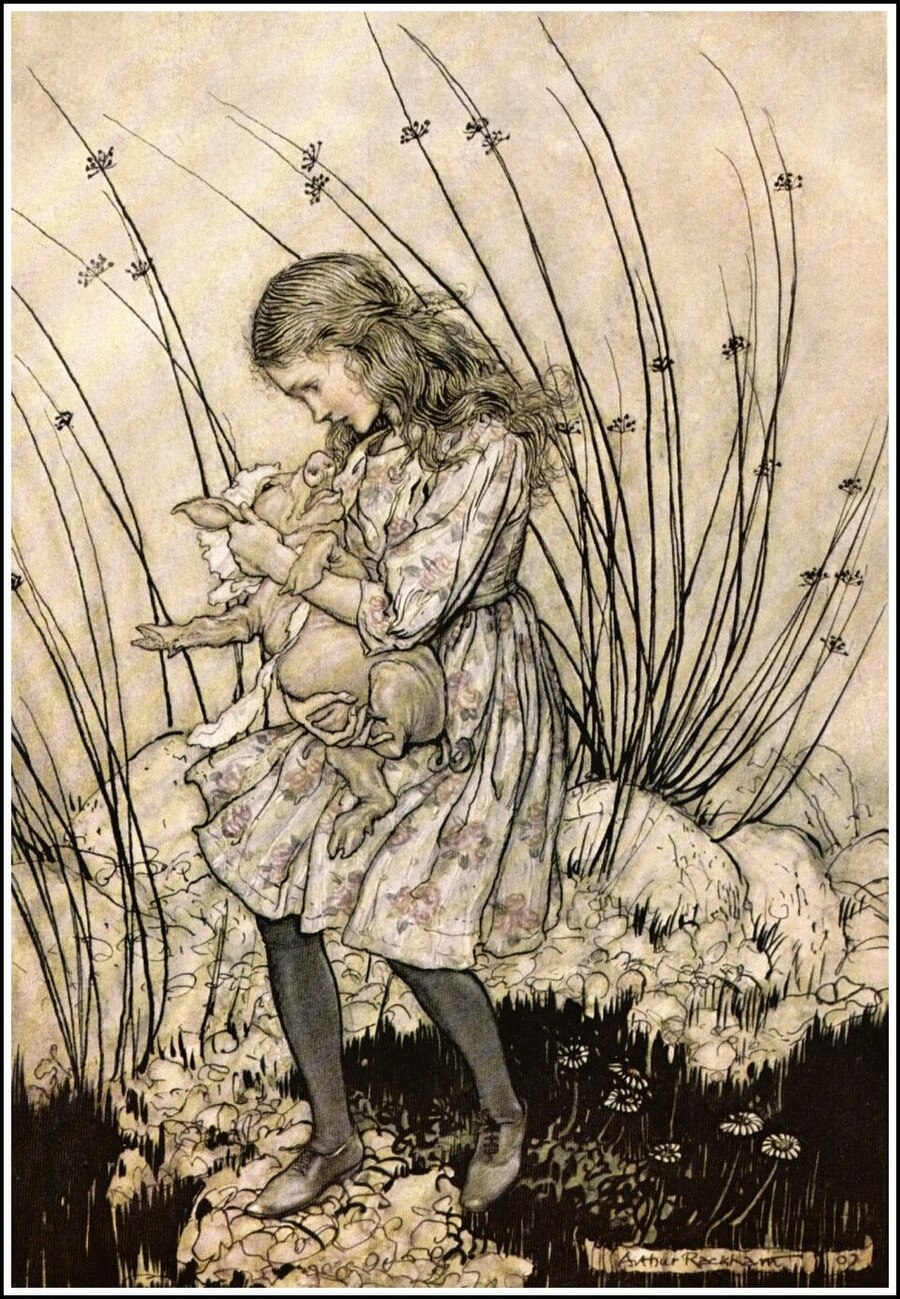
1. John Tenniel, 1865 2. Arthur Rackham, 1907
The visual study is organized around several operations: scaling, stretching, the body colliding with space, transformation, and the exaggeration of facial features. Furthermore, there is a distinction between changing the figure’s size and altering its internal proportions. A large figure is not necessarily disproportionate; its strangeness can only arise when compared to familiar objects. The primary method involves comparing full illustrations and magnified details. The full image shows the character’s placement within the scene, while the detail allows for a closer look at the contour, gesture, and expression. Separate analysis is given to how Alice’s recognizability is maintained and the relationship between the human figure and animal or hybrid characters. The goal of this work is to demonstrate that deformation in book illustration is not merely a decorative element for a fantastic plot. Instead, it helps to make visible the loss of stability, the change in the hero’s position, and the disruption of the accustomed order. The impossible body becomes a tool of narrative.
John Tenniel, 1865
Not every change in scale is a distortion of proportion.
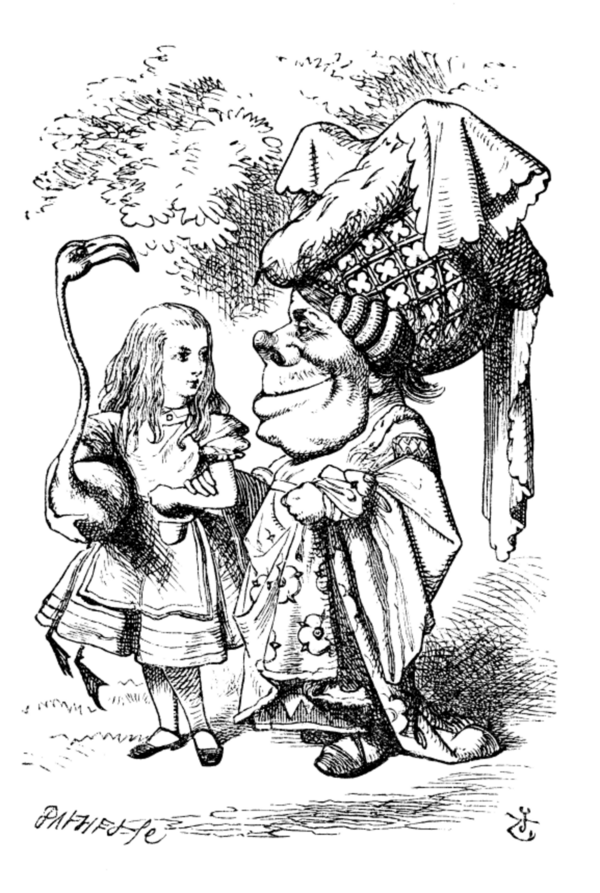
Scale is the relationship between a figure and its surrounding objects. Proportion is the relationship between the parts within the figure itself. Pose is the body’s position, which can appear unusual without altering the anatomy. In illustrations, these techniques often operate simultaneously but serve different functions. In this study, grotesque is examined as the merging of the recognizable and the impossible. The human figure retains familiar traits but violates the viewer’s expectations. Such an image can be funny, anxious, or evoke both reactions simultaneously. Therefore, the grotesque cannot be reduced to mere caricature or a depiction of an «ugly» person.
John Tenniel, 1865
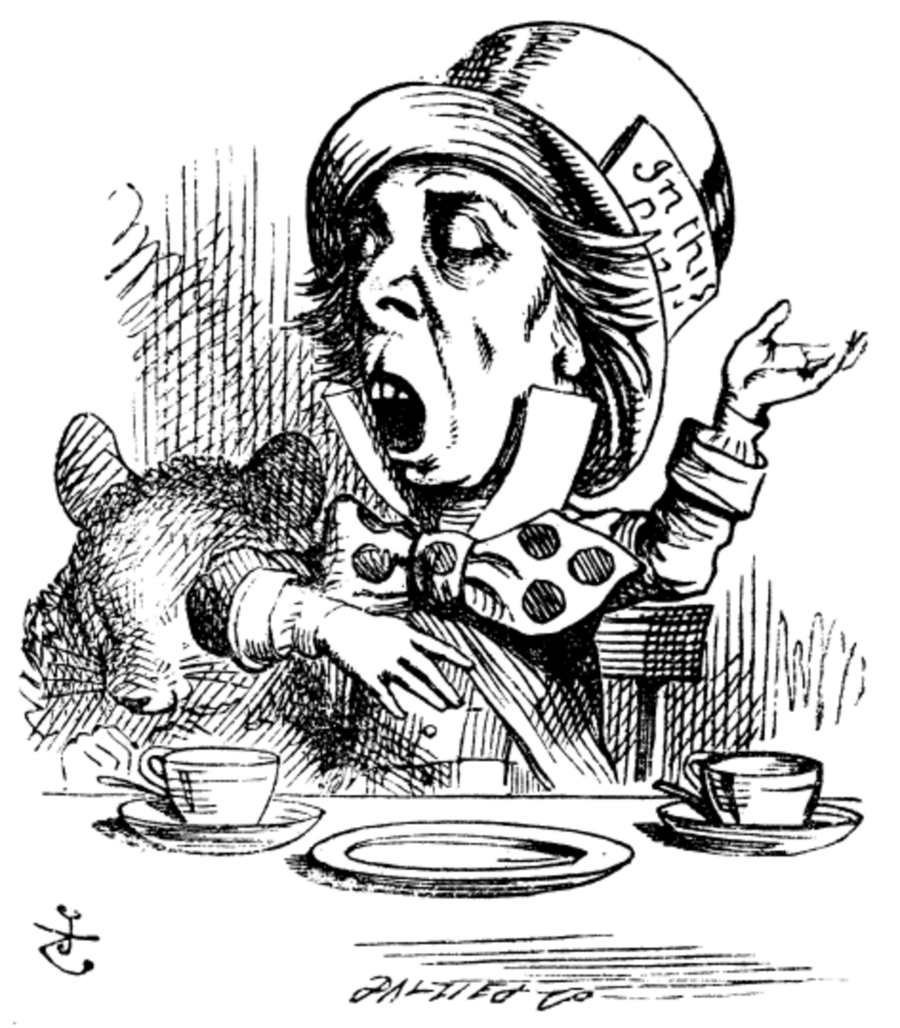
John Tenniel, 1865: Black and white graphics, distinct outlines, expressive poses, and a clear relationship between the figure and the objects. Arthur Rackham, 1907: Line drawings and color illustrations, complex natural environments, fluid contours, and grotesque characterization. The differences are examined in specific scenes, not as a contrast between «correct» and «incorrect» illustration.
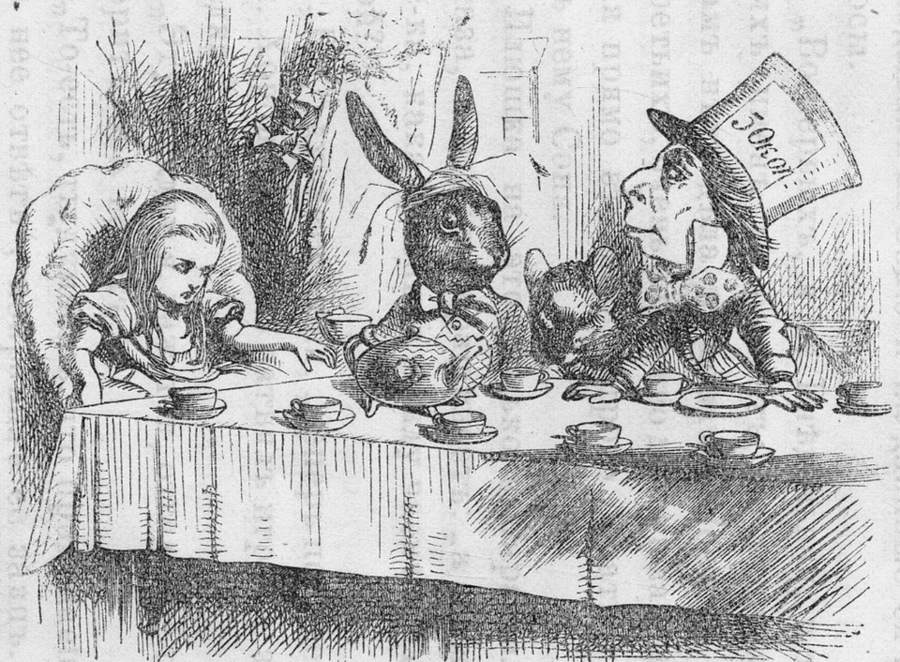
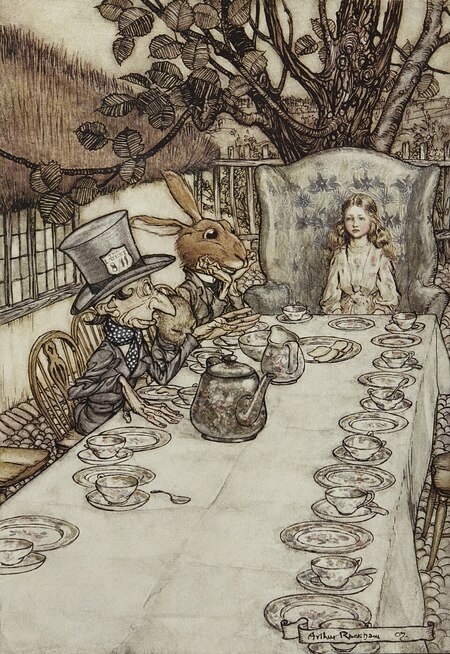
Tea Party Scene 1. John Tenniel, 1865 2. Arthur Rackham, 1907
THE BODY THAT NO LONGER FITS
The resizing in «Alice» is not a singular miracle, but a recurring condition of the heroine’s existence.
John Tenniel, 1865 Alice’s Adventures in Wonderland
An unusual scale becomes comprehensible through familiar objects. A door, a table, a bottle, or a house serves as a point of comparison.
Without these anchors, the viewer might perceive only an ordinary figure,
simply rendered larger or smaller.
The fantastical emerges in the relationships between objects.
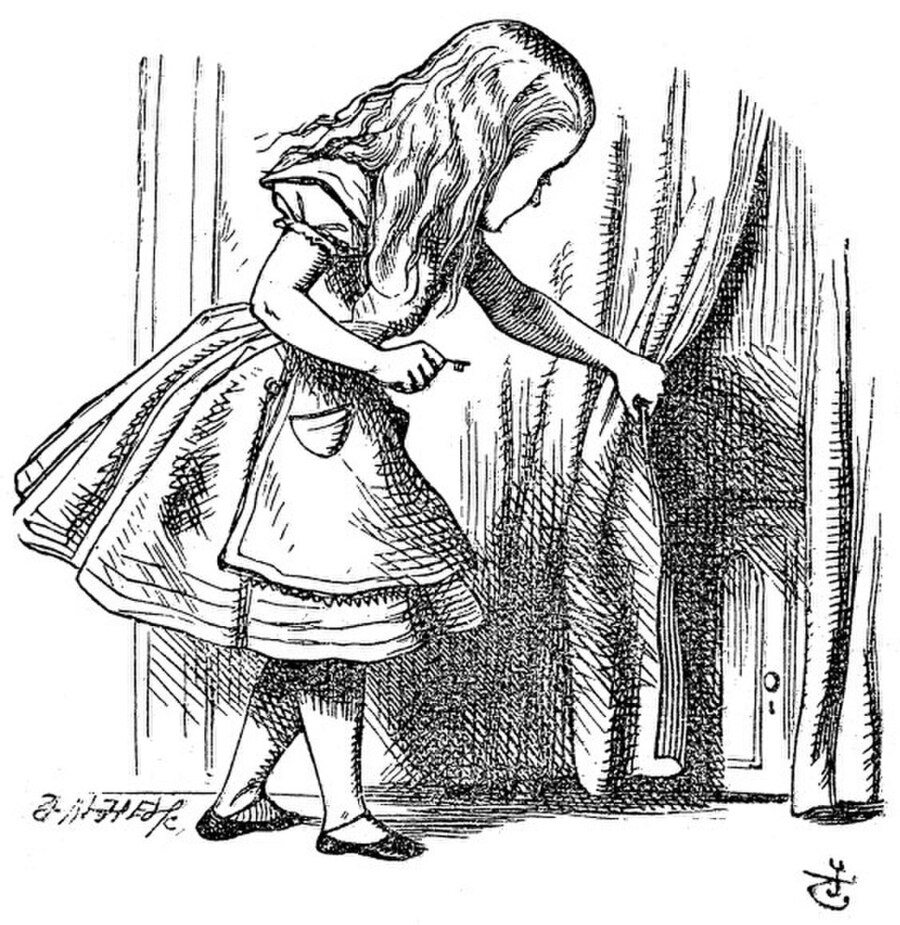
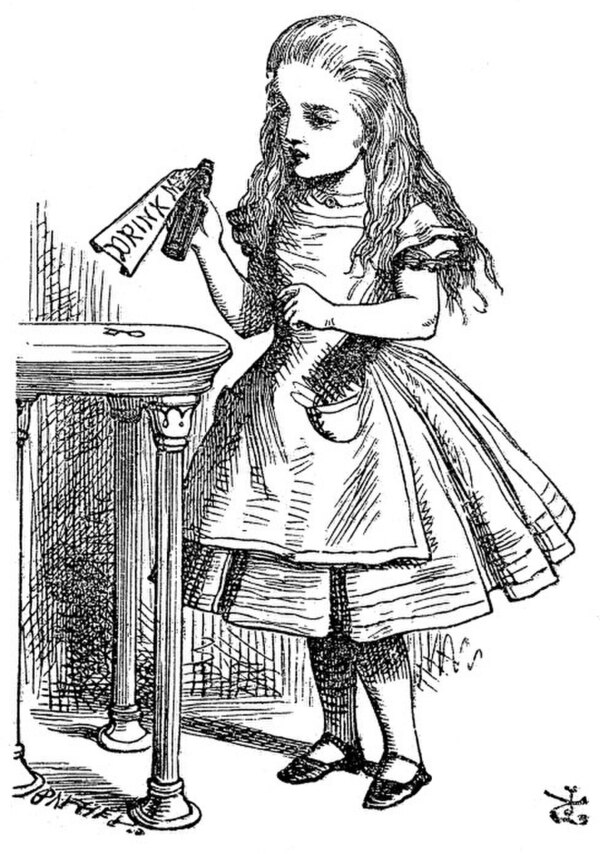
John Tenniel, 1865 1. Alice at the Small Door 2. Scene with the «Drink Me» Bottle
When Alice’s body changes, the surrounding world is not obligated to change with it. A familiar object retains its shape but becomes inaccessible—too small or excessively large. It is this constancy of things that makes the change in her body noticeable. Growth of the body does not always equate to the hero’s strength. A large Alice may find herself immobile and helpless because the space no longer allows her to act. Size only grants an advantage in specific situations; in others, it transforms into an obstacle.
John Tenniel, 1865 Alice and the Puppy
When Alice becomes small,
ordinary beings and objects are perceived differently. The insignificant gains weight,
and the safe can become threatening. The illustration shows not just a small person,
but a restructuring of the relationship between humanity and the world.
John Tenniel, 1865 1. Standard Figure 2. Elongated Neck 3. Figure within Space
Recognition remains—relationships evolve.
Changes do not destroy the character’s identity. Alisa remains recognizable due to recurring traits: her hairstyle, dress, and facial features. The consistency of these elements allows for the depiction of radical bodily transformation without introducing a new character each time.
JOHN TENNYLE: THE PERSUASION OF THE IMPOSSIBLE
In Tenne’s fantasy figure, the form does not dissolve into ambiguity. The contour allows one to precisely see where the body runs and how it is structured. The clearer the impossible form is depicted, the stronger the collision between its visual believability and its anatomical implausibility.
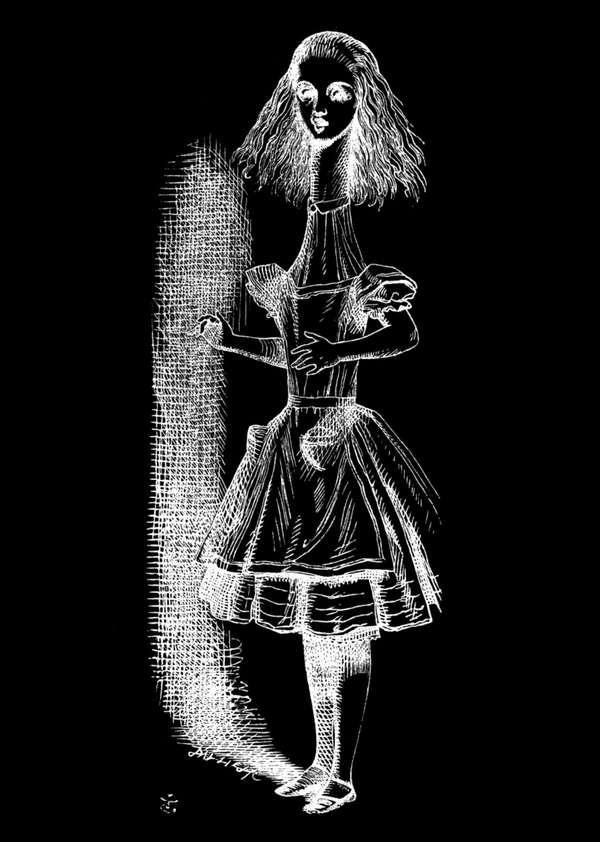
John Tenniel, 1865 Alice with a Long Neck
In the depiction of Alice Tenniel stretching out, the recognizable features of the heroine—her face, hairstyle, and dress—are preserved. However, the proportions of the body are distorted; the neck and figure acquire an unnatural elongation. The sharp contour allows the viewer to perceive the impossible body as a defined, complete form. The artist does not conceal the anatomical distortion; rather, they make it explicit. Through the combination of familiar details and altered proportions, the viewer continues to recognize Alice while simultaneously noticing the impossibility of her new form.