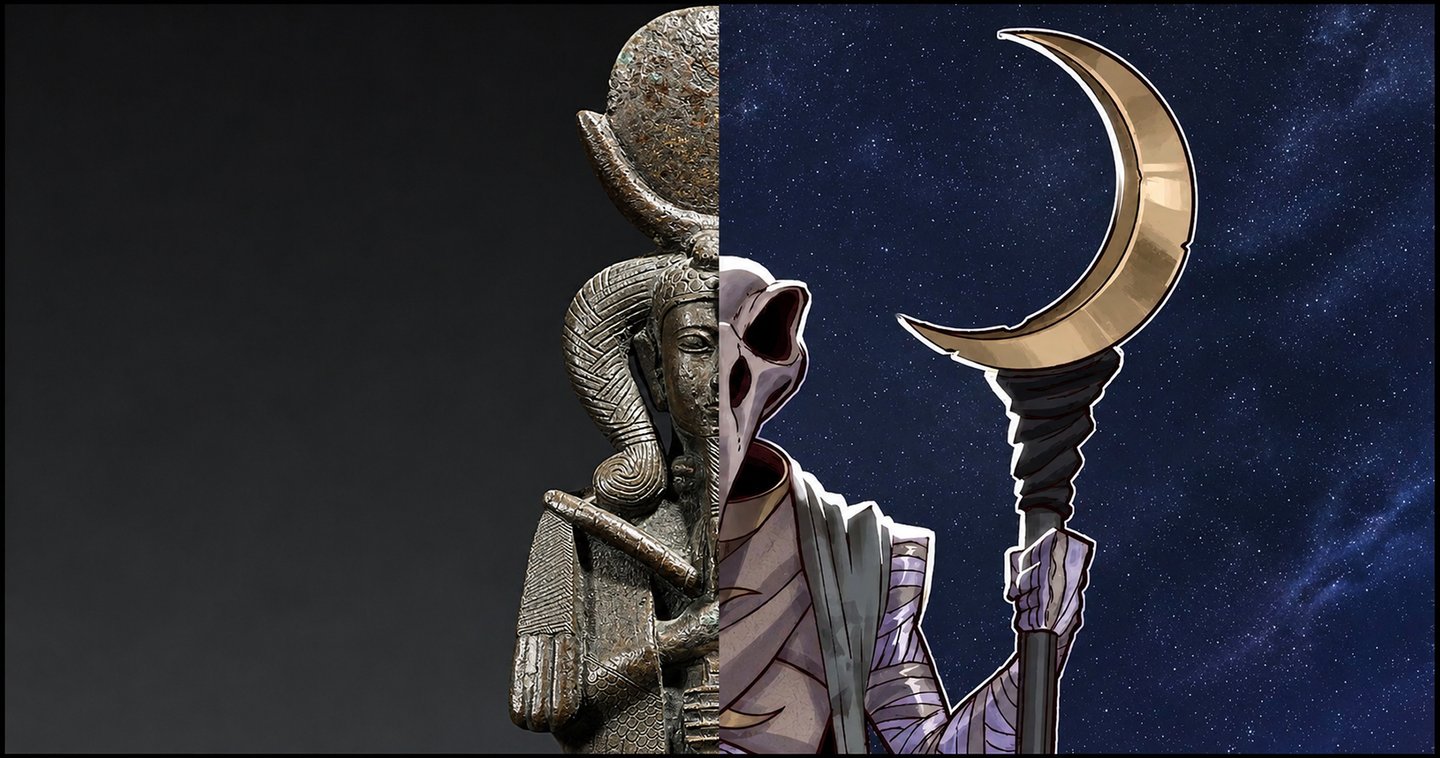
Concept
In ancient Egyptian art, the depiction of a deity was constructed from numerous visual attributes, which were canonical for each god. These attributes helped to identify the deity and signified its functions. Furthermore, one god could possess multiple visual representations, which shifted depending on the era and the religious context [1].
Ancient Egyptian art was intrinsically linked to religion. It followed established rules for composition that helped convey the essence of the subject. Among these deities was Khonsu, who was primarily associated with the Moon [2]. He was depicted in human, mummy-like, and falcon-headed forms. His recognizable traits include the lunar disk and crescent moon, the youthful side lock, a divine beard, the ankh, and scepters [3]. Together, these elements formed a system of divine representation, allowing ancient Egyptians to distinguish one deity from another.
In Marvel comics, Khonsu receives a new graphic interpretation. Artists retain some of the historical iconography but alter the form and arrangement of its elements. While an artist could modify any sacred detail, the presence of these reinterpreted elements ensures that the canonical image of Khonsu from Ancient Egypt is still recognizable within Marvel comics. Naturally, since every artist approaches the image of the moon god in their own way, we will be examining several comic book interpretations [4].
I am interested in how ancient, sacred archetypes persist in contemporary culture. What details remain, what changes, and what disappears? How do religious attributes transform into elements of character design, taking on a new form while retaining their meaning?
For this research, I selected images of Khonsu from the museum collections of the Louvre, the Metropolitan Museum of Art, and the Walters Art Museum. The primary historical material consists of bronze figurines and sculptures, plaques depicting the deity, small cult objects, and jewelry. When selecting these pieces, I took into account the accuracy of the museum attribution, the condition of the work, and the opportunity to examine characteristic details: silhouette, body posture, headdress, clothing, and objects held in the hands. Additionally, I chose some works that do not depict Khonsu directly but allow for a comparison of specific elements of ancient Egyptian attire and burial culture.In this study, I analyze canonical depictions of the moon god and subsequently compare them with the portrayals of Khonsu by contemporary comic book artists.The main material for the modern image includes Moon Knight (2014) by Declan Shalvey, Moon Knight (2016) by Greg Smallwood, and Avengers (2018) #33–35 by Javier Garron. I specifically chose these comics because they contain the most suitable close-up images of Khonsu.
Key research question: How do Marvel comics transform the historical iconography of Khonsu, and which elements of the ancient Egyptian imagery are preserved, altered, or assigned new meanings?
I hypothesize that Hongsu’s recognizability in Marvel comics is maintained through specific features drawn from ancient iconography, even when their original form evolves. This transformation, however, preserves the historical image while adapting it to the narratives of contemporary comics.
The research pays particular attention to the Moon God’s head, clothing, handheld attributes, and ornamentation. When comparing the works, their artistic characteristics are considered. A separate analysis focuses on how these features are reinterpreted in comic book graphics and how this influences the perception of the character.
The study is structured into four chapters: historical depictions of Hongsu; the transformation of the hawk-headed figure into a skull; the reinterpretation of clothing and the mummiform silhouette; and the evolution of attributes and held objects. The conclusion synthesizes observations on how Marvel reinterprets the sacred image.
The work utilizes art historical studies, museum catalogs, publications on ancient Egyptian religion, comics, and interviews with artists. When selecting textual sources, their scholarly authority, reliability, and relevance to the works under review were taken into account. The primary method is comparative visual analysis of the form, placement, and function of individual details.
Chapter #1. The Sacred Image
Before comparing the depictions of Khonsu, you must understand: what did this god look like previously? It should be noted immediately that Khonsu did not possess a single, unchanging appearance during the ancient Egyptian period. He was depicted differently across various regions and timeframes [2].
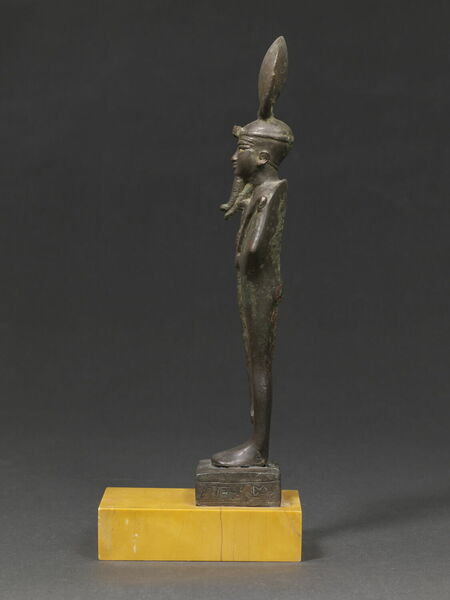
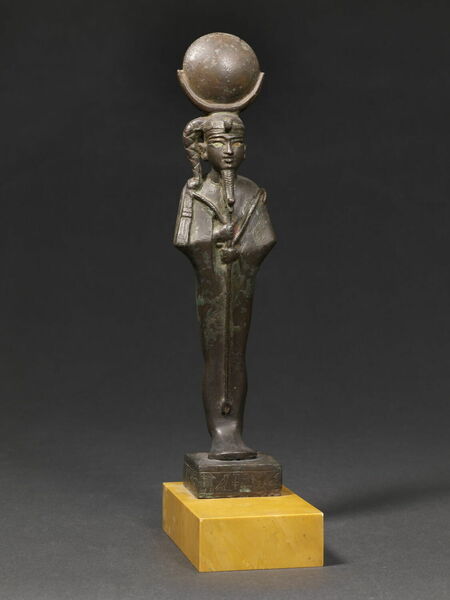
Statue of Khonsu-Neferhotep in burial shroud. Late Period, 664–332 BCE. Bronze alloy. Louvre, Inv. N 3539.
One of the common depictions of Honsu is a young deity with a human body, clad in tight, closed bandages, featuring a lock of youthful hair and a moon disc. The arms are held against the chest, and the figure appears motionless [3].
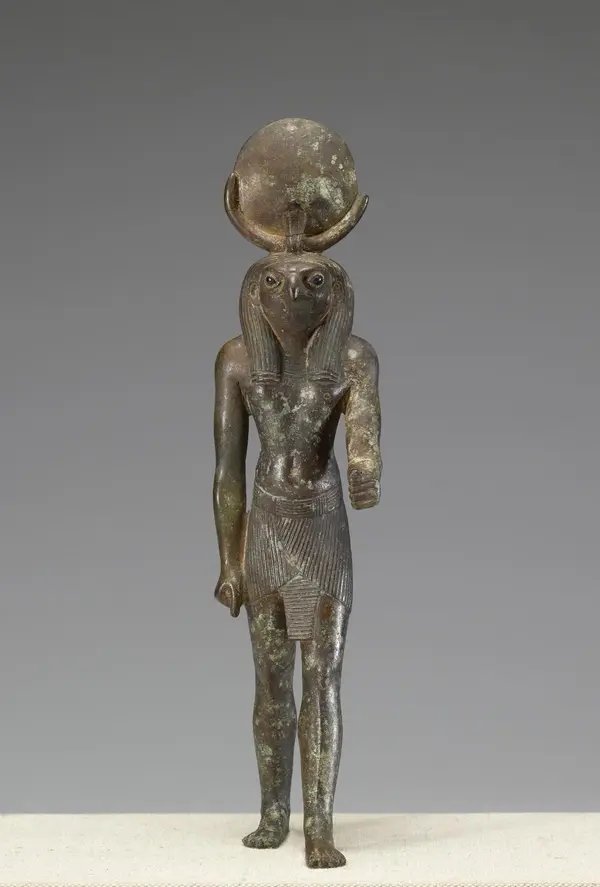
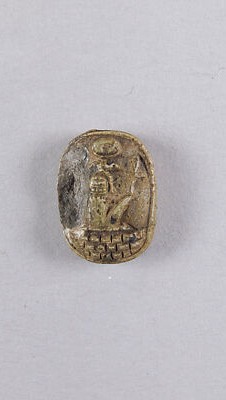
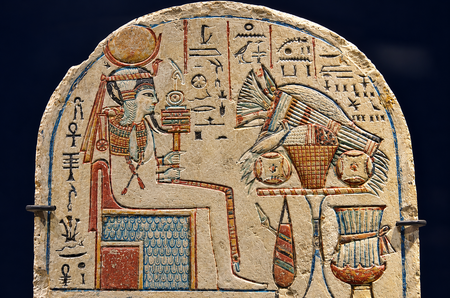
Statue of standing Honsu with a falcon head. Late period, c. 664–525 BCE. Walters Art Museum, No. 54.395. // Oval amulet plaque depicting a seated Honsu with a falcon head. 945–525 BCE. Steatite. The Metropolitan Museum of Art, No. 90.6.162.
Another common way to depict Khonsu during the Ancient Egyptian period is as a man with a falcon’s head and a moon disc above his head. In these depictions, the body merges seamlessly with the bird’s head.Why the falcon’s head? In Ancient Egypt, the falcon was a symbol of the sky, height, and grandeur. The falcon-headed form of Khonsu was one of the ways he was portrayed and could reflect his connection to other celestial and solar deities [2].
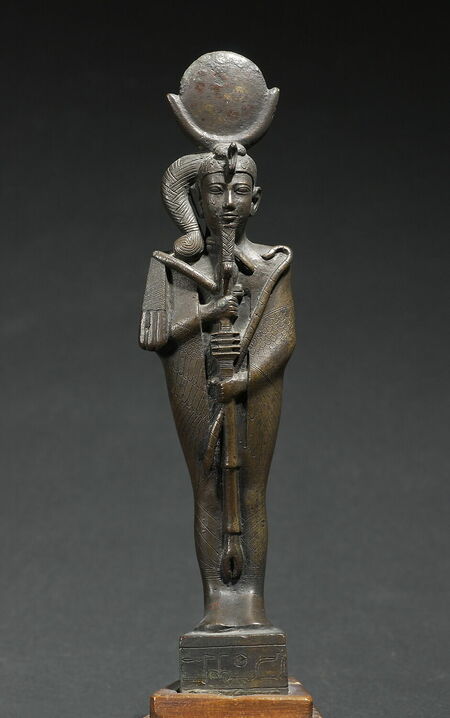
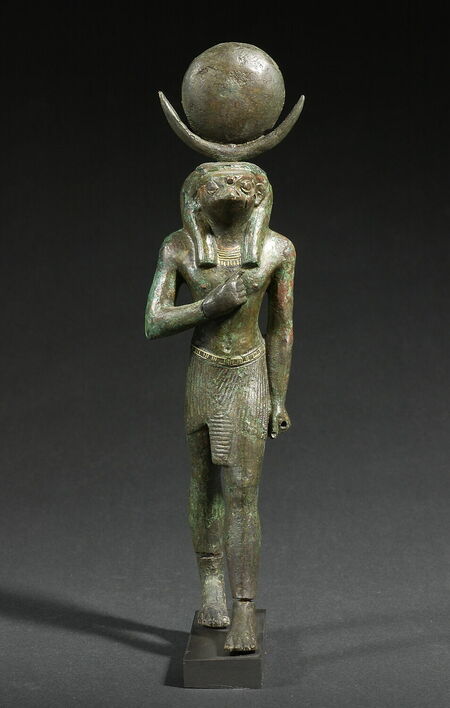
Huns statue in burial robe with a youthful curl and a moon disc. Late Period, 664–332 BCE. Louvre, inv. E 4109. // Statue of standing Hunsu with a falcon head, in the loincloths of the Shandit and a broad collar of the Useh; Late Period, 664–332 BCE. Louvre, inv. E 3720.
The lunar disc and crescent moon are vital components of the depiction of the deity Khonsu. They were positioned above the head and signified the god’s connection to the moon. In some depictions, this headwear was complemented by a uraeus—an ancient Egyptian symbol of royal power rendered as a vertically erect cobra [5].
Together, the lunar disc and crescent moon represent the entire lunar cycle and the renewal of time [2].
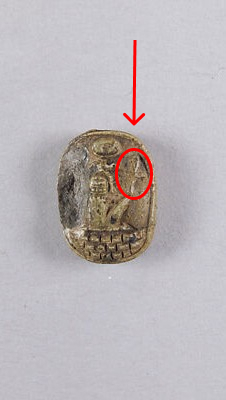
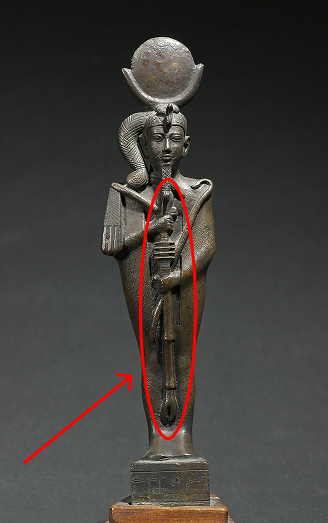
Oval amulet plaque featuring a seated Honsu with a falcon head. 945–525 BCE. The Metropolitan Museum of Art, No. 90.6.162. // Statue of Honsu in burial garments, with a lock of youth and a moon disk. Late period, 664–332 BCE. Louvre, inv. E 4109.
Khonsu could be depicted holding various objects: the ankh—a symbol of life—as well as various scepters symbolizing power and royalty [6].The entire iconography of Khonsu changed over the centuries. Historians identify human, mummy-like, falcon-headed, and zoomorphic variations. Therefore, it is more accurate to speak not of a single form, but of many physical characteristics by which the ancient Egyptians recognized the deity [2].
Chapter #2. Divine Head
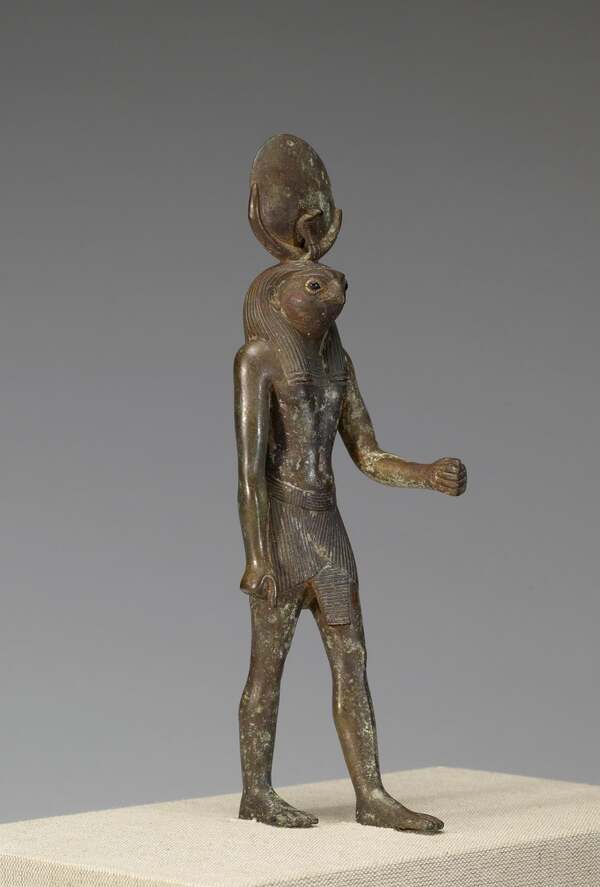
Statue of standing Hongse with a falcon head. Late period, circa 664–525 BCE. Walters Art Museum, No. 54.395. // Moon Knight comic book cover (2016) #10: Writer Jeff Lemire, Artist Greg Smallwood, published January 04, 2017.
Pay attention to the head of the Honshu from Ancient Egypt. It is the head of a living bird—a small beak, a headdress, small eyes, with the body smoothly transitioning into the head [7]. This example particularly illustrates the difference between ancient and modern representations.
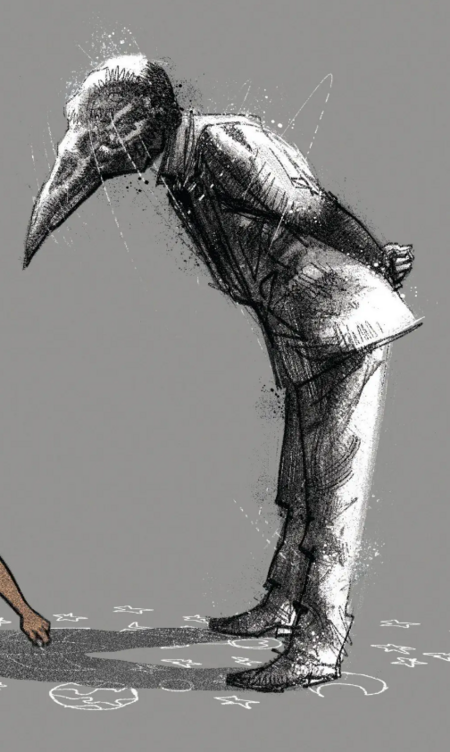
In Marvel comics, only the skull remains of the live falcon head. The main distinguishing features of the Honshu’s head are now the exposed skull, a huge beak, and large, deep, empty eye sockets. The entire head appears disproportionate to the body; the skull is clearly larger and draws the viewer’s attention.
Panel from Moon Knight comic (2016) #2: Writer Jeff Lemire, Artist Greg Smallwood, published May 11, 2016.
…whereas in the «Moon Knight» comic, he is depicted with a massive falcon skull. This new iconographic interpretation is one example of reinterpreting Khonsu within the context of Neo-Egyptian religion.
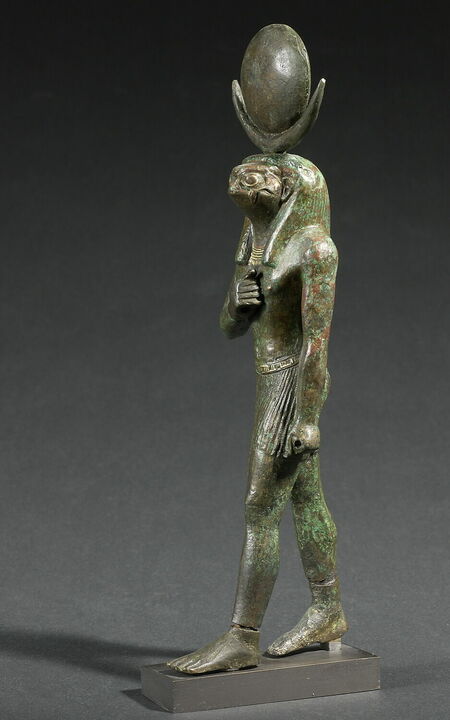
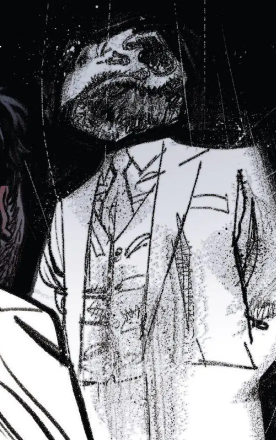
Statuette of a standing Khonsu with a falcon head, wearing a loincloth and a broad collar; Late Period, 664–332 BCE. Louvre, inv. E 3720. // Panel from Moon Knight (2016) #3: writer Jeff Lemire, artist Greg Smallwood, published June 01, 2016.
Another important, yet subtle, detail concerns the impression that the deity’s head evokes in the reader. In Ancient Egypt, it appeared realistically, more naturally—as if to communicate that such a being was possible and genuinely existed.In Marvel comics, the divine head serves the opposite function: it looks unnatural, too large, disconnected from the body, and is alienating and frightening. The connection between Khonsu and mysticism is immediately apparent. The skull literally cries out: «I am not real! I am from another world and beyond your comprehension!»
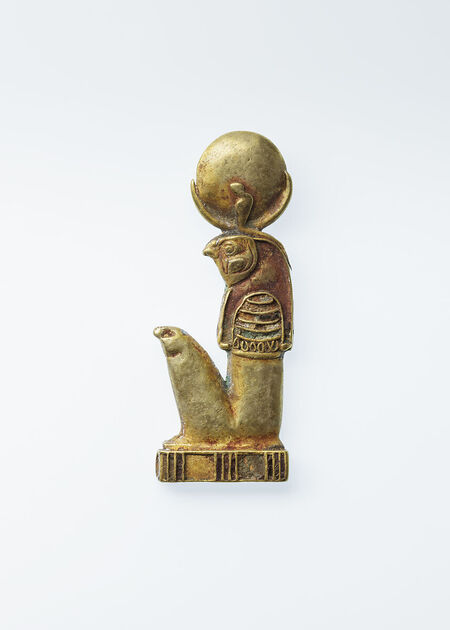
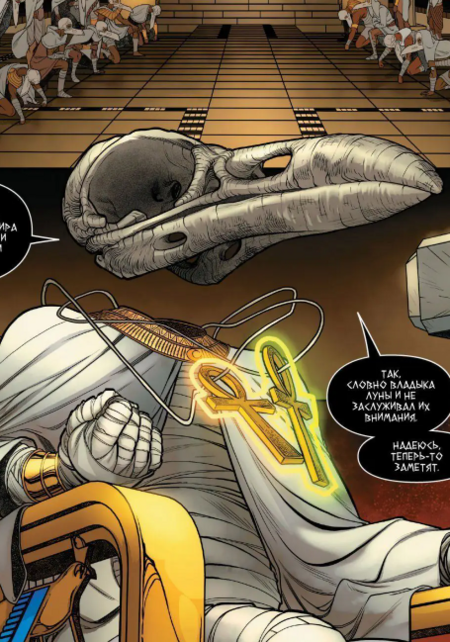
Gold pendant depicting Hongsu. c. 1300–1080 BCE. The Metropolitan Museum of Art, No. 65.194.1. // Panel from the Avengers comic (2018) #35: writer Jason Aaron, artist Javier Garrón, published August 19, 2020.
Pay attention to how the head of Khonsu is depicted in images from Ancient Egypt and in Marvel comic illustrations. In antiquity, the head shows almost no clear transition from the human body to the bird; the neck is clearly visible [7]. In the modern portrayal of the moon god, however, you can notice a complete absence of transition: the skull floats above an indentation in the human body, and the neck has been omitted from the image.
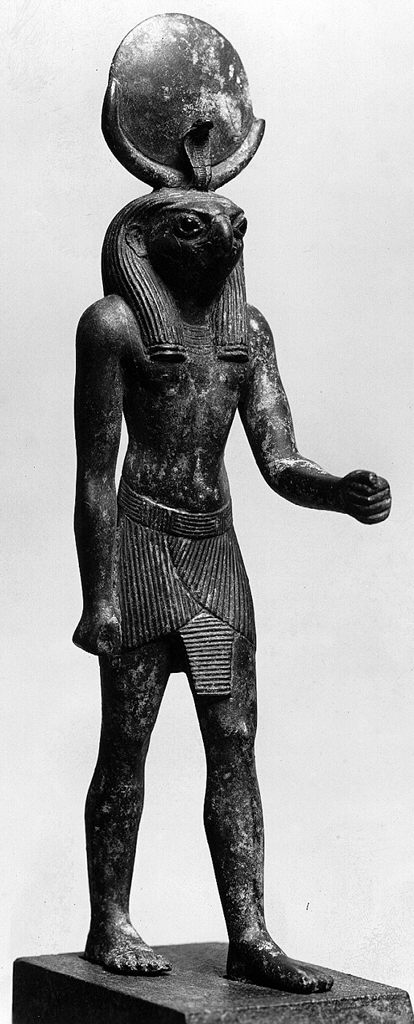
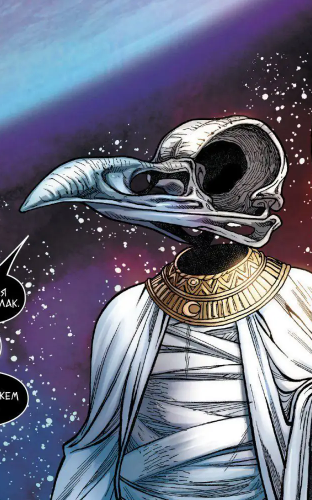
Statue of Standing Honsu with a Falcon Head. Late period, circa 664–525 BCE. Walters Art Museum, No. 54.395. // Panel from Avengers comic (2018) #33: writer Jason Aaron, artist Javier Garron, published May 27, 2020.
Most likely, this significant difference is connected to the changing perception of deities across time. In Ancient Egypt, religion was an intrinsic part of life. The Egyptians understood the world through the existence of higher entities. The gods were part of their lives, and they manifested this in their art [8].In our time, gods are more equated with mysticism, which accounts for this contrast in imagery: a living being versus a lifeless, levitating head.
Moon Knight Comic Cover (2016) #14: Writer Jeff Lemire, Artist Greg Smallwood, published May 31, 2017.
A living falcon’s head in Ancient Egypt presents a stark contrast to the dead bird skull found in modern Marvel comics. These are literally two opposites.My hypothesis is that the living head may embody divine faith. In Ancient Egypt, people sincerely believed in gods—the existence of a higher power was a given. Today, most people have lost faith in those gods, including the faith in Khonsu. Perhaps the comic book artist, by transforming a living bird into dead bones, intended to convey the death of that very faith, with the skull being merely its echo.