Can the periphery of a work of art be more significant than its center, and what stories can the details hidden at the edges of the canvas tell?
The word «marginal» originates from the Latin noun margo (genitive marginis), meaning «edge, border, margin.» In book arts, this term was traditionally used for annotations in the margins of books. Let’s consider this concept from the perspective of painting composition. Specifically, we will pay attention to secondary (marginal) details that the artist places in the background or along the edges of the work. These can include human or animal figures, everyday elements, landscape fragments, and so on.
In 16th and 17th-century European painting, secondary elements—such as animals, servants, domestic objects, and doorways—cease to be mere background. They transform into tools of subtle dramaturgy: commenting upon, satirizing, or even contradicting the action taking place at the center of the canvas.
Hidden Morals and «Clues» in Interior Design
In Dutch painting, everyday objects and animals function as detective clues, revealing the true meaning of the scene.
For example, in Jan Steen’s painting «The Loose Family, ” a scene of chaotic domesticity is depicted, where every character and object illustrates human vices and the inevitable retribution for them. The first impression is one of cheerful, theatrical chaos, which instantly brings a smile and draws the viewer into the action. However, upon closer examination of the details, a growing sense of anxiety emerges, and the playful comedy transforms into moralistic satire. At the center of the composition sits the master at the table. He is lounging, propping one leg over the other, holding a pipe, and subtly interweaving fingers with a young maid right behind his wife. To his left, his drunken spouse is slumped in an armchair. The woman carelessly steps on a book left on the floor—a symbol of sacrilege and moral oblivion. The characters behave in a deliberately caricature-like manner.
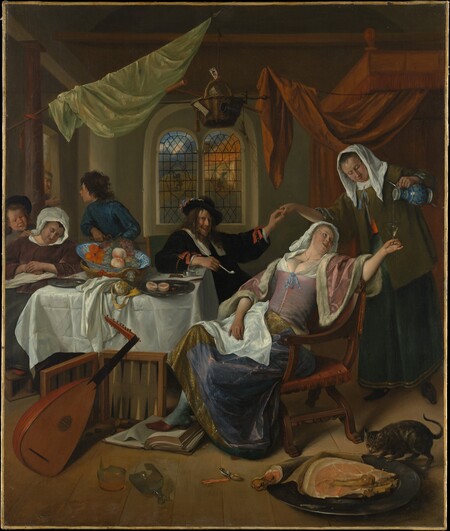
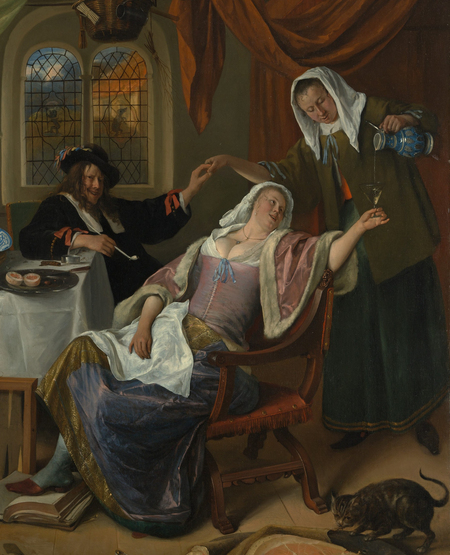
Left: Jan Steen, «The Promiscuous Family, ” c. 1663. Right: Fragment
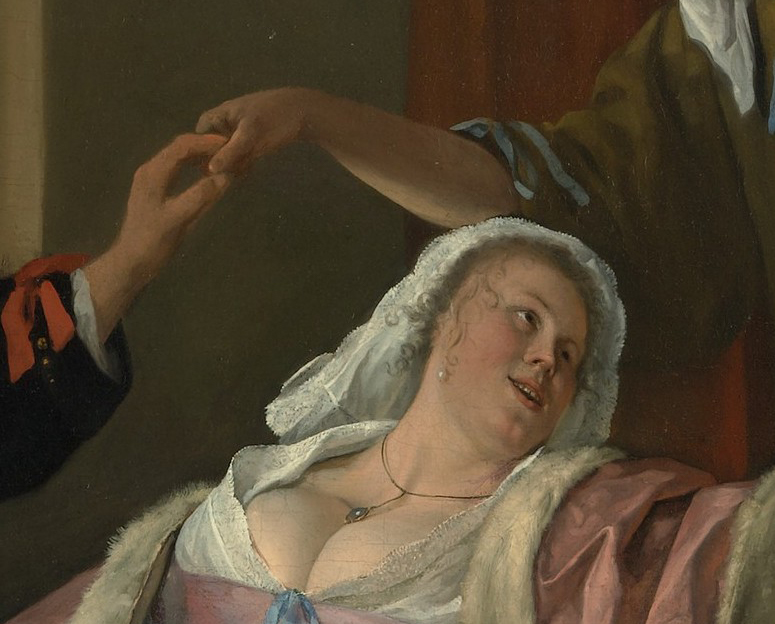
Jan Steen, «A Merry Family, ” circa 1663 (fragment)
Room clutter. In the lower left corner of the painting, a broken glass bottle and a lute with snapped strings lie scattered (a symbol of shattered harmony in the household). A woven basket filled with menacing objects hangs from the ceiling above the table. Inside, there is a sword, a beggar’s crutch, whips, and a jack of spades. This detail serves as a direct warning to the viewer about the fate of such a careless life: poverty, illness, and punishment.
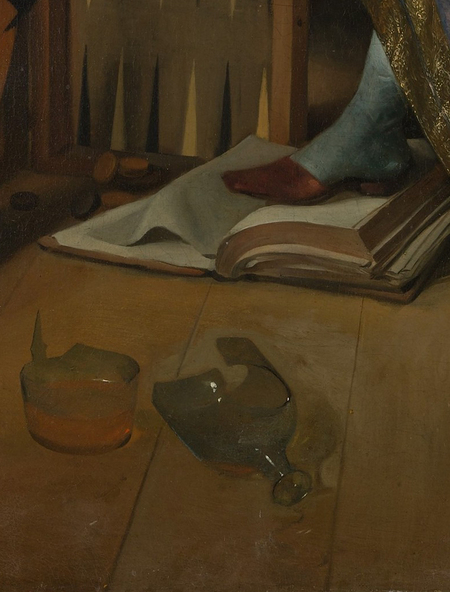
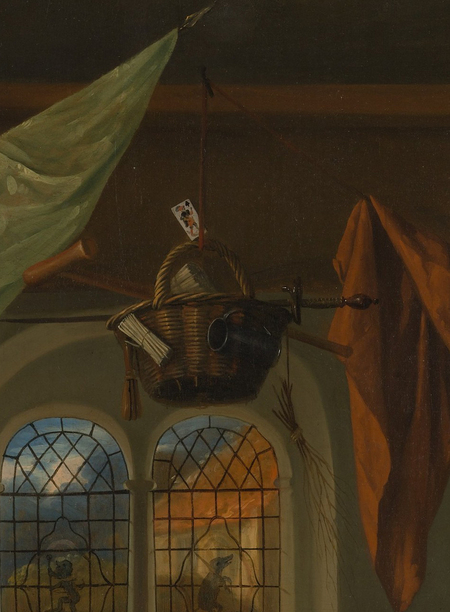
Jan Steen, «The Promiscuous Family,» c. 1663 (fragments)
Gerhard Terborgh’s painting, «The Gallant Conversation, ” was once known as „Paternal Admonition“ following the appearance of a print by Wilhelm, which Goethe described. However, later, based on the interpretation of certain details, it received an entirely opposite reading. Experts suggest that the background elements—items from a woman’s washstand, the presence of a bed, and wine as a symbol of passion—transform the scene of „family guidance“ into a negotiation between a client and a courtesan. Although art critics have not reached a definitive consensus on the work’s meaning to this day.
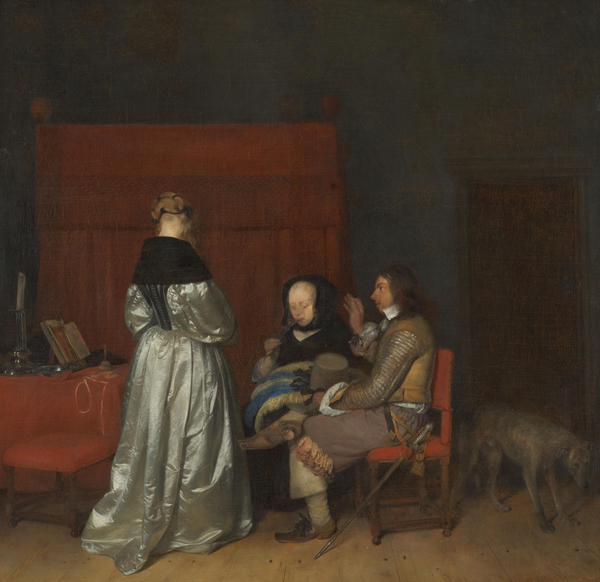
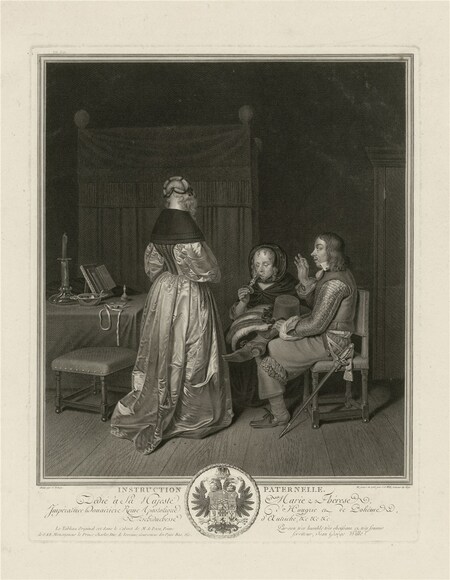
Left: Gerard Terborch, «Gallant Conversation, ” c. 1654. Right: Johann Georg Will, „Paternal Admonition, ” 1765.
«The engraving depicts a young, bowed-headed girl receiving instruction from her parents. However, behind this seemingly simple, domestic scene may lie ambiguous subtexts. When viewed more closely, this seemingly virtuous scene reveals something quite opposite—namely, a scene at a brothel.»1
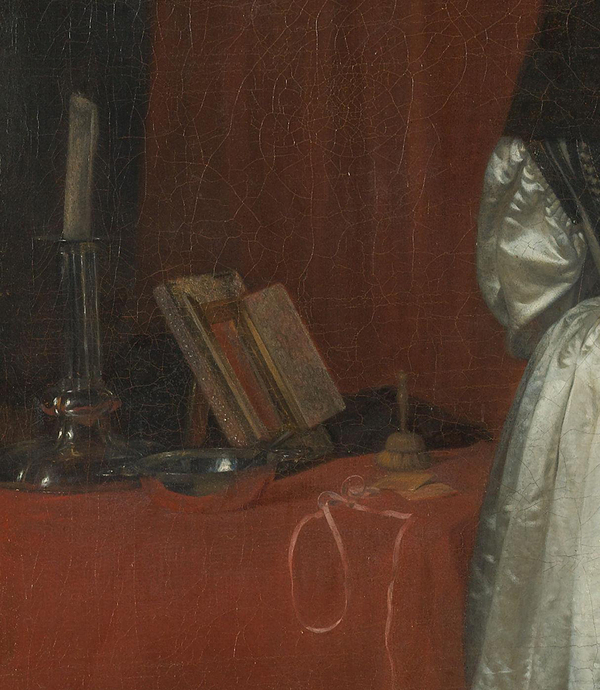
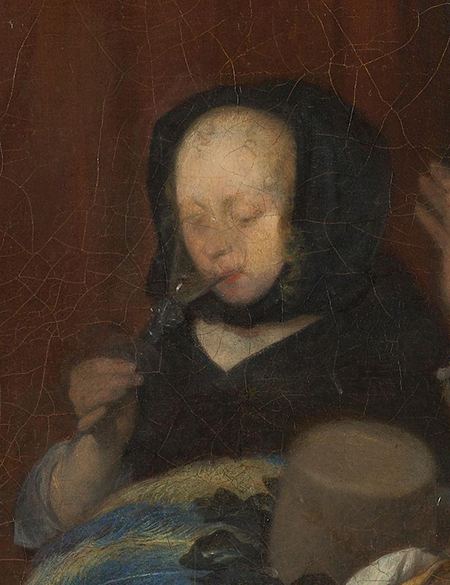
Gerhard Terborch, «Courtly Conversation,» c. 1654 (fragments)
In Jan Vermeer’s painting «The Sleeping Girl,» the figure of the heroine, leaning over a table laden with fruit and a decanter, is brought to the forefront. Opposite her is another chair, giving the impression that a companion has just left the room. Upon closer examination of the details, one can spot a glass of wine, an overturned decanter, and a painting in the background. All these elements establish a specific context for the scene, linking the heroine’s state to romantic experiences—she may have fallen asleep, weary from awaiting her beloved or disheartened by love.
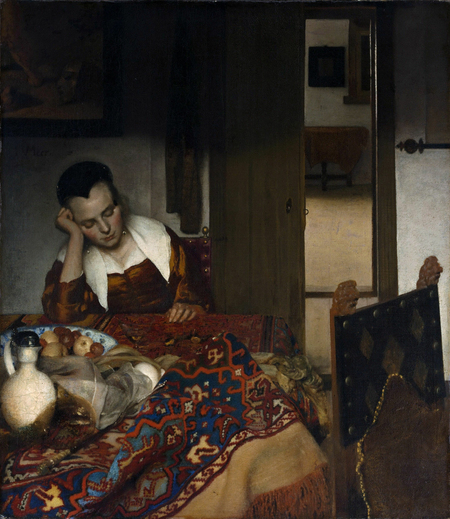
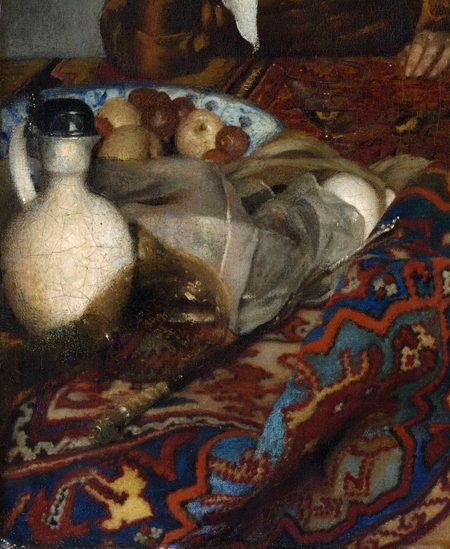
Left: Johannes Vermeer, «The Sleeping Girl, ” 1657 Right: Fragment
In the upper left corner, a partially visible painting can be discerned, featuring the silhouette of a Cupid’s leg and two masks lying on the floor. Vermeer often depicted this detail in his other works. For instance, in the piece «Girl Reading a Letter, ” the canvas featuring Cupid is shown more clearly and almost entirely. This may be the same painting, as the inventory indicates that Vermeer owned a similar work.
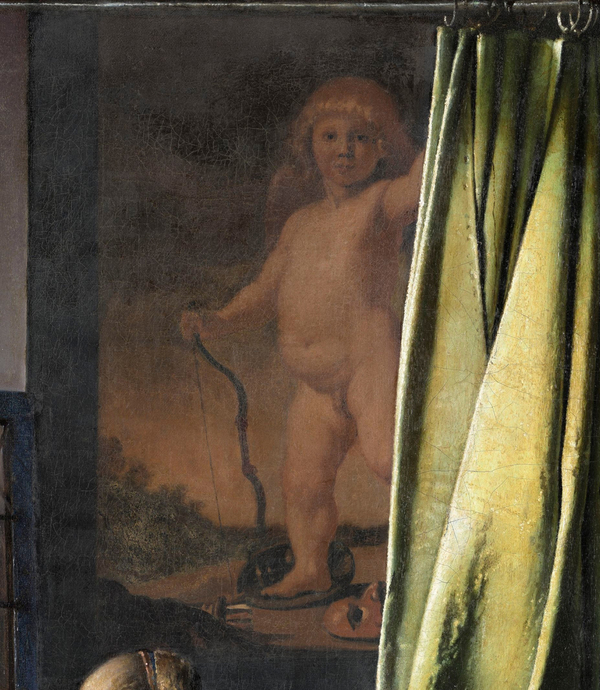
Left: Jan Vermeer, «Girl Reading a Letter by an Open Window, ” 1657 (fragment) Right: Jan Vermeer, „Sleeping Girl, ” 1657 (fragment)
With meticulously chosen details, the artist left only a subtle hint of the scene’s romantic undertones, avoiding overt moralizing.
Theater of Power and the Gaze
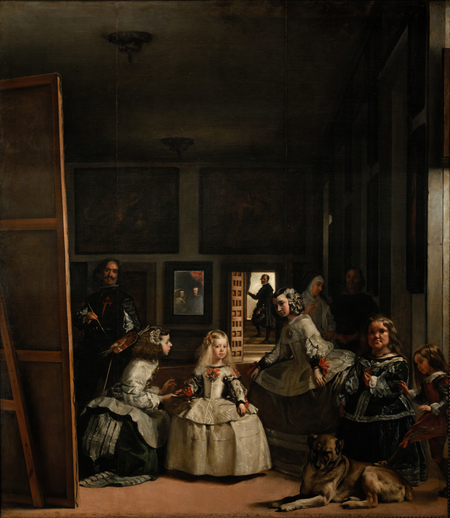
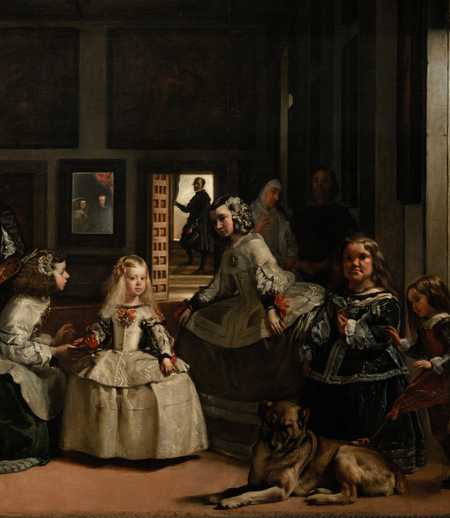
Diego Velázquez, «Las Meninas, ” 1656.
Perhaps Velázquez’s most famous work, in which the author masterfully explores the nature of illusion and power, as well as the status of the artist at court.
The scene takes place in an artist’s studio. At the center of the canvas is five-year-old Margarita Teresa, the daughter of the Spanish king. She is surrounded by ladies-in-waiting, court dwarfs, and guards, with a huge mastiff lying at her feet. On the left side, the artist himself is working on a large canvas. In the shadows of the room, one can barely spot a mirror on the back wall, which reflects the royal family. This elegant device draws the viewer into the action, placing them on the same level as the monarchs.
Diego Velázquez, «Las Meninas,» 1656 (fragment)
«Menin’s» dismantles all boundaries and shatters every frame. Velázquez merges the perspective of a potential viewer with the position of the royal couple, essentially creating an unimaginable object.»2
When the marginal takes the center
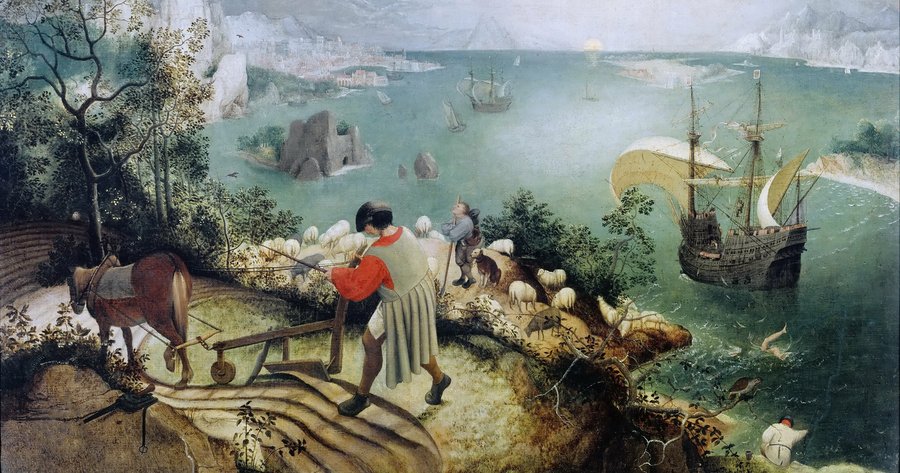
The apex of compositional development occurs when the artist deliberately relegates the main subject to a corner, bringing the background to the forefront. Peter Bruegel the Elder’s painting, «The Fall of Icarus, ” serves as an excellent example of such a composition.
Pieter Bruegel the Elder, «The Fall of Icarus, ” c. 1558.
In the composition, the central role is given to the figure of a peasant plowing the earth, and the main character—Icarus—is nowhere to be found. «The image of the plowman is emphasized not only by compositional choices but also by color. Even the feet of the characters are contrasted—the firm-standing feet of the plowman and the helplessly dangling feet of Icarus.»3