Navigation
- Concept
- Mythological Doubles
- The Double as the Repressed «Self»
- The Double as Ideal and Rival
- Copy, Substitution, and the Right to the Original’s Place
- Variations of a Single Character
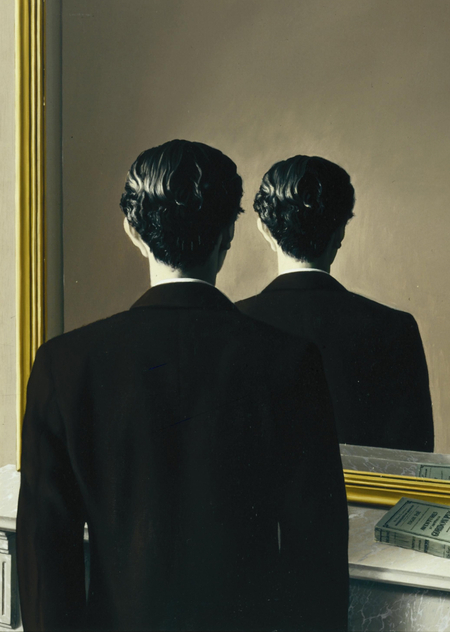
- Reflection and Self-Image:
- Conclusions
Concept
The doppelgänger emerges where a person ceases to align with their own image. One image is seen by others; the other is felt internally. At first, there may only be a barely perceptible crack between them. But sometimes it becomes so wide that it seems to hold another person—similar, familiar, yet still alien.
The doppelgänger has many guises. It can be a reflection, a portrait, a copy, a rival, or an alternative version of the person. Sometimes it harbors what the person themselves tries to hide: fear, desire, vulnerability. Sometimes it embodies an ideal—an image one wishes to match. And sometimes it becomes who others already perceive the person to be, overshadowing their own sense of self.
The conflict becomes particularly sharp when the doppelgänger gains autonomy. It stops being a simple reflection and begins to claim the original’s place: attention, recognition, the right to act and speak in their name. At that point, it becomes difficult to determine which is authentic—the one who appeared first, or the one others believed in.
However, the doppelgänger is not always a threat. Sometimes it opens the possibility of seeing oneself differently—imagining who a person could become with a different choice, in another life, or from another perspective. Encountering it becomes an encounter not so much with the external, but with what could not be perceived directly within oneself.
This study examines the doppelgänger as an image of the rupture between the public role and the inner self. I am interested in what exactly detaches from a person when this gap becomes visible, and how the doppelgänger alters the relationship between the individual and their image. Perhaps it is in this encounter that it becomes clear: a person does not always control how others see them.
Mythological Doubles
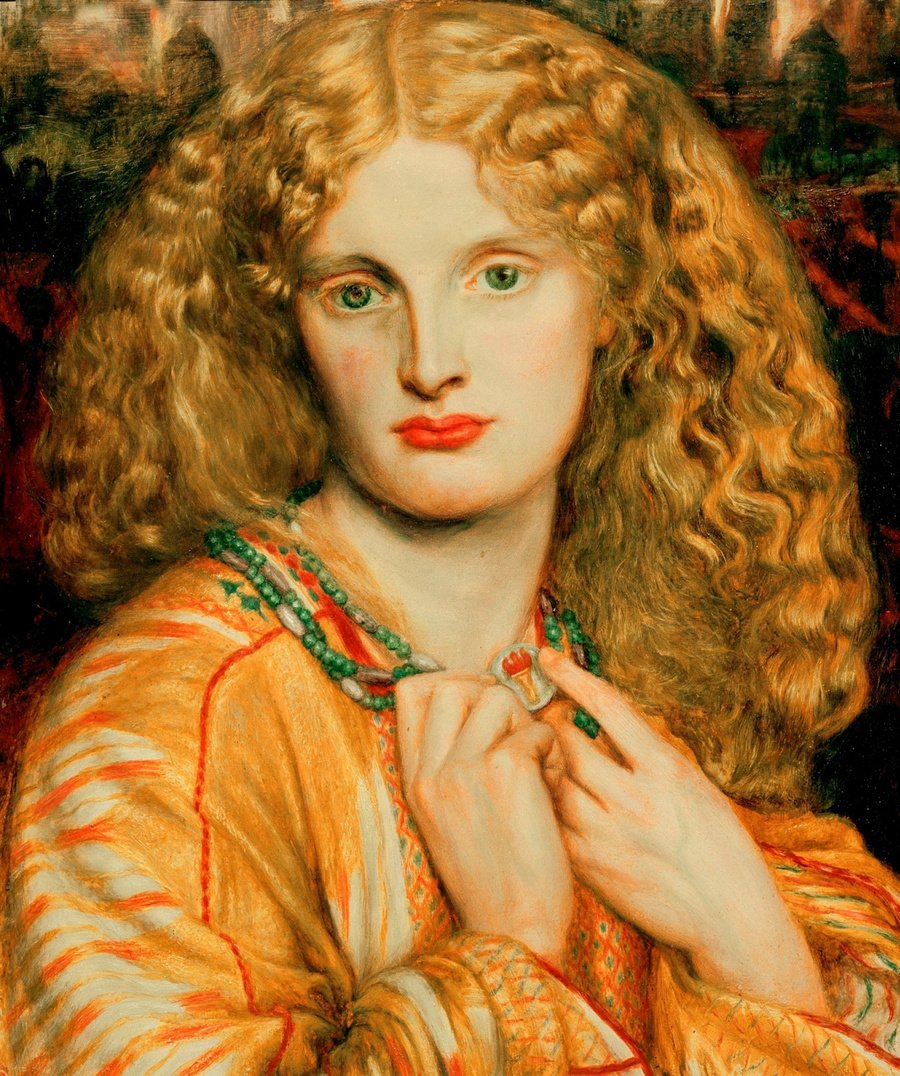
Dante Gabriel Rossetti, «Helen of Troy.» 1863.
The Double as the Repressed «Ego»
A still from the film «Dorian Gray.» 2009.
A scene from the film «Fight Club.» 1999.
A still from the film «Fight Club.» 1999.
Dostoevsky. The Double», Sergey Potapov. 1985
Illustration by E. P. Samokish-Sudkovskaya for Dostoevsky’s novella, «The Double»
The Doppelgänger as Ideal and Rival
A still from the film «The Black Swan.» 2010.
Still from the film «Substance.» 2025.
Copy, substitution, and the right to the original
A still from the film «Dark Mirror.» 2018.
A frame from the film «We.» 2019.
A still from the film «We.» 2019.
Single Character Concepts: Batman and Alternate Versions
A still from the animated film «Spider-Man: Across the Spider-Verse.» 2023.
A still from the animated film «Spider-Man: Across the Spider-Verse.» 2023.
Reflection and Self-Image
A frame from the animated film «Alice Through the Looking Glass.» 1982.
Illustration of Celsius Piccot’s Alice from Lewis Carroll’s «Alice’s Adventures in Wonderland.» 2025.
Conclusions