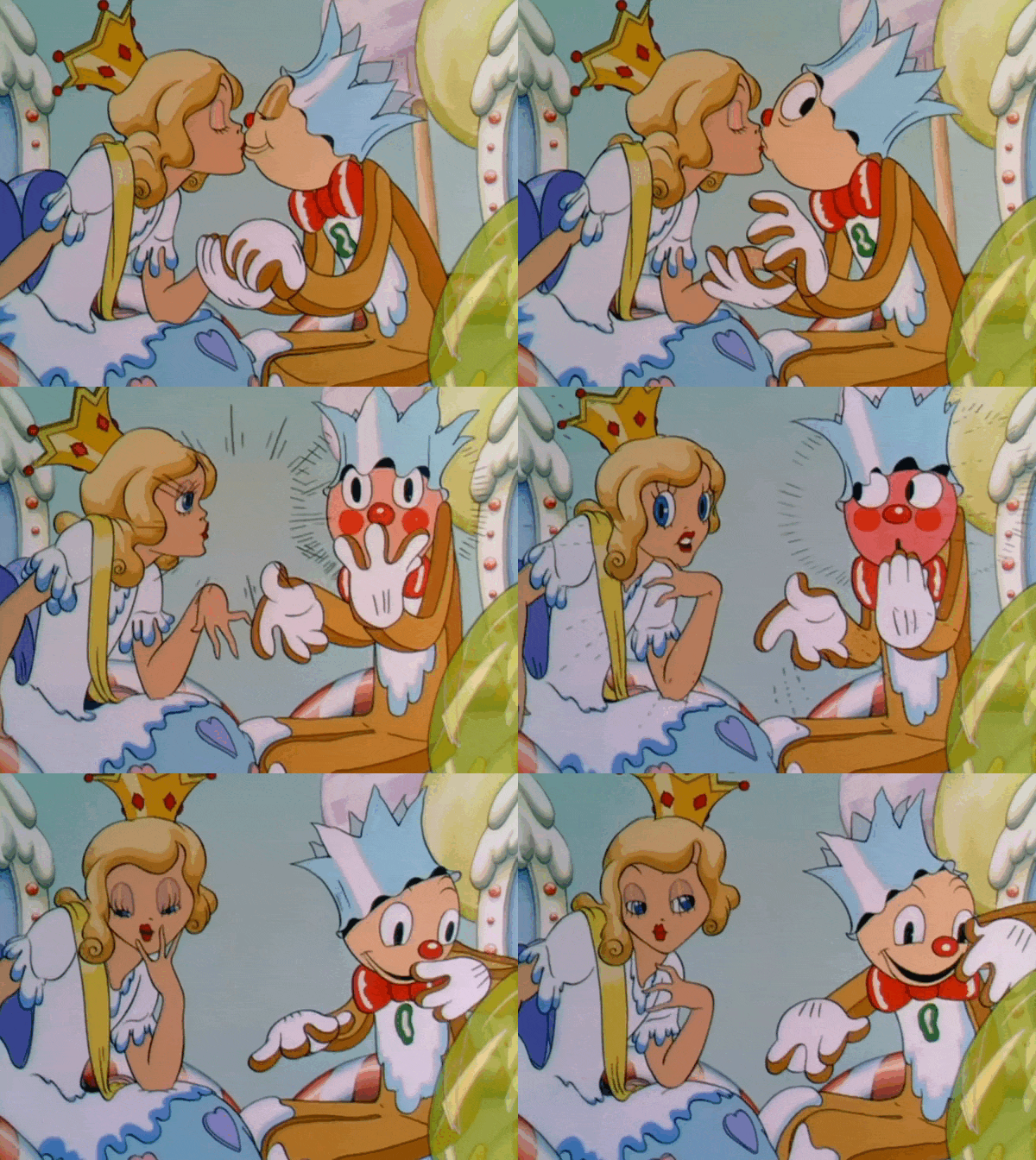
Stills from the cartoon «The Cookie Carnival» (1935, directed by Ben Sharpsteen, Disney)
What is emotion?
They attempt to convey all emotions through body parts, whereas the entire body should be involved in the process.
Sometimes, merely speaking words is insufficient to express our thoughts, because it doesn’t capture the full nuance of our inner feelings. It is in these moments that facial expressions and emotions come to the rescue; they help us convey our ideas to others even without unnecessary speech. For instance, when we are happy, we can smile broadly; when we are angry, we frown and cross our arms to show our displeasure with our entire body. Emotions and facial expressions are inextricably linked—they complement and color our dialogues.
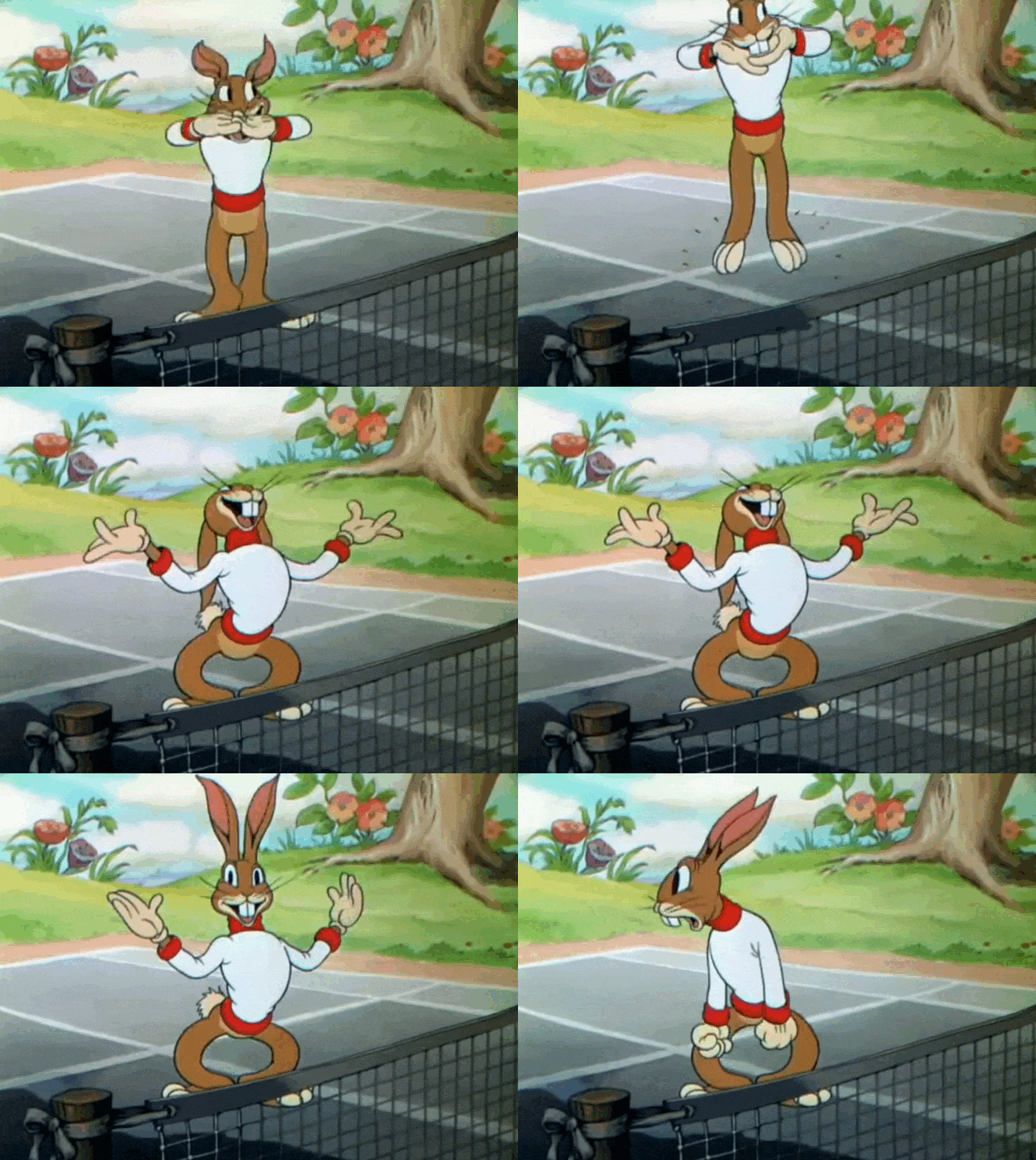
A frame from the cartoon «The Tortoise and the Hare» (1935, directed by Wilfred Jackson, Disney)
In animation, facial expressions and gestures are exaggerated: animators intentionally emphasize a character’s characteristic emotional trait and amplify it for onscreen dynamism. This allows the viewer to grasp the character’s emotion or behavioral shifts even without dialogue. Furthermore, this hyperbole sometimes helps reveal a character’s personality—the laugh of a refined lady and a formidable sailor, for instance, can look entirely different.
Concept and Hypothesis
The visual study examines how animators of the 1930s conveyed character emotions through facial expressions and gestures. Using American short animated films as material, the research focuses on four common emotions—joy, sadness, fear, and anger. The primary goal of the study is to determine which specific visual cues allow the viewer to recognize each emotion without error, and how different animators represented these emotions on screen.
It is hypothesized that when creating animation, artists rely on general principles of mimetic and bodily responses, and that the manner in which a character’s movement unfolds is the key to understanding their character.
Principles of the visual study structure:
- What is emotion
- Concept and hypothesis
- Joy
- Sadness
- Fear
- Anger
- Conclusion
Joy
When a person’s desires are fulfilled or they meet a long-lost friend, they experience a feeling of joy, accompanied by vivid inner emotions or a smile. Joy manifests in various ways: sometimes it is expressed through loud laughter, and other times it is an internal desire to prolong a cherished moment for as long as possible.Typically, the emotion of joy is expressed through a broad smile, which the viewer immediately interprets as a positive feeling. After all, we all smile when we are happy.
Stills from the animated film «Ferdinand the Bull» (1938, directed by Dick Richards)
Stills from the cartoon «Lullaby Land» (1933, directed by Wilfred Jackson, Walt Disney)
But a smile doesn’t always signify pure joy. A smile can also hint at a villain’s cunning scheme brewing in their mind, or perhaps at mockery directed at a hero. So, what facial features and gestures allow the audience to distinguish a smile of genuine joy and happiness?
The final scene of Jack King’s cartoon, «Donald’s Penguin» (1939), brilliantly illustrates one of the most defining characteristics of joy in 1930s animation: Donald’s happiness after seeing that the penguin chick was unharmed.
As soon as he sees his friend, he leaps up with delight and runs to embrace him.
Stills from the cartoon «Donald’s Penguin» (1939, directed by Jack King)
In Walt Disney’s animated short, «The Golden Touch» (1935), we see the same «jump of happiness.» But besides that, we also observe another device. The King is so overcome with joy that he starts dancing. During this, all jumps and dances are accompanied by open poses and vivid facial expressions: a wide smile, raised eyebrows, and a chin tilted up from pleasure.
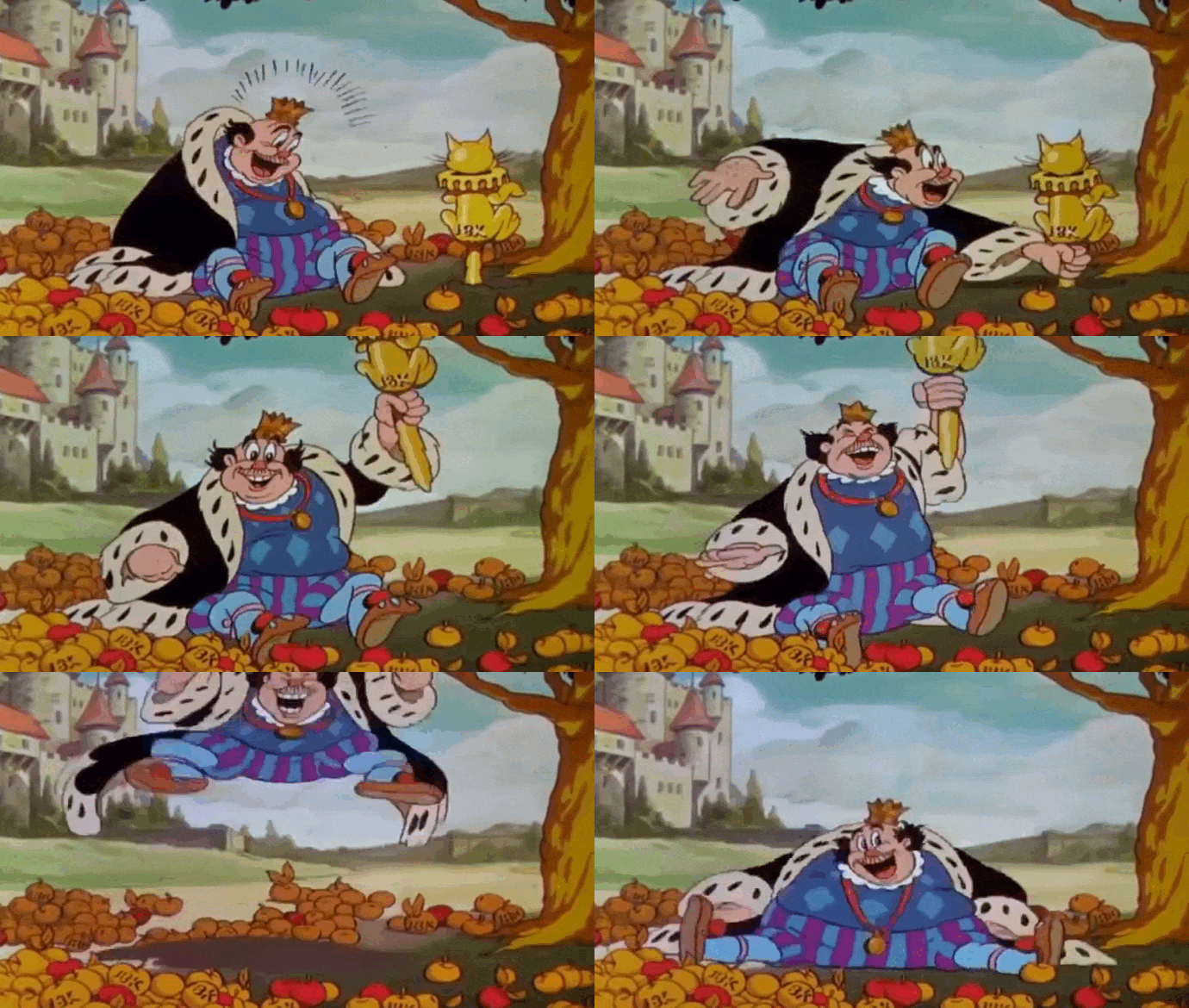
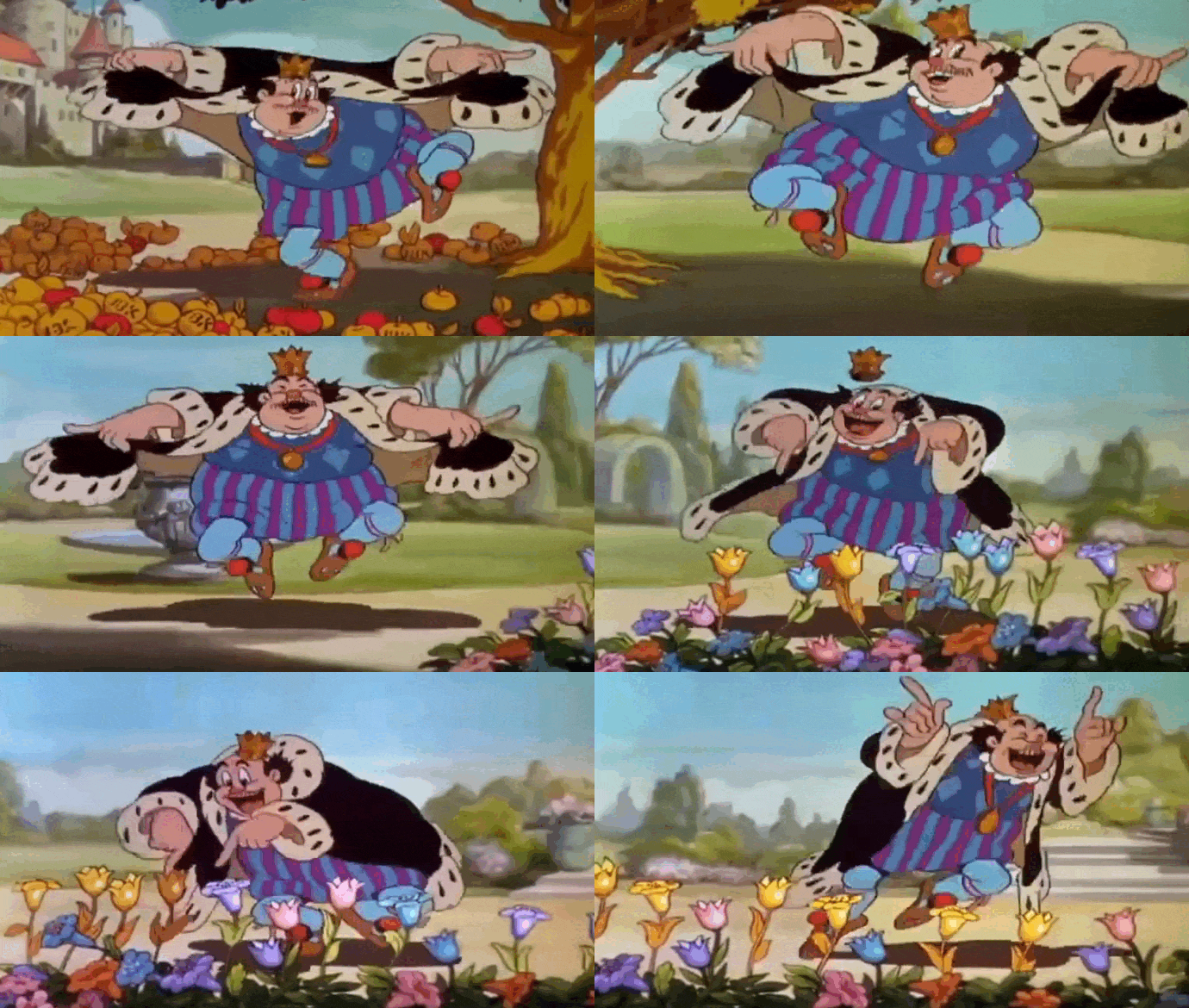
Stills from the cartoon «The Golden Touch» (1935, dir. Walt Disney)
In «Mickey Steps Out» (1931), Berta Gillett shows the emotion of joy through Mickey’s routine actions. While preparing to meet Minnie, every action he takes is accompanied by active gesturing and small dances. He hums a cheerful song and taps a rhythm on the objects surrounding him. Through these small, supplementary actions, the viewer immediately perceives the character’s upbeat mood.
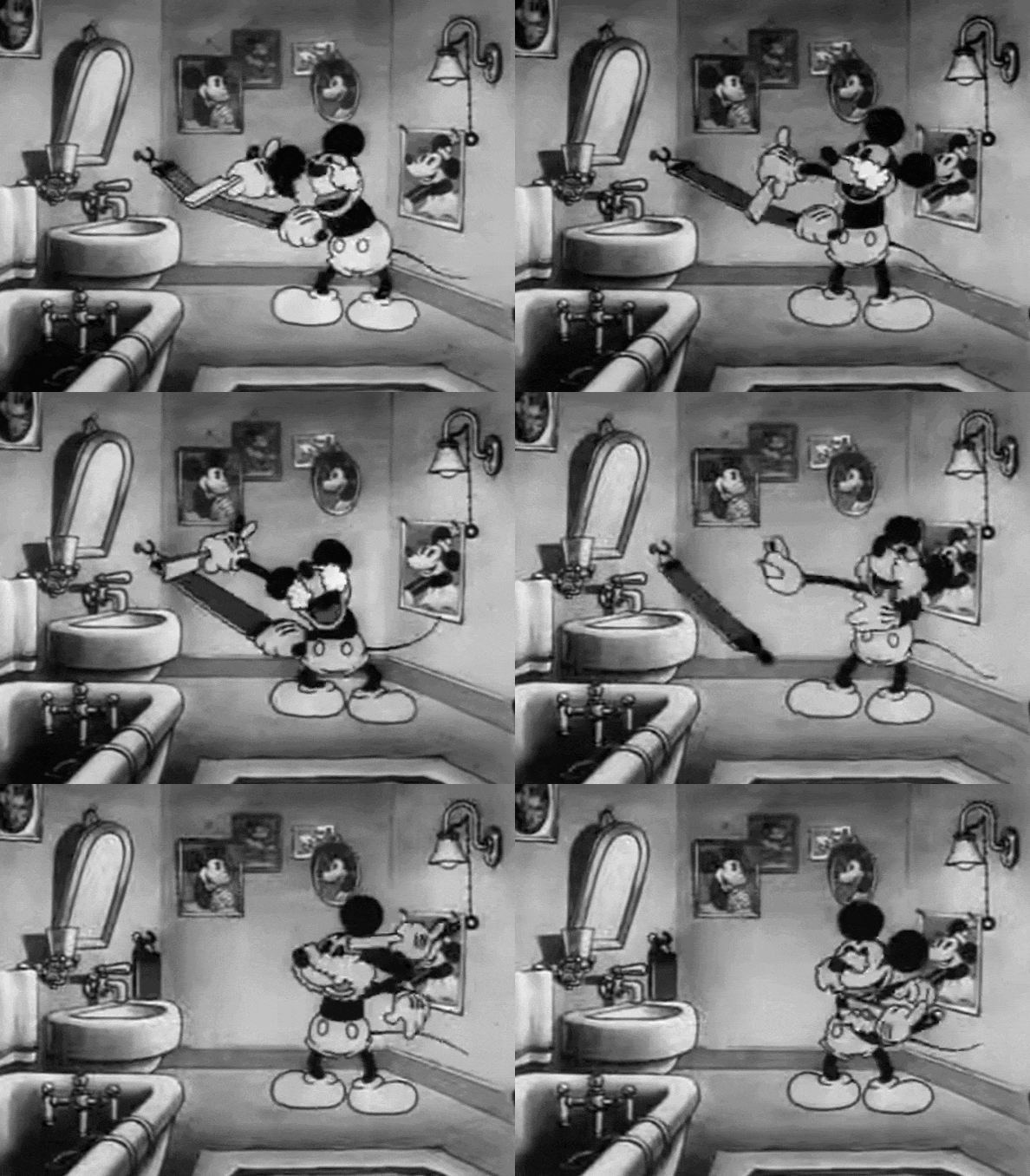
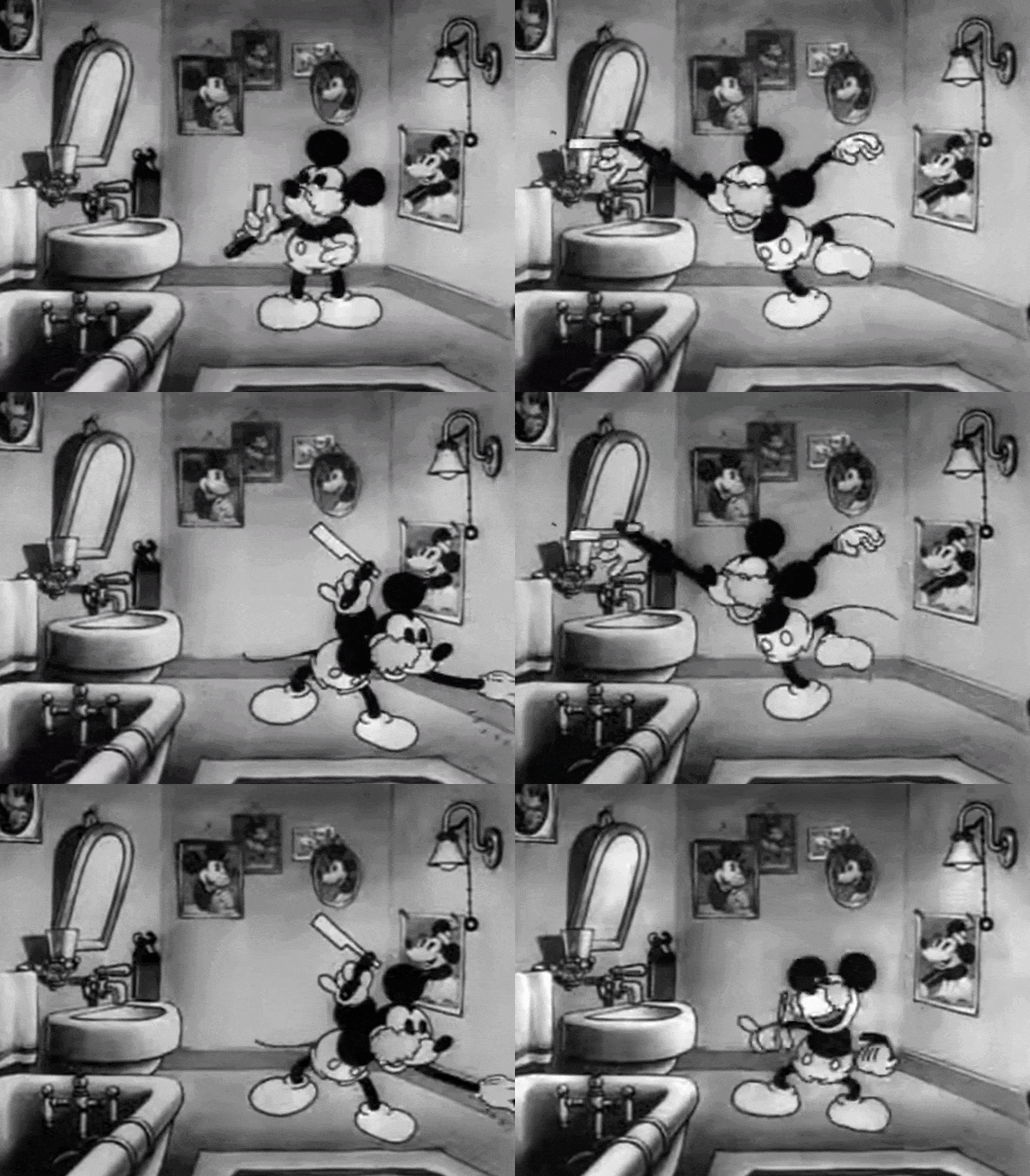
Stills from the cartoon «Mickey Steps Out» (1931, directed by Walt Disney)
The character’s cheerful mood is evident in other scenes, too. As Mickey heads toward Minnie, descending the stairs, he does so not in a typical way, but by hopping. By jumping, he also falls into the rhythm of the music, creating a feeling of lightness and playfulness.
Stills from the cartoon «Mickey Steps Out» (1931, directed by Walt Disney)
These episodes demonstrate how the characters' joy is visually conveyed through the combination of facial expressions and dynamic action. The smile gains fullness through jumping and broad gestures. By hyperbolizing the movements, the animators make the emotional nuance more apparent and comprehensible to the viewer, asserting that this is precisely joy, and not some other emotion.
Sadness
The easiest way to recognize sadness is through tears. When emotions overwhelm us, we begin to cry. This might be a small tear or a full torrent, depending on the intensity of the feeling at that moment.In animation, sadness usually manifests through a combination of facial expressions and other non-verbal cues. Tears serve as a direct indicator of emotional state, while gestures and postures convey the degree of emotion. A character might attempt to hide their sorrow from others by covering their face with a scarf, or they might collapse to their knees in despair.
Stills from the cartoon «Poor Cinderella» (1934, directed by Dave Fleischer, Seymour Kneitel)
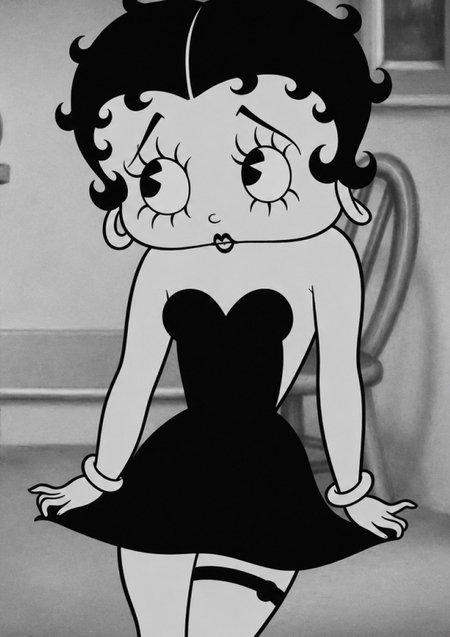
In «Minnie the Moocher» (1932), Betty Boop’s sadness is evident even in the opening scenes. While seated at a table, her facial expression conveys emotion: high, inverted eyebrows—characteristic of a somber mood—and downturned corners of the mouth. Furthermore, the girl is positioned in a closed posture.
Stills from the cartoon «Minnie, the Moocher» (1932, directed by Dave Fleischer)
In the next scene, the emotion of sorrow intensifies. Betty runs to the stairs and begins to sob bitterly into a handkerchief, covering herself with her arms. This allows the audience to grasp the depth of her grief—she is not merely slightly upset; Betty is experiencing deeply powerful emotions.
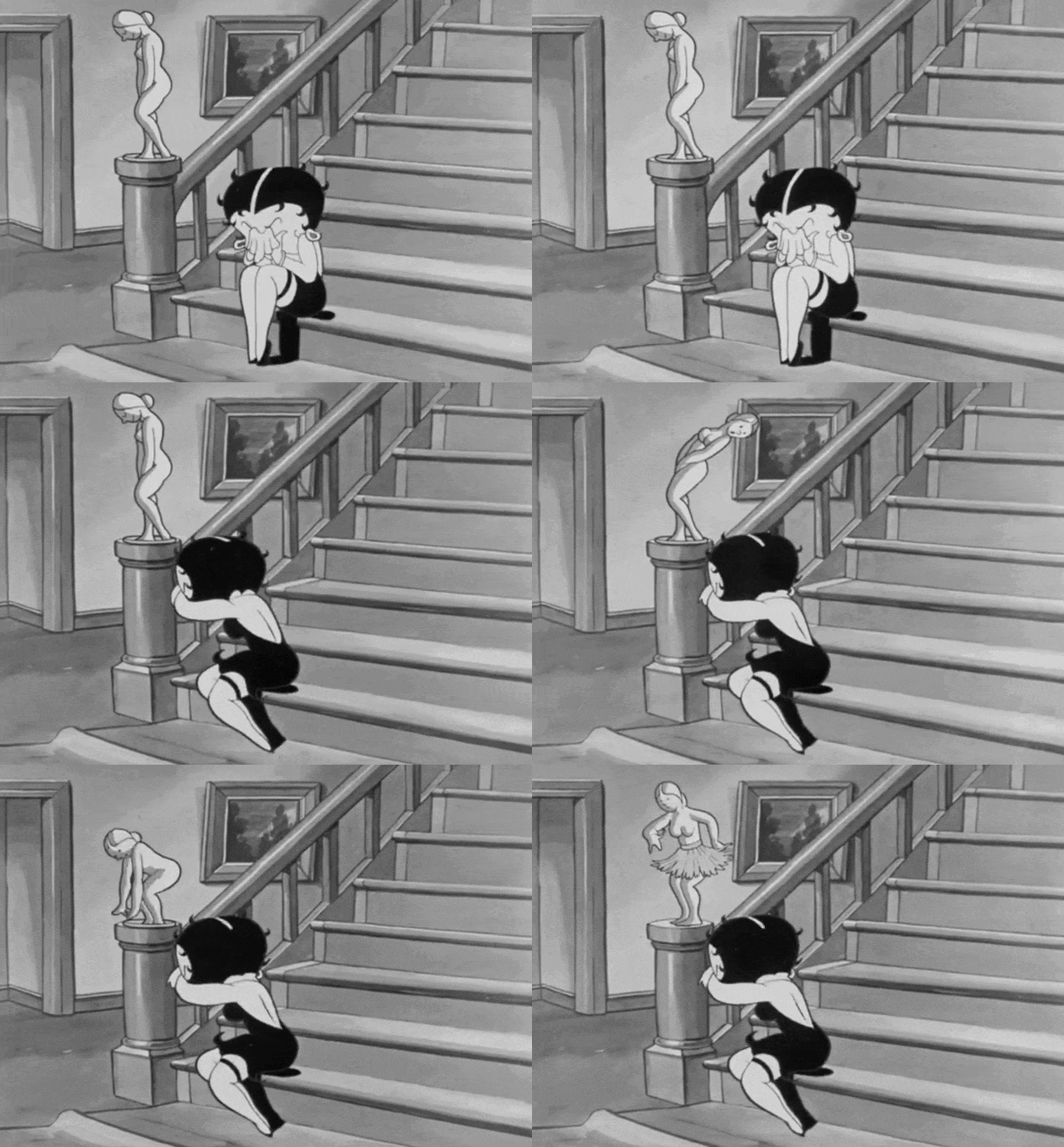
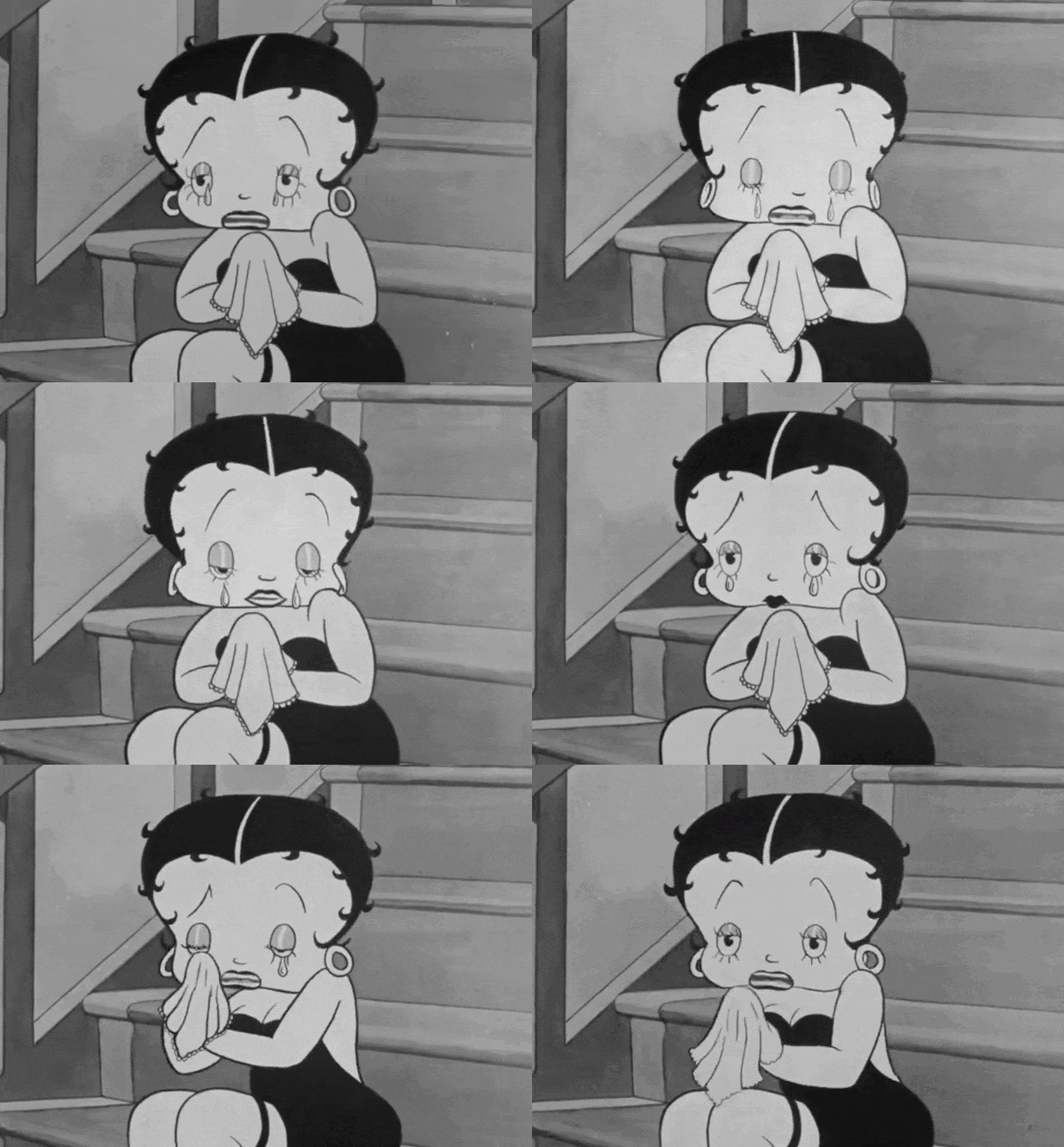
Stills from the cartoon «Minnie, the Moocher» (1932, directed by Dave Fleischer)
Another example of conveying a dejected mood can be seen in «The Ugly Duckling» (1939). After being rejected by his mother, the duckling also droops his brows in sorrow. Instead of an open, confident posture with a high head, the duckling seems to withdraw into himself: his gaze lowers, and his overall appearance becomes more lethargic. This is visible even in his gait; it becomes less dynamic, slower, and the duckling itself is hunched over.
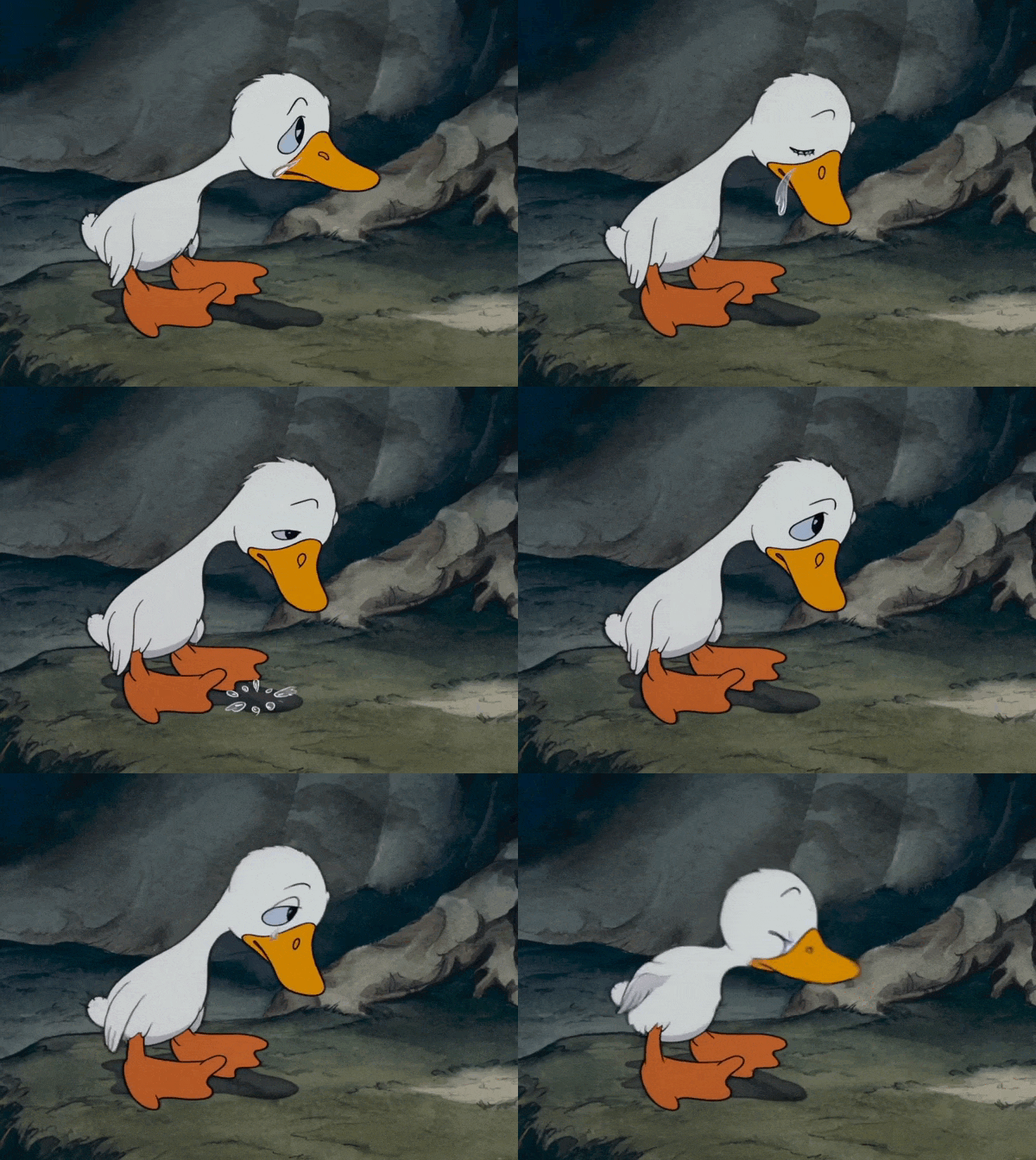
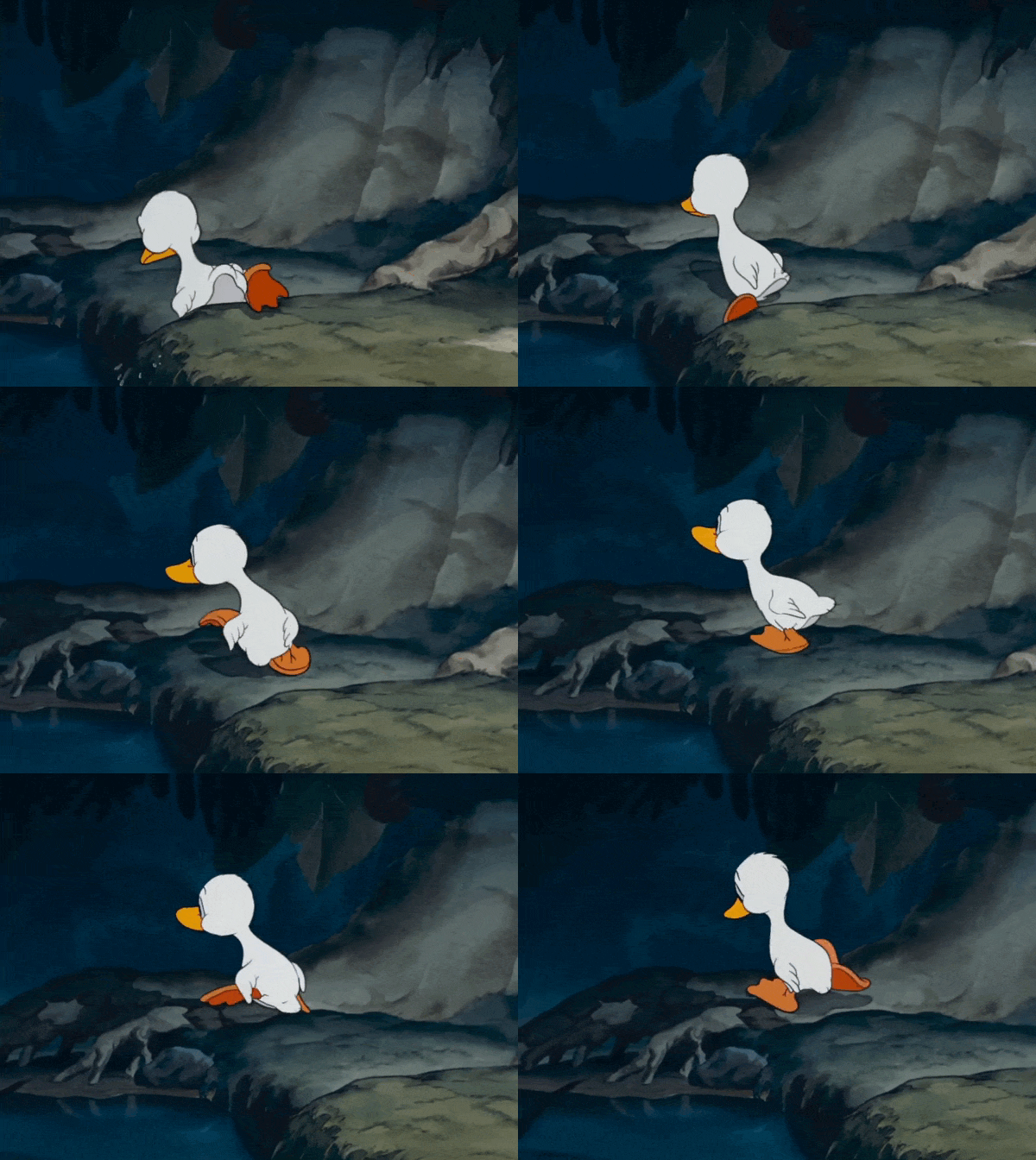
Stills from the cartoon «The Ugly Duckling» (1939, directed by Jack Coting and Clyde Geronimi)