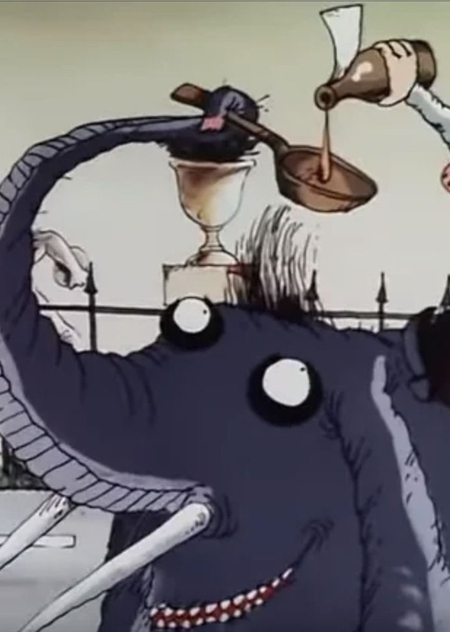
Concept
Animation is a calling, a way of life, a destiny. If a person enters the world of animation, they will be connected to it for life [1].
This is how the remarkable director Alexander Tatarsky achieved his work [1]. Alexander Mikhailovich Tatarsky is a Soviet and Russian director, animator, screenwriter, and artist—one of the most recognizable representatives of the experimental direction in domestic animation. He was born on December 11, 1950, in Kyiv. In 1974, he graduated from the I. K. Karpenko-Karyi State Institute of Theater and Cinema in Kyiv, and subsequently studied courses for cartoon artists at Goskino of the Ukrainian SSR. Starting in 1968, he worked at the «Kyivnauchnafilm» studio, and in 1980, he moved to Moscow, where he began working at the «Ekran» studio. Alexander Tatarsky’s unique animation style is formed by combining visual absurdity, grotesqueness, plastic transformations, and formal experimentation. His artistic language is characterized by a departure from realistic imagery: familiar objects change their outlines, characters adopt unusual proportions, and the surrounding space yields to fantasy and illogical laws. One of the main features of his work is the constant variability of the visual world. This is especially evident in clay animation, where the material becomes a pliable tool for creating unexpected images. In 1988, Tatarsky became one of the founders of the «Pilot» studio, which played an important role in the development of domestic authorial animation.
Soviet animation of the second half of the 20th century represented a space of artistic experimentation, in which creators gradually moved away from traditional methods of depiction and narration. Beyond fairy-tale and realistic plots, animation developed genres based on metaphor, irony, grotesque, surrealism, and the absurd. The aesthetics of the absurd in Soviet animation manifested through the disruption of the familiar logic of the surrounding world—unexpected plot twists, ludicrous situations, and the juxtaposition of incompatible images. In these works, reality ceased to be perceived as something stable or predictable: objects could change their function, space could lose its familiar structure, and characters' actions could contradict common sense. The absurd became not merely a means of generating humor, but an artistic tool allowing for a novel perspective on everyday life.
Tatar’s work is particularly interesting from the perspective of exploring the absurd and visual grotesque, as he built a cohesive artistic world upon these foundations. His animation is characterized by a freedom in handling imagery; familiar objects lose their original outlines, characters are constantly in flux, their anatomy submits to the plasticity of the material, and space exists according to its own, illogical laws.The goal of this study is to identify and analyze the primary visual techniques used to create absurdity and grotesque in the Soviet animation of Alexander Tatarsky. The research hypothesis is that the absurd in Alexander Tatarsky’s work is not merely a means of achieving a comical effect, but an independent artistic method that allows for the reinterpretation of conventional reality and the creation of a unique visual language in Soviet animation.Structure of the study: 1. Concept 2. Distortion of the Familiar: The Deformation of the Surrounding World 3. Transformations: The Plasticity and Metamorphosis of Images 4. Strange Characters: The Anatomy of the Absurdist Figure 5. Scale Disruption: Playing with Proportion and Perspective 6. The Logic of the Absurd: Visualizing Bizarre Situations 7. Conclusion 8. Bibliography 9. Sources
Distorting the familiar: deforming the surrounding world
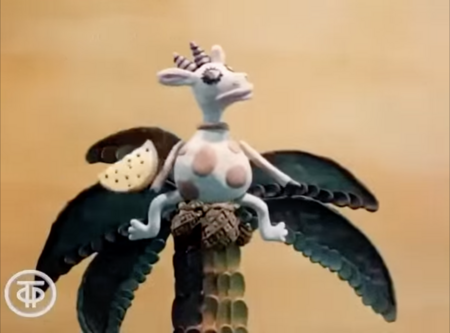
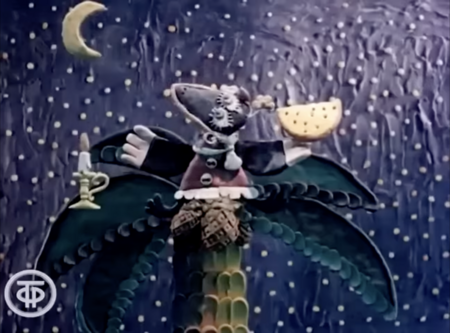
Alexander Tatarsky, «Plasteline Crow,» 1981.
In the cartoon «Plasticine Crow,» the character maintains a general structure—torso and limbs—but its appearance and the nature of its portrayal are constantly changing. Here, we can speak of the blending of features from various creatures and objects. The character does not adhere to a strict representation of how a specific animal should look; its body is composed of heterogeneous elements.
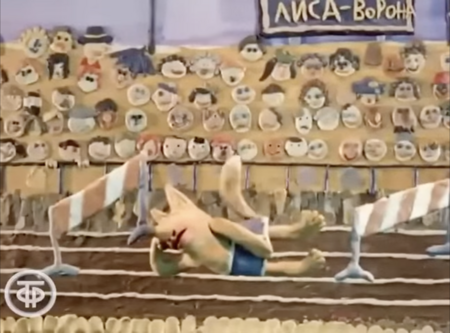
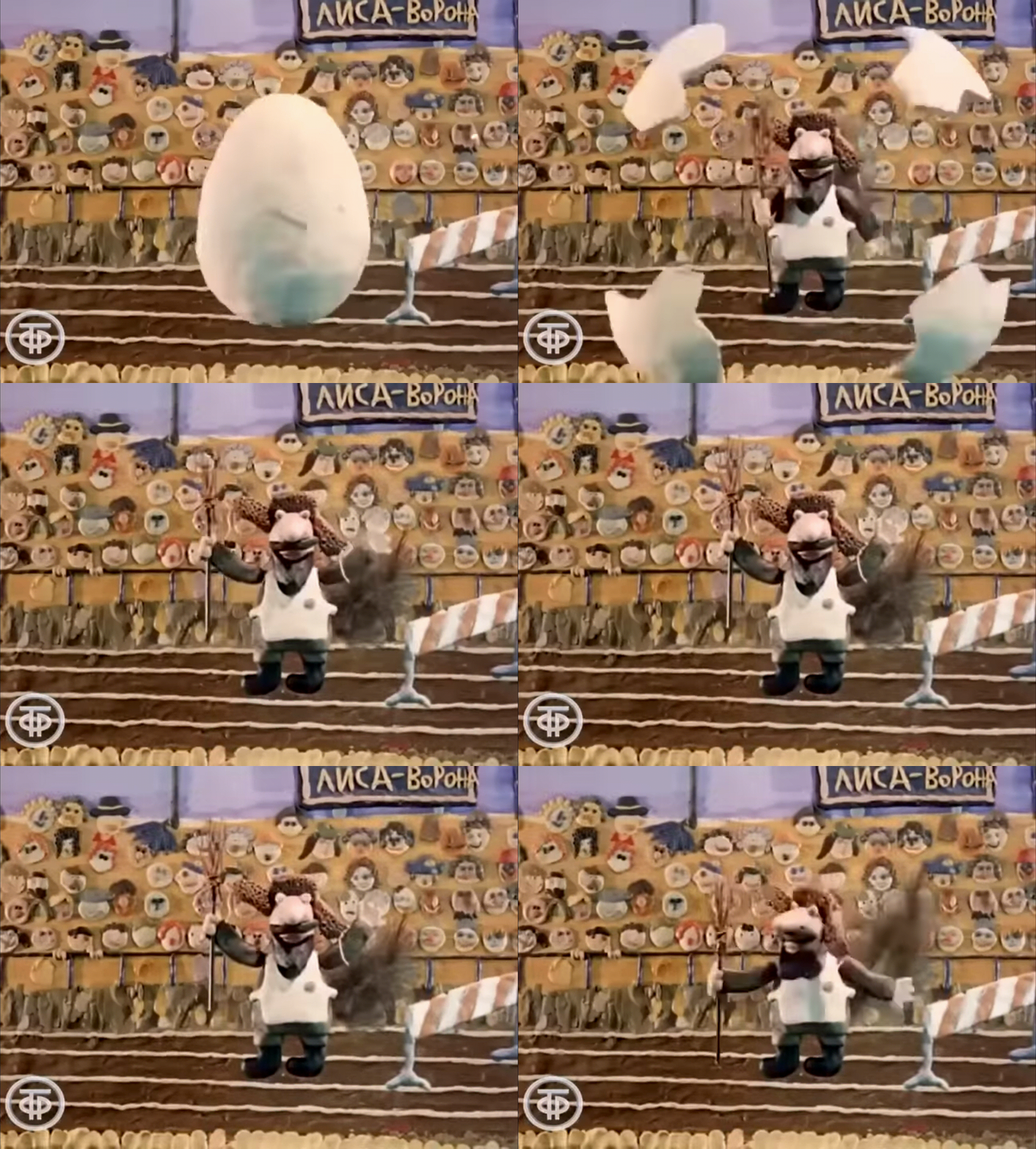
Alexander Tatarsky, «The Plasticine Crow, ” 1981
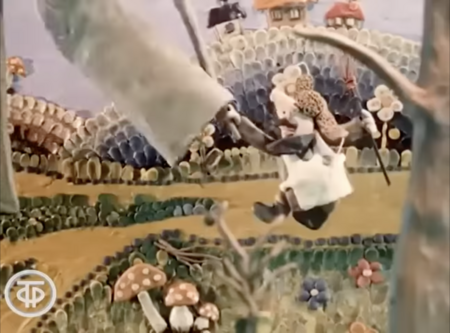
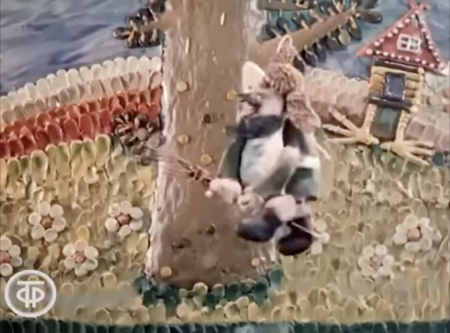
Alexander Tatarsky, «Plasticine Crow, ” 1981
Here, the viewer sees bleachers, spectators, railings, trees, flowers, and fantastical structures. The environment becomes an independent part of the grotesque image—the surrounding details emphasize the fairy-tale quality and the conventionality of the space.
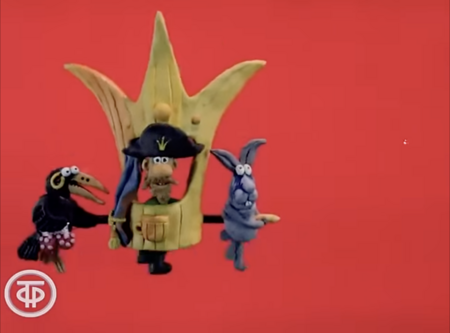
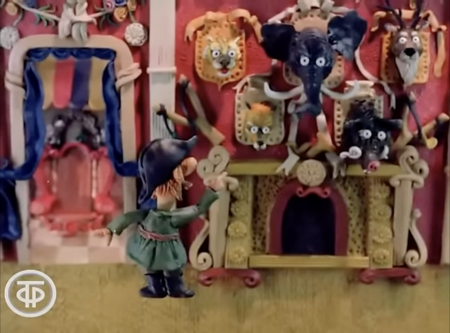
Alexander Tatarsky, «The Snow from Last Year,» 1983.
In the animated film «Last Year’s Snow, ” the principle of artistic space organization is altered; absurdity is created not only through the characters’ appearance but also through the rejection of conventional spatial organization.
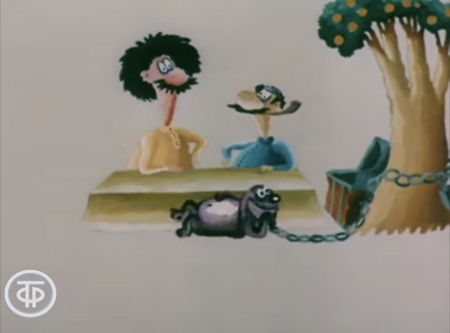
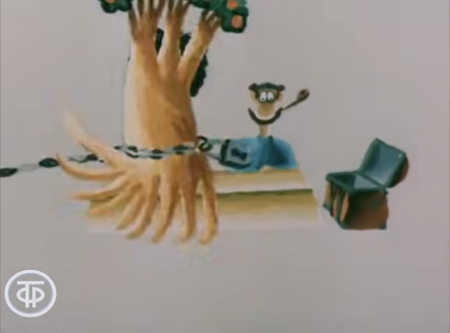
Alexander Tatarsky, «The Dark Side of the Moon,» 1984
The presented frames reveal a sequential transformation of familiar forms and space. In the initial stage, a tree, which is part of the surrounding environment, begins to take on the characteristics of a living being; its roots emerge from the earth, spread outwards, and resemble limbs. Here, the natural object transforms into a dynamic element of action.
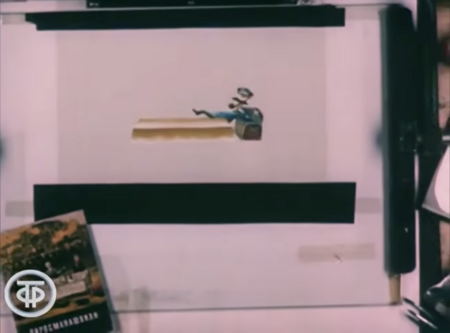
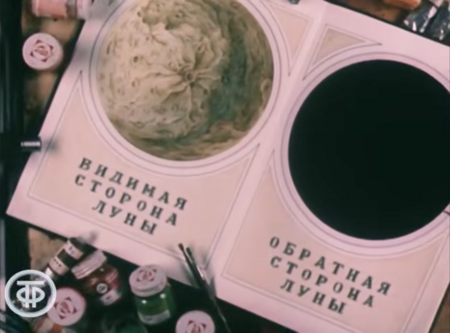
Alexander Tatarsky, «The Other Side of the Moon, ” 1984
The image scale then sharply changes: the character and surrounding objects become a small fragment of a larger space. The final frame shifts the viewer to a book composition, juxtaposing the visible and reverse sides of the Moon.
Alexander Tatarsky, «Wings, Legs, and Tails, ” 1986.
The background is rendered quite abstractly: a barren landscape with a horizon line and small objects in the distance. Against this backdrop, the characters appear particularly unusual. Their elongated forms, active gestures, and exaggerated facial expressions create a sense of grotesqueness.
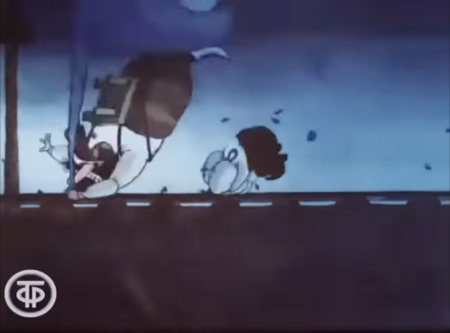
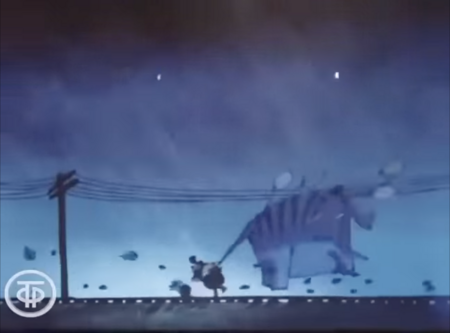
Alexander Tatarsky, «The Kolobki Investigation,» 1986.
In the presented frames, absurdity is created through the disruption of conventional scale. The positioning and poses of the characters do not adhere to the customary logic of interaction with surrounding objects. The combination of recognizable elements from the real environment with unusual objects forms a conditional space where the violation of proportions and physical laws becomes the basis for the comedic effect.
Transformations: Plastics and the Transformation of Images
Alexander Tatarsky, «Plasticine Crow,» 1981.
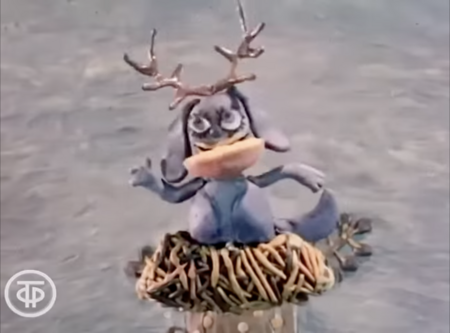
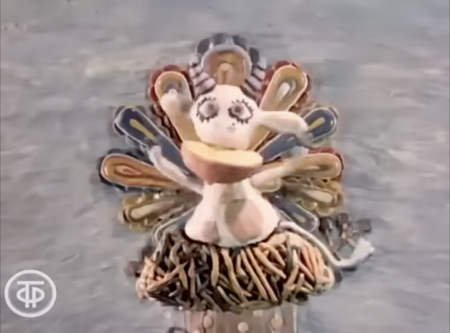
Alexander Tatarsky, «Plasticine Raven,» 1981
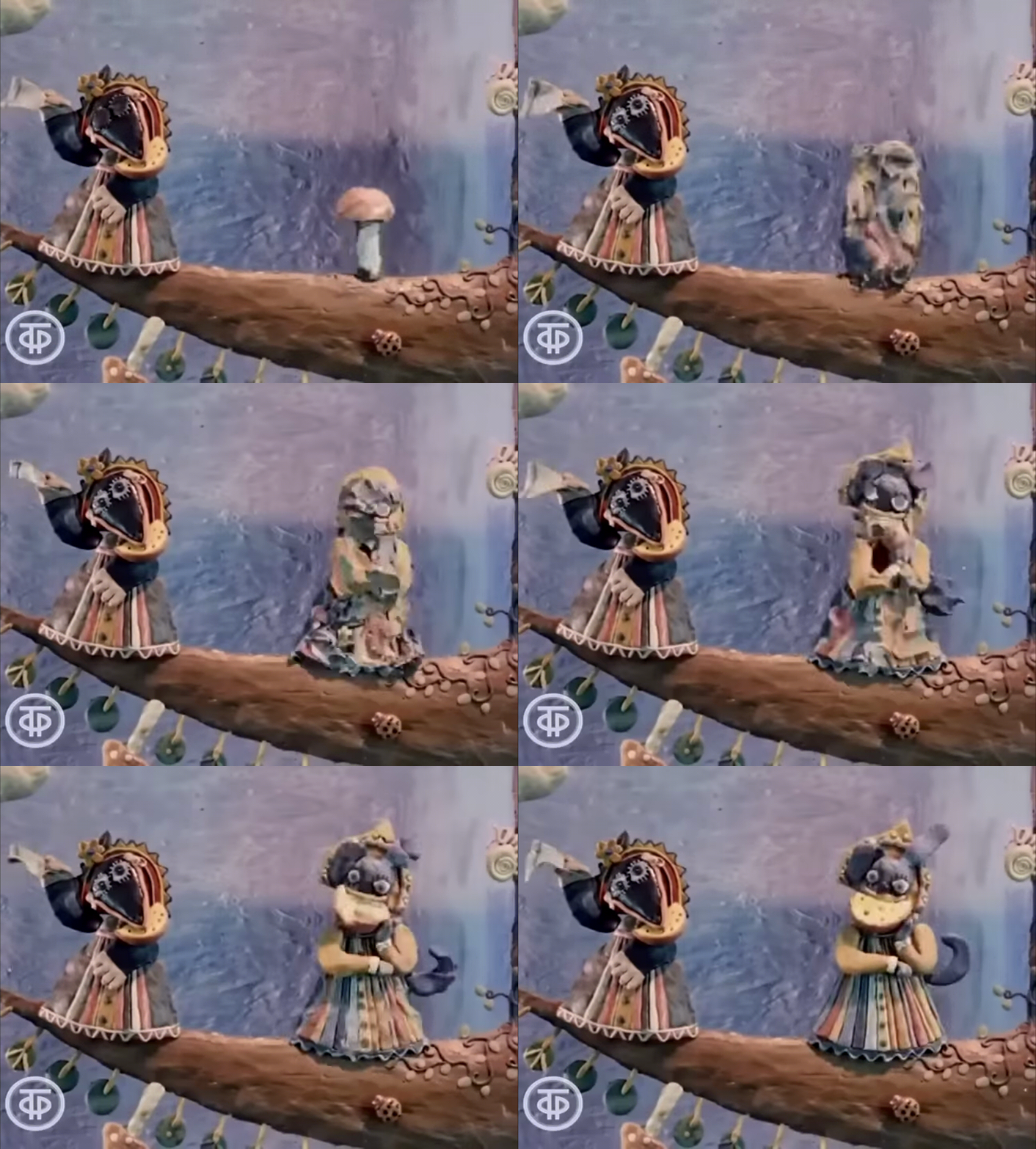
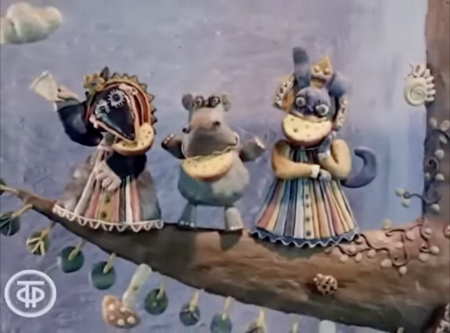
Alexander Tatarsky, «Plasteline Raven, ” 1981
In the animated film «Plasticine Crow,» the transformation of images becomes one of the primary means of achieving artistic expressiveness. Thanks to the plasticity of the material, characters can alter their shape, proportions, and outward appearance, transitioning from one recognizable figure to another. Deformation, stretching, compression, and the blending of characteristic animal features transform the process of shape change into an independent visual action.
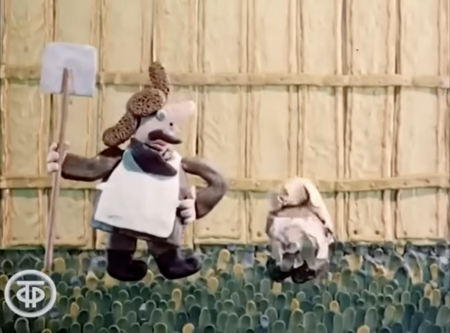
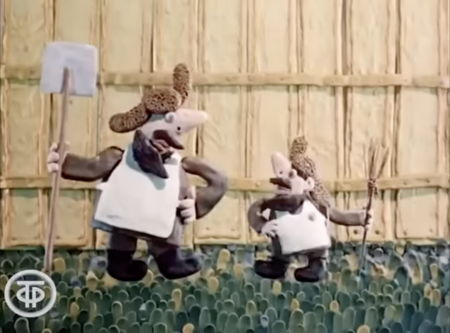
Alexander Tatarsky, «Plasticine Raven, ” 1981.
Instead of a stable image, a hybrid visual solution emerges, one in which traits from different people or animals may intersect. This creates a comedic effect and forms an aesthetic of the absurd.
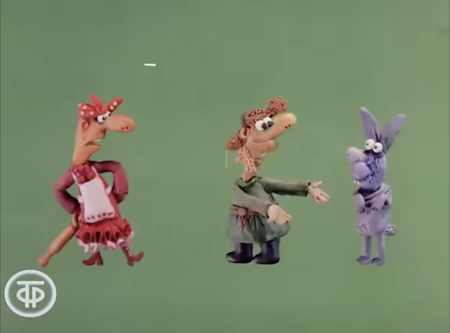
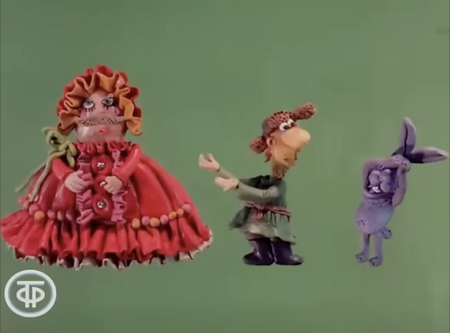
Alexander Tatarsky, «Last Year’s Snow, ” 1983
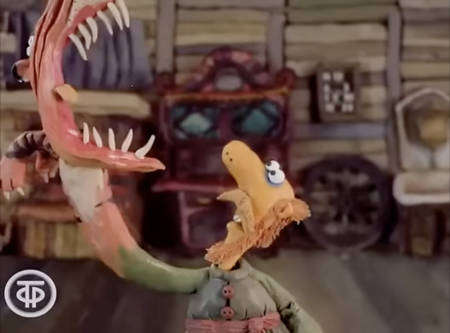
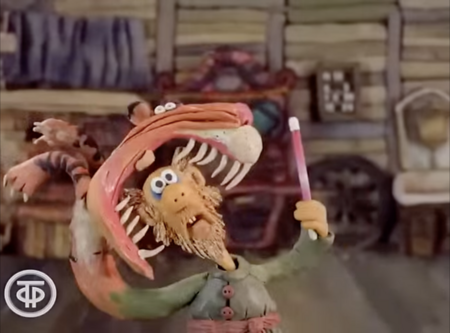
Alexander Tatarsky, «Last Year’s Snow Fell,» 1983.