(1) CONCEPT
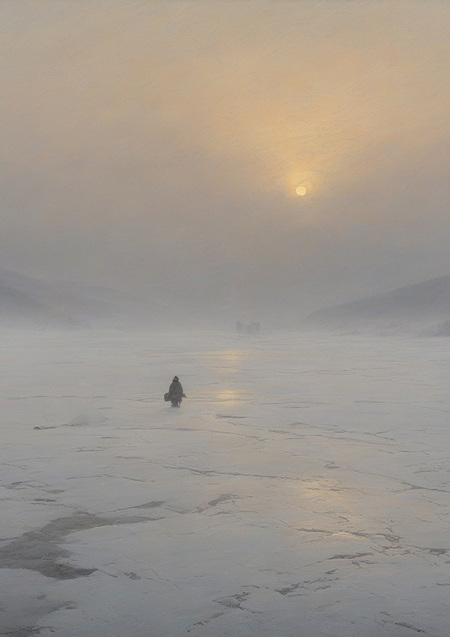
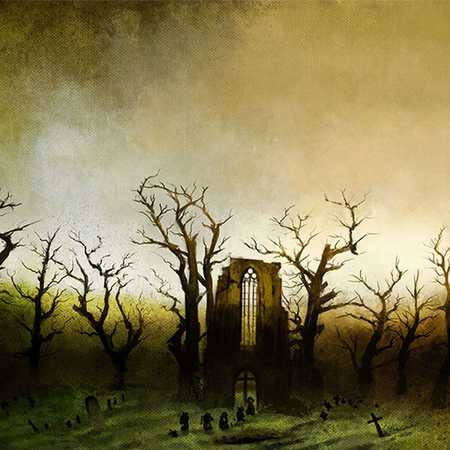
Caspar David Friedrich—a seminal artist of German Romanticism—whose paintings are perceived as philosophical meditations on the divine, existence, eternity, death, and hope. Light serves as the principal instrument for conveying infinity in his works; in them, distant planes lose definition, colors become soft and muted, and the smooth transitions between hues create a sense of aerial depth. Friedrich’s innovation lies in being the first to infuse the landscape with spiritual meaning, making the solitary figure confronting a cold, majestic world the central theme. Within the scope of this project, I aimed to investigate how a trained model could recreate a similar atmosphere through this style, viewed through the lens of Siberian aesthetics.
(2) LEARNING PROCESS
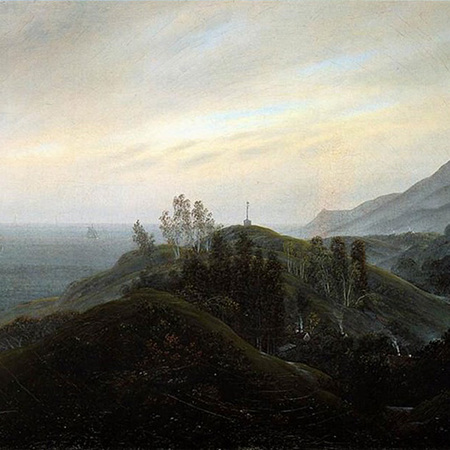
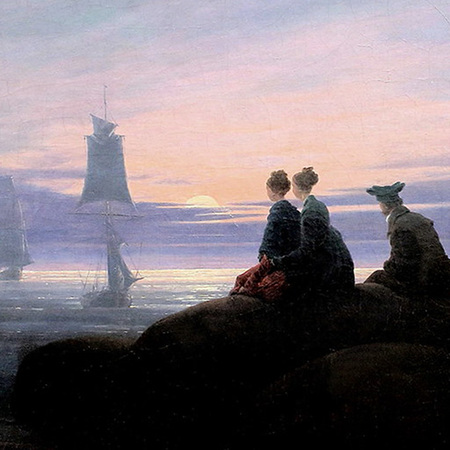
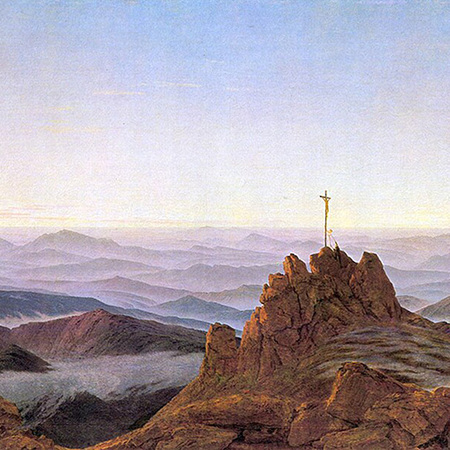
For the project implementation, the LoRA (Low-Rank Adaptation) technology was chosen. This method allows the base weights of the Stable Diffusion XL (SDXL) model to remain frozen while training only small, additional matrices instead. This approach enables fast and efficient adaptation of the neural network to a specific artistic style without overwhelming video memory. The phrase «sks style» was used as the identifier token in the prompt. The training process was conducted in the Google Colab cloud environment using a T4 GPU.
(3) RESULTING IMAGE SERIES
After training the model, I began crafting prompts, but I avoided excessive detail. Over-specification risked causing the neural network to lose the intended style and generate something entirely different. Instead, I wanted it to reference the works of Friedrich and attempt to capture and convey that atmosphere itself—even if through a slightly different lens.
Core Training Parameters:
Base Model: Stable Diffusion XL 1.0.
Resolution: 512 pixels (upscaled to 1024 during generation).
Batch and Gradient: Batch size — 1, gradient accumulation — 4 steps (to prevent Out of Memory on T4).
LoRA Architecture: Rank — 32.
Learning Rate: 1e-4
Number of Steps: 500 (checkpoints saved every 250).
Optimization: fp16, 8-bit Adam
prompt: a lone figure in a dark coat standing on a rocky shore of Lake Baikal, back to the viewer, gazing at endless frozen ice, frosty mist over the water, a cold blue and gray palette, low horizon, sublime scale, melancholic silence, romanticism, a painting in sks style
prompt: an abandoned Siberian village in a snowy field at dusk, crooked wooden crosses, collapsing log houses, ruins atmosphere, muted grey and ochre palette, fog, a painting in sks style
prompt: three people sitting by a campfire in a misty taiga at night, backs to the viewer, dark spruce silhouettes, faint northern lights above, cold blue palette with warm fire accent, silent, romanticism, a painting in SKS style
prompt: the frozen Baikal with cracked ice, a lone fisherman silhouette in the distance, frosty mist, a low pale sun, sublime emptiness, cold palette, a painting in sks style
prompt: empty frozen Lake Baikal shore at dawn, frosty mist, no people, cold blue palette, low horizon, sublime silence, a painting in sks style
prompt: cracked ice on a frozen lake, deep blue and cyan tones, jagged rocky cliffs and small bare trees on the distant shore, frosty mist, overcast winter sky, low horizon, sublime scale, melancholic silence, romanticism, a painting in sks style
prompt: a small Siberian village under heavy snowfall, wooden houses half-hidden in snow, a lone figure walking along a path, back to the viewer, muted gray and white, melancholic, a painting in sks style
prompt: traditional Siberian wooden houses, winter, fog, a painting in the SCS style.In the bottom right corner, it seems the model began trying to sign the paintings.
(4) RESULTS ANALYSIS
In conclusion, it is worth noting that the neural networks successfully conveyed the core principles of Caspar Friedrich’s creativity, which is particularly evident in the softness of the gradient transitions. However, characteristic imagery and objects of the artist also appeared periodically; for instance, Gothic structures sometimes emerged when generating images, contradicting the intended concept. Because of this, careful attention needed to be paid to prompt construction when dealing with buildings. Despite these model limitations, it still succeeded in recreating images in the style of German Romanticism—albeit in an unfamiliar setting.
(5) APPLICATION OF GENERATIVE MODELS