Эволюция передачи человеческого опыта и знаний в доисторическом искусстве.
Concept
In this visual study, I aim to examine the educational role in Paleolithic art and compare it with Iron Age art. Throughout history, there has been a need to teach young people how to survive, and by examining the art and education of these two eras, one can clearly see how the knowledge being transmitted and the methods of information transfer evolved and grew more complex alongside human and societal development. This observation helps us better understand the role of art in education and the evolution of humanity and society. The essence of my research is to demonstrate that as human language and writing developed, the subjects of education shifted, leaning more toward the study of written disciplines rather than purely survival skills.
The Stone Age: Cave Paintings and Their Role.
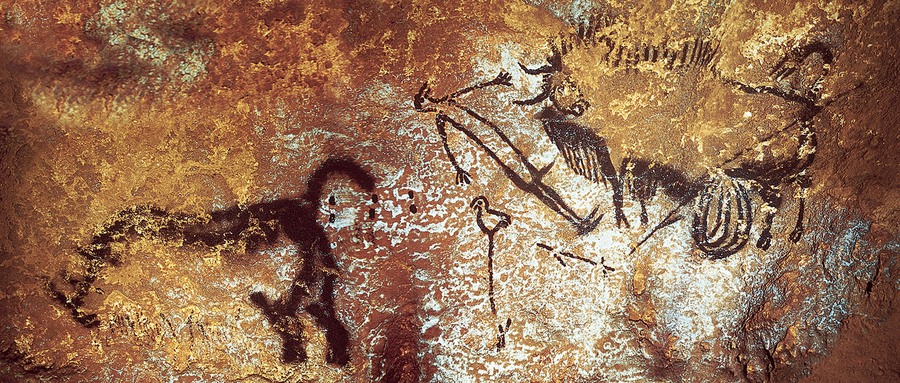
Rock art in the Lasco Cave.
The Lascaux cave paintings date back to 17–15 millennia BCE. This particular depiction is arguably one of the most debated prehistoric rock art pieces. It is not difficult to discern that the image portrays a battle between an injured animal and a human, where the bison clearly emerges victorious despite its wounds. It is particularly interesting to note that one of the earliest depictions of a human appears here, and its execution is far less realistic compared to the animals.
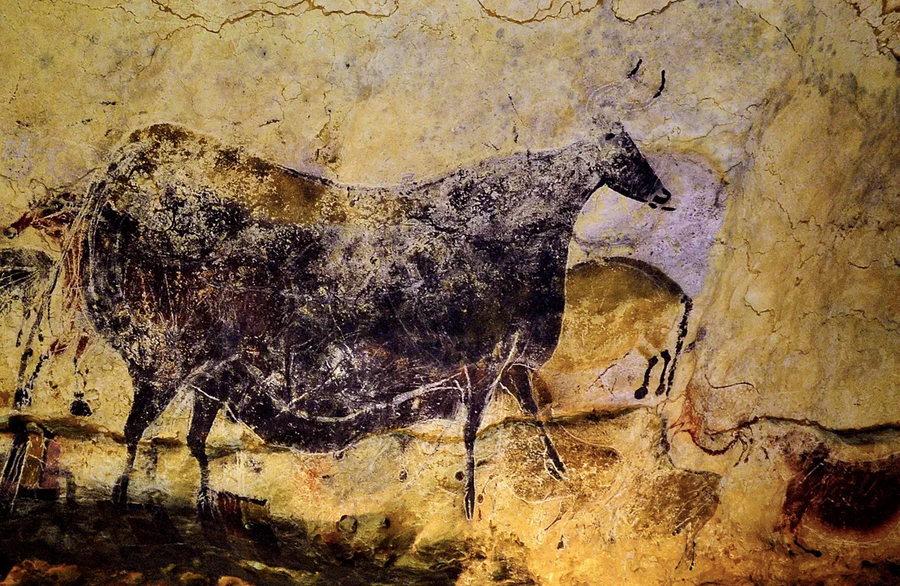
Big Black Cow of the Lasko Caves.
Two meters long, this cow is one of the largest paintings in the Lascaux cave. You can see how its body was scratched by arrows.
One of the numerous depictions of animals from the Altamira Cave.
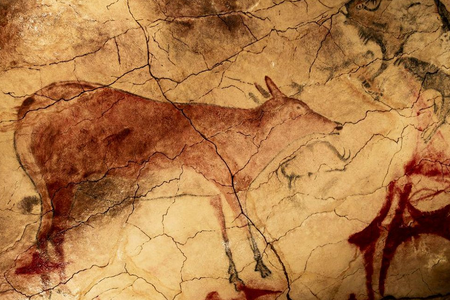
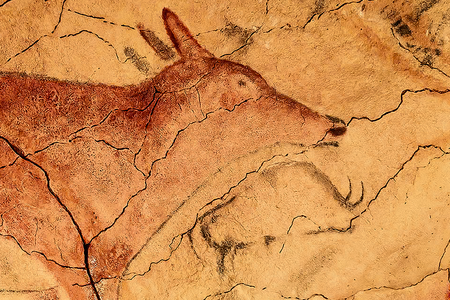
Altamira Cave is a superb illustration of the realism with which prehistoric humans depicted animals. The paintings in this cave were created between the 16th and 13th millennia.
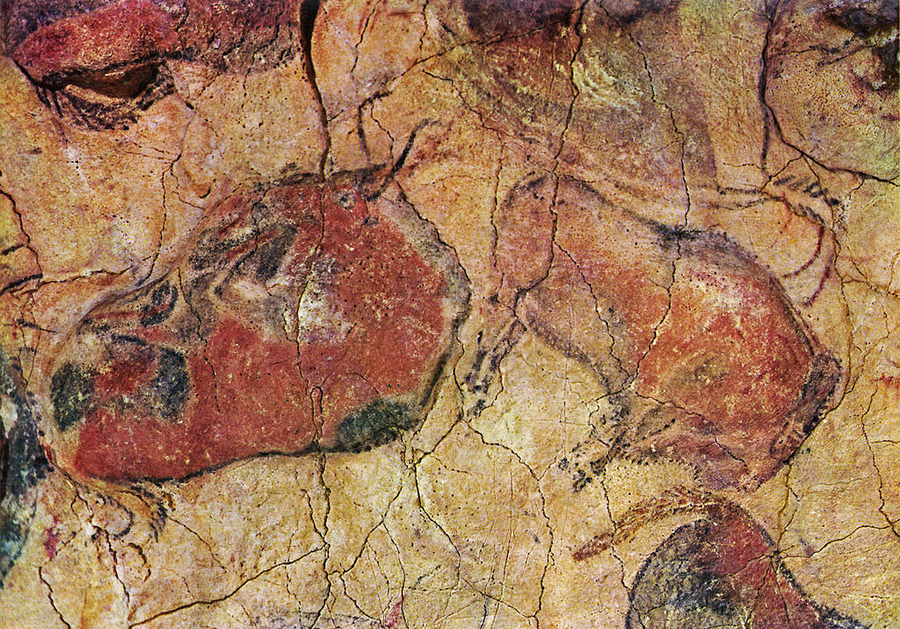
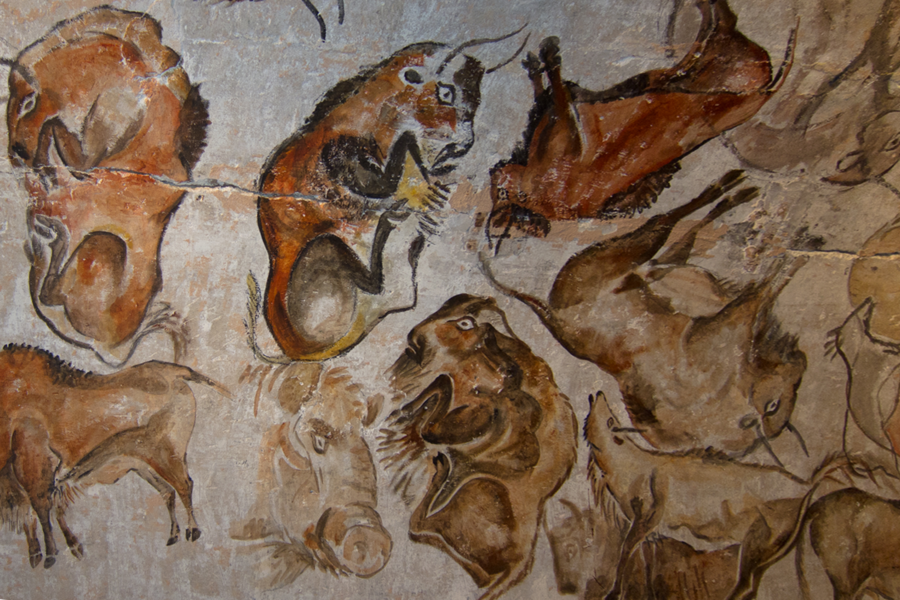
There are many theories about why prehistoric humans painted. Perhaps it was part of a religious ritual, a depiction of myths, or perhaps they simply did it out of boredom. However, there is another likely hypothesis that I focus on in this study: the idea that humans painted to store and transmit useful information.
A battle scene at the Bhimbetka rock shelter.
By the end of the Stone Age, one can observe how humans began to represent people more and more. In the rock paintings of Bhimbetka, dating from the 8th millennium BCE up to the 3rd century BCE, numerous scenes featuring people can be seen. Furthermore, this cave contains many images spanning a wide variety of periods.
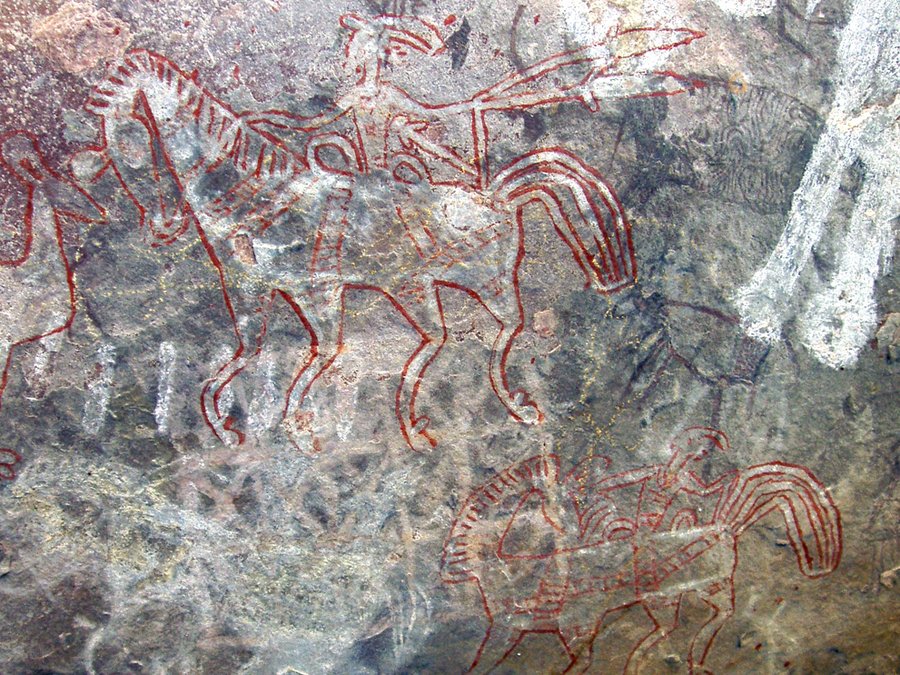
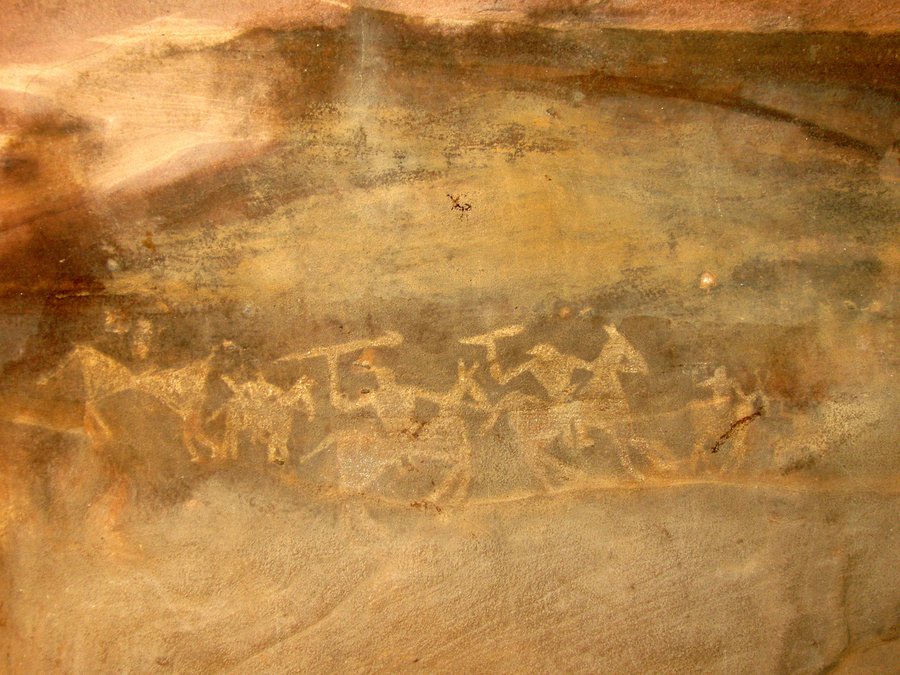
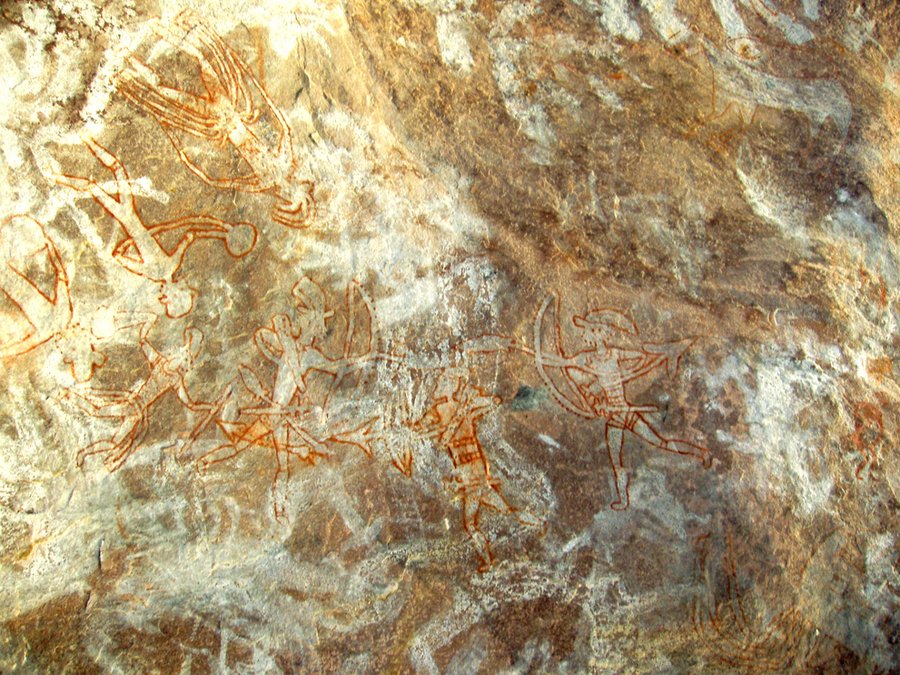
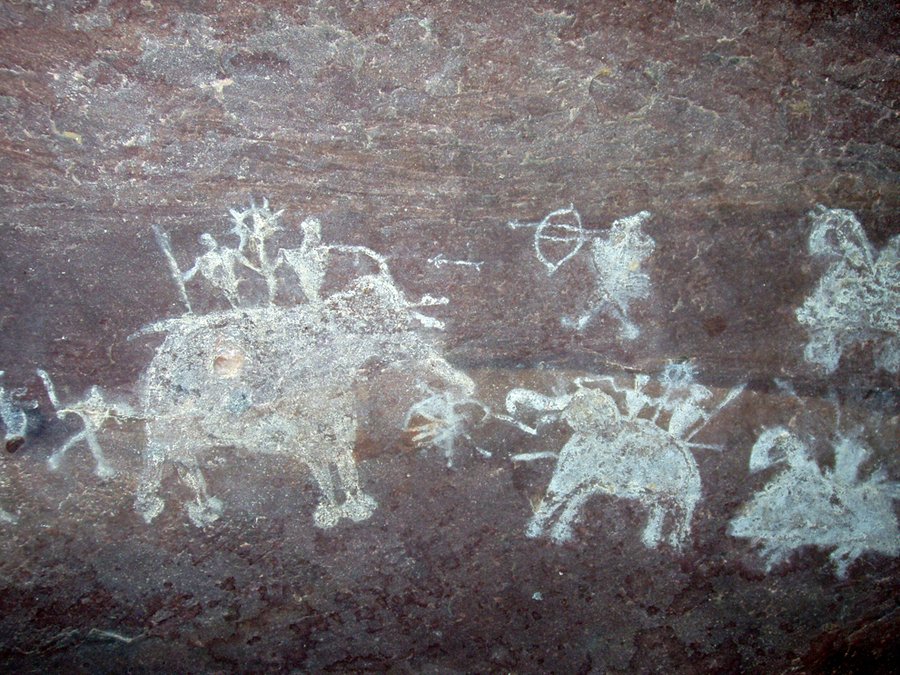
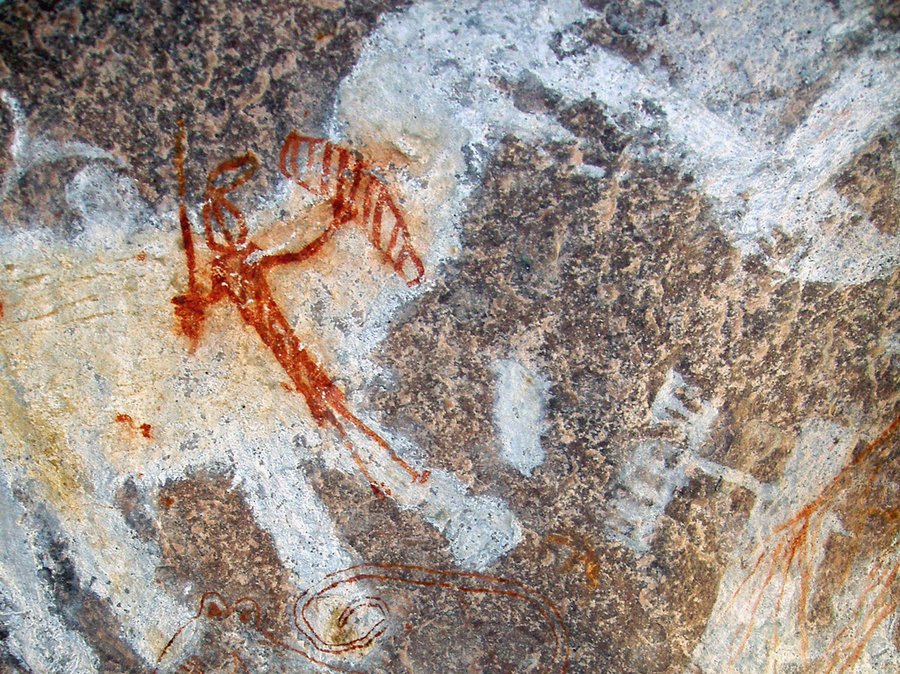
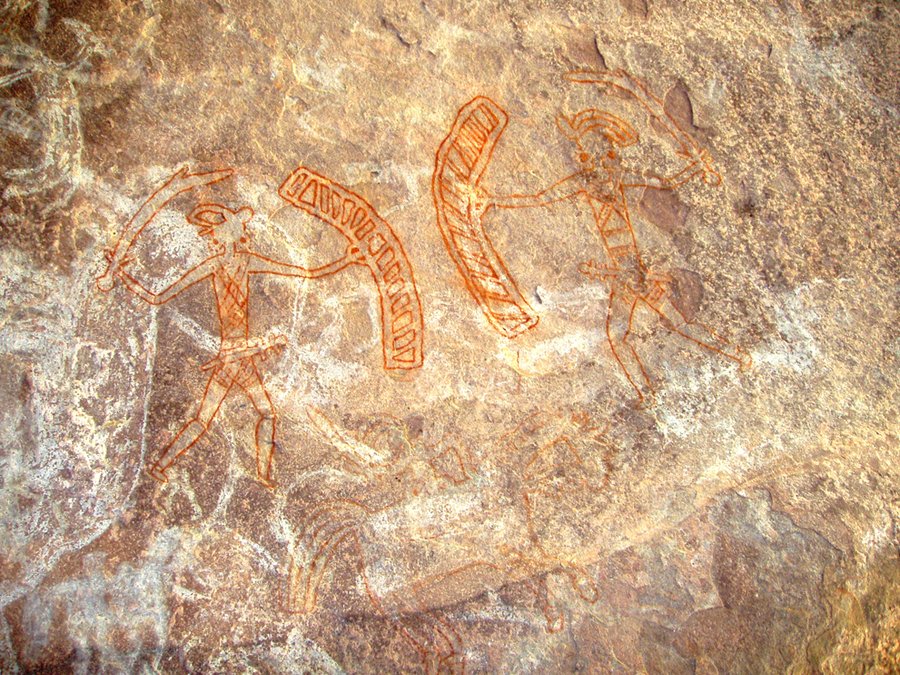
Battle scenes from Bhimbetka drawings.
People are depicted here riding animals, armed with weapons—a battle is in full swing. However, it is worth noting that Bhimbetka contains not only scenes of combat but also of dancing and religious rituals.
Scenes from the rituals in Bhimbetka paintings.
How could such images theoretically be used for education, information storage, and knowledge transfer?
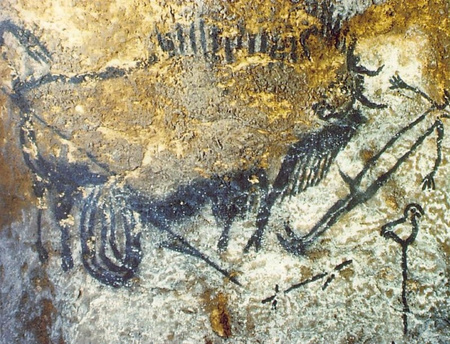
With the anatomical precision of prehistoric humans drawing animals, it is very easy to understand and recognize what an animal looks like and how it is structured. This is highly illustrative material for growing children. If we return to the scene of the wounded human in the Lascaux cave, we can conclude that this is a very instructive image for young hunters—to be cautious and not relax when fighting such a powerful animal.
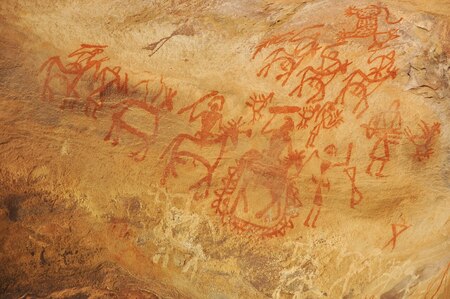
Scenes of hunting, combat, and rituals in Bhembetka may carry a narrative function, recounting past victories and clearly demonstrating what should and should not be done in such situations. To draw something is the most effective way to explain something across generations in the absence of writing.
Education in Different Regions: From the Late Stone Age to the Iron Age
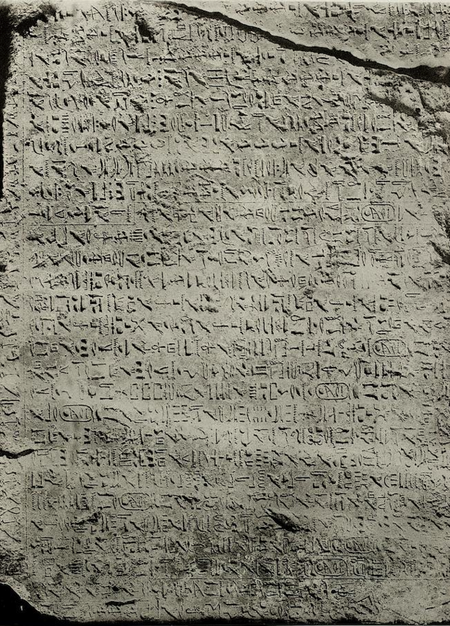
As early as the transition into the fourth millennium BCE, writing emerged in ancient Egypt. Among the monuments of this script are the biographical accounts of Uni and Khufu. Such records were found in the tombs of the elite. The biographies of Uni stand out for their detail. A portion of these accounts is featured in this photograph.
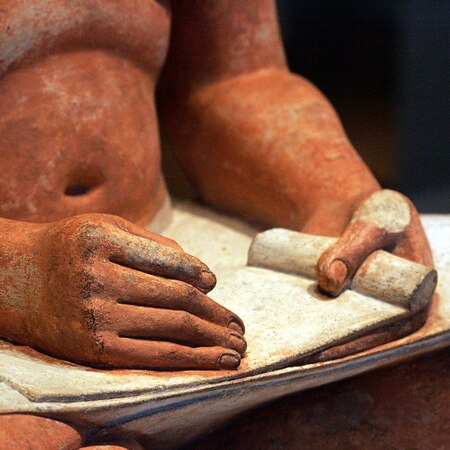
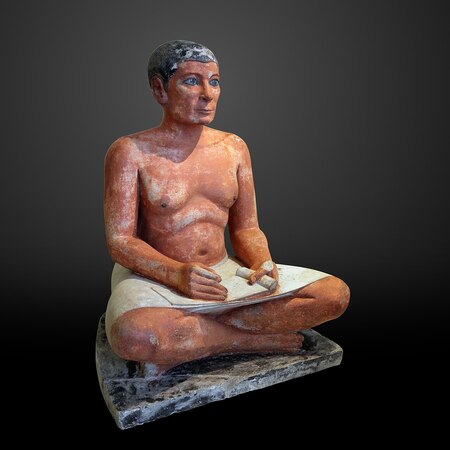
Seated Scribe. Ancient Egypt.
We also want to mention the Seated Scribe—one of the most famous sculptures of Ancient Egypt, dating back to the 3rd millennium BCE.
Relief from the tomb of Khoremheb at Saqqara. Ancient Egypt.
Even a millennium later, visual evidence of education in Ancient Egypt can be found. This relief depicts four future scribes.
With the invention of writing, the theme of education changes and becomes more complex. If the subject matter for a Paleolithic person primarily included hunting and rituals, gradually, approaching the Iron Age, people were taught more precise documentation of history and mythology, and specialized professions.
Progress is visible not only in Ancient Egypt. Although no legal records survive from Ancient Egypt, a large number of legal records have survived from Mesopotamia to the present day.
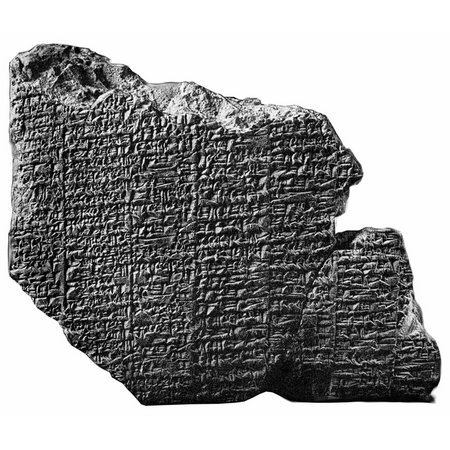
For example, the Laws of Lipit-Ishtar—created in the second millennium—were discovered in nine fragments, one of which is presented here.