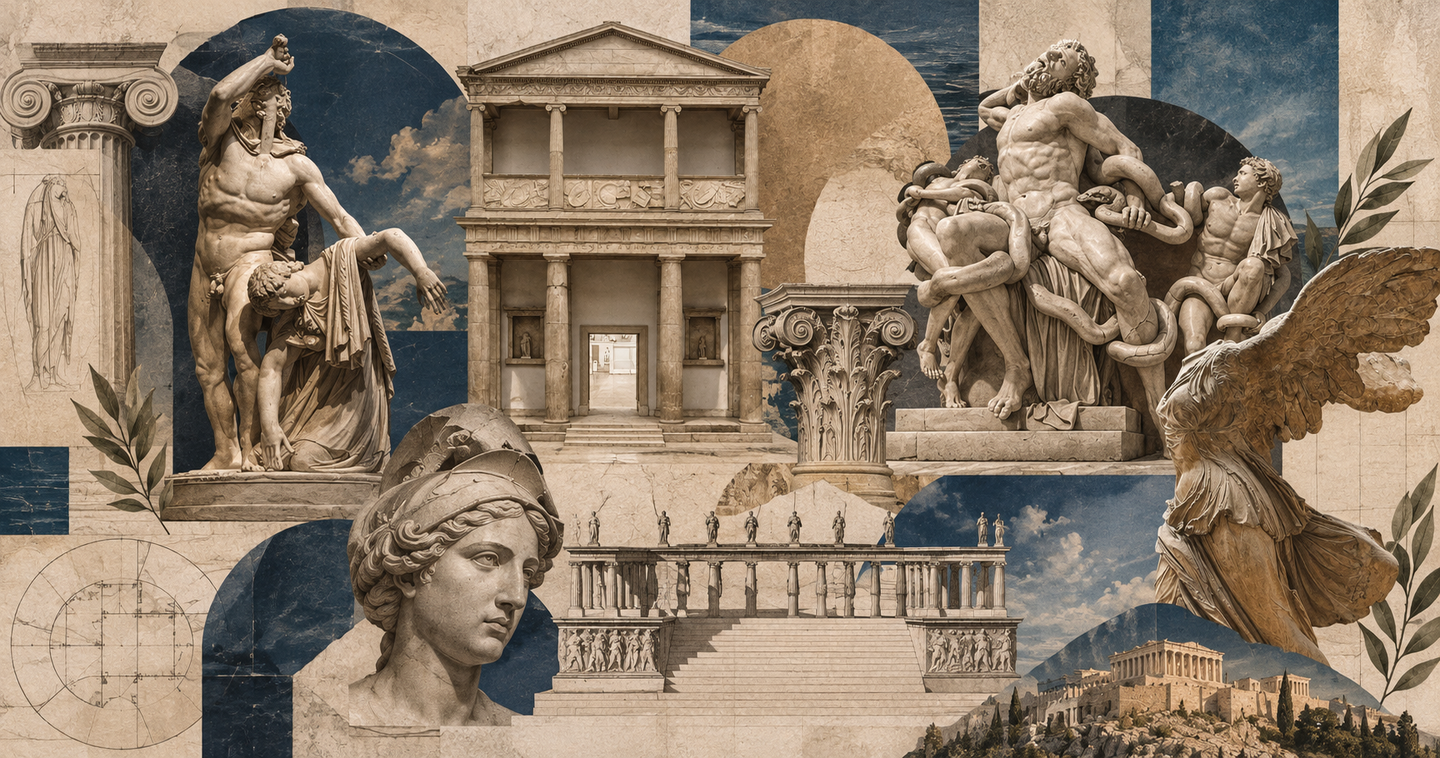
Эволюция скульптуры и ее взаимодействия со средой в различные периоды древней Греции
Concept
Ancient Greek sculpture is rarely examined within the context of space and interaction with the environment. In various educational sources, it is more often presented as an object to be studied, without attention paid to its placement, the viewer’s vantage points, or their path to the sculpture. This approach simplifies the experience of ancient art. The visual aspects of the sculpture are best revealed when the viewer observes it in relation to architecture, rituals, landscape, urban atmosphere, or interior design.
Relevance
The relevance of this topic stems from contemporary trends in environmental design and the field’s interest in ancient approaches to spatial organization. By referencing ancient works of art, one can observe how sculpture and architecture shape imagery, direct the viewer’s attention, and create semantic and visual accents. Engagement with the environment deepens the understanding of art’s context, amplifies its significance, and elevates the level of analysis. Therefore, the topic is framed as an investigation into the spatial functions of sculpture and its interaction with its environment.
Material Selection for the Study
The materials were selected based on how well each example aligned with the core theme and how it offered a unique perspective on it. The study includes monuments that are documented or have been reconstructed with sufficient reliability. Representatives from various environmental types were also chosen (sanctuary, necropolis, acropolis, temple, villa, garden, interior). The examples demonstrate the evolution of artistic motifs from the Homeric period to Hellenism. The material selection includes not only monumental compositions and statues, but also small sculptures, offerings to deities or important persons, and funerary stelae. This approach broadens the scope of the topic. It is not limited solely to the interaction between sculpture and architecture; it also takes into account rituals, landscape, and interiors.
Structure
The work is structured chronologically, divided into internal periods. Four eras are highlighted: the Homeric, Archaic, Classical, and Hellenistic. Within each chapter, the material is grouped by the nature of the setting and the function of sculpture (ritual-funerary contexts, sanctuaries and temples, public space, and others). This structure allows for an understanding of how the plasticity of sculpture evolved and how it gradually transformed from an element integrated into its environment to a tool for organizing space.
Principle of Source Selection and Analysis
The sources included archaeological publications, photographs, plans, reconstructions, and exhibitions. For my analysis, I employed compositional, spatial, contextual, and comparative methods. The criteria for analysis were scale, figure placement, presence and type of pedestal, viewpoint, relationship to architecture and landscape, lighting, function, or material.
The key question
How did the interaction of ancient Greek sculpture with its environment change, and what spatial functions did it perform at different stages?
Hypothesis
As the transition moves from the Homeric period to Hellenism, sculpture moves away from ritual, funerary, and sacred contexts, drawing closer to the active creation and embellishment of the environment. In doing so, each era forms its own relationship between plasticity and space—a dynamic I aimed to identify and demonstrate.
Object, Subject, Goal, and Objectives
The object of study is ancient Greek sculpture from the 11th–1st centuries BCE, along with the context of its placement and perception.
The subject of investigation was the forms of interaction between sculpture and the architectural, ritual, landscape, urban, or interior environment.
The goal is to analyze the changes in how sculpture and its environment interacted, spanning from the Homeric period to Hellenism.
The task was to analyze how the environment and space related to sculpture, observe the shift in sculpture’s functions within its setting, study relevant examples based on specific criteria, compare the art of different periods, and demonstrate the significance of ancient creativity for contemporary environmental design.
Practical Significance
The results can be used in courses on art history or environmental design. The chronological scope covers the 11th–1st centuries BCE. This is based on periods of ancient Greek artistic development, derived from our instructional materials.
Chapter 1. The Homeric Period (11th–8th Centuries BCE). Sculpture in a Ritual-Funerary Context
During the Homeric period, monumental sculpture does not yet emerge. Its absence influences the understanding of art in relation to space. Within the forms included in ritual and funerary contexts, there is a particular plasticity. Its scale can be correlated with the scale of the human body and sacred rituals, but not yet with architecture.
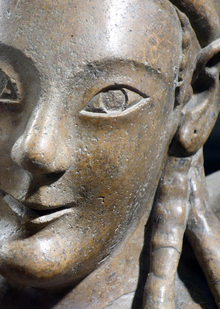
Xoans—roughly hewn wooden trunks or stone blocks with barely discernible facial features. They embody a deity, serving as its physical presence within the sanctuary. The Xoan occupies the center of the ritual space, functioning as the point around which the action unfolds. Its spatial function is to designate the sacred center.
Original ksoans have not survived to the present day because they were made from wood that could not withstand so many years. However, there are later artifacts that give us an understanding of their appearance. We have received miniature wooden ksoans dating to the late 7th century BCE (stored in the National Archaeological Museum of Syracuse). These are no longer from the geometric period, but they are the closest authentic examples in terms of time and material.
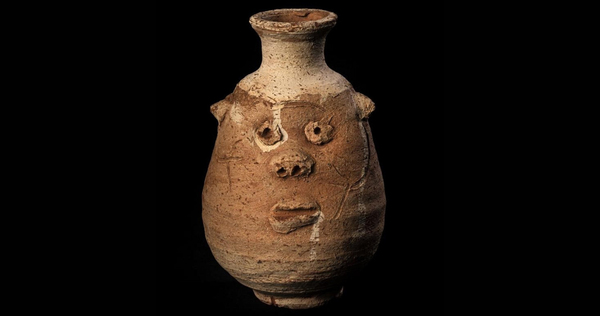
Small Sculpture of the Geometric Period
In addition to the pottery, there were bronze geometric statuettes from Olympia, taken from the altar of Zeus (warriors, horses, chariots, bulls). They are also closely linked to ritual activity. These miniature figures were not intended for viewing from a distance. People brought them to the altar because they played an important role in rituals and sacrifices. Their spatial significance is to function as an element within the ritual context, rather than as a standalone object. The scale, ranging from a few centimeters, indicates that they emphasized the environment rather than creating it.
These examples demonstrate plasticity before it became integrated into the organization of the environment. The sculpture here is embedded within a ritual-funerary context. The absence of monumental sculpture during this period suggests that sculpture had not yet addressed or set large-scale objectives for spatial organization.
Chapter 2. Archaic Period (7th–6th Centuries BCE)
Sculpture approaches architecture
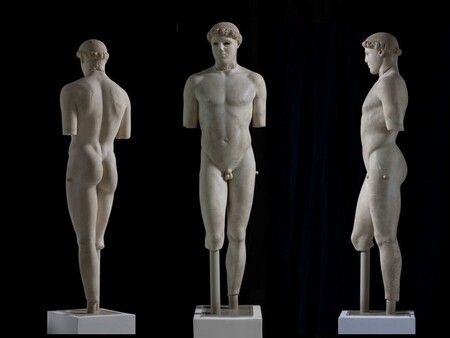
In the Archaic period, sculpture begins to interact more actively with architecture and the landscape. This interaction retains ritualistic elements. Pedestals emerge, frontality becomes a spatial convention, and the temple acquires a sculptural facade.