Navigation
Concept Section 1. Pre-Digital Revolution Section 2. Jurassic Park (1993): Dinosaurs Gain Flesh Section 3. Jurassic World (2015): Dinosaurs Become Digital Section 4. Conclusion: What Makes an Artificial Being Alive? Bibliography Image Sources
Concept
Have you ever wondered why the dinosaurs from «Jurassic Park,» filmed over thirty years ago, still look so convincing?
A colossal Tyrannosaurus Rex in a downpour, velociraptors chasing children in the kitchen, the first appearance of a Brachiosaurus—these scenes were not only iconic but also fundamentally changed perceptions of cinematic possibility. Yet, behind the realism of these prehistoric creatures lay something more complex than just computer graphics.
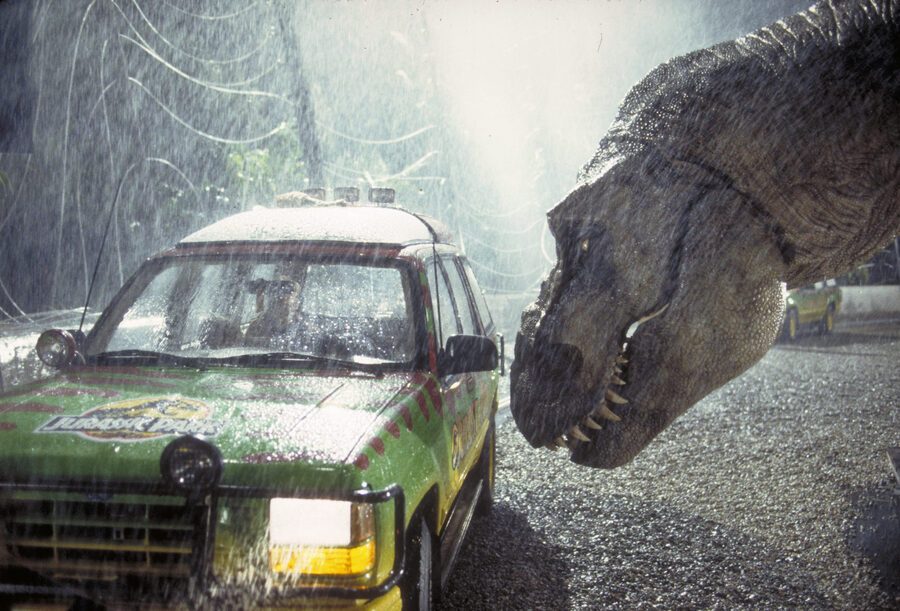
Jurassic Park (1993)
In 1993, Steven Spielberg introduced audiences to dinosaurs created by combining full-scale mechanical models with digital animation. Twenty-two years later, «Jurassic World» premiered, where computer technologies had reached an entirely different level. It seemed that any dinosaur could now exist solely in a digital space. But why did the creators continue to use physical models?
This very contradiction forms the starting point of the research. Comparing the two films allows us to view the history of special effects not as a linear succession of outdated technologies replaced by new ones, but as a process of searching for the most convincing ways to bring the impossible to life.
«Jurassic Park» (1993)
Research Object: technologies for creating visual and practical special effects in cinematography.Research Subject: the shift in methods for creating dinosaurs and the integration of animatronics with CGI in films from 1993 and 2015.Research Goal: to trace the evolution of screen dinosaur creation technologies and to determine how the choice between physical and digital effects impacts the visual believability of the image.
The history of these two films demonstrates that the evolution of special effects cannot be reduced to a simple substitution of mechanical creatures with computer-generated ones. The physical model and the digital dinosaur solve different problems, and their believability depends not only on the technology but also on how the creature moves, is lit, and interacts with the space.
Why do some scenes suffice with digital animation while creators return to animatronics in others?
«Lost World» (1925), Willis O’Brien
To trace these changes, we must look back at how dinosaurs were brought to life even before the advent of computer graphics. Frame-by-frame animation, mechanical structures, digital modeling—each of these methods offered a unique way to overcome the stillness of an artificial creature. However, the introduction of a new technology did not necessarily mean the disappearance of the previous ones. On the contrary, cinema gradually learned to integrate their capabilities.
This continuity is particularly evident when comparing specific scenes. The Tyrannosaurus allows for the exploration of mass transfer, scale, and skin texture; the Velociraptors—the modulation of movement plasticity; and the scenes of direct contact with the dinosaurs—the significance of the model’s physical presence on set. What matters here is not only the final shot but also the production process hidden behind it.
«The Lost World» (1925), Willis O’Brien
Therefore, the basis of the visual research will consist of comparisons between film frames, photographs of animatronic constructions, working digital models, and materials from filming. Interviews with specialists, publications from visual effects studios, and professional cinematic journals will help determine which technologies were utilized in each case. The images will not be mere illustrations of the history of special effects—they will be the primary tool for analyzing it.
The central hypothesis of this research is that the development of CGI has not completely displaced practical effects, but has instead transformed the principles of their application and combination. From mechanical movement to digital animation, from physical skin to computer texture, from full-scale construction to a virtual being—each shift represents an attempt to render the impossible visually convincing.
It is through comparing these solutions that we can understand how filmmakers' perception of what makes an artificial being feel alive to the audience has changed over the last 22 years.
Section 1. Before the Digital Revolution: How Cinema Brought Dinosaurs to Life
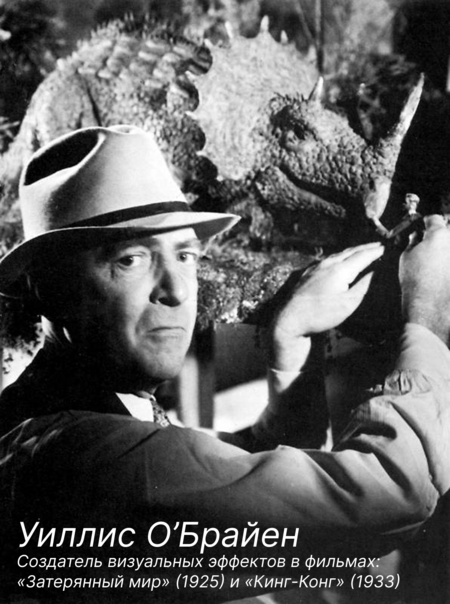
Long before computer graphics existed, cinema was already attempting to bring to life creatures humanity had never seen. Dinosaurs became one of the most challenging tests for special effects artists: massive bodies had to move, interact with their surroundings, and look convincing alongside live actors. But how do you make a static model appear as a living creature?
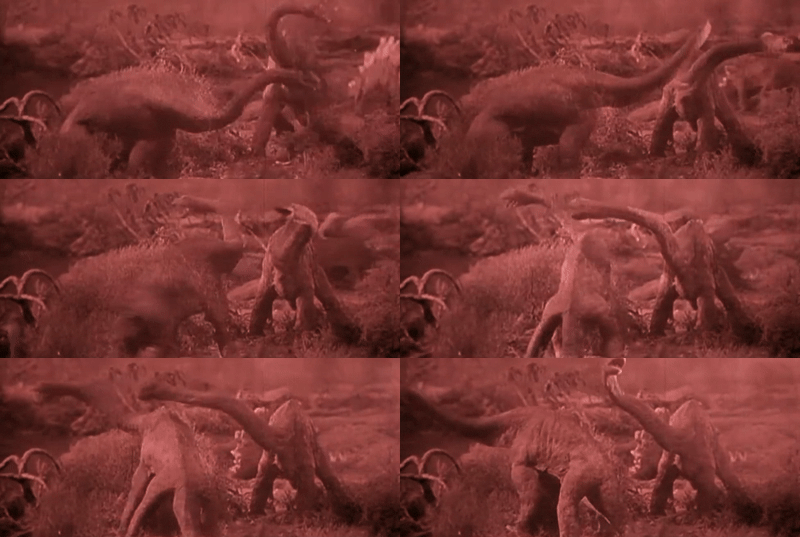
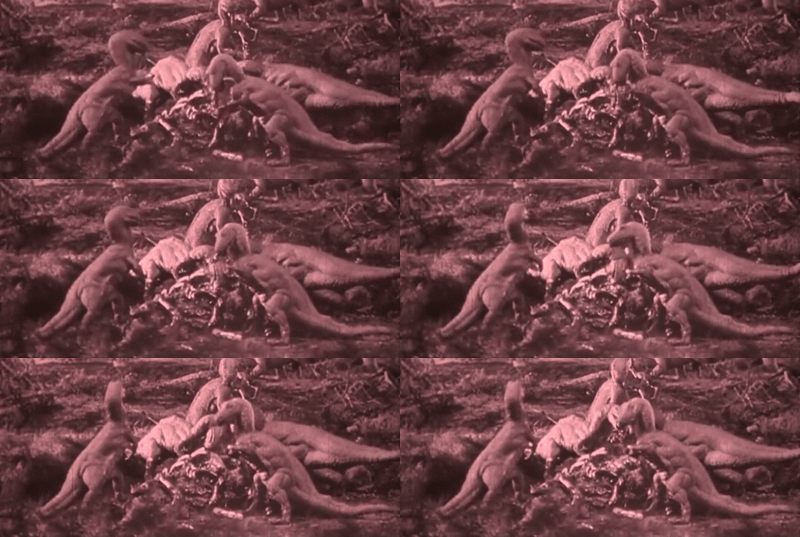
«Lost World» (1925), Willis O’Brien
The first crucial step was stop-motion animation—a technique that transformed a sequence of subtle changes in a model’s position into continuous movement.
In the film «Lost World» (1925), Willis O’Brien used movable miniature dinosaur figures, shooting them frame by frame. On screen, artificial creatures gained the ability not just to appear before the viewer, but to move, fight, and destroy the surrounding world on their own.
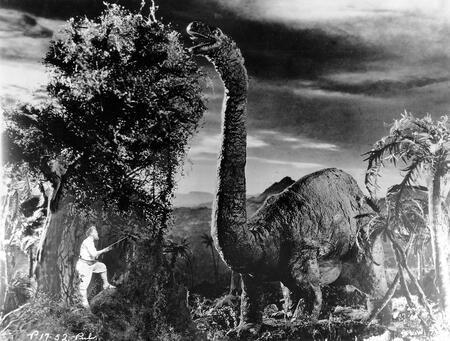
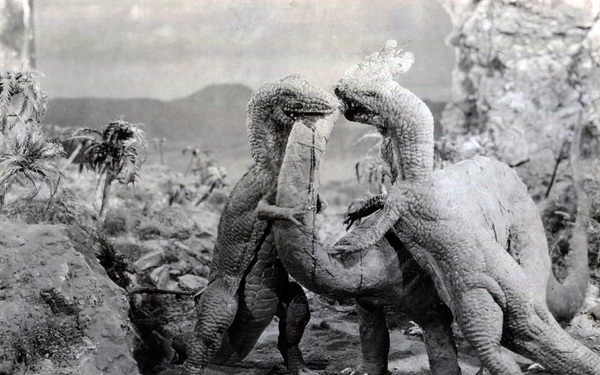
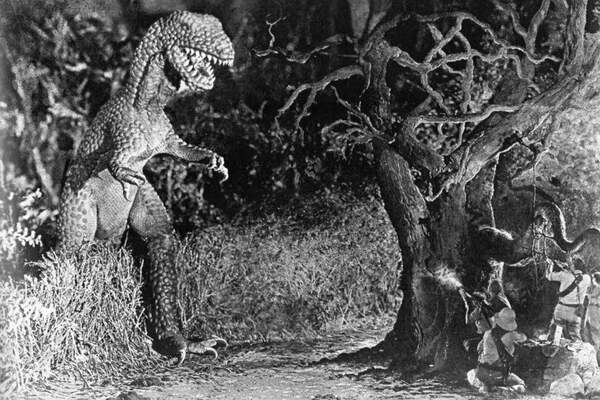
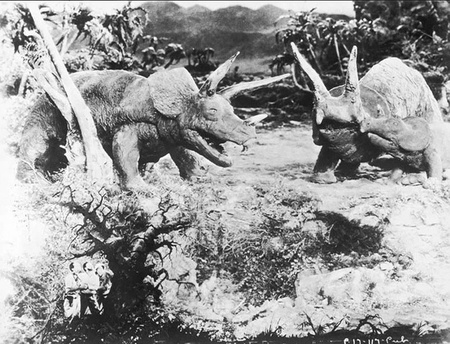
«The Lost World» (1925), Willis O’Brien
In King Kong (1933), this technology became part of a more complex special effects system. The frame-by-frame creatures interacted with the actors through composite filming, projection, and meticulously constructed compositions. The dinosaur ceased to be an isolated animated figure and became a participant in the overall cinematic space.
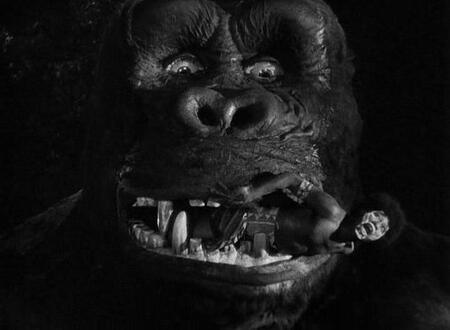
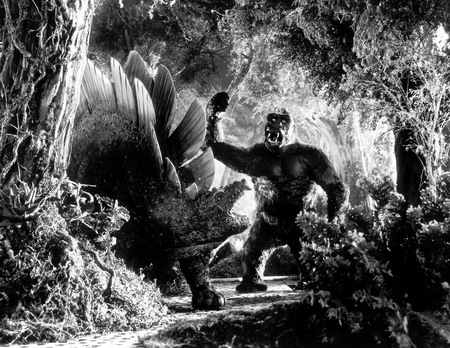
«King Kong» (1933), Willis H. O’Brien
However, stop-motion animation had a distinctive characteristic: the movement was created manually, and the physical model existed at a reduced scale. Since every change in pose required a separate frame, the naturalness of the plasticity depended entirely on the animator’s precision.
In the second half of the 20th century, the advancement of mechanical constructions allowed for a different approach to the challenge of animating creatures. Animatroonics provided the capability to create physical models capable of moving directly during filming. The camera could now capture not a sequence of static poses, but the actual movement of a mechanical body.
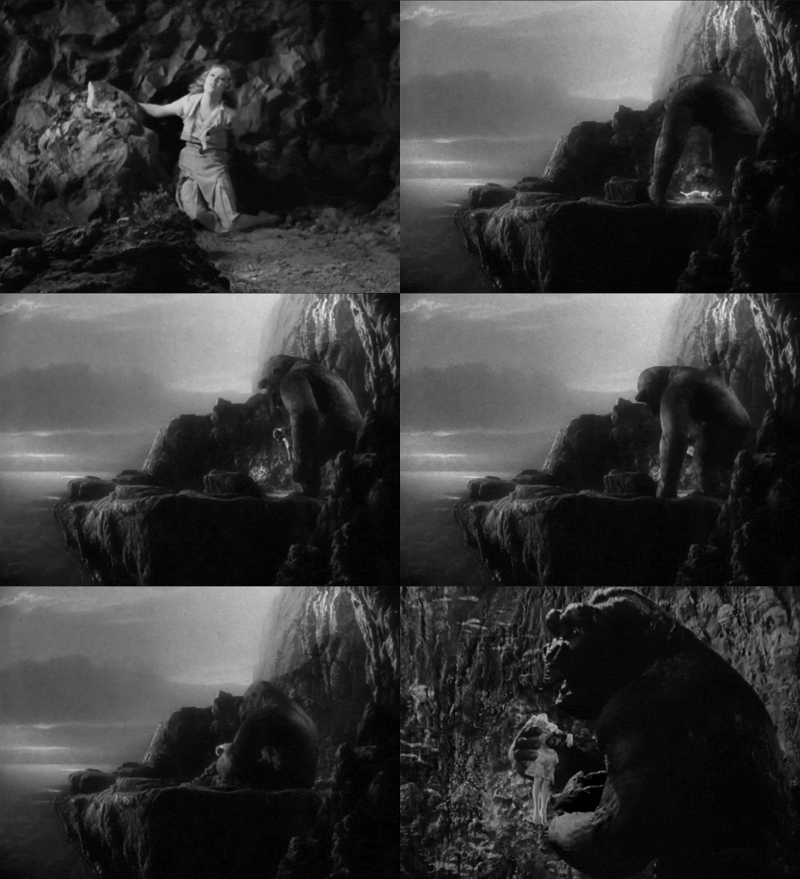
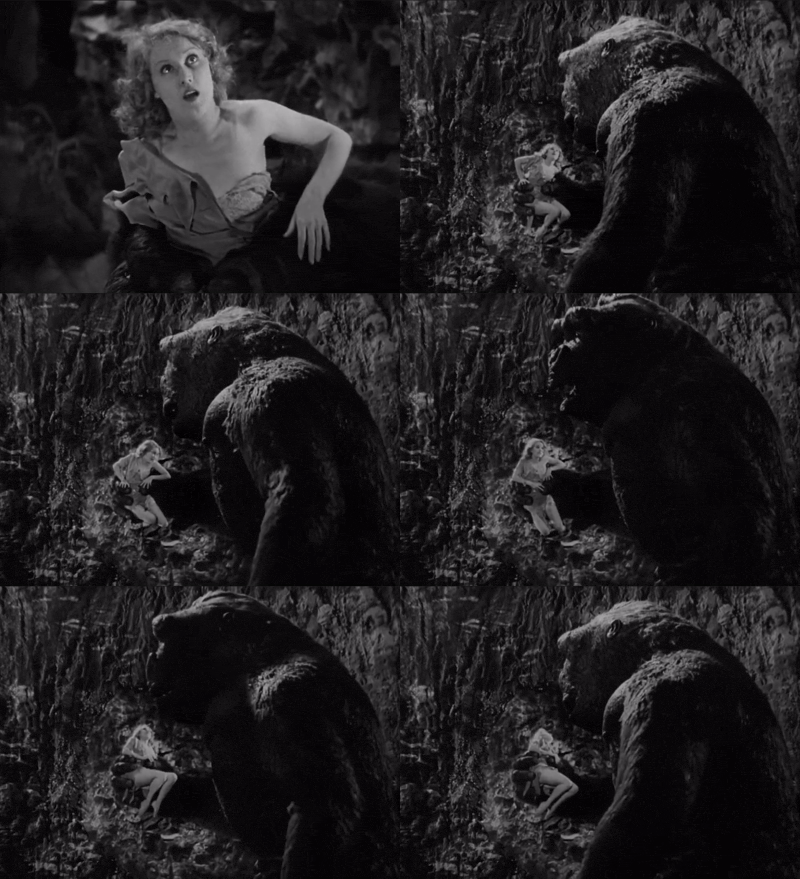
«King Kong» (1933), Willis H. O’Brien
By the early 1990s, two fundamentally different approaches had emerged: creating the illusion of motion through animation, and creating a moving object directly in front of the camera. Their combination with emerging computer graphics paved the way for the technological breakthrough seen in Jurassic Park (1993).