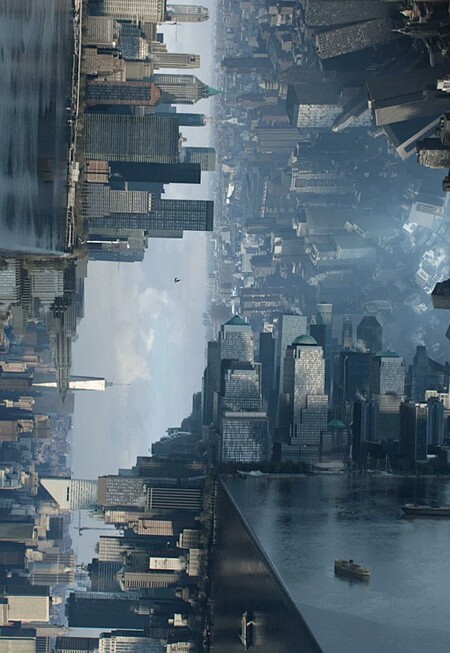
One of the earliest examples of creating a large-scale architectural environment using composite filming techniques is Fritz Lang’s film Metropolis (1927). It employed miniature building models and optical image compositing to depict the futuristic city. Although the film does not yet explore the deformation of architecture in the sense central to this research, it demonstrates the early potential of cinema to create visually convincing architectural forms inaccessible through standard filming methods—a potential that was widely adopted later.In subsequent decades, the advancement of special effects allowed the shift from merely representing fantastical cities to actively altering the form of architectural objects—destroying, reconstructing, and transforming them. We would like to begin with the effect of destroying a residential building in the final scene of the film Poltergeist (1982). This episode is selected as an example of a practical method for altering architectural form, wherein the object’s destruction was realized through physical manipulation of a specially constructed model.
Chapter 1. Practical Methods for Creating Architectural Deformation in 1980s Cinema
The primary technical objective was to create an implosion effect—a collapse where the structure doesn’t just fall outward, but is sequentially drawn inward.
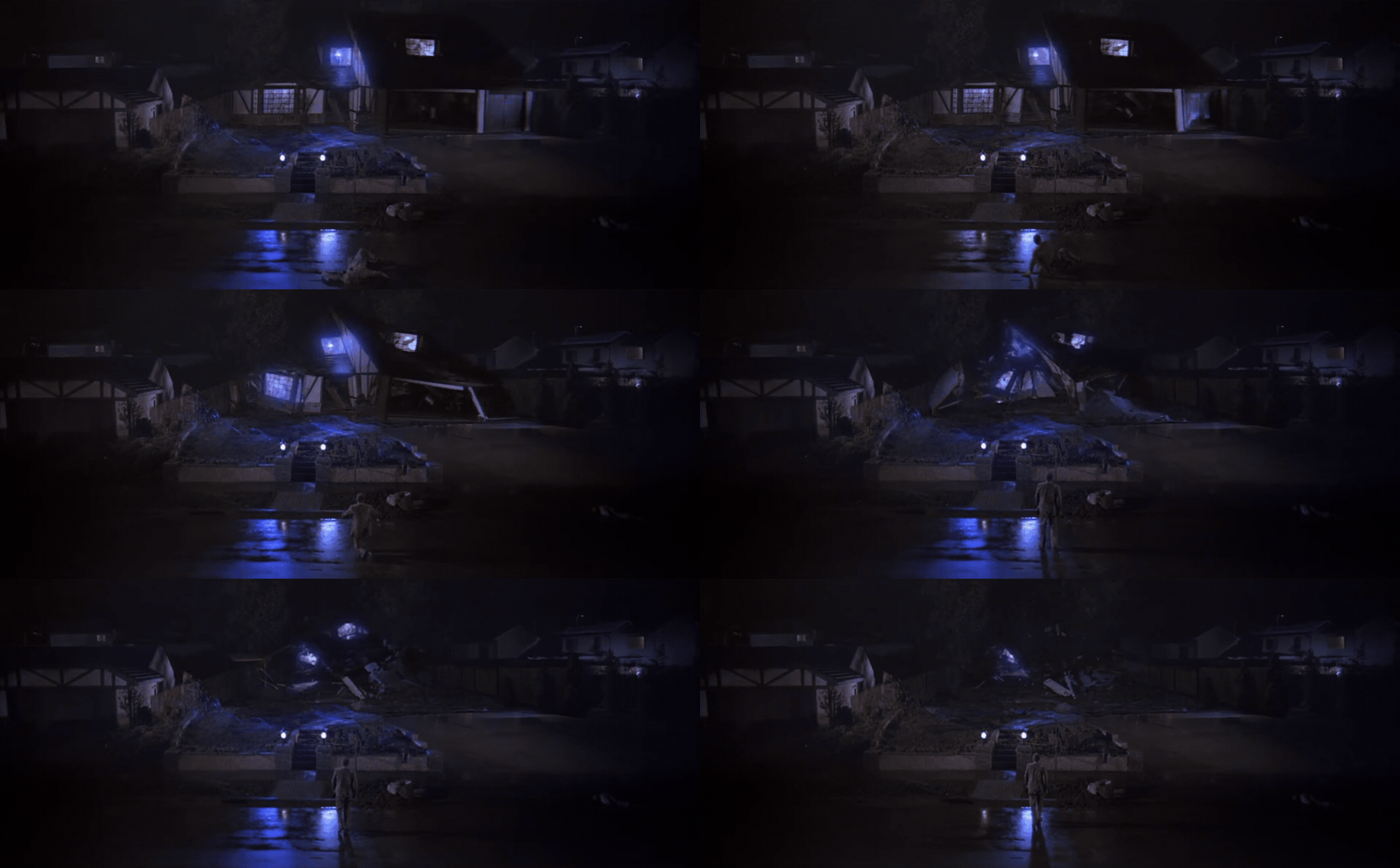
«Poltergeist» 1982
When the mechanism was activated, cables pulled the model elements inward, and the vacuum system removed dust and fragments that the cables missed; filming was done with a high-speed camera. The destruction of the miniature was captured using high-speed photography. The increased frame rate allowed the process to be slowed down, precisely recording the sequence of geometric changes in the structure, the movement of debris, and the dispersal of dust.
To integrate the effect into the final shot, composite photography was employed. The image of the physical miniature was combined with separately filmed material featuring actors, for which blue-screen photography, rotoscoping, and optical image compositing via an optical printer were utilized.
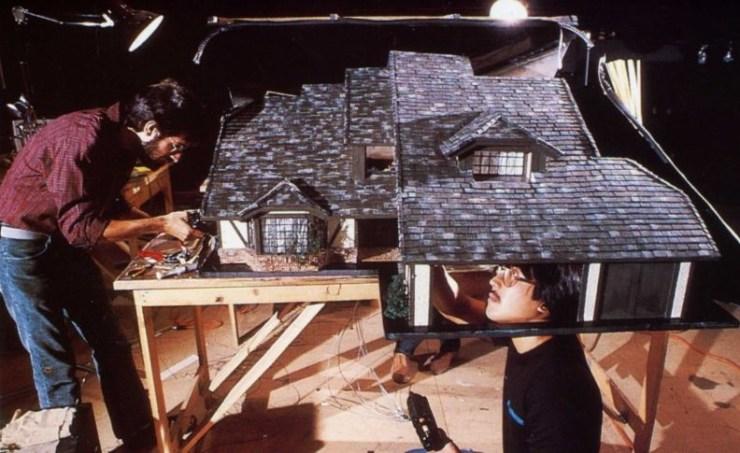
The mechanism of the house’s destruction in the 1982 film «Poltergeist»
The mechanism of house destruction in the 1982 film «Poltergeist»
The main interest of this example is that the architectural object changed its shape directly during filming. In other words, a computer model was not used to reproduce the destruction; the physical structure was designed to ensure the necessary trajectory of individual building elements. The visual result depended on the precision of the mechanical system, the miniature’s construction, and the filming parameters.
It is also interesting to consider the limitations imposed by this mode of production. The fracture pattern was predetermined by the model’s construction and its clamping mechanism. Unlike later digital methods, specialists could not arbitrarily alter the object’s geometry after scanning—the fundamental characteristics of the fracture had to be accounted for during the initial design of the model and mechanism.
Professionals
Richard Edlund—Visual Effects Supervisor, Industrial Light & Magic.
Michael Wood—Mechanical Effects Supervisor.
John Bruno—Animation Supervisor, Industrial Light & Magic.
Chapter 2. The Shift Toward Digital Technologies: Transforming Architectural Space in the 1990s
This chapter examines the transition from the physical alteration of architectural objects to their digital transformation. A prime example is the urban environment of the 1998 film Dark City, where buildings change their geometry—stretching, reconfiguring, and altering their spatial relationships.
For this research, scenes depicting the deformation process are particularly important—a process where the architectural elements of the city undergo sequential transformations. Unlike in «Poltergeist, ” where deformation occurred through the physical destruction of the miniature, „Dark City“ utilized a combination of physical models and digital image processing.
«Dark City» 1998
The use of 2.5D morphing—a method of digital image transformation that combines the characteristics of a two-dimensional image with specific spatial data—was particularly significant. In this context, the technology allowed for the alteration of the shape of captured architectural elements, creating a visually continuous transition between various states of the object. To develop the relevant transformations, tools such as Houdini and Prisms were utilized (Houdini is software for computer graphics and visual effects; Prisms was a graphics software package that preceded Houdini). Manipulating the image allowed for the modification of the contours and spatial perception of the architecture without needing to create every transformation purely through physical model manipulation.
«Dark City» 1998
Urban environment mockup and a film still
Additional digital elements were integrated into the source material using digital compositing. This allowed for the combination of miniature images, digital elements, and other components of the final frame.
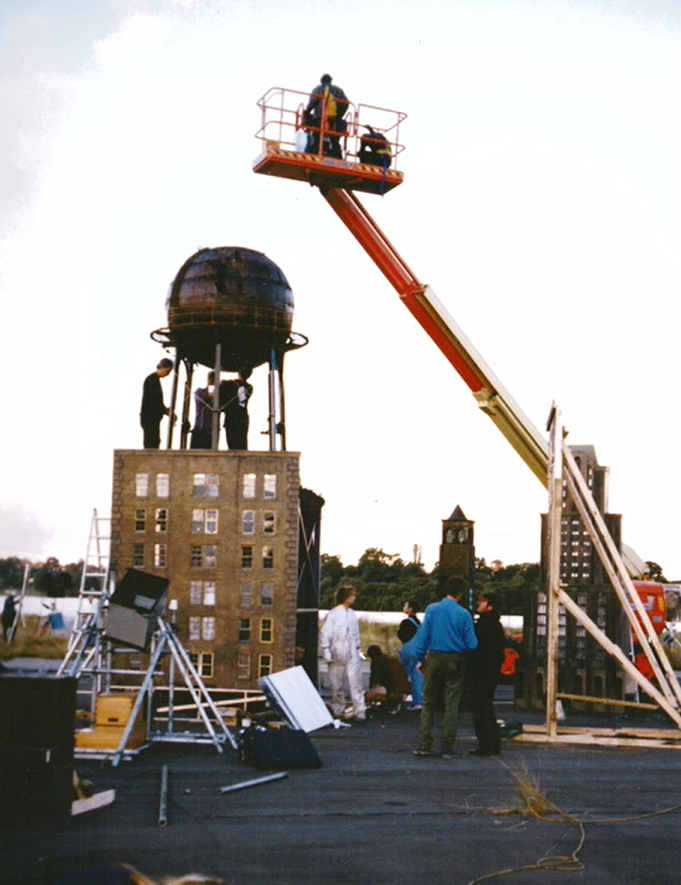
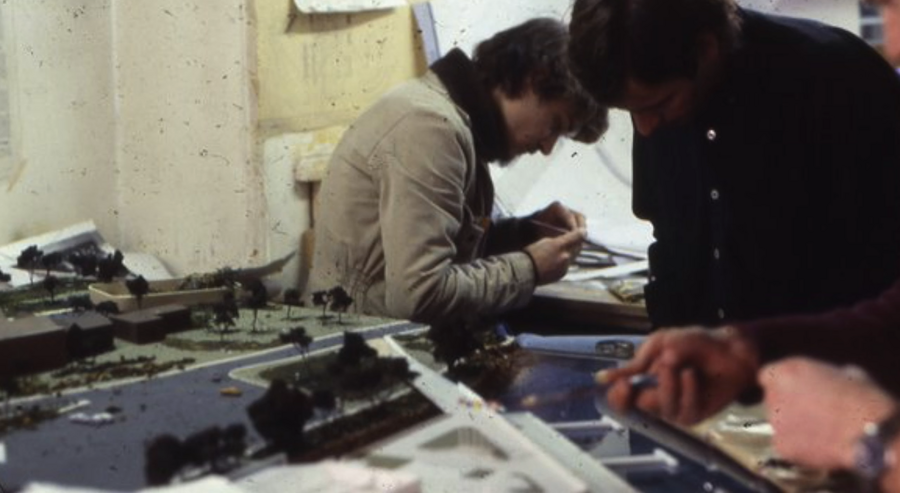
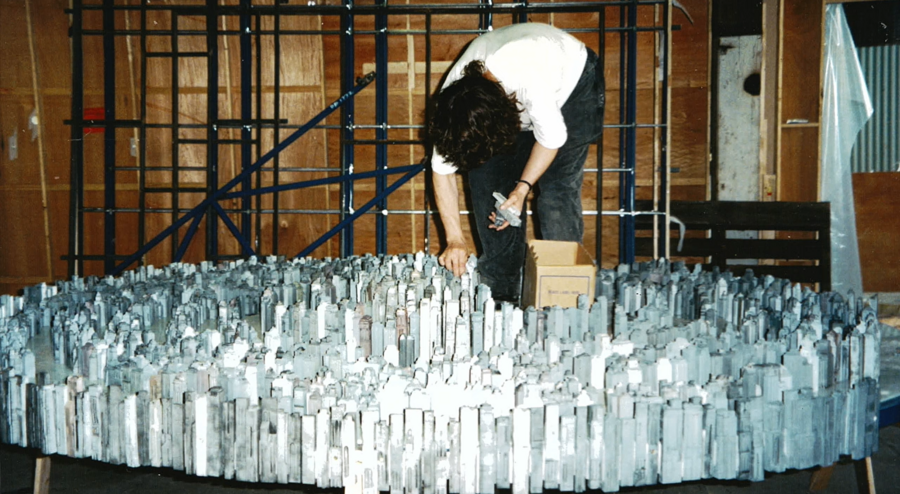
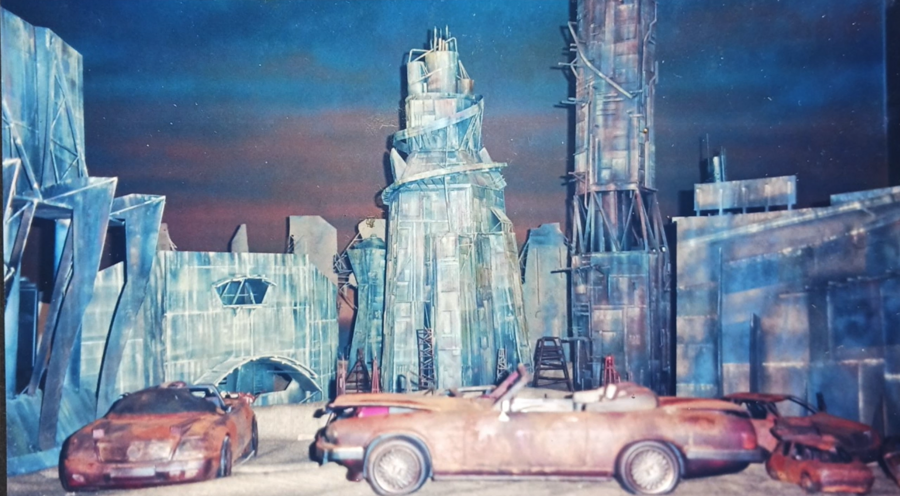
The key difference between «The Dark City» and the previous example lies in the method of controlling the architectural form. Whereas in «Poltergeist, ” the geometric changes were dictated by the physical construction and mechanics of its destruction, in „The Dark City, ” part of the transformations are moved into a digital environment where the form of the captured architectural element can change even after filming is complete. Furthermore, the digital processing does not entirely replace physical production, as the miniatures continue to serve as the source image, ensuring the visual characteristics of the architectural objects.
Specialists
Mara Bryan — Visual Effects Supervisor.Arthur Windus — Visual Effects Specialist; production role requires verification against credits.
Andrew Mason — Visual Effects Specialist; production role requires verification against credits.