Concept
A fantastic plant ceases to be a static decorative prop when it requires action or independent interaction with an actor. In such cases, it is necessary to determine the mechanics of the movement, and what method must be used to coordinate the individual parts of the object, its interaction with the environment, and lighting characteristics.
This visual study examines the differences in the technologies used to create and animate organic forms in video games, based on six projects filmed between 1986 and 2022.
The chronological scope across 36 years allows tracing the transition from controlling a physical object to hybrid systems, where practical construction combines with a digital model, and subsequently—to vines capable of independent movement and interaction with characters.
The evolution of computer graphics has not led to a complete abandonment of physical effects.
Practical elements remain convenient to use where direct interaction between actors and objects is crucial.
The sample set includes «Little Shop of Horrors, ” „Harry Potter and the Chamber of Secrets, ” „The Lord of the Rings: The Two Towers, ” „Harry Potter and the Prisoner of Azkaban, ” „Annihilation, ” and Season 4 of the series „Stranger Things.“ The comparison is conducted based on four criteria: form creation method, motion control technology, the ratio of physical to digital components, and interaction with actors and production footage. The focus is not on external form or plot function, but on technology and production challenges.
Why these specific films?
The selection of films is determined by the differences in the technologies employed for rendering the subjects and the availability of production materials that allow tracing their creation process. Odree from «The Little Shop of Horrors» exemplifies a mechanized puppet; Treebeard in «The Lord of the Rings» is a combination of physical construction and a digital head; and the Whomping Willow from the Harry Potter films showcases digital modeling and procedural animation. Its appearance several years later allows for a comparative study of the evolution of the same object. «Annihilation» examines the digital transformation of real colors, while «Stranger Things» features a combination of physical set pieces with computer-controlled vines. Each film is included in the study as a distinct example of solving the challenge of creating fantastical vegetation, taking into account the objects’ purpose and available technologies.
The research is based on official film production materials.
When writing the visual study, we consider publications from specialized journals, interviews with VFX supervisors, production stills, and VFX breakdowns.
One of the main results of the research is tracking how physical and digital technologies have learned to work together.
Section 1. «Little Horror Shop» (1986)
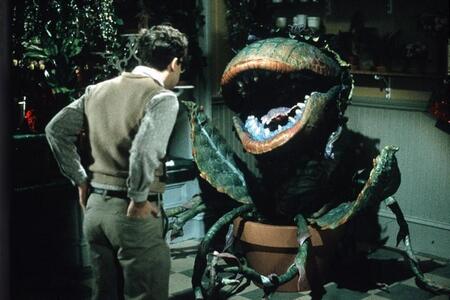
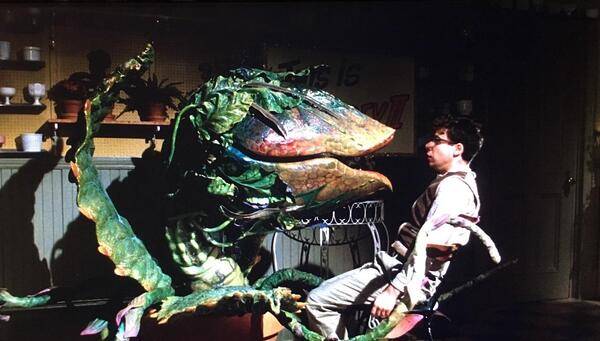
Odri II, designed by Kylie Conway
In Frank Oz’s film, the fantastical plant Audrey II was created as a physical puppet character. Unlike subsequent digital characters, Audrey II did not require a three-dimensional model or computer animation to reproduce its basic movements.
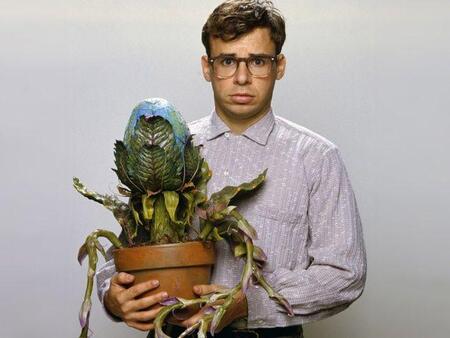
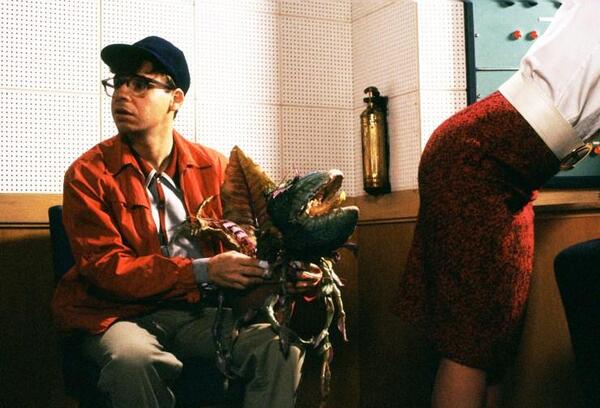
Audrey II, developed by Kylie Conway
A series of physical models of various sizes was used to illustrate the plant’s growth. These models allowed for the depiction of changes in its form and enabled direct manipulation of movement during filming.
Bibliography will be located here
Here will be links to photos, blah blah blah.