Navigation
- Creation of a Digital Kong — 2005 Character modeling and performance capture Fur creation and simulation system Material rendering and lighting interaction Integration of the digital character into filming2. Creation of Digital Primates — 2014 Motion capture on open sets Digital anatomy: muscle and skin simulation Fur modeling and simulation system Rendering and work with large groups of characters Integration of digital primates into real-world space3. Comparative Analysis
- Conclusion
Concept
A digital character in film appears alive not only because it has intricate details, but because every element of its appearance and movement works in concert. Real animal skin interacts with light in a distinct way: it reflects light from its surface and allows some of it to pass through, especially in thin areas like ears or nostrils. Fur also doesn’t look the same under any lighting—each strand reflects light differently, and its appearance changes when it gets wet or dirty. However, the realism of a digital animal depends on more than just materials. Equally important is how the muscles move beneath the skin, how the body deforms, how naturally the facial expressions function, and how the character interacts with its environment. To create a convincing image, it is not enough to simply make a detailed model; one must integrate modeling, animation, simulation, and rendering.
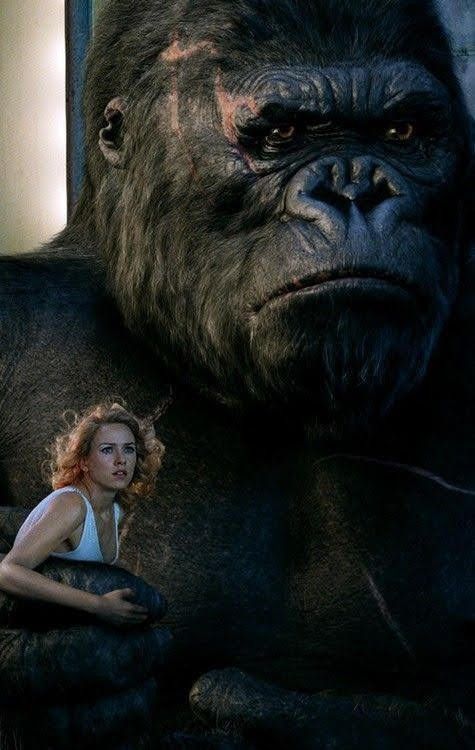
King Kong (2005) by Peter Jackson
In this study, I examine the evolution of digital primate creation technologies using two films from Weta Digital: Peter Jackson’s King Kong (2005) and Matt Reeves' Planet of the Apes: Revolution (2014). Nine years passed between the release of these films, a period during which the studio continued to develop tools for creating digital animals and characters. Furthermore, the objectives of the two projects differed significantly. In King Kong, the primary focus was on creating one main digital character—the giant gorilla Kong—who needed to convincingly exist on screen alongside live actors. Planet of the Apes: Revolution, however, required the creation of an entire community of primates: conveying the individual nuances of their appearance, facial expressions, and movements, as well as depicting their interactions with each other and with the live actors.
Both films were created by the same studio, though different production teams worked on them. Joe Letteri was the visual effects supervisor for King Kong, and for Planet of the Apes: Revolution, he worked as one of the visual effects supervisors alongside Dan Lemmon, Kit Miller, and Eric Winkvist. Therefore, this study will focus not on the work of a single specialist, but on the evolution of Weta Digital’s technical solutions during that period.
Frame from the movie «Planet of the Apes: Revolution» (2014): a close-up of Caesar. Visual material for analyzing facial expressions, facial geometry, and the interaction of light with skin and fur.
The primary focus of this work will be on how digital primates were created and visually integrated into the film. I will examine several areas: modeling anatomy and body surface, animating muscles and facial expressions, creating and simulating fur, working with materials and lighting, and integrating the characters into live-action footage. Motion capture methods will be addressed separately, as they influence how the digital character conveys movement and acting performance. Crucially, motion capture will not be discussed in isolation, but rather in connection with subsequent animation and the final rendering of the image.
For visual analysis, I will use specific frames from both films and official Weta Digital materials regarding the creation of visual effects. Close-ups and scenes where the interaction between digital characters and the environment is clearly visible are particularly important: the movement of fur, its reaction to rain and water, facial lighting, skin behavior in thin areas, facial expressions, and body movement. Such examples will allow me to examine not only the final visual result but also the technical challenges faced by the artists and visual effects specialists. Shooting locations, environment, and camera work will only be addressed when they help explain the integration of the digital character into the frame.
The central question of this research is: How have the technologies for creating and integrating digital primates in Weta Digital evolved between 2005 and 2014? My hypothesis is that the main development during this period was not simply due to increased model detail, but rather to the refinement of interconnected systems responsible for anatomy, movement, fur simulation, material rendering, and lighting. It is proposed that this comprehensive advancement of these tools enabled the creation of more complex digital characters and allowed for their more convincing integration into feature films. In this study, I will test this hypothesis using specific scenes and technical materials from two films.
The key objective of this visual study is to trace how rendering and digital primat integration technologies evolved between 2005 and 2014, and to determine which technical solutions influenced their visual believability.
1. Creating a Digital Kong: «King Kong» (2005)
1.1 Character Modeling and Conveying Acting Performance
Creating Kong for Peter Jackson’s film was one of the most ambitious projects for Weta Digital at the time. The character had to appear not merely as a large computer-generated creature, but as a living gorilla with an individual personality, recognizable facial expressions, and convincing physical grace. Furthermore, since Kong used very little dialogue, his emotional state was conveyed primarily through body movements, head posture, gaze, and facial expression.
Performance capture technology was used to convey the actor’s performance. Andy Serkis initially performed the role of Kong directly on the set, interacting with other actors. In these scenes, he wore a specialized suit featuring additional elements that simulated the gorilla’s massive musculature and elongated limbs. This allowed his scene partners to track his movements and body positioning.
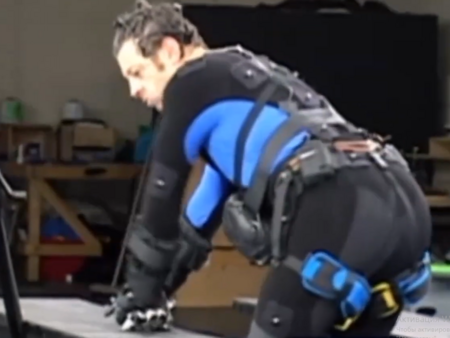
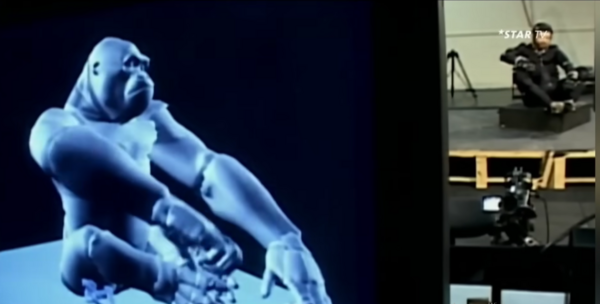
Andy Serkis in motion capture suit during the filming of «King Kong»
Then Serkis repeated scenes on the motion capture stage. Special markers were placed on his body to track movement, and more than a hundred markers were placed on his face to record changes in expression. The data obtained was used as the basis for Kong’s digital animation.
Andy Serkis in a motion capture suit during the filming of King Kong
However, the actor’s movements were not automatically transferred to the character. Because the proportions of a human and a gorilla differ significantly, the animators had to adapt the recorded physicality to the anatomy of the digital creature. Furthermore, some of Kong’s actions—such as complex jumps, climbing, and fighting dinosaurs—were created primarily using keyframe animation, meaning manual animation based on key frames. Thus, the final animation was a combination of the actor’s performance and the animators’ work. Motion capture helped preserve the emotional foundation of Sergey’s performance, while manual animation allowed the movements to be convincing given the character’s size and physical capabilities.
1.2. Digital Fur Development
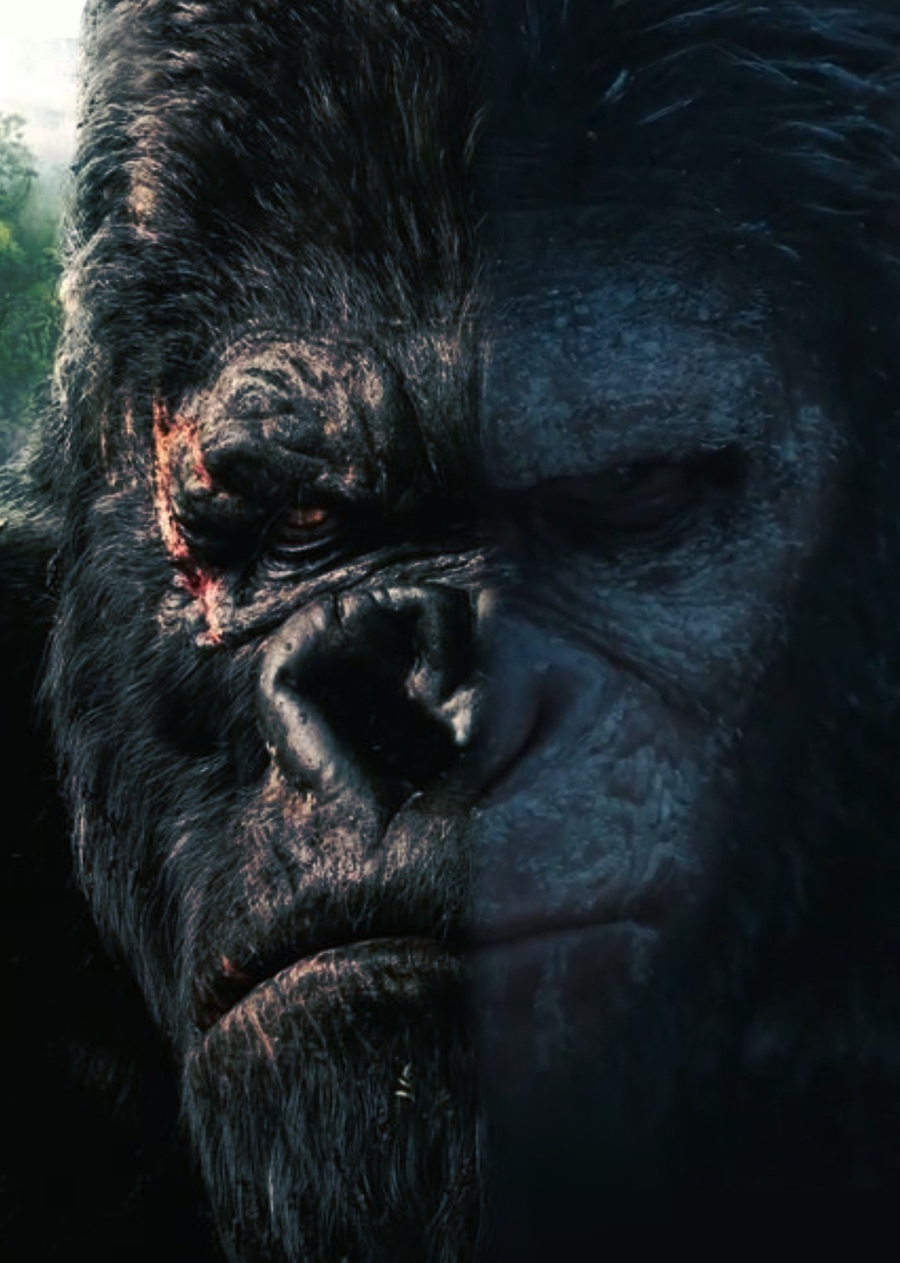
One of the most complex challenges in creating Kong was developing his coat. The character needed to look less like a smooth computer model with applied texture and more like a large gorilla with thick, matted, and sometimes dirty fur.
To achieve this, Weta Digital developed its own system for hair simulation and rendering. The final depiction of Kong featured approximately four million individual hairs. They were not a simple flat texture; the fur was formed using separate RenderMan curves, and a deformer system allowed for intricate work with the character’s hairstyle elements.
The Influence of Wool Density and Shearing Quality
A key feature of the production process was the use of the Bonobo system. It was a program that ran directly within RenderMan and generated fur during rendering. This approach allowed us to avoid storing the entire mass of individual hairs in memory simultaneously, which was crucial when working with such a highly detailed character.Kong’s fur also needed to convey a history of his life. The creators envisioned him as an old animal that had lived alone on the island for a long time. Therefore, his fur could not look neatly groomed. The artists introduced irregularities, displacements, and noise, creating the impression of matted and coarse hair.
The fur system also incorporated additional elements: leaves, dirt, and dried blood. In the technical breakdown, Computer Graphics World mentions approximately two thousand leaves and two thousand particles of dirt and dried blood that moved along with the character’s hair. This helped make Kong’s appearance more natural and connected his digital model to the island’s environment.
Three components of highlights on fur, according to the Marschner model: the primary highlight from the surface, the light that passes through the hair (secondary highlight), and the light reflected inside the hair (tertiary highlight). Weta Digital utilized this model for realistic lighting of Kong’s fur.
Illuminating hair presented a separate challenge. The standard model, which accounted only for the main highlight on the surface of the hair shaft, could not accurately convey how light behaves within the fiber. Therefore, Weta specialists utilized a mathematical model for light scattering in hair, based on the research by Steven Marschner and his colleagues, published in the SIGGRAPH 2002 proceedings.
Deep shadows, ambient occlusion, and reflections were additionally applied. They helped convey the volume of the wool coating and prevent the surface from looking monolithic. As a result, the wool could appear differently under daylight on the island versus in the night scenes of New York.
Close-up of King Kong’s face from the film «King Kong» (2005)
1.3. Material Rendering and Lighting Interaction