Introduction
This visual study will analyze and describe various technologies used to create robots as visual effects in cinema. Several films from the 1980–2020 period will be selected for this analysis. We will examine key films that revolutionized how robots are portrayed in film, including widely known titles such as «The Terminator, ” „Terminator 2: Judgment Day, ” „RoboCop, ” „I, Robot, ” and „Transformers, ” as well as less popular films like „Short Circuit“ and „Pacific Rim.“
Terminator

Name a person born after 1950 who lives in our world and is unfamiliar with the film series about relentless, killer robots from the future—a feat you probably won’t manage. The truth is quite simple: the combination of visual aesthetics, noir styling, and practical effects gave audiences that image of a grim future unfolding in our present—a vision that is simply impossible to forget.
The evolution from simple suits used to display robots in earlier films to the creation of detailed dolls and full-scale constructions is perhaps the most significant advancement. The capability might have existed sooner, but no one was doing it like this. If you intend to depict a robot, you must design it accordingly—mechanized and entirely devoid of anything that would suggest human connection.
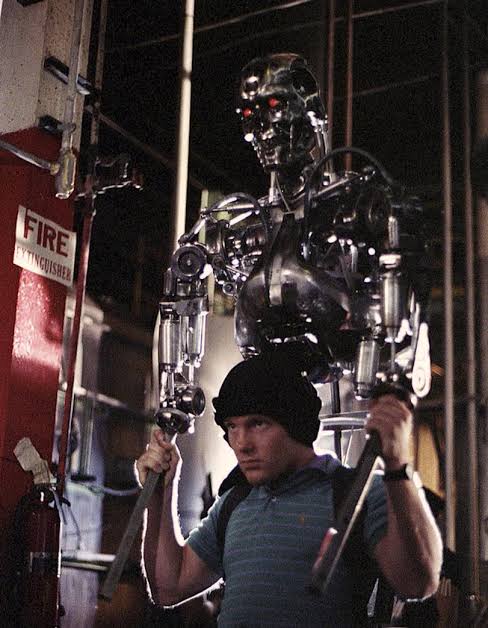
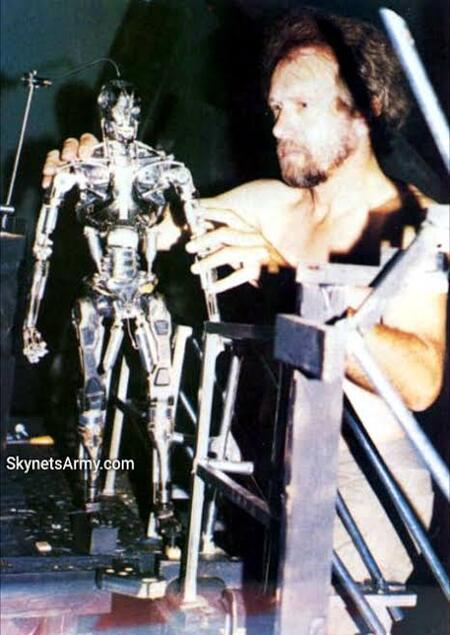
To create such a detailed robot that looked excellent on a large screen, two versions of the robot were made. For close-ups, a large, full-scale construction was used, operated by a professional puppeteer, while a more miniature version—about half a meter tall—was utilized for shots featuring the robot in full size. This approach allowed us to maintain the necessary level of detail without bogging down in the process of handling the heavy construction.

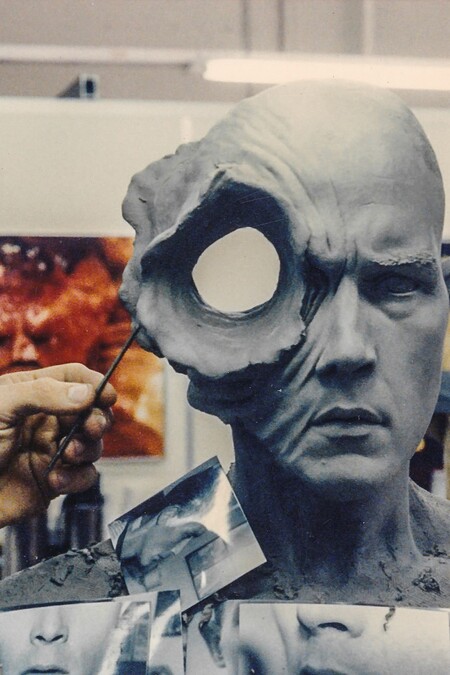
In close-ups of the T-800, when he was still in his human guise but showing visible damage to his disguise, an animatronic puppet with silicone skin stretched over a metal frame was used.
Short Circuit
The technical breakdown of creating the robot Johnny 5 for the film was published in issue 28 of Cinefex magazine. Unlike many 1980s movie robots, these were not costumes with actors inside, but complex, autonomous remote-controlled mechanisms created by special effects engineer Erik Allard based on concept art by futurist artist Syd Mead.
The robot PAL served as the prototype, created by the same Allard for another film. Coincidentally, Steven Spielberg saw that film and recommended the creators of PAL to the director of «Short Circuit,» John Badham.
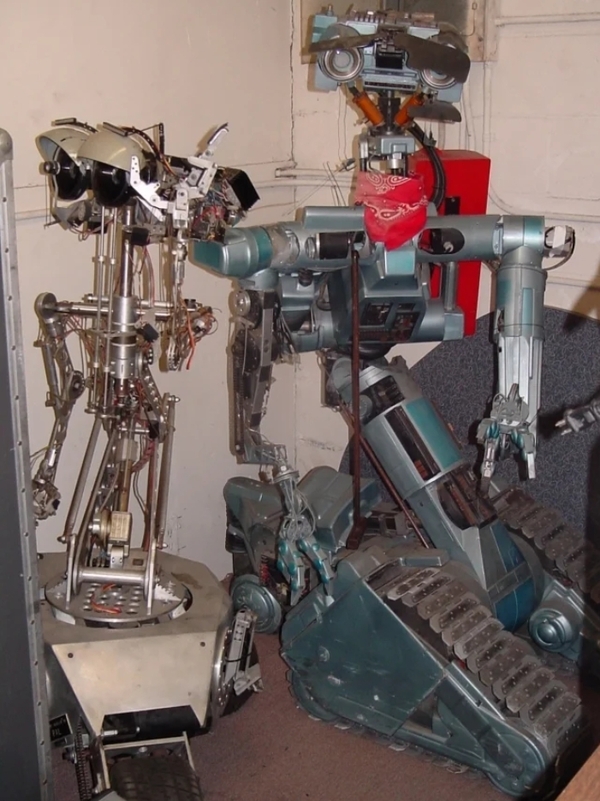
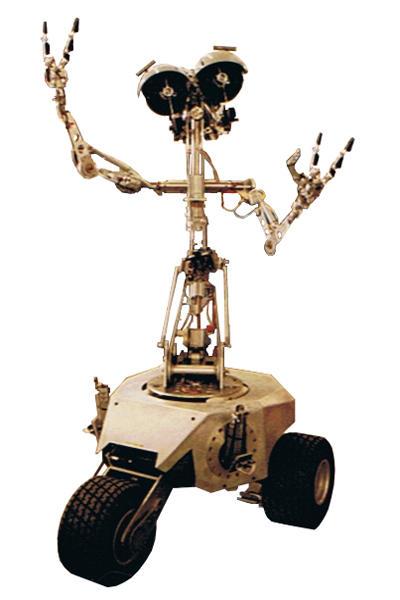
Eric Allard refined the head structure by adding movable «eyelid» curtains above the lenses and baffles that mimic a mouth and eyebrows. These simple mechanical details allowed for the conveyance of a wide range of emotions without relying on computer graphics.
The robot’s movements were controlled using a special suit worn by puppeteer Timati Patrick Blayne. Each joint of the suit had a separate sensor, allowing hand movements to be directly transmitted to the machine.
For various filming requirements, we developed an entire fleet of doubles. A total of 15 different versions of Johnny 5 were created. The primary work was performed by two full-scale, highly detailed heroic robots made of aviation aluminum, equipped with built-in actuators and electronics for large and medium shots. For action scenes involving falls, collisions, and off-road driving, we constructed lightweight and reinforced stunt models without fragile internal components. Operation within tight spaces was managed by separate puppet torsos and mechanical manipulator arms, which operators controlled manually via off-screen cables, while miniature models were used for wide shots.
Terminator: Judgment Day
The second film in the series expanded upon and supplemented the ideas of the first, both in terms of the plot and special effects. The film introduces a new threat—the T-1000 robot—which is impervious to physical damage from gunfire, explosions, and relentlessly pushes forward regardless. This is because, in this instance, the robot is composed of a liquid alloy capable of assuming any form. Consequently, relying solely on puppets was no longer feasible for this concept.
The visual effects for the liquid Terminator T-1000 in the film were a revolution in cinema. In reality, the T-1000's pure computer-generated time on screen is relatively short—about three minutes—with the rest achieved through puppet and animatronic work.
In scenes where the T-1000 sustained heavy damage, Robert Patrick’s highly detailed silicone dummies and body parts (ripped-off heads, torsos) were created. Servomotors and mechanical cables were embedded inside these dummies, allowing the «face» or skull to deform, pull apart, and retract realistically.
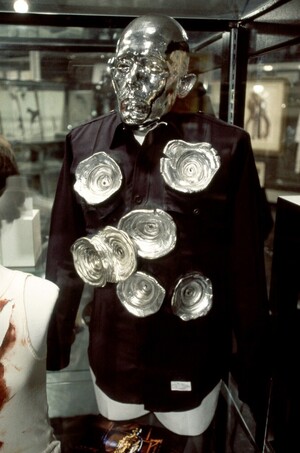
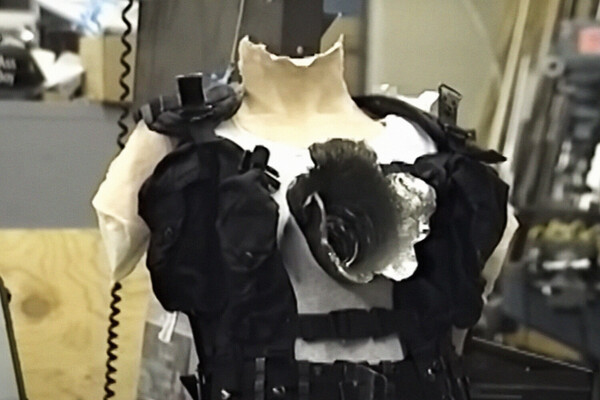
To simulate bullet impacts—when the shot creates a crater—we used a mechanism that literally unfurled the crater bloom during filming. Therefore, this was also a practical effect. Because of this, to position the mechanism on the actor’s body, the actor wore a chest plate fitted with flowers that would unfurl through the police uniform via pre-prepared holes.
During the filming of the scene where T-1000 was frozen and attempting to take a step, causing a leg to break off because it was frozen to the floor, they specifically hired an actor with amputated legs. He was fitted with special prosthetics designed to snap off on cue.