
Navigation Menu
I. Concept
- Rationale for Theme Selection
- Material Selection Principle
- Categorization Principle
- Text Selection and Analysis Principle
- Key Question II. Tastewill III. Yandex Business IV. Yandex Lavka V. Epica VI. Surveys VII. Conclusion VIII. Bibliography
I. Concept
1. Rationale for Topic Selection
Today, neural networks are actively utilized in graphic design, advertising, and branding, significantly impacting both the product concept creation process and production. The selection of this topic stems from a personal interest in the development of generative artificial intelligence and its influence on modern culture and the field of graphic design. I am interested in exploring both the motivation behind designers using generative tools for branding and the perspective of consumers. Is the neural network refining design and advertising approaches, or is it conversely stripping communication between a brand and its customer of uniqueness and emotional depth?
2. Material Selection Principle
The research material selected is the visual communication of modern Russian market brands that utilized generative artificial intelligence in their creation. Primary focus is placed on advertising campaigns, videos, packaging illustrations, and corporate identity elements. When selecting examples, consideration is given to the diversity of visual solutions, the degree of neural network involvement in material creation, and the potential to assess their impact on the brand image. It is important to examine both individual generated elements and complete visual concepts created with AI.
3. The Principle of Rubrication
In this study, I will examine case studies of several prominent brands within the Russian market to analyze how and why generative neural networks have been utilized in their brand identity or specific product lines. This will be followed by a comparison of the principles behind their implementation in design and the resulting quality of execution. Finally, I will review survey results concerning consumer perception of AI and draw conclusions to answer the research question.
4. Principle of Text Selection and Analysis
Examples have been selected to illustrate various methods of integrating generative AI into visual communications. The primary research method involves comparing traditional design solutions with materials created using neural networks. For each example, we consider its originality, visual expressiveness, alignment with brand identity, recognizability, and emotional impact on the viewer. It is also important to determine how organically the artificially generated images convey company values and aid in building consumer communication. Special attention is paid to subjective perception: does the content evoke trust, interest, and positive emotions, or does it, conversely, create a sense of artificiality and uniformity?
5. Key Question
How does the use of generative artificial intelligence in branding affect the perception of visual communications: is it becoming a tool for creating a more original and expressive brand image, or does it lead to a loss of individuality and emotional connection with the audience? Does knowing that an image was created by a neural network influence consumer attitudes toward the brand, how easily can artificially generated content be recognized, and can it become a complete tool for shaping a unique visual identity?
II. Flavorville
VkusVill is a supermarket chain known for its rich variety of «healthy food products» []. There are over 2,000 retail locations across Russia (according to 2025 estimates) []. The brand’s communication strategy is built around values such as naturalness, product quality, and customer trust.
With the advancement of generative neural networks, VkusVill has begun experimenting with new visual content formats, supplementing its traditional advertising with generated images and video clips.
To understand precisely how generative tools influence brand presentation, it is necessary to analyze the creation process and concept. As Yuri Pokrovsky—founder of the neural production company Open Production—explains, the task was to create four promotional videos for Vkusvill in three and a half weeks [].
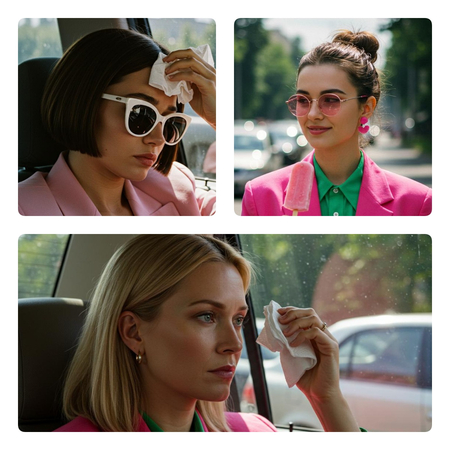

The team was responsible for developing the character designs and the environmental visuals for the videos. The resulting advertisement is, on one hand, vibrant and dynamic, but on the other hand, it raises several questions. First, due to technical limitations of the neural networks, the shots came out quite short and rapidly changing, which prevents the viewer from fully absorbing the information displayed on screen. This suggests that the carefully conceived heroes of the advertisement are perceived by the viewer as minor details, meaning the visual potential of the characters was not fully realized.


A second crucial point is the alignment of this video series with the brand’s core values—trust and authenticity. By using AI to generate human figures, an artificial depiction of reality is created. Because the characters simulate feelings and emotions, there is a risk of diminishing trust in the advertising concept and the product itself.
Special attention should be paid to the use of generative AI in packaging design. Classic serif fonts, minimalist pictograms, and a light background evoke a sense of neatness and quality, creating a contrast with vibrant AI generations. This ensures the packaging does not appear cluttered, and the combination of image generation technology with traditional graphic techniques forms an unconventional visual identity that is not immediately perceived as AI-generated.


In the presented options, «Spaghetti» and «Bantiki,» the primary visual element is landscape imagery rendered in a painting style. The vibrant colors and contrasting stylization make the packaging eye-catching, setting it apart from the more conventional presentation of food products. Despite the initial striking visual quality, a closer examination of the packaging reveals that the depicted landscapes bear almost no relationship to the product itself. The generated nature imagery does not provide any supplementary information regarding the product’s origin or production. Consequently, the illustration primarily serves to provide aesthetic value to the packaging. However, the viewing window that allows the pasta to be seen is a successful design choice: it enables the buyer to see the contents of the package and partially compensates for the illustration’s abstract nature.
III. Yandex Business
Yandex Business is a service by Yandex specializing in advertising and working with small and medium-sized businesses []. Generative AI is used in Yandex Business advertising materials to create product and space imagery for online ads.
The main focus is on the visual appeal of the objects, color saturation, and the creation of a pleasant atmosphere. The images look polished, but they employ rather conventional techniques of commercial photography: blurred backgrounds, accent lighting, close-ups of the product, and vibrant colors. As a result, generative AI becomes a tool for creating bright advertising content that can quickly capture attention, yet the quality of the illustrations may fail to elicit the desired emotions from the viewer. Even if the user is already familiar with the brand, the first thing they see is an image—and overly bright or simplistic visuals are unlikely to inspire trust or affinity in someone quickly scrolling through a website. However, considering the idea as a whole, in this case, AI functions as a convenient tool for producing small pieces of advertising content with the goal of rapidly conveying information.
IV. Yandex Lavka