
Concept
The human voice has traditionally been perceived as a manifestation of the speaker’s physical presence and individuality. It originates within the body. Its genesis is tied to respiration and the function of the vocal apparatus, and its characteristics allow people to recognize an individual even without visual contact. However, the evolution of sound media has altered this connection. Voice can now be recorded, transmitted over distance, reproduced, transformed, and finally, created using electronic means. It is no longer confined exclusively to the moment of direct communication but has gained the capacity for independent media existence.
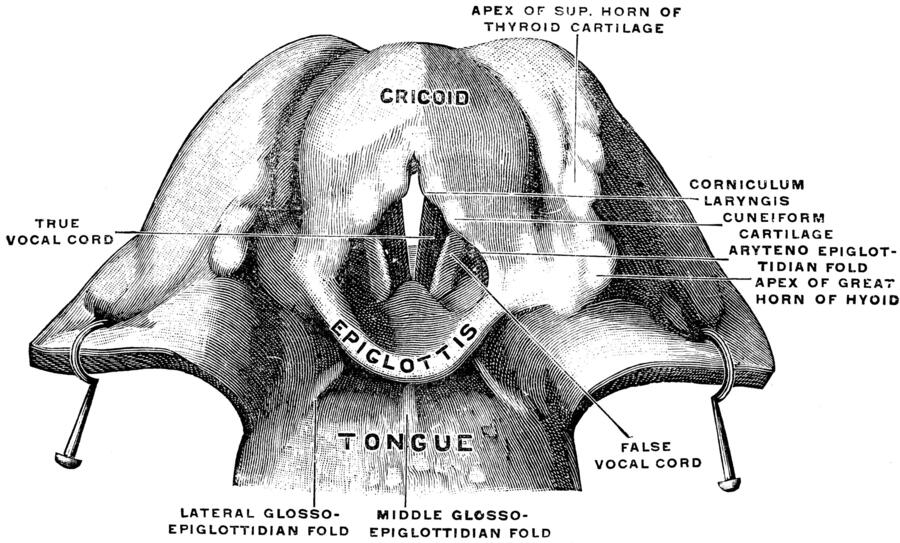
«Larynx, superior view.» 1913. Image from Henry Gray’s book, «Gray’s Anatomy: Descriptive and Applied.»
This research is dedicated to the cultural implications of this process. The focus is not so much on the technical history of sound devices as it is on the shift in perceptions regarding human presence, individuality, and the authenticity of spoken language. Of particular interest is the transition from reproducing a real human voice to creating an artificial one: while a recording preserves the sound of a specific person, speech synthesis allows for the creation of a voice without direct involvement of the human vocal apparatus.
How is the evolution of voice recording, transmission, and synthesis technologies changing cultural perceptions of human presence, individuality, and speech authenticity?
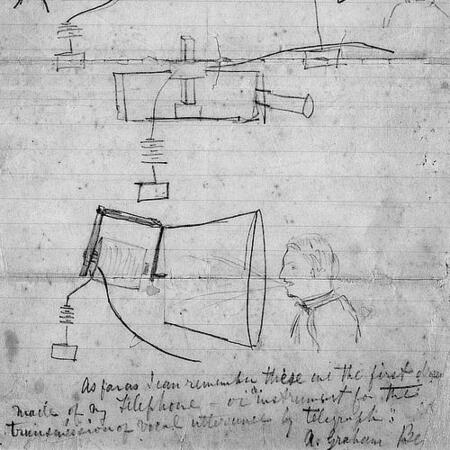
The hypothesis is that the technological separation of voice from body gradually transforms it from a direct human manifestation into a reproducible and constructible media object. As sound technologies evolve, the connection between the voice and its source becomes less obvious: the sound can retain an individual’s characteristics, exist without their presence, or lack a singular human source altogether.Image: Alexander Graham Bell. «Sketch of a Telephone.» Circa 1876.
Flowchart of the human voice mechanism from the article «The Carrier Nature of Speech, ” published in the Bell System Technical Journal. Homer Dudley. 1940.
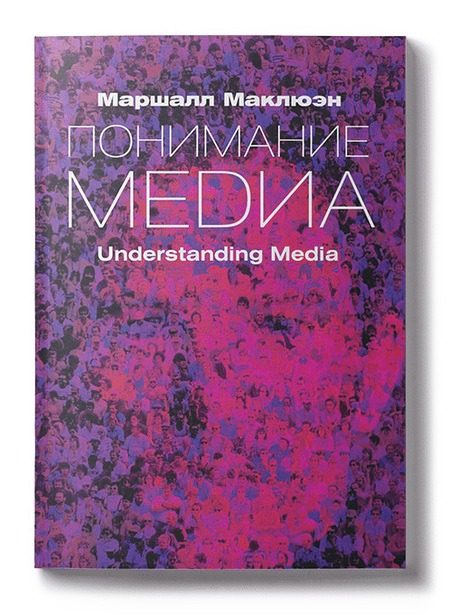
The theoretical foundation of this research is Marshall McLuhan’s concept, particularly his view of media as extensions of human capabilities and their influence on perception and communication. Applied to voice, this perspective allows us to examine sound recording, the telephone, and other sonic technologies not merely as technical devices, but as mediums that alter the conditions of human interaction. Hans Ulrich Gumbrecht’s ideas, relating to the materiality of sound, proximity, and the experience of presence, provide an additional perspective. The historical context is shaped, in particular, by Valery Zolotukhin’s study, «Voice and Wax, ” which focuses on practices of sonic artistic speech, sound recording, and performance in Russia during the first third of the 20th century.Image: Photograph of Marshall McLuhan’s printed work, „Understanding Media.“
The visual and auditory material covers several stages of voice transformation: early sound recording and transmission devices, the development of phonographic and gramophone recording, radio broadcasting, electronic voice processing and synthesis, the use of artificial voices in music and audiovisual culture, and modern voice cloning technologies. The images of devices, archival photographs, historical phonograms, and examples of synthesized speech are presented not merely as illustrations for the text, but as independent testaments to the evolution of the relationship between voice, body, and media technologies.
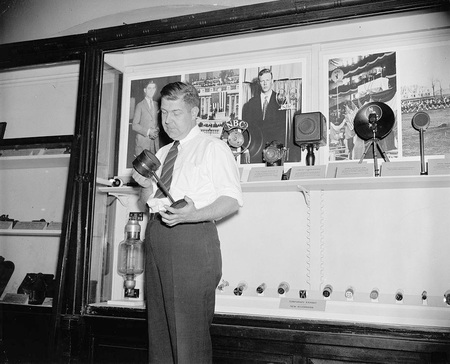
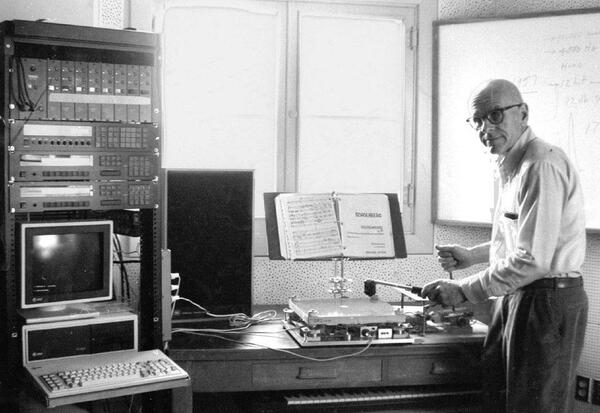
Fred Reed with a Tomato Can microphone. 1938 / Max Mathews in a computer music studio at Bell Labs. Mid-20th century.
The research is structured according to a problem-chronological principle and comprises five sections:
- Voice as a manifestation of bodily presence. This examines the connection between voice, the body, individuality, and the feeling of another person’s presence.
- The emergence of speech recording and transmission technologies. This traces the evolution of devices that allowed voices to be preserved, transmitted over distance, and reproduced outside the original communication context.
- Electronic speech conversion and synthesis. This investigates the shift from reproducing human sound to technically altering it and creating artificial speech.
- Synthetic voice in culture. This considers the use of artificial voices in music, artistic practices, and audiovisual culture.
- Digital cloning and the crisis of trust in vocal speech. This analyzes technologies for reproducing individual vocal characteristics and the arising questions of authorship, identity, and the authenticity of sonic information.
A key principle of the research involves differentiating several technological processes: sound recording, speech transmission, electronic processing, synthesis, and voice cloning. They cannot be reduced to a single category of artificial sound because they involve different relationships between the voice and its source. Recording preserves sound that was previously produced, transmission moves it to another space, processing alters the sound characteristics, synthesis creates a voice using electronic means, and cloning allows the reproduction of the specific characteristics of a particular voice.
Thus, the study examines the history of the synthetic voice within the broader context of changing relationships between humanity and sound. Its subject is not merely the emergence of artificial speech, but also the gradual transformation of the very concept of what it means to hear a human being.
Voice as a manifestation of physical presence
The human voice emerges from the functioning of the body: respiration creates airflow, vocal cords generate sound vibrations, and the articulatory apparatus shapes them into speech. However, the voice is perceived as something more profound than a mere physiological process. Through sound, we recognize individuals, discern their emotional state, speaking mannerisms, and speech characteristics. Timbre, intonation, rhythm, and articulation all become markers of individuality. By hearing a voice, the listener correlates the sound with a specific person, even if they cannot see them.
Thomas Baxter, drawing; J. Hopewood, engraving. From John James Watt’s publication, «Anatomical and Surgical Views of the Nose, Mouth, Larynx, and Pharynx.» 1809.
The connection between voice and body is evident in how we perceive sound. Voice conveys information about spoken words, but it simultaneously elicits physical and emotional responses—the timbre might sound soft or sharp, and the speech might be calm or tense. Hans Ulrich Gumbrecht describes this connection through the concept of the «voice nexus,» where the meaning of speech merges with the associations and physical impressions of the sound. Voice is perceived holistically: its content is difficult to fully separate from how it is delivered [1].
Nicolas Henry Jacob. «The Surface of Language.» 1831–1854.
The sound also creates a sense of the speaker’s presence. In a typical social interaction, the voice indicates a person who is nearby and addressing the listener. Even without visual contact, speech allows one to imagine their presence, character, and emotional state. Furthermore, the listener perceives the voice as emanating from a specific body. This connection feels natural and usually requires no separate conscious consideration.
Voice Outside the Body: The Emergence of Speech Recording and Transmission Technologies
Before the advent of sound recording technology, the sound of the human voice was intrinsically tied to the moment of utterance. While one could hear a voice, remember it, transmit it verbally, or reproduce it through another person’s performance, it was impossible to save the acoustic signal for later listening. Every utterance existed as a discrete event, dependent on the speaker, the listener, and the communicative context.
«Studies in the Institute of Art History.» 1920–1931.
One of the first attempts to technically capture sound was the phonautograph, created by the French inventor Édouard-Léon Scott de Martinville in 1857. The device captured sound vibrations using a diaphragm and recorded them as a graphical line on a blackened surface. While the phonautograph allowed for a visual trace of sound, it did not allow for its subsequent playback. The recording served as a means to study acoustic phenomena, rather than preserving a voice for repeated listening [8; 9].
«Session for Signing on a Background Autograph.» Édouard-Léon Scott de Martinville. 1857. Drawing from patent documentation.
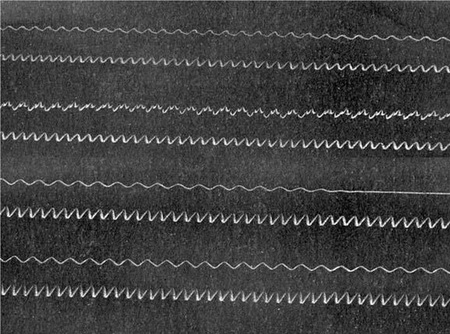
The significance of this invention became apparent much later. On April 9, 1860, Scott recorded a fragment of the French song «Au clair de la lune.» In 2008, researchers were able to transform the preserved phonautogram into audible sound using digital processing. A voice that had existed for over a century only as a graphic trace was made audible once again. This case clearly illustrates the difference between the documentation of an auditory event and the possibility of its reproduction. For the voice to reach the listener, technology was required that could not only capture the vibrations but also reconstruct them in an audible form [8; 9].Image: Édouard-Léon Scott de Martinville. Phonautogram No. 5: Au clair de la lune. April 9, 1860.
In 1877, Thomas Edison introduced the phonograph—a device capable of recording and reproducing sound. Early models utilized a cylinder coated with tin foil. Sound vibrations drove a diaphragm and a needle that left a trace on the cylinder’s surface. During playback, the needle tracked along the recorded groove, moving the diaphragm and recreating the sound. Unlike the phonautograph, the phonograph allowed for the repeated listening of recorded speech [8; 10].
«Edison’s Cylinder Phonograph with Tin Foil.» Photograph of a museum object manufactured by John Kruse based on Edison’s design. The original device dates to December 1877.
The invention of the phonograph altered the temporal relationship between speaker and listener. A person could hear their own voice hours, days, or years after it was recorded. The sound retained the characteristics of a specific performance, but it no longer depended on the performer’s presence. It could be reproduced in a different setting and for a different audience. The voice became an object for storage and repeated listening.
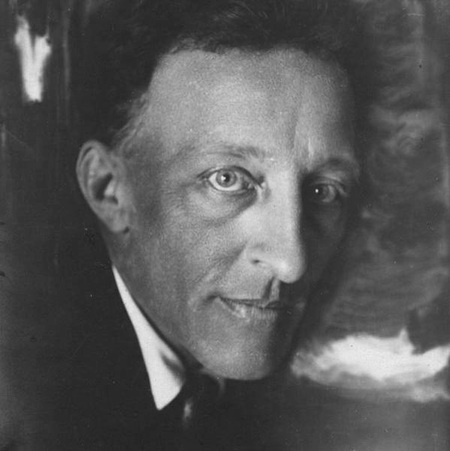
This shift in perspective is particularly evident in the history of how we relate to early sound recordings. In 1920, Sergey Bernstein recorded Alexander Blok reading on a phonograph. Upon hearing the recording, the poet reacted with the words: «I would say it made a heavy impression. You cannot separate a voice from a living person…» [2, pp. 190–195 (approximate; verification needed)]. This reaction suggests that a preserved sound was not necessarily perceived as a complete continuation of the performer’s presence. The recording reproduced the voice, but the person themselves was absent. For Blok, this discrepancy was significant: a voice that previously existed in direct connection with the performer now sounded separate from him.
Image: Moisey Nappelman. «Alexander Blok.» 1920.
In this episode, one of the core contradictions that forms the basis of the study is revealed. The recording preserves the acoustic features of a specific performance, yet it does not retain the speaker themselves or the circumstances of the original sound. Upon subsequent listening, the voice emerges in a different situation, before a different audience, and at a different time. Its perception depends on the quality of the recording, the playback device, and the listening conditions. A person’s sonic trace can continue to exist after the speech event concludes, but the nature of its presence changes.