The modern city demands constant motion. Study transitions into work, and planned meetings turn into spontaneous journeys, yet familiar objects accompany us in every circumstance. In these situations, items that can adapt to change are particularly valuable.
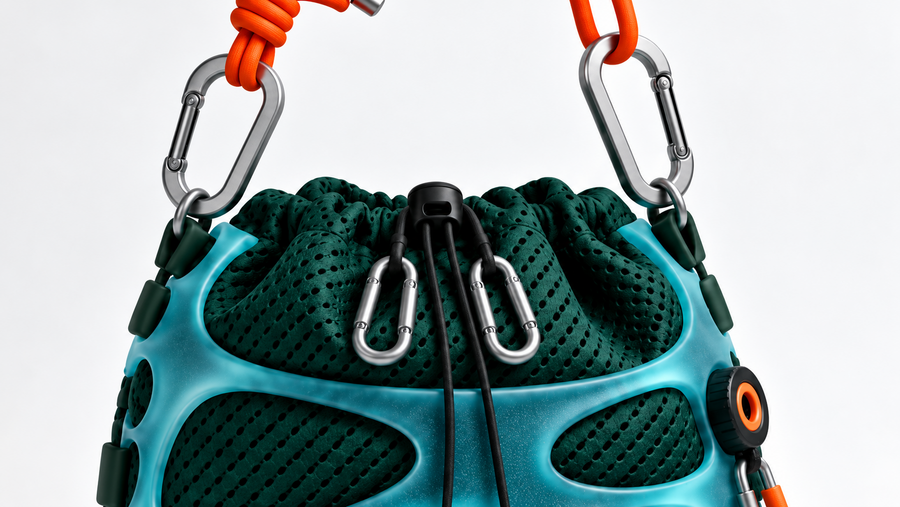
Graft merges the functionality of outdoor gear with the aesthetic of everyday accessories, blurring the line between urban living and outdoor culture.
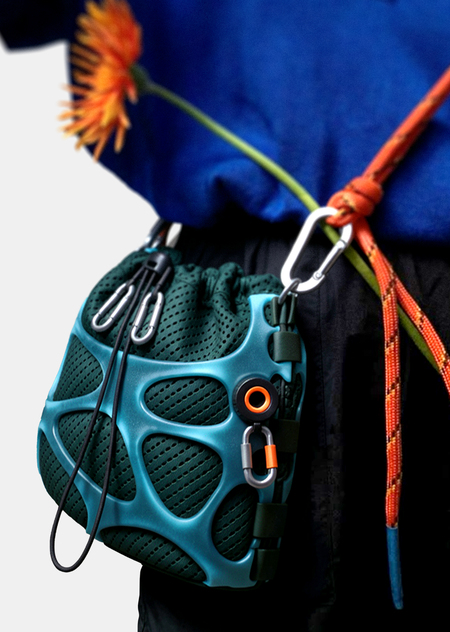
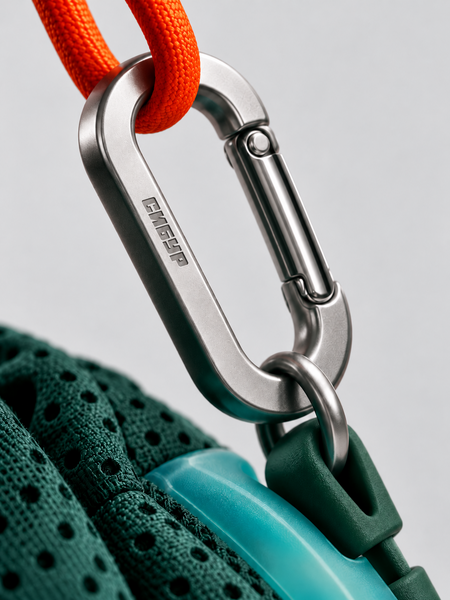
The form originated from research into the elasticity of sheet materials. The project progressed from pencil sketches to a full-scale pattern and a hand-cut rubber prototype. Subsequently, its contours were translated into a digital environment, allowing for a more precise study of the geometry of the perforations, the thickness of the crossbeams, and the grid’s behavior when bent.
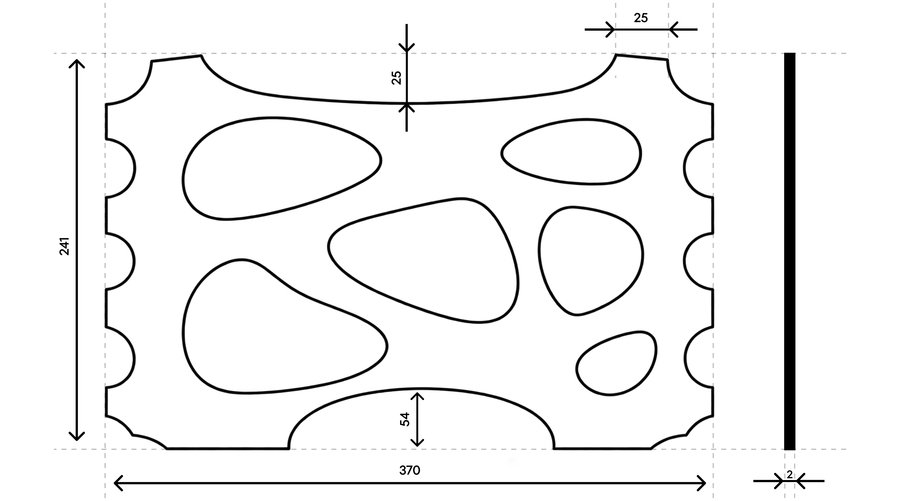
Overall Drawing
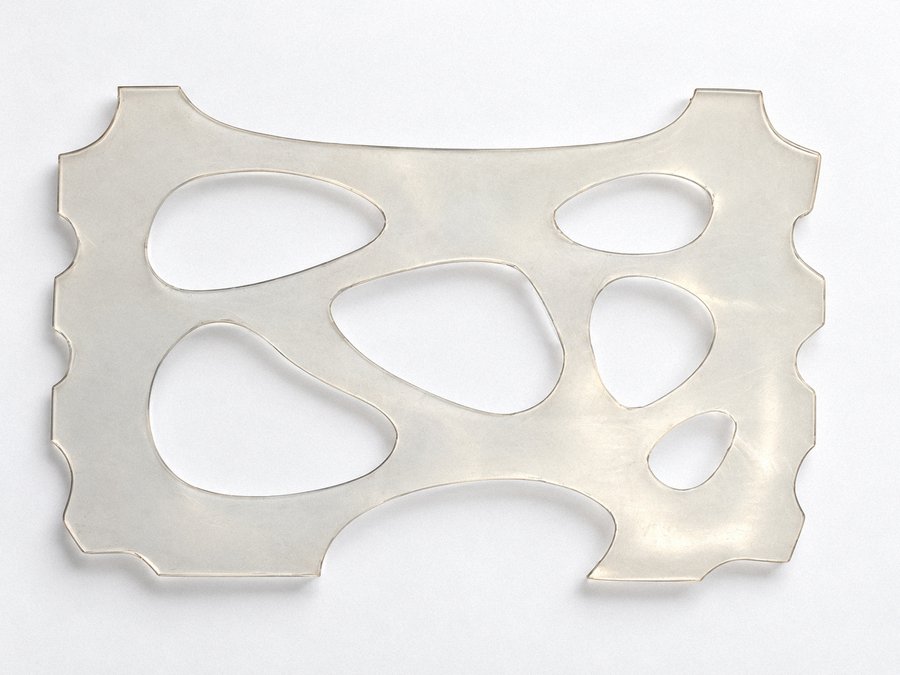
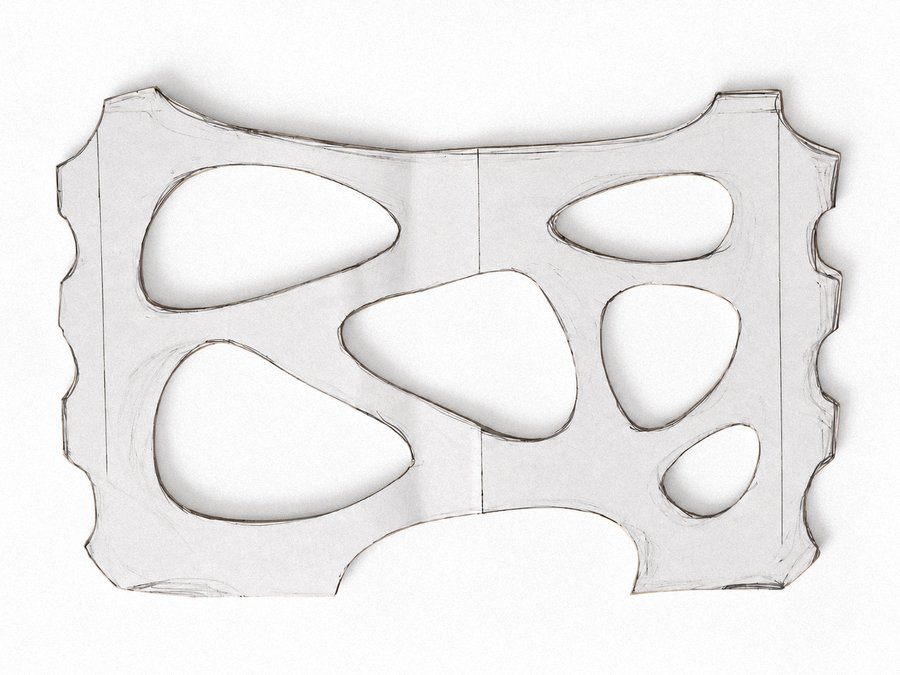
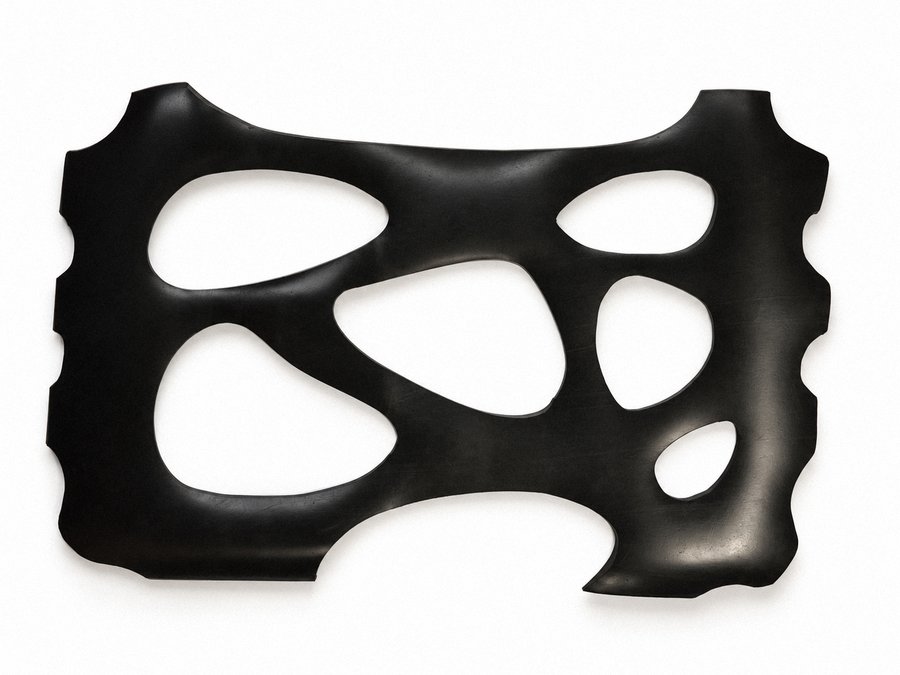
Paper, rubber (2 mm), and silicone (2 mm) grid prototypes
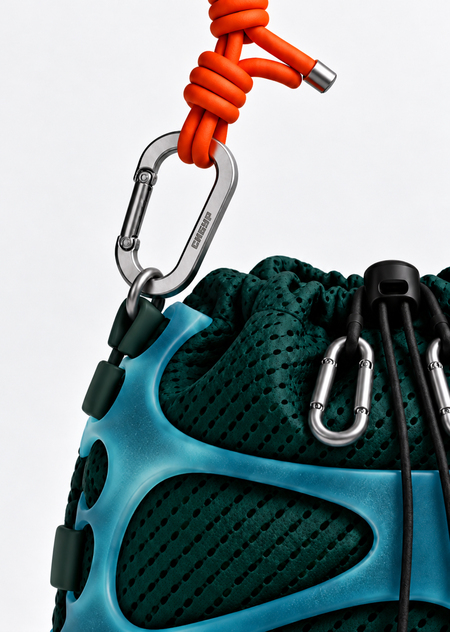
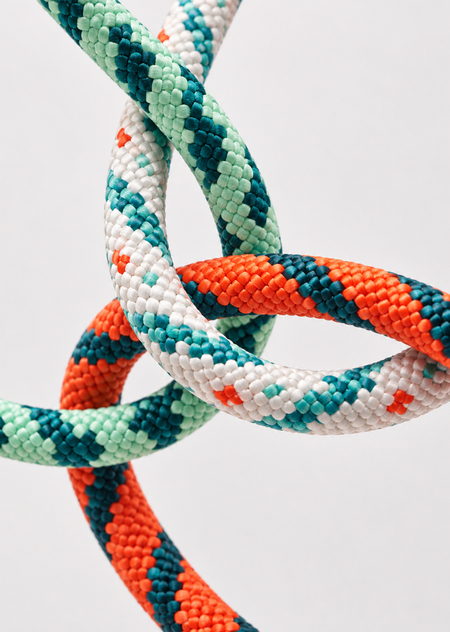
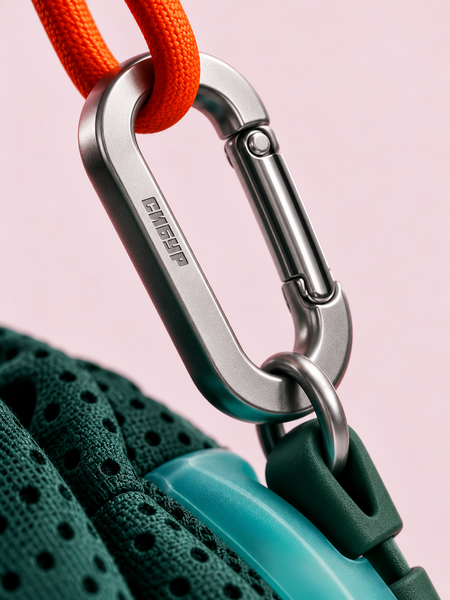
The bag’s structure is based on the interaction of two layers: specifically, an inner pouch made of perforated textile is responsible for storage, while the outer polymer shell mirrors its contours.The openwork structure maintains the item’s visual lightness, while the cords, fastenings, and carabiners reference outdoor gear culture.
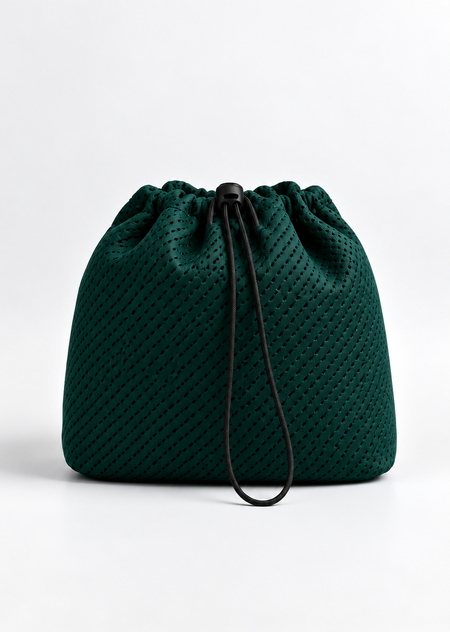
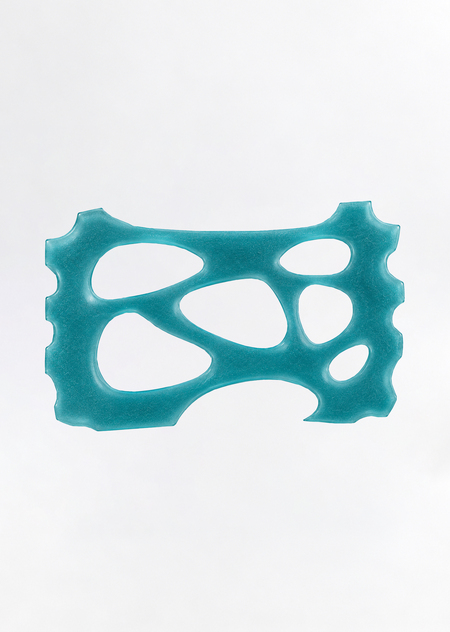
Structural elements of the bag—the pouch and the mesh.
Thus, the connection to the company is primarily evident in the design of the bag itself, rather than in the symbolism applied to it. Furthermore, the capabilities of polymers are subtly demonstrated in two forms—flexible and rigid.
Materials
The external mesh shell of GRAFT is conceived using a TPE compound based on Styrene-Butadiene-Styrene (SBS) thermelastomer produced by SIBUR. Its elasticity allows the shell to conform to the soft volume of the bag, and its presumed semi-transparency lends depth to the material, highlighting the organic pattern of the straps.
For small, rigid parts, we have chosen VIVILEN 25rPP—a polypropylene compound from Sibur containing 25% recycled material. In the project, it is intended to be used for fasteners, connecting elements, and adjustment parts, contrasting the sharp geometry of the fixtures with the softness of the main casing.
Prototypes
Production
The GRAFT design integrates textile and polymer technologies.The intricate outer shell is intended to be created by cutting shaped pieces of flexible thermoplastic compound, small rigid components by injection molding, and the inner body through traditional sewing. Decomposing the product into separate components allows us to consider its production in a limited series.
One of the main sections. Demonstrate that the idea moved beyond visualization and progressed through the creation of an actual rubber panel.
Images: a close-up photograph of the black rubber mesh on a white background; followed by a photograph of the component being bent by hand; then a close-up of the crossbar under slight tension. State the observation results separately from the calculated properties. Do not assert that the strength test was passed if it was not conducted.
Return to the person view. Show how the bag opens, what it holds, and how it sits on the body. Images: a series of three frames—on the shoulder, open from the top, next to typical student items to illustrate scale. If the external mesh truly holds items, add a separate verified scenario. If not—do not depict it as an extra pocket.
Production Logic: compound selection $\rightarrow$ sheet acquisition $\rightarrow$ panel cutting $\rightarrow$ foundation sewing $\rightarrow$ hardware $\rightarrow$ assembly $\rightarrow$ quality control. Images: a horizontal technical diagram with six stages, followed by a table detailing materials, projected manufacturing methods, and cost. This is also where you confirm or honestly assess the feasibility of producing 200–300 units in Russia with a budget of up to ₽3 million and a launch timeline of approximately 1.5 months.
Explain why this project relates to the company not through the logo, but through the material and technology. It is also appropriate here to show restrained branding, packaging, and a gift presentation scenario. Images: A technical macro shot of the turquoise casing and a separate photograph or render of the packaging featuring Sibur labeling.