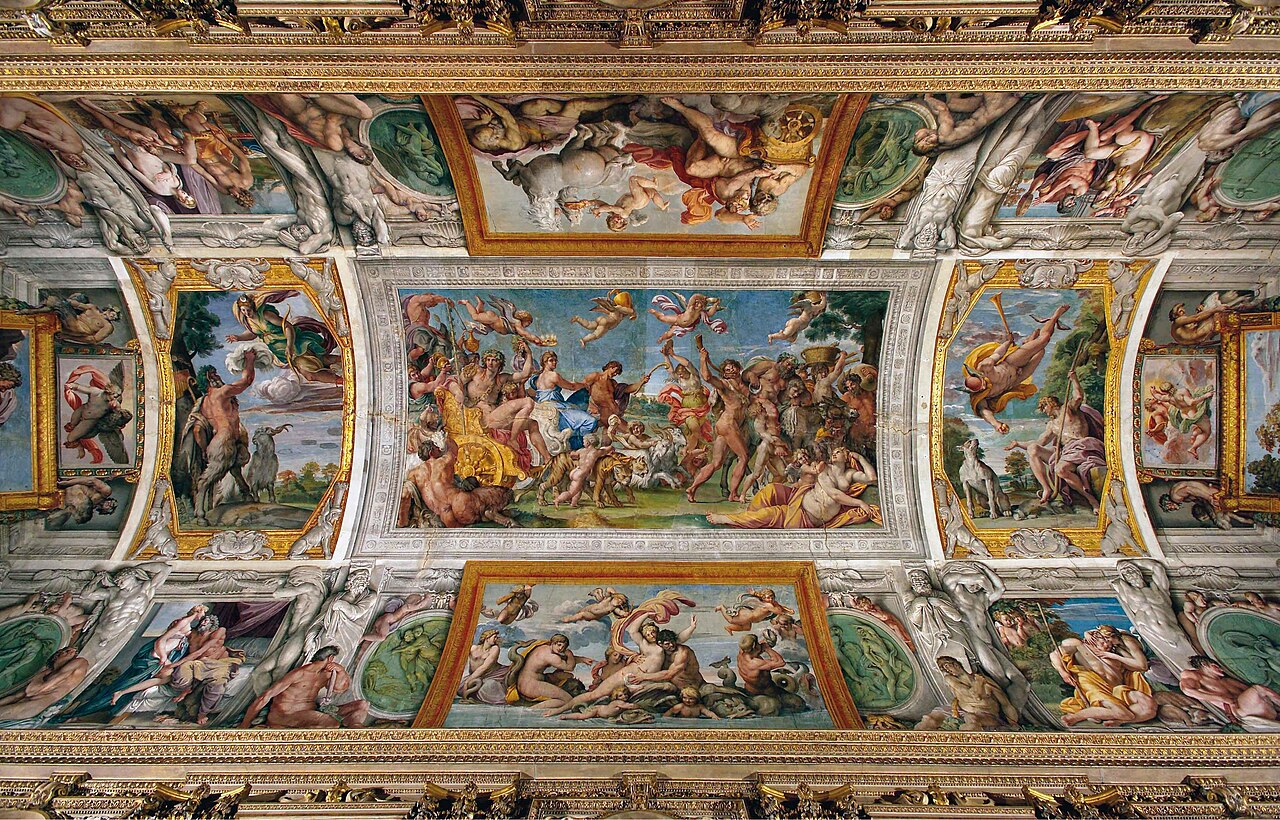
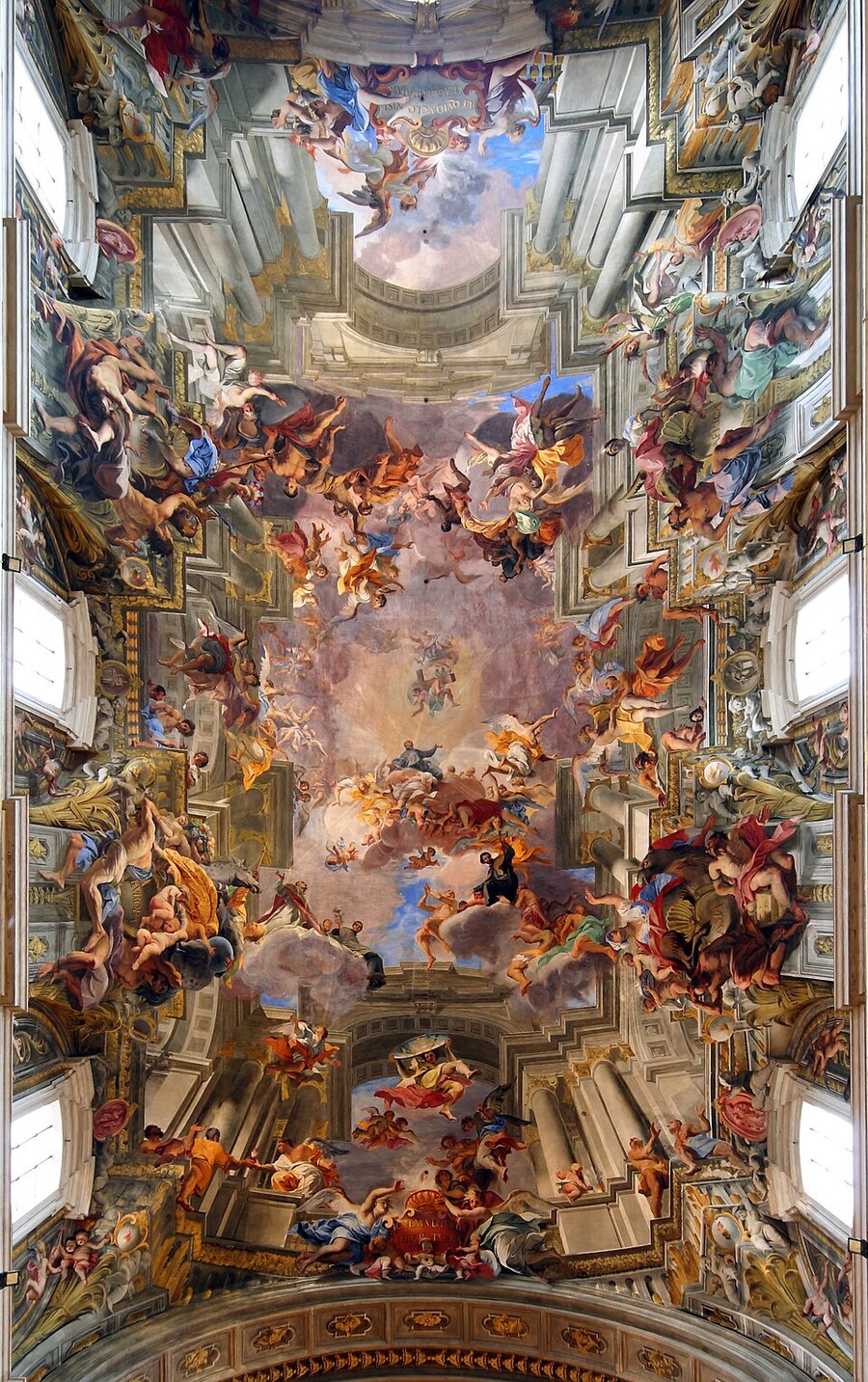
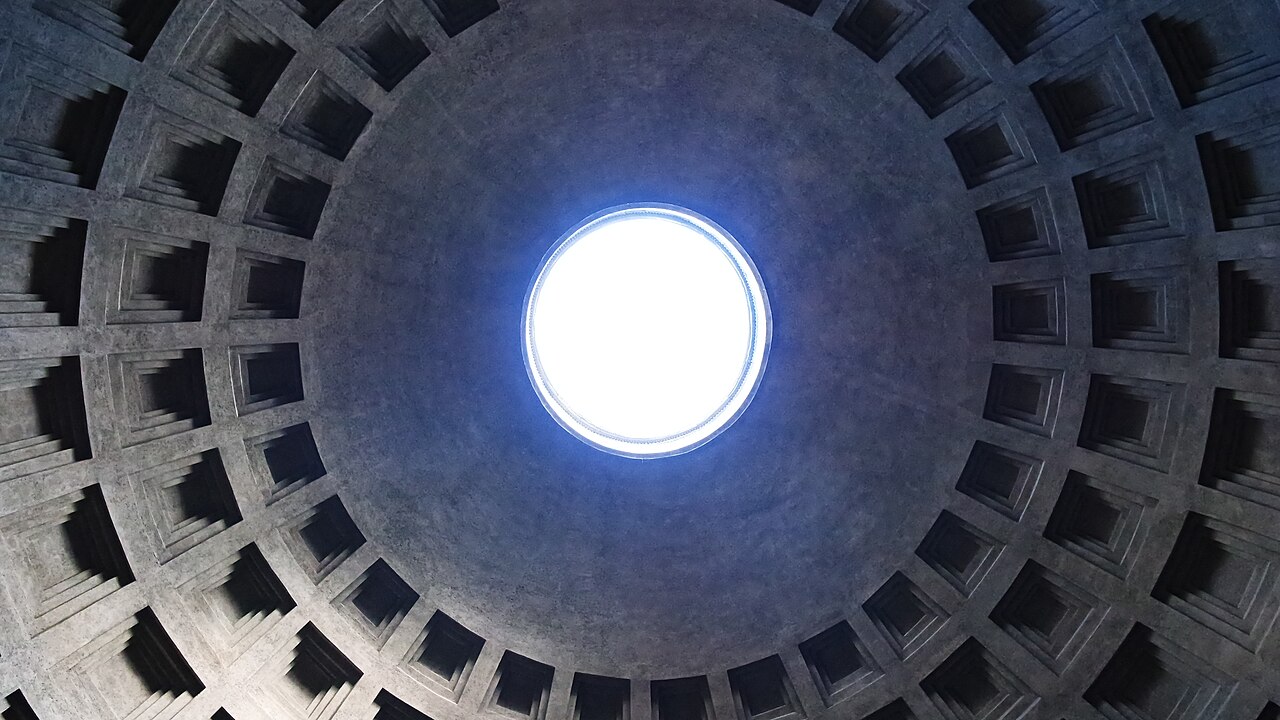
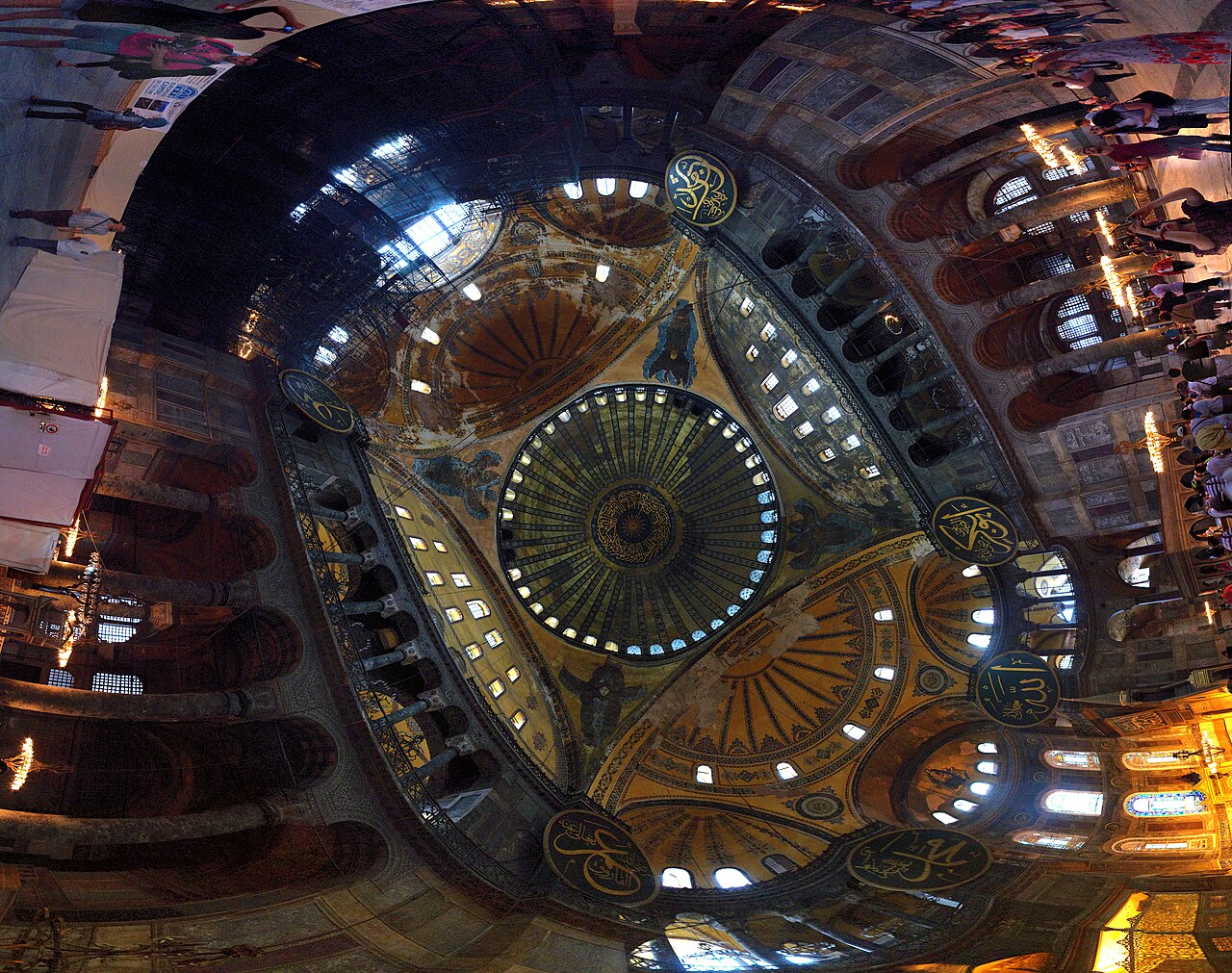
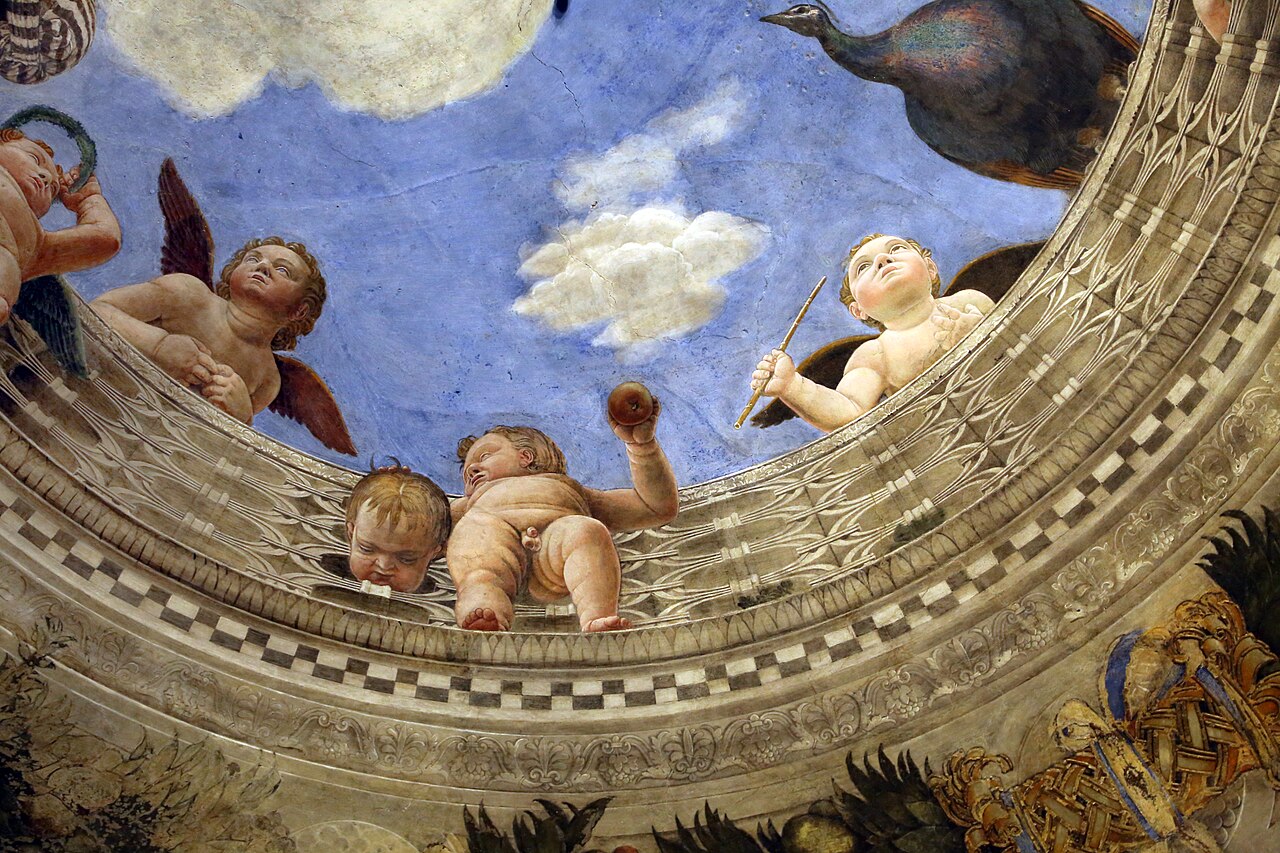
The ceiling in art history is not merely a surface to be adorned. It can create the sensation of a sky above a person, transform a building into a symbol of power, or make the viewer believe that the roof has vanished, revealing infinity before them.
The central thesis is this: the impression arises not only from the painting but also from the architecture, the light, the depicted figures, and the viewer’s positioning. Therefore, the history of ceilings and domes is also the history of how art directs human gaze and emotion.
The Mechanics of Illusion:
Dome — a ceiling structure shaped like a hemisphere or close to it.
Sails — curved triangular surfaces that allow a transition from a square building base to the circular base of a dome.
Perspective reduction — a method of depicting objects at an unusual angle, such as from below looking up.
Sotto in sù — literally «from below looking up»: a technique in which figures and architecture are depicted as if the viewer is looking at them from the floor.
Quadratura — an illusory architectural painting: columns, cornices, arches, and openings that appear real, even though they exist only on a flat ceiling.
Trompe-l’oeil — a deception of the eye; in this case, an image that creates the illusion of real space.