Concept
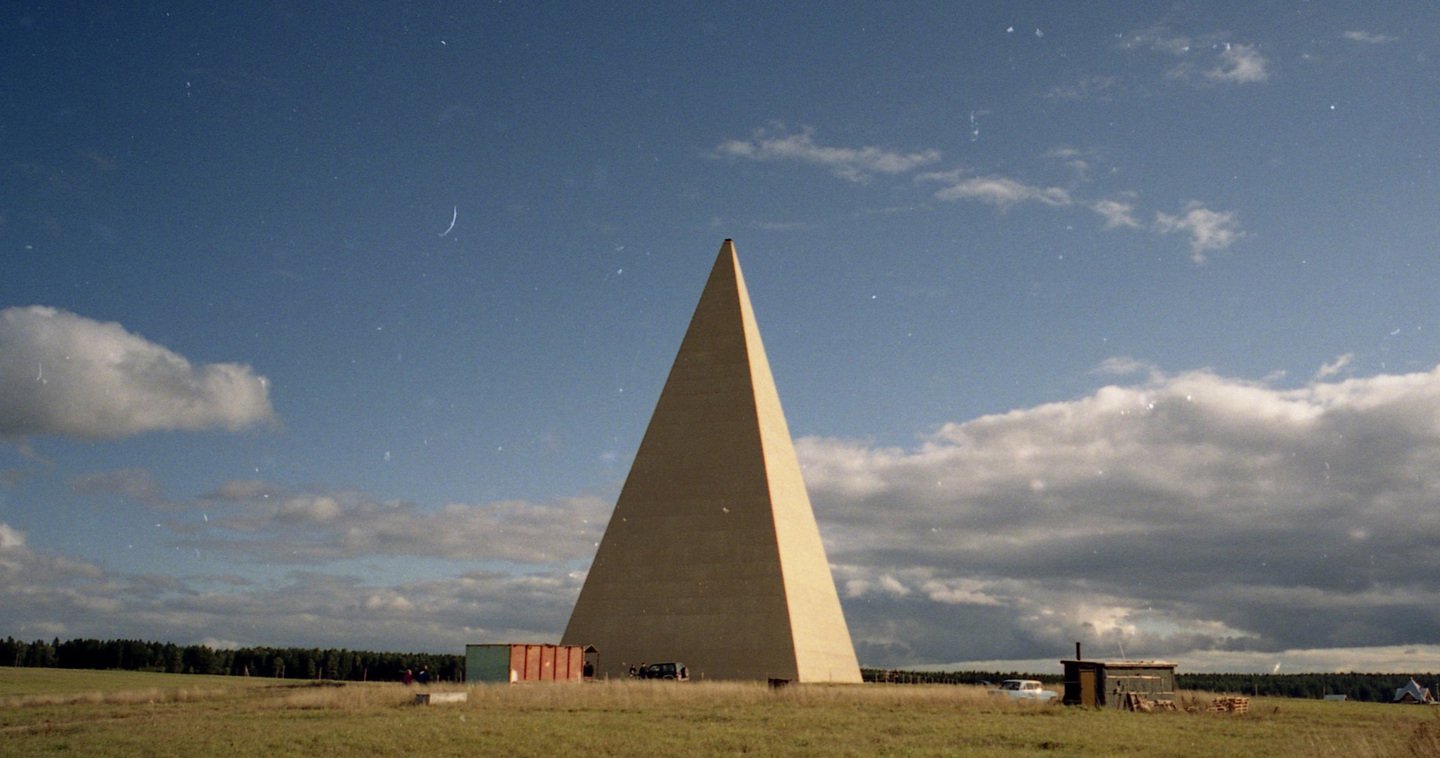
My introduction to the pyramids started oddly. During a trip, my father and I were driving along the Novorizhskoye Highway, and I saw a pyramid. The structure was strange and uncharacteristic of the Moscow region.
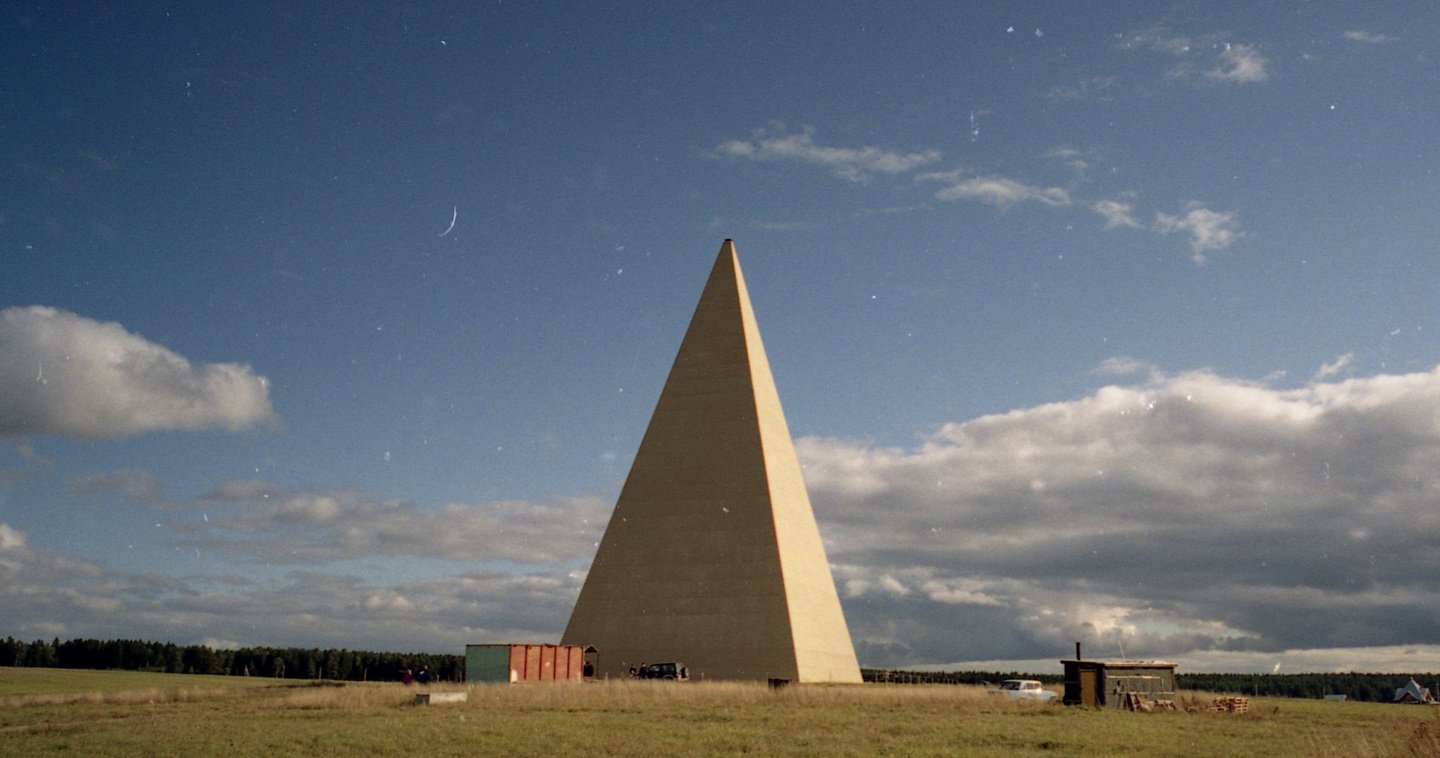
Pyramid on Novorizhskoye Highway from a personal archive
Modern archaeology posits that the oldest and first major pyramid is the Step Pyramid of Djoser, constructed around 2667–2648 BCE.
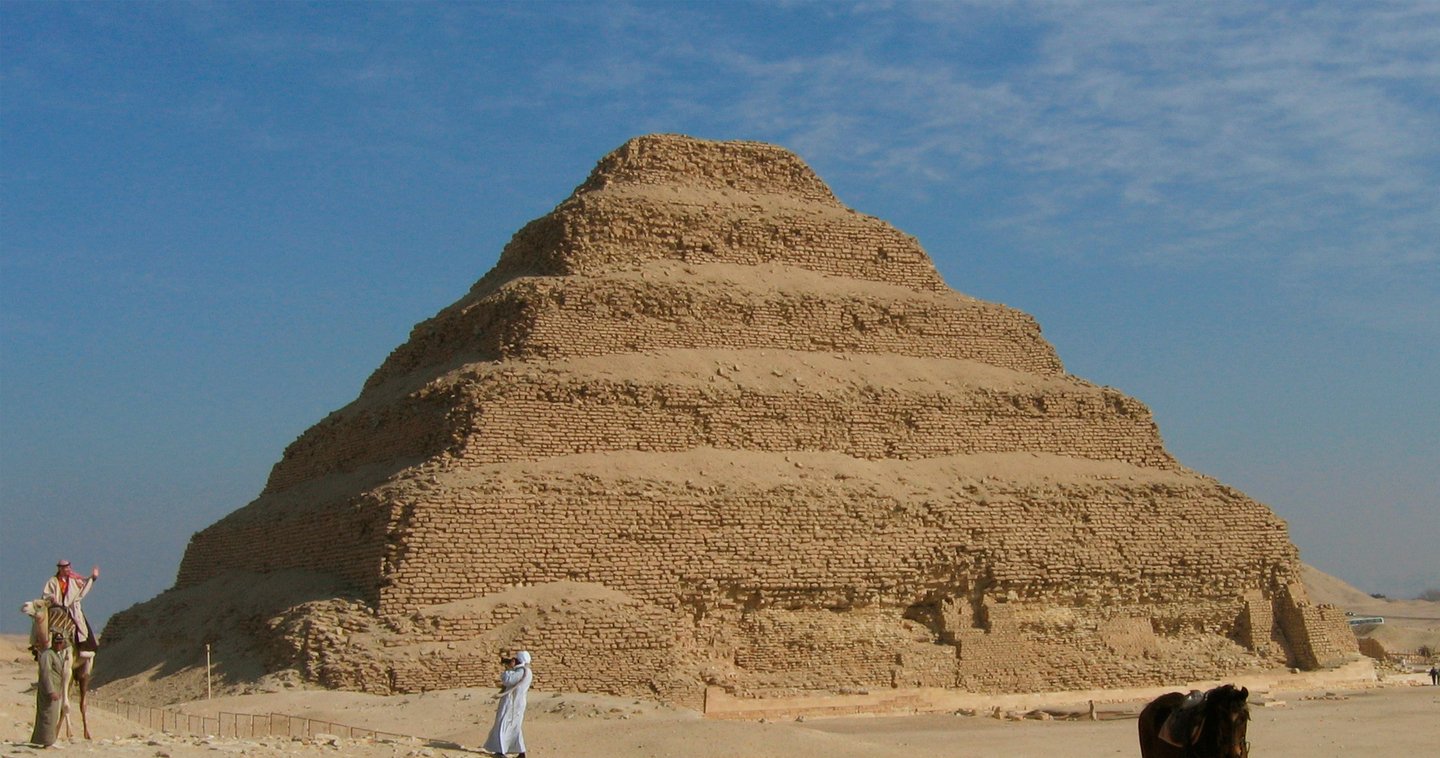
So, what unites Pharaoh Djoser, founder of the 3rd Dynasty, «Divine Flesh, ” „King of the Sun People, ” and Alexandr Efimovich Golod, a graduate of Dnipropetrovsk State University?
On the left: Pharaoh Djoser; reference Alexander Yefimovich Golod.
In modern times, many structures of a pyramidal form have been built. Have they retained their original function? Has the meaning of these constructions changed? Why do people continue to build them after five millennia?
Research Limitations
Pyramids have been built all over the world, but this study will focus only on the pyramids of the Egyptian crescent, as the pyramids of Mesoamerica and Oceania were discovered much later and did not have time to influence modern culture.
Map of the approximate locations of pyramid structures
Pyramid Development
The development of Egyptian pyramids was initially connected to funerary worship. The earliest precursors to the large, true pyramids are burial mounds and megalithic structures.
Metallic structure in Nabta Playa
A logical development from the burial mounds were the mastabas—rectangular tombs with flat roofs and sloping walls, constructed from adobe brick and other materials. The appearance of adobe brick may indicate archectructural borrowings from Mesopotamia. Mastabas began to develop around 3100 BCE. They were actively used by the First and Second Dynasties and continued to be employed by non-royal individuals for a long time.
Mastba Shepsecaf
It is worth noting that even the mastabas were gigantic in scale and represented highly developed structures. For example, mastaba C3504 measures 25 meters wide and 56 meters long.
Mastaba C3504
The next development of the mastaba was the stepped pyramid. It is commonly considered that the first stepped pyramid was the Pyramid of Djoser, built in the 27th century BCE. The pyramid has six tiers and was built into a stepped pyramid in several stages.
If we track the development of the pyramids further, we see attempts to arrive at the correct, four-sided pyramidal form. These attempts can be observed on the Pyramid of Meidum, also known as the «Corbelled Pyramid, ” and on the Pyramid of Sneferu, also known as the „Broken Pyramid.“ Various theories exist, but the generally accepted theory suggests that the Pyramid of Meidum was catastrophically ruined, which consequently altered the angle of the Pyramid of Sneferu.
Meidum Pyramid.
Sneferu Pyramid.
These failures allow the Egyptian architect to accumulate knowledge about building such structures and construct a pyramid of the correct shape.
Pink Pyramid.
Here, I am developing the pyramid genesis because, at this stage, the pyramid form gains its canon. Generally, during the Old Kingdom, the 3rd–4th Dynasties, the Egyptians constructed true, four-sided pyramids from durable materials, which allowed these structures from 2700–2100 BCE to be well-preserved.
During the Middle Kingdom, from 2100 to 1650 BCE, the Egyptians were unable to construct pyramids as large and durable as those of previous historical periods. Pyramid building continued, but due to the use of lower-quality materials, many of the structures did not survive.
Influence