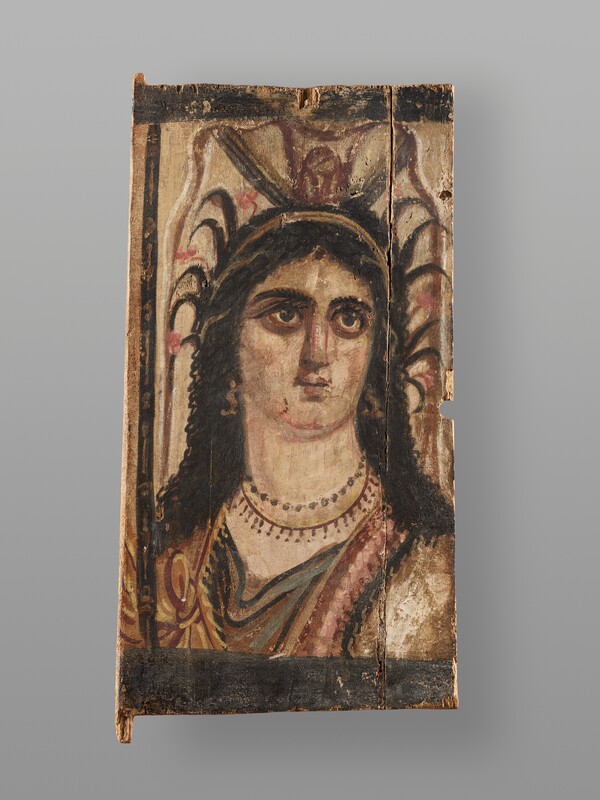
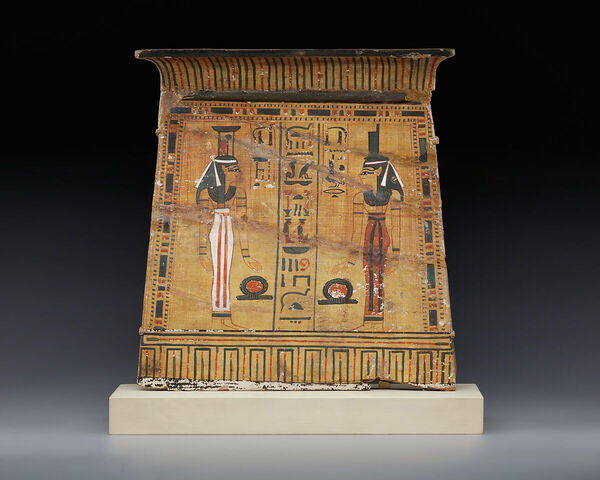
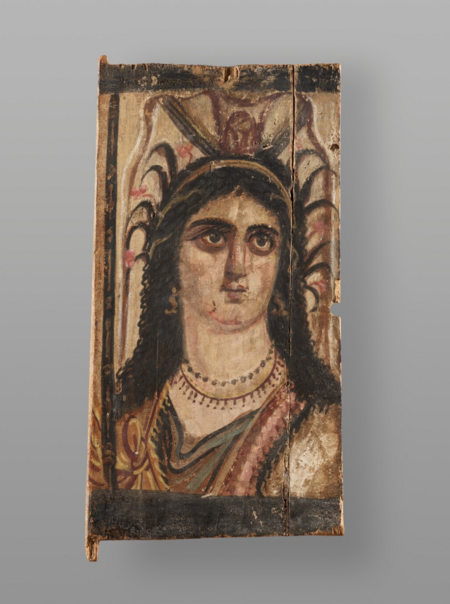
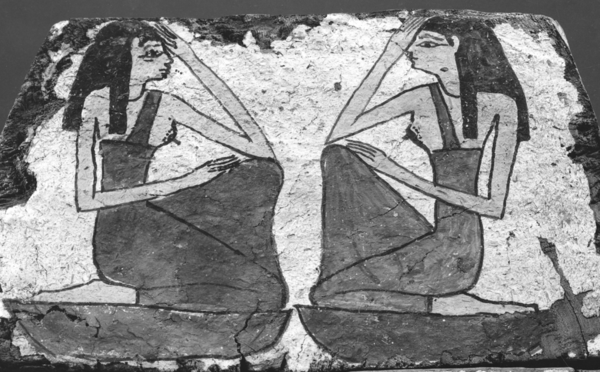
«Painted panel with Isis and Nephthys, ” c. 1300–1080 BCE — left „Panel depicting Isis, ” 100–200 CE — right
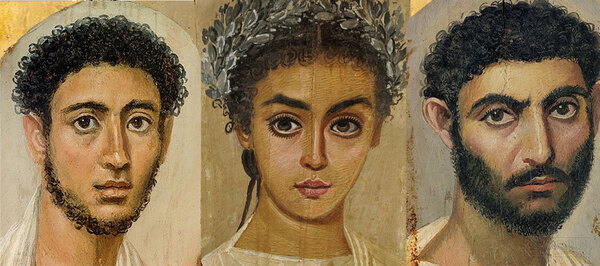
The figure on the right in the first photo and the girl in the second photo are both the goddess Isis, but do they look alike? In the first case, the goddess is shown full-length and in profile, whereas in the second, she is almost a three-quarter portrait. Compositionally, Isis is accompanied by the goddess Aphrodite in the first image, while in the second image, she is alone. However, in both images, one can discern Isis: on the left, she is recognizable by the throne on her head, and on the right, one can notice a headdress with horns and a snake—but this does not specify which goddess we are viewing; for that, one must consult the museum’s attribution. Why do they differ so much?
Concept
I was intrigued by how differently the same goddess could appear. In Egyptian relief, Isis is shown in profile alongside other deities, whereas on a painted panel from the Roman period, her face resembles a portrait. Therefore, the central question of my research is: how did the image of Isis change from the New Kingdom to the Roman period, and what features allowed her to be recognizable across different depictions?
For this study, I selected images from sarcophagi, reliefs, and painted panels, as well as pectorals, amulets, and figurines. These range across different time periods and depict Isis in various contexts—next to Nephthys and Osiris, with young Horus, or separated from other characters. This allows me to compare not only her physical appearance but also her placement within the composition.
I examine the goddess’s pose and perspective, her headdress, the surrounding figures, and the manner of representation. I verify the dating and identification of the artifacts using museum labels. If a specific detail is not clearly visible in the general photograph, I utilize an enlarged fragment.
The chapters are structured as a movement from scenes of the New Kingdom to images of the mother of Horus, then to small objects featuring recognizable symbols of Isis, and finally to monuments from the Roman period. I hypothesize that the goddess’s pose and artistic style evolved, but her connection to Horus and Osiris, along with certain attributes, continued to help the viewer recognize Isis. Furthermore, even in the Roman era, she could be portrayed in diverse ways—in a traditional Egyptian scene or on a panel resembling a portrait.
Chapters
1. Isis next to Osiris
2. Isis and little Horus
3. Recognizable Image
4. Different Portrayals of One Goddess
5. Conclusion
1. Isis next to Osiris. The New Kingdom.
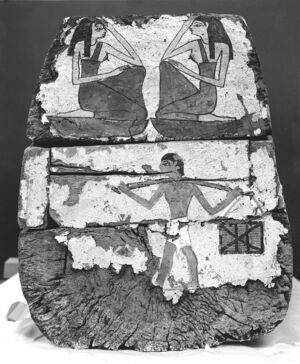
The sarcophagus of Akhmos, foot end, circa 1550–1458 BCE.
Isis and Nephthys are connected to Osiris—the ruler of the afterlife—so their depiction on the sarcophagus can be understood as a sign of protection for the deceased.
Painted panel featuring Isis and Nephthys, circa 1300–1080 BCE.
Here, Isis and Nephthys stand opposite each other. Isis can be identified by the characteristic crown on her head. Unlike the previous image, both goddesses are depicted standing.
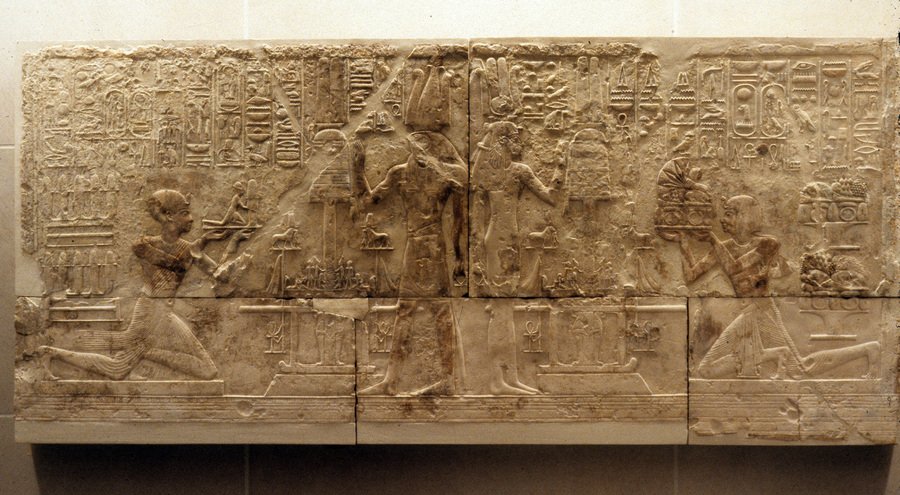
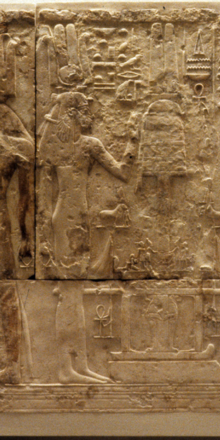
Relief on the western wall of the Temple of Ramesses I, c. 1299–1290 BCE.
Isis is located slightly to the right of the center. She accompanies Ramses I during the offering to the cult symbol of Osiris.
It is noticeable that Isis is depicted alongside the goddess Nephthys in the first two monuments, and she participates in the scene of offering to the cult symbol of Osiris in the third photograph.
2. Isis and Little Horus.
«Isis feeds Horus among the papyrus, ” c. 1080–664 BCE
In this image, Isis holds the young Horus and feeds him from her breast amidst papyrus reeds. The museum connects this scene to the myth of how Isis hid Horus from Set.
«Upper section of the Isis figurine, ” c. 945–721 BCE.
Only the upper portion remains, but the museum suggests that the goddess was originally depicted as seated with Horus on her lap.
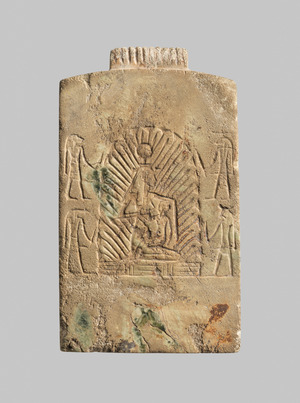
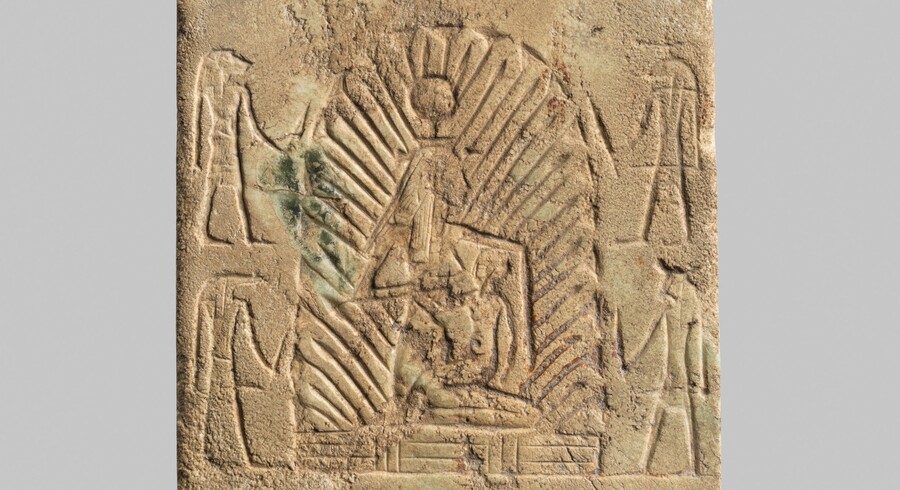
Pectoral with a goddess nursing a child among papyrus reeds (presumably Isis and Horus), c. 1200–664 BCE.
Here, you can see the same scene as before, but now four armed figures surround the mother and child, guarding them.
In the first chapter, Isis is shown with Nephthys and in the scene with Osiris—here, with young Horus. It is noticeable that in this chapter, the image of Isis as a mother and protector comes to the forefront.
3. Recognizable Identity.
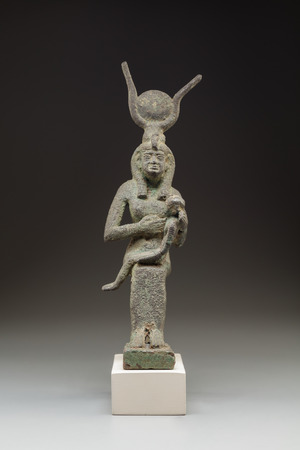
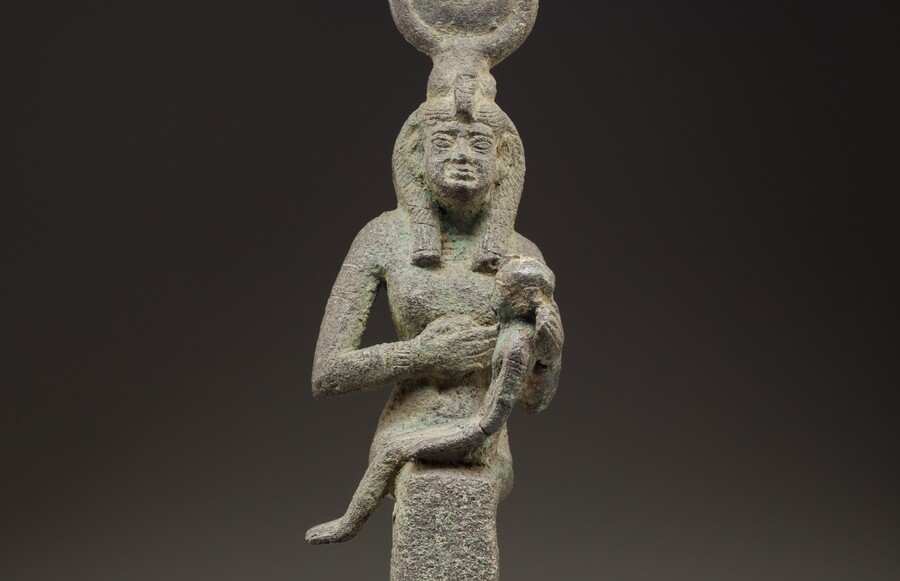
«Isis Feeds Horus, ” 664–332 BCE
You can see the storyline about maternal care for Gore again. The mother and child’s pose is similar to those we have already seen, but the statuette does not have papyrus or surrounding figures.
«Isis Amulet,» 332–30 BCE
Here, Isis is depicted without a child. One can notice the throne on the goddess’s head, by which we recognize her.
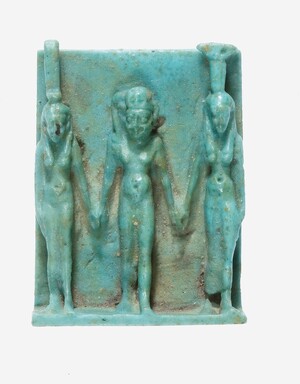
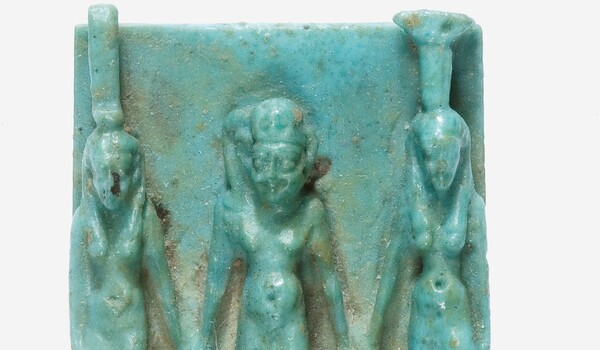
«Isis, Horus, and Nephthys,» 664–30 BCE
Horus stands between two goddesses. Here, Isis and Nephthys meet again, as in Chapter 1, but this time with Horus from Chapter 2. The goddesses hold Horus’s hands, which may symbolize protection and care.
Isis remains recognizable here by the scene with Horus on the statuette and by the symbol of her name on the amulets.