Concept
Context
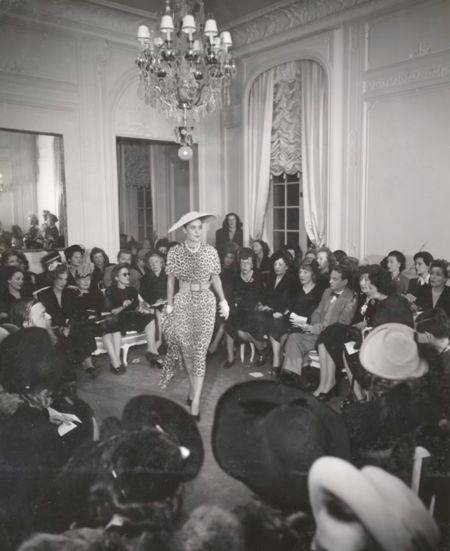
The fashion show evolved from the practice of presenting clothing to clients. When collections began to be showcased on moving models before an assembled audience, the designer gained new expressive tools. The order of the looks, gait, distance between the model and the viewer, the host’s voice, and the musical accompaniment became significant. At the beginning of the 20th century, these elements were combined in various ways. Intimate presentations in salons, theatrical catwalks, and department store showings all existed concurrently. The purpose of the display also changed: a viewer might attend to select a dress, watch a performance, or learn about the lifestyle the collection offered (The first fashion show 1947)
Subject — The Sound of a Fashion Show
The research object is the sound design of fashion shows from the early 20th century to 2026. The core of this work focuses on instances where sound can be correlated with a specific runway walk, movement, or venue element. I examine music performed by artists, curated playlists, bespoke music written for collections, and soundscapes featuring vocals. The historical section also emphasizes announcements and pauses, which demonstrate how audience attention was managed in formats where music’s role was restricted. The periodization is based on fashion shows and professional testimonies, so individual examples are discussed within the context of their venue, audience, and mode of distribution.
Research Question
How did designers begin to incorporate music into runway shows, and how did the dynamic change when sound became an integral part of the show’s direction? This question allows us to explore the evolution from music merely accompanying a social event to a fully designed soundscape—one that can establish the tone of a presentation, unify disparate elements of a collection, and fundamentally reshape the perceived image. A separate inquiry concerns recordings. How does the exhibition shift when the audience experiences it through a camera lens and the musical score becomes a standalone release? To answer this, I am comparing archival documents, full recordings, reports, and creator credits.
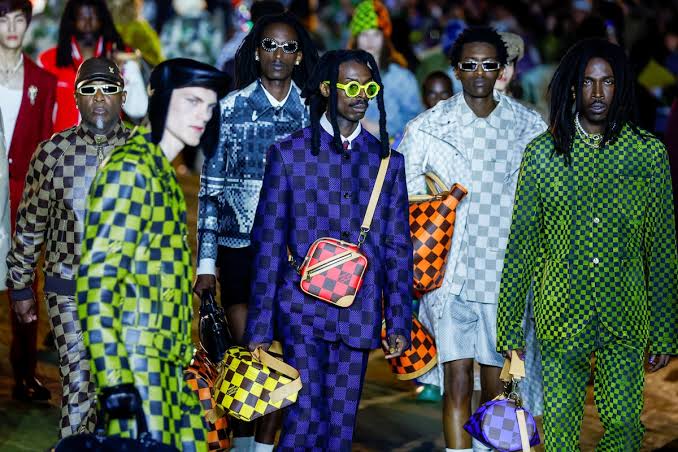
Men’s Spring-Summer 2024 Show by Pharrell Williams | LOUIS VUITTON
Hypothesis
The hypothesis suggests that music became especially important for fashion shows when designers and directors began treating the sequence of runway appearances as a singular event. Music helped establish a sense of tempo, highlight climaxes, and connect the clothing to a cultural context—whether it be Broadway theater, a pop video, or a club. In contemporary shows, the medium itself is also significant. In the venue, the sound experienced varies depending on the audience member’s location and the placement of the sound sources, while on a screen, the meaning of an emphasis can depend on the editing. I hypothesize that the role of music will be most noticeable at transition points: at the beginning of the show, when the character of the movement changes, and in the finale.
Structure and Methodology
The research is divided into four chapters. The first is dedicated to early forms of fashion presentation and why salons, theaters, and department stores developed different sonic demands. The second analyzes the transformation of the fashion show into a staged performance. The third examines the work of music directors, from track selection to spatial audio. The fourth presents contemporary formats where live ensembles, custom mixes, films, and digital presentations coexist. For each case, I record four parameters: sound source, its position in the sequence of outputs, its relationship to the model’s movement, and the effect on the spectator. In conclusion, I compare one segment with the original track and with sound off.
Navigator
1. The Origin of Runway Sound
2. When the Podium Became a Stage
3. Who and How Soundtracks Are Composed
4. How Fashion Sounds Today
Chapter 1. How the sound display came to be
At the end of the 19th century, Parisian couturiers began presenting garments to clients on live models. Charles Frédéric Warth is often cited in the history of this format. The movement allowed viewers to see how the design behaved on the human body and became a key part of the presentation.
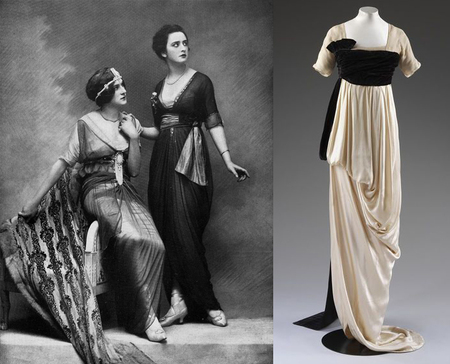
Lucile and Theatrical PresenceLucile presented collections in the form of mannequin parades. She gave the models theatrical names and taught them how to move in specific ways. Music and dance were part of her presentations' repertoire, helping to show how the clothing moved in a scenario the audience could envision outside of the salon.(Innovative designs from Lady Duff Gordon.)
British actresses in Lucile gowns.
Paul Poiret and Runway Outside the Salon
Poiret held presentations in gardens and transported his collections to other cities. Changing the venue altered the relationship with the audience: they saw the clothing in the setting of a reception or a theatrical event. Here, the surroundings became part of what was remembered about the collection.
Photograph of a model parade in Parc Monceau, Paris, 1910. It is captioned in the Vitra Design Museum booklet.
In some American department stores, seasonal presentations were accompanied by piano music and a host’s commentary. The sound had two goals. The music set a sophisticated atmosphere, while the voice informed the viewers about the outfit on display.
Dior, 1947
Christian Dior’s first collection was unveiled in salons on Avenue Montaigne. Archival photographs show guests packed closely together and portions of the audience watching from the steps. This setting is a good starting point for a discussion on sound scale: the intimate delivery and presentation in a concert hall require different methods of holding attention. La Galerie Dior
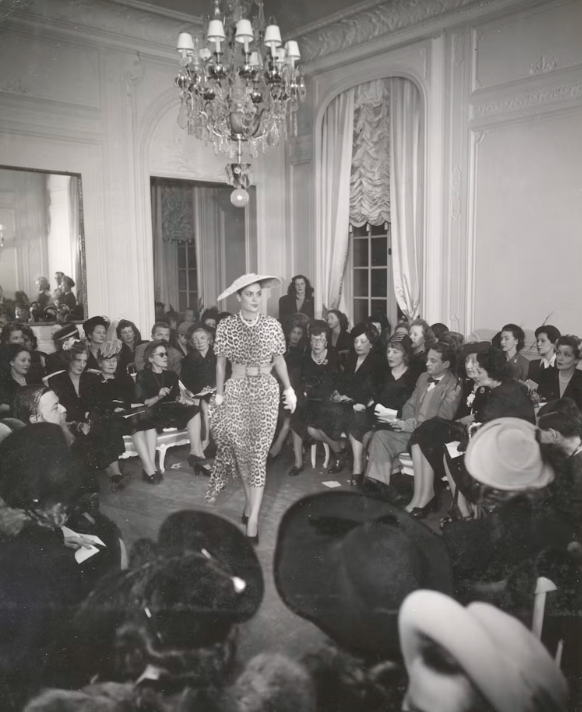
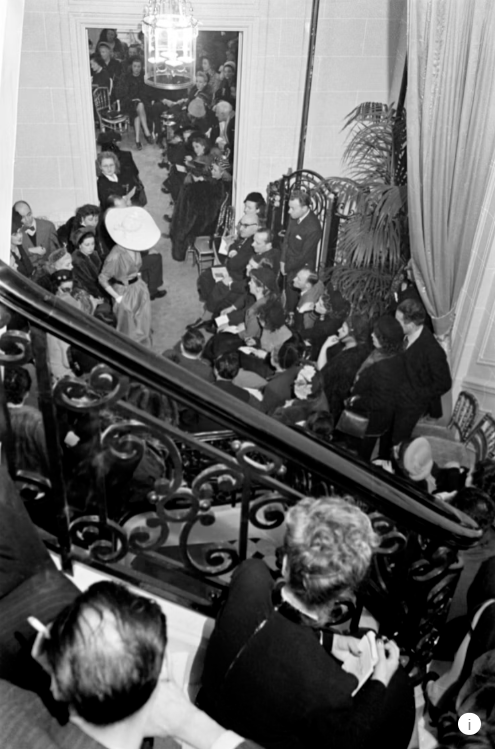
the show of the first collection, 1947
La Galerie Dior maintains collection boards where clothing models and their information are arranged in a specific sequence. Historical show descriptions also included announcements of number or ensemble names. The viewer received a verbal guide and could correlate what they saw with the program.
According to fashion historian Robin Givhan, Cristóbal Balenciaga’s shows took place in silence. This format helps explain why music did not have a singular moment of appearance. Some houses used it for spectacle, while others built focus around the presentation and silhouette itself.
Chapter 2 / When the Podium Became a Stage
In the 1960s, ready-to-wear designers, including Mary Quant, adopted a looser approach to presentation. In the film footage, the effect of the short silhouette in motion is clearly visible. To analyze this, select a wide shot and a frame where the model turns or changes direction.
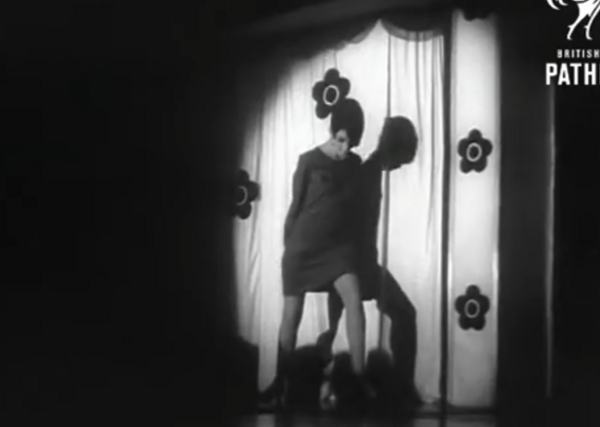
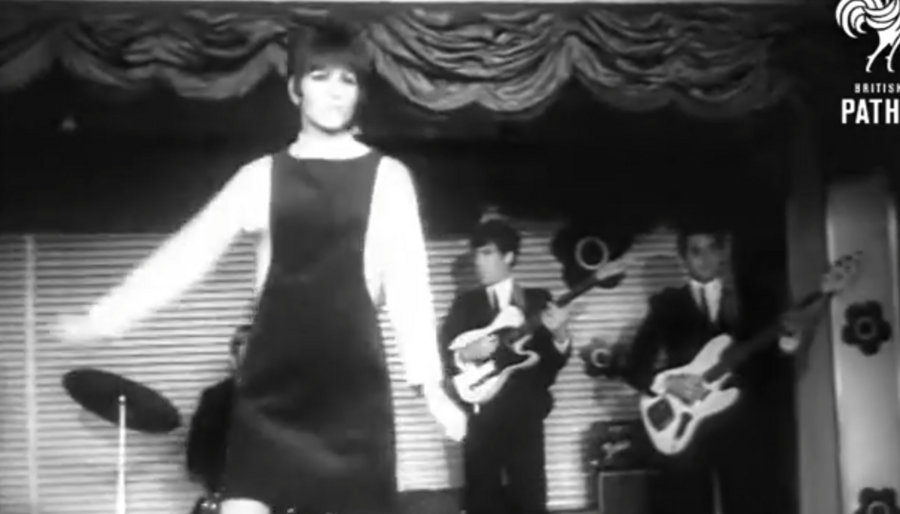
Mary Quant Fashions in Australia, 1966
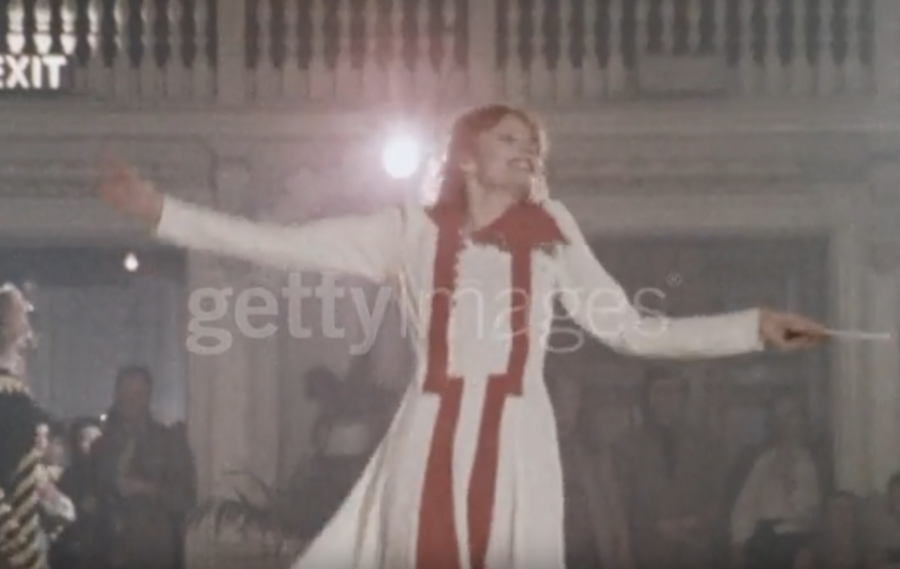
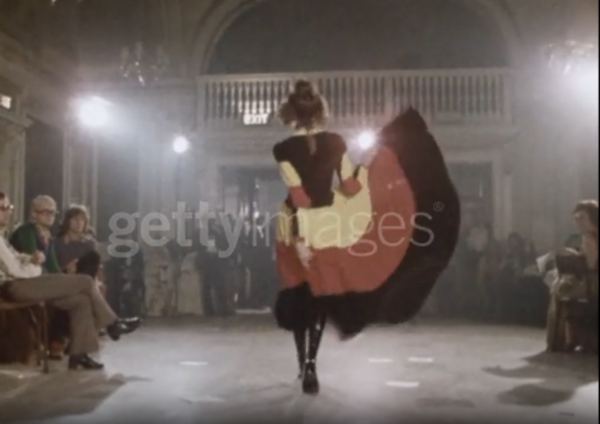
Researcher Janice Miller cites Ossie Clark’s runway shows from the late 1960s and early 1970s as a significant example in the history of podium music. This case can be connected to the young London audience and clothing designed for expressive movement.
Archive Shoot · Catwalk Music