Navigation
1. Research Concept
------Context
------Object of Study
------Problem
------Hypothesis
2. Analytical Section
------The Portal as an Architectural Boundary
------Zoomorphic Imagery: From Protection to Threat
------Monsters and the Drama of the Last Judgment
------Romanesque Monuments: Muassak, Oton, Conques, Vézelay, Sully
------Ancient Prototypes of the Threshold
------Contemporary Interpretations
3. Conclusion: Relationship Between Hypothesis and Research Findings
4. Bibliography
5. Image Source References
Concept
This study examines the Romanesque church portal as a visual boundary between the external, sinful world and the internal, sacred space of the temple. The zoomorphic and monstrous figures within this system are not mere incidental ornamentation; they participate in constructing the threshold, setting the emotional tone, and preparing the believer for the liturgical rite.
The core idea is that the Romanesque portal functions as a «stone sermon»: through the scale, placement, and repetition of monstrous figures, the viewer physically and morally traverses a path from fear and repentance toward the hope of salvation.
CONTEXT
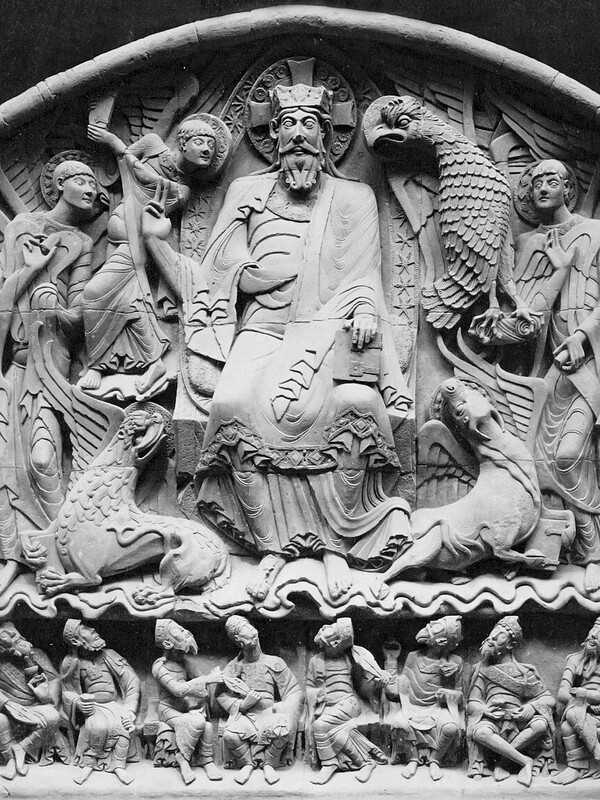
Romanesque art of the 11th–12th centuries developed amid the strengthening of ecclesiastical authority, the rise of pilgrimage, and the active visualization of eschatological themes. The portal became the primary meeting point between the believer and the church: it is here that scenes such as the «Last Judgment, ” „Christ in Glory, ” apocalyptic visions, and punishments for sinners are depicted.In Romanesque decoration, animal motifs served not only an aesthetic function but also a protective (apotropaic) one; they embodied religious concepts of good and evil, Eden, sin, and vice. Russian-language researcher L. M. Terentyeva notes that in Spanish Romanesque sculpture, dragons, griffins, sirens, and deer form a dense decorative-symbolic layer where ornament and the monstrous are tightly interwoven.
SUBJECT OF STUDY
The object of study is the sculptural decoration of Romanesque church portals from the 11th–12th centuries, which features animalistic and monstrous imagery. The subject of study is the methods of visually constructing the boundary between exterior and sacred space through the images of lions, dragons, griffins, hybrid creatures, and demonic figures.
THE PROBLEM
The research problem lies in the fact that the bestial and monstrous imagery in Romanesque portals is often perceived merely as a decorative element, when in reality, its function was far broader. They did not simply adorn the entrance; rather, they shaped the moral framework through which the sanctuary was perceived.
It is necessary to investigate how these images:
--> demarcated the threshold of sacred space;
--> visualized the opposition between sin and salvation;
--> engaged the viewer in the drama of the Last Judgment;
--> and emotionally and morally prepared them for entering the church.
It is necessary to determine how these images:
--> marked the threshold of sacred space; --> visualized the opposition between sin and salvation; --> engaged the viewer in the drama of the Last Judgment; --> emotionally and morally prepared them for entering the church.
HYPOTHESIS
In the Romanesque church portals of the 11th–12th centuries, animals and monsters served not a decorative but a structurally meaningful function: they marked the threshold of sacred space, visualized the boundary between salvation and damnation, and involved the viewer in the moral drama of the Last Judgment.
Analytical Section
THE PORTAL AS AN ARCHITECTURAL BOUNDARY
The Romanesque portal is structured as a transition: the outside is the world of the corporeal, the sinful, and the mortal; the interior is the liturgical space of salvation. The tympanum, archivolts, capitals, and trumeau do not merely decorate the entrance—they establish a sequence of perception: the viewer first confronts threat and judgment before entering the sanctified space.
Thus, the monster at the entrance is not a random «scare tactic, ” but rather part of the architectural drama: the viewer physically passes between images of threat to enter the space of salvation.
ANIMAL IMAGES: FROM DEFENSE TO THREAT
In Romanesque decoration, animal imagery is not limited to a simple dichotomy of «beast vs. evil.» The meaning of the figure was determined by its context: its posture, its role as a victim, its placement within the composition, and its proximity to biblical scenes.
Leo could signify both Christ and the Devil; in portal sculpture, it often appears as a predator tormenting its prey.
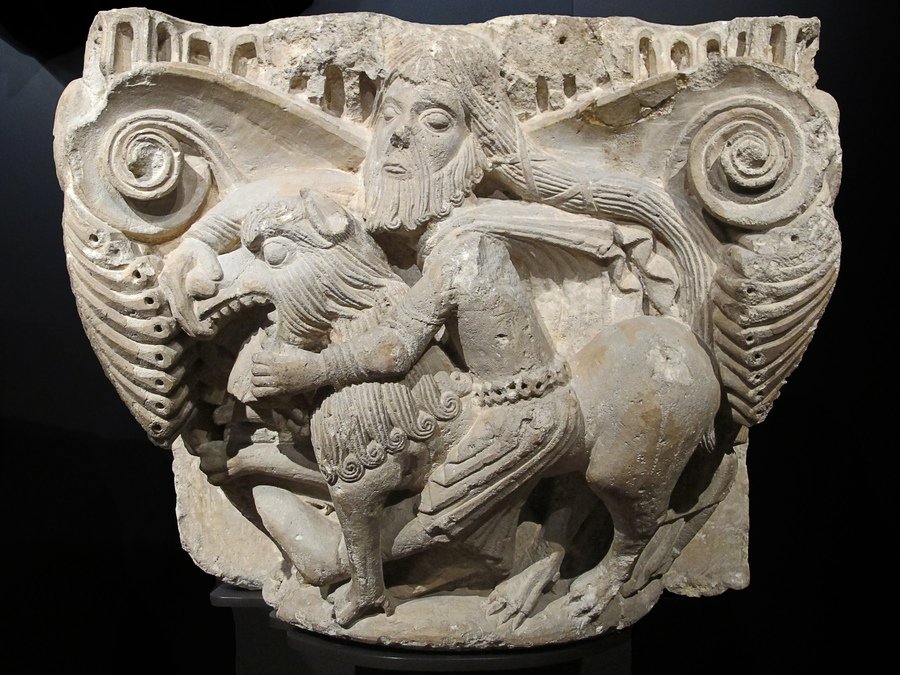
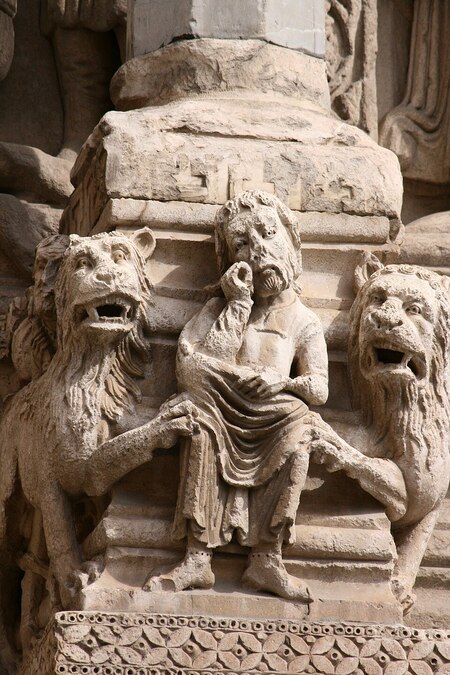
Dragon and Serpent are more often associated with the devil, the Fall, and apocalyptic struggle.
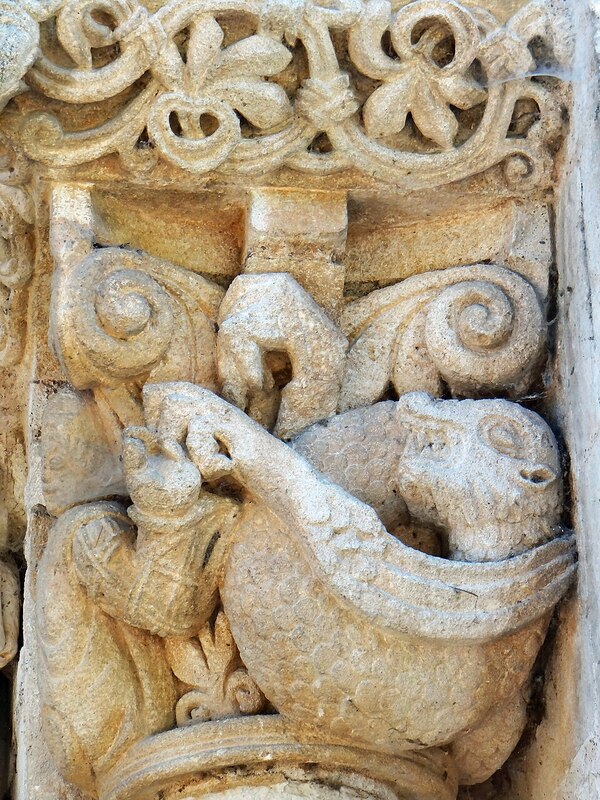
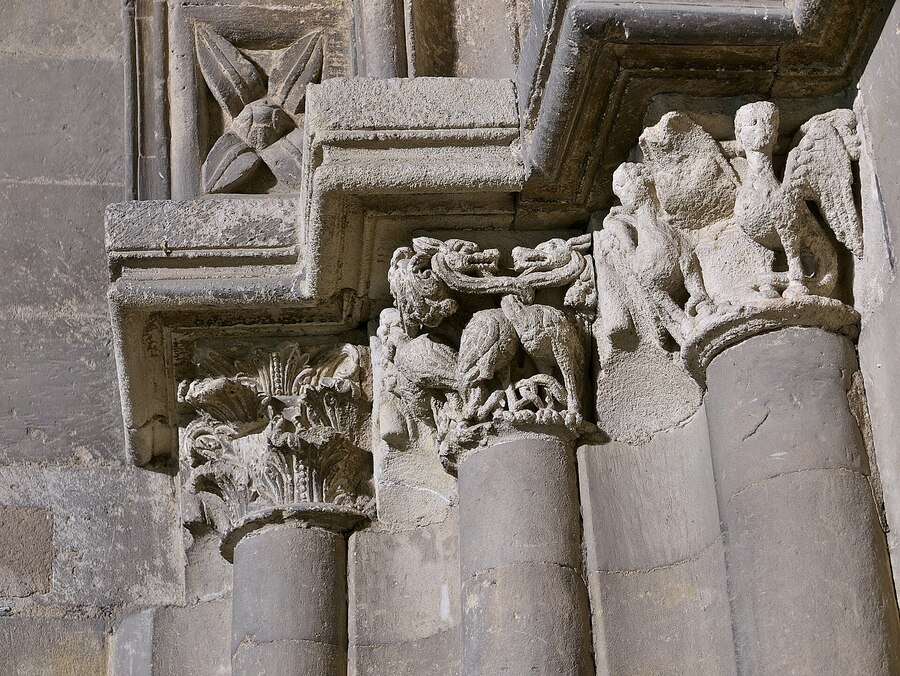
Gryphons, hybrid creatures with snarling maws visualize the instability of the boundaries between human, animal, and demonic.
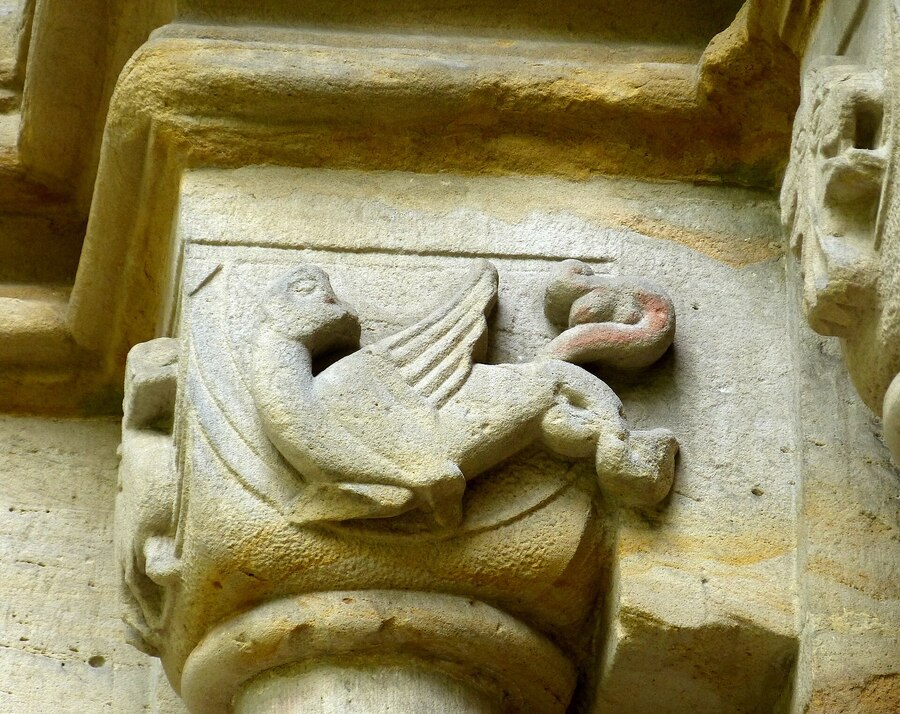
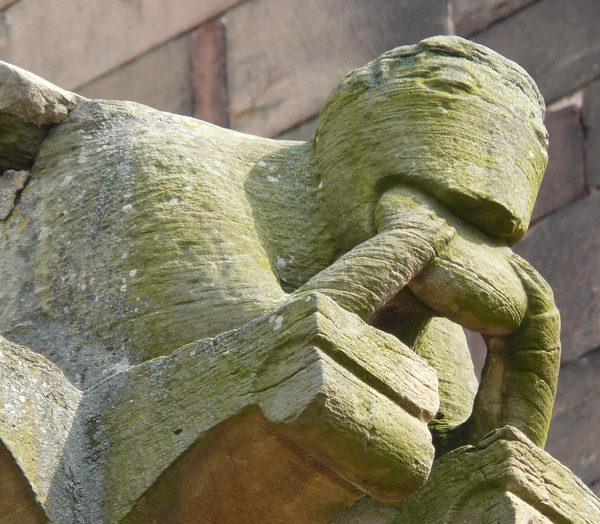
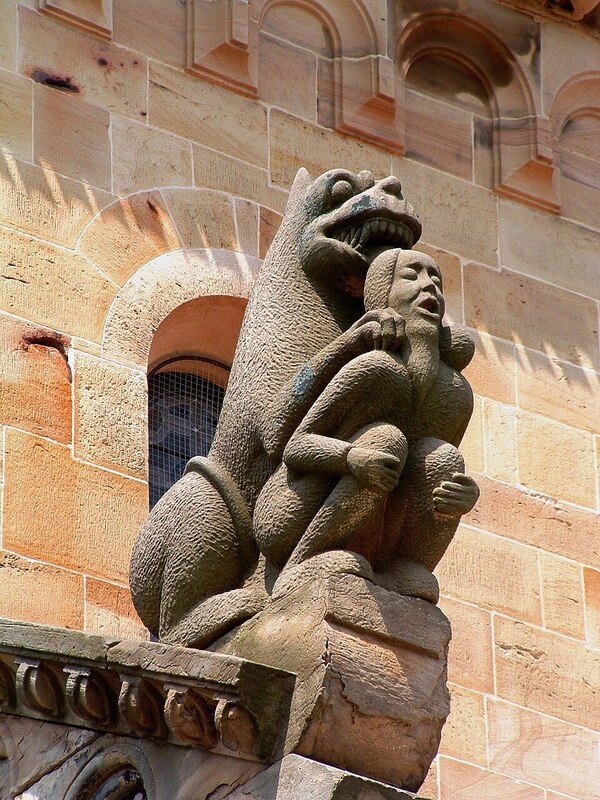
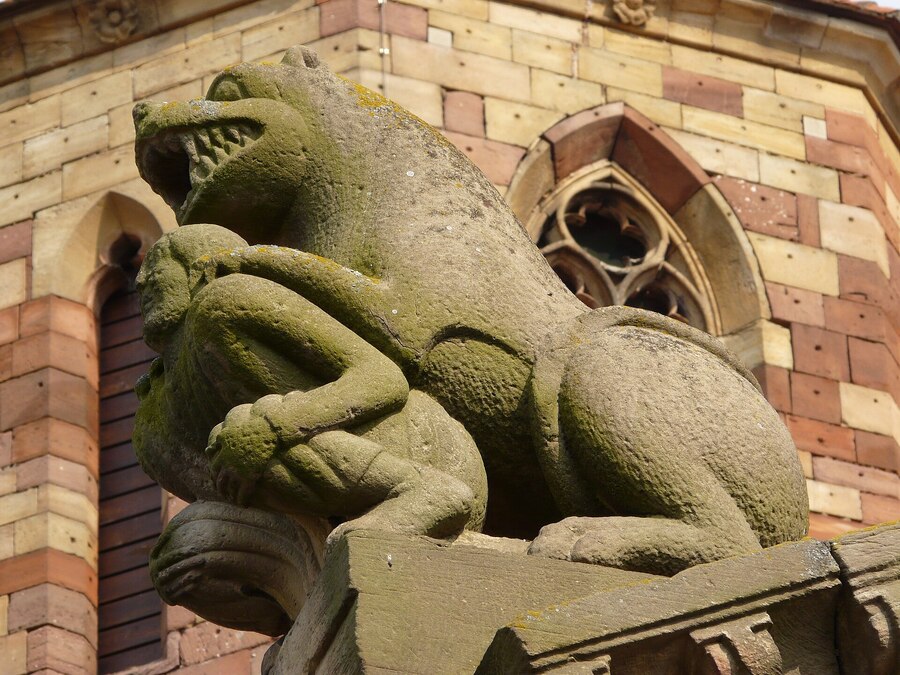
The Devouring Scene relates to concepts of hellish torment, the mortal danger of sin, and the necessity of a spiritual choice.
MONSTERS AND THE DRAMA OF THE LAST JUDGMENT
Grotesque figures in Romanesque portals are closely tied to eschatology. They don’t merely «frighten»; instead, they immerse the viewer in a moral drama: before them unfolds a choice between sin and salvation, between hell and heaven.In Autun, for example, the scene of the Last Judgment is depicted on the western portal and includes images of the resurrection of the dead, the weighing of souls, hell, and paradise.The «Last Judgment» was one of the most common subjects and was traditionally placed on the western wall of the church structure.