Concept
During the 13th and 14th centuries, Gothic cathedrals were adorned with stone figures depicting animals, humans, and fantastic creatures. Many of these figures had an intimidating appearance: open jaws, sharp claws, and unusual body proportions. Such sculptures differed markedly from conventional religious imagery, drawing attention with their striking presence.However, these stone monsters were not merely decorative. Some of them, known as gargoyles, served a practical function—diverting rainwater away from the cathedral walls. Simultaneously, their unusual forms may have held symbolic meaning, although researchers interpret their significance differently.In this study, I aim to investigate why these stone creatures looked the way they did and what role they played in the architecture of Gothic cathedrals. To do this, I will compare their appearance, forms, placement on the buildings, and depiction characteristics. This will help us understand how common architectural elements were transformed into expressive sculptures.
Why were terrifying creatures depicted in Christian cathedrals of the 13th–14th centuries, and how was their appearance connected to the building’s architecture?
The Principle of Rubrication
The research is structured around the principles of typology and comparison. To understand the role that stone gargoyles played in the architecture of Gothic cathedrals, I divided the work into four sections. The first section examines the function of the stone figures, particularly their use as waterspouts. The second section covers the appearance of the gargoyles—the specifics of their forms and proportions. The third section deals with the placement of the sculptures on the cathedrals and their relationship to the building’s architecture. The fourth section explores the potential symbolic meaning of the stone gargoyles and the various explanations for why they were depicted on Christian sanctuaries.
Part I. The Practical Function of Stone Monsters
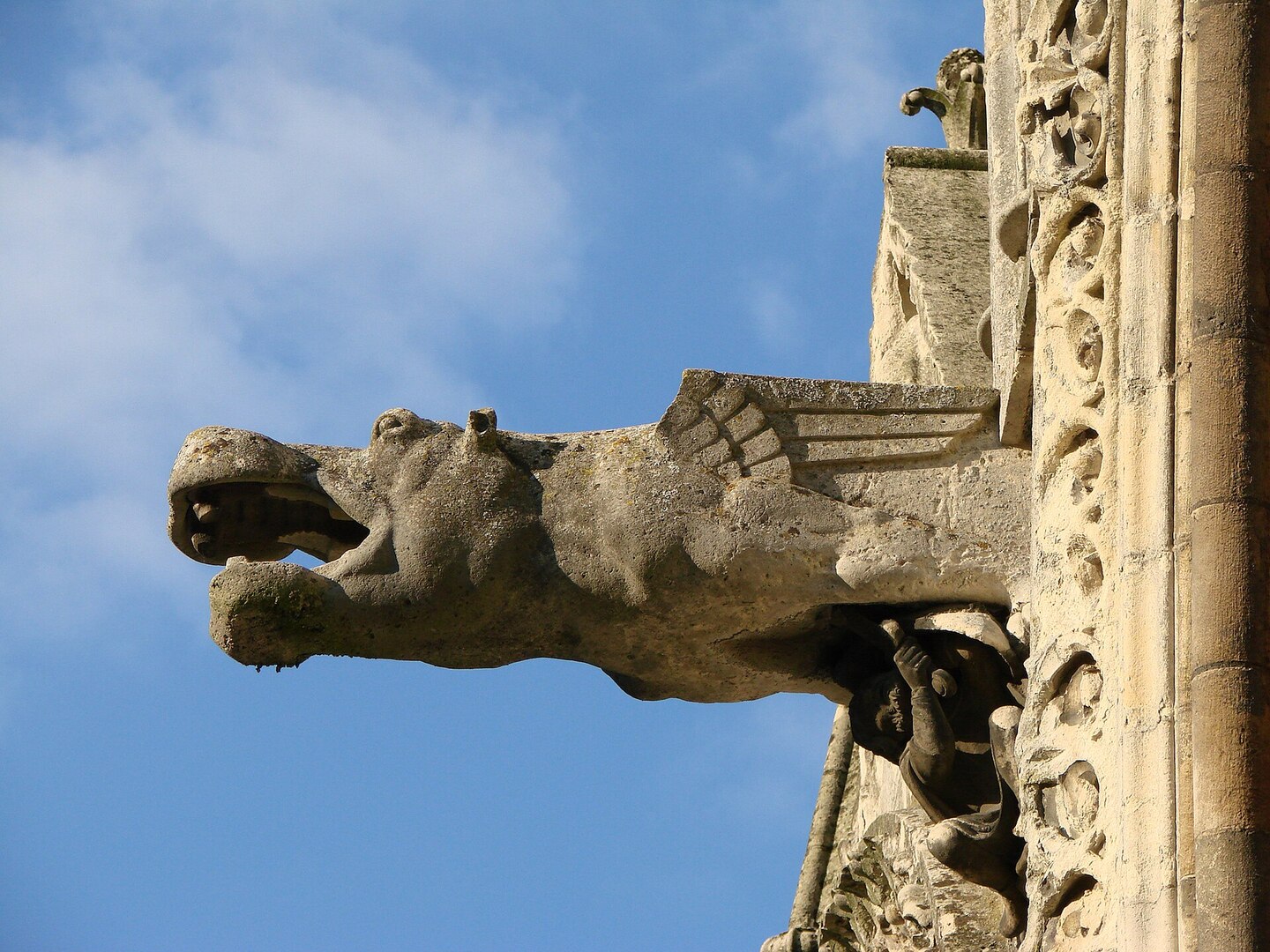
Гаргулья с водостоком
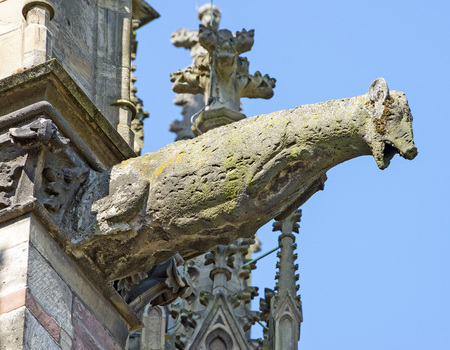
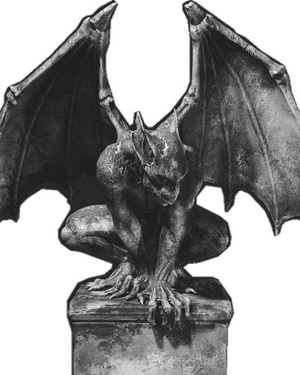
Декоративная фигура
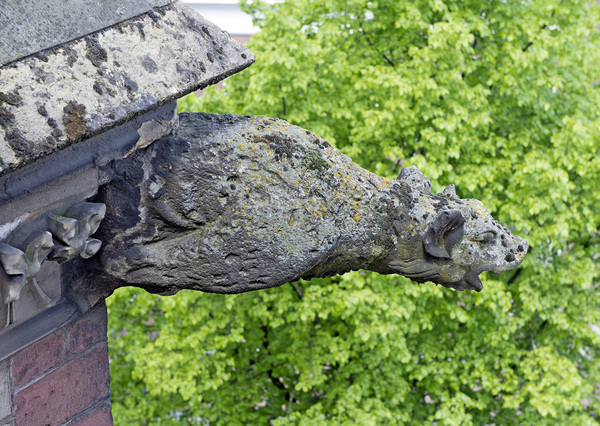
On Gothic cathedrals, stone monsters were used not only as decoration but also as part of the drainage system. These sculptures were called gargoyles. Through special channels inside them, rainwater exited outside, preventing it from running directly down the building’s walls.
The first photograph shows that the figure is strongly elongated and projects beyond the wall. Its body has an extended shape, and an opening for water exit is located at the end. This structure allowed rainwater to be diverted far away from the cathedral’s facade.
The second photograph depicts a similar stone figure, but without a drainage opening. It also projects beyond the building, but serves a purely decorative role. Its form resembles a real animal rather than a downspout.
Thus, the comparison shows that the stone monsters could look similar but serve different functions. Furthermore, the practical function influenced the appearance of the gargoyles: their bodies were elongated so that water would not strike the cathedral walls.
The lion gargoyle from the Reims Cathedral in France
The gargoyle of St. Lance’s Cathedral depicts a lion with a bone. Its body projects beyond the wall, and the figure possesses recognizable animal features.This example demonstrates how medieval artisans transformed ordinary downspouts into extraordinary sculptures, combining practical function with artistic design.
Thus, the form of the gargoyles was closely tied to their function. Their elongated bodies helped divert water from the cathedral walls, and the depictions of animals and fantastical creatures integrated these elements into the structure’s artistic character.
Lincoln’s Little Ghost, England.
This small 13th-century figure depicts a horned creature with an unusual facial expression. Unlike gargoyles, it does not function as a waterspout, but serves as a decorative sculpture.
Part II. The Appearance of Stone Monsters
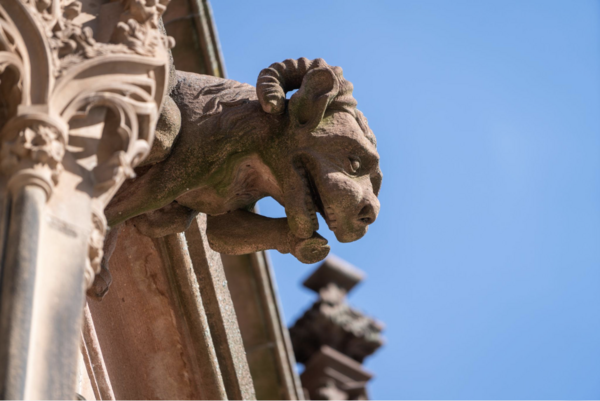
Звериный образ — баран
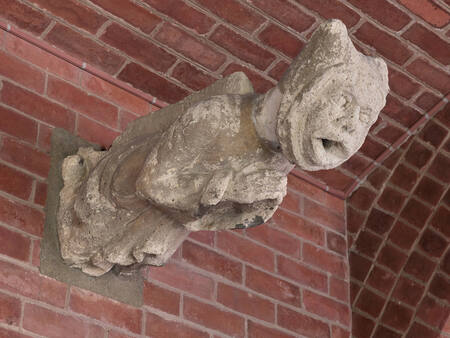
Человекообразная фигура
The first example shows a ram.
The second one is a figure with a human face and clothing.
The stone monsters of Gothic cathedrals varied widely in appearance. Some depicted real animals, others resembled humans, and some combined the features of several creatures.
Fantastic Creature
The third example features fantastic creatures with elongated necks and unusual proportions. Despite their differences, these sculptures share common characteristics: open jaws, exaggerated proportions, and expressive faces or snouts. The menacing appearance of these monsters may have been connected to the religious significance of the cathedral. According to one theory, such figures depicted evil and sin, which retreat before the power of Christian faith. For this reason, the monsters were placed outside the sacred building. Thus, the unusual appearance of the stone figures may have held not only artistic but also symbolic meaning. In my opinion, depicting monsters outside cathedrals seems quite symbolic, as the interior space of the sanctuary is considered sacred. Where there is a light side, there is always a dark side. In this case, the monsters positioned on the exterior of the cathedral might embody that darkness.
Part III. Placement of Stone Monsters on Cathedrals
Stone grotesques were often placed in the upper sections of Gothic cathedrals—on cornices, projections, and other architectural elements.
In the first photograph, the figures are situated amidst the pointed arches and stone ornamentation of Notre Dame Cathedral.
On the second, a stone creature emerges from the corner of Lansing Cathedral’s tower.