Concept
The primary objective of Chinese and Japanese painting is to convey an idea through an image. Chinese art has exerted a profound influence on traditional Japanese painting. In both countries, this art form emphasizes the eternal connection between nature and humanity.
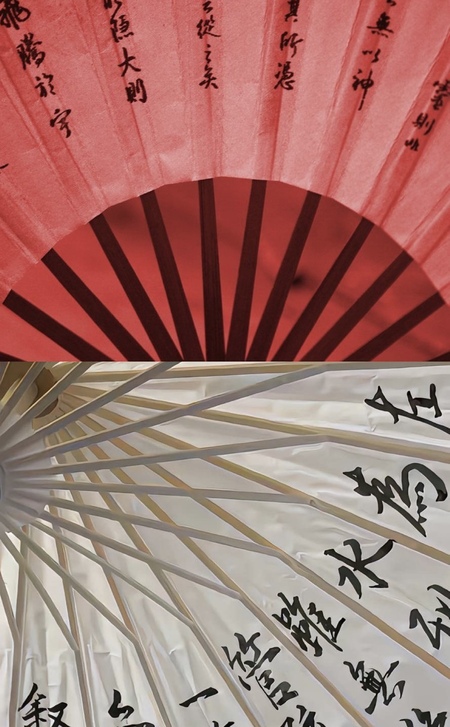
Chinese painting integrates not only artistic elements but also literary ones. Typically, the canvases feature ambiguous figures carrying a hidden message, alongside numerous Chinese characters that clarify the essence of the narrative.
Japanese painting is mystical and enigmatic. It is characterized by a wide variety of genres and styles and serves to convey the state of the soul. Nature imagery is also employed as a vessel for the divine essence. This tradition originated under the influence of China but eventually became a part of Japanese traditions.

The subject of this research is Chinese and Japanese painting, with an emphasis on their cultural, stylistic, and historical characteristics. My study will examine various schools and directions within Chinese and Japanese painting.
This topic allows for an in-depth exploration of Eastern artistic traditions, which are a part of the global cultural landscape. Furthermore, Eastern painting has exerted a strong influence on Western art—a factor that attracts the attention of artists from around the world.
The relevance of this project lies in the necessity of understanding and respecting the traditions of other peoples. Studying this field helps illuminate the diversity of artistic approaches and their global impact.

In this research, I aimed to analyze and deeply explore the styles and techniques employed by Chinese and Japanese artists in their works of art.
While gathering material for this visual study, I relied on online sources that helped me analyze and understand the various painting genres, styles, and techniques utilized by Chinese and Japanese artists during the 16th–19th centuries.
The organizational principle of this project is based on studying this topic. To begin, I analyzed the historical aspects of Chinese and Japanese painting. In subsequent sections, I present the most significant aspects of the research that I was able to identify, culminating in conclusions in the final chapter.
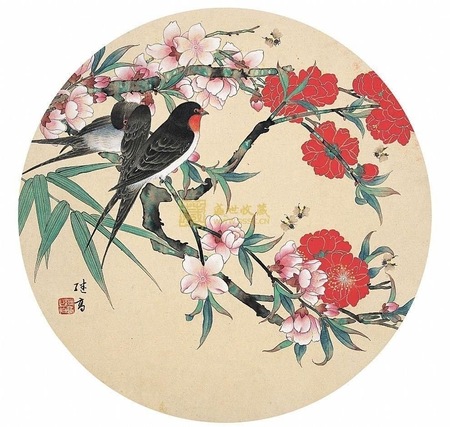
The 16th–19th centuries were a time of significant change in China and Japan. In China, internal transformations were underway, including dynastic shifts. Concurrently in Japan, there was a policy of isolation until the mid-19th century, after which the nation opened up to the outside world. All these historical factors strongly influenced the development of art in China and Japan, causing their paintings to become a reflection of social and aesthetic transformations.
The primary goal of this research is to identify the core characteristics, styles, and techniques of Chinese and Japanese painting during the specified period, as well as to explore the aesthetic aspects reflected in this artistic direction.
Thus, this project presents a comprehensive study of 16th–19th-century Chinese and Japanese painting, with an emphasis on their unique and unconventional characteristics.
Chinese Painting
Chinese painting as a form of visual art and one of the most vibrant Eastern traditions. It originated in deep antiquity, and with each passing year, the date of its inception moves further and further away. It developed under the influence of philosophical, cultural, and social factors.
Gongbi. Traditional Chinese Painting
«Chinese Perch.» Bian Shaomin
The laws of painting developed gradually, eventually becoming strict canons that remained unchanged for many centuries. The artist operated under a set of regulations dictating the materials they must choose and upon which the artwork was to be created. These rules were codified in treatises on painting theory.
«The Six Laws of Painting”—created by the artist Gu Kaizhi around the turn of the 4th and 5th centuries—included mandatory factors that artists were required to follow.
- Shenci — Spirituality
- Tianqiu — Naturalness
- Gautu — Composition
- Gushan — Structure
- Mose — Adherence to Tradition and Ancient Monuments
- Yunbi — High Mastery of Ink and Brushwork
Ma Yuan. «Ducks, Rock, and Ai Hua»
Ci Baishi.
The primary materials for paintings were silk and paper, which were stored in scroll form. Silk was mostly written on with colored mineral pigments, and paper was written on with black ink.
The scroll format could be horizontal or vertical, so the content of the artwork heavily depended on the chosen shape.
Zhen. «Fisherman»
Ci Baishi. «Meihua»
Qi Baishi. «Butterflies Among Flowers»
Three main genres:
1. Gen-u (people and things)
This genre encompassed all types of paintings where human figures held primary significance. Examples include portraits, historical or mythological scenes, and illustrations for literary works.
Scrolls were most often horizontal and very long, typically measuring around 10–15 meters. They were stored in ornate cases.
Zhou Fan. «Court Ladies with Flowers in Their Hair»
Yan Liben. «Masters of Different Eras»
Cheng Chanyu. «Festival on the Qinming River»
2. Shan-shui (Mountains and Waters)
The most beloved and widespread genre in China, it was also considered the finest compared to other genres. The landscape is the primary subject in this genre.
Landscapes in China have always been a representation of the artist himself. They were a fantasy rooted in his reflections, mirroring his state of mind and worldview. Through this genre, painters depicted fragments of nature that alluded to the world’s diversity and grandeur.