Concept for the «Apartment No…» wardrobe
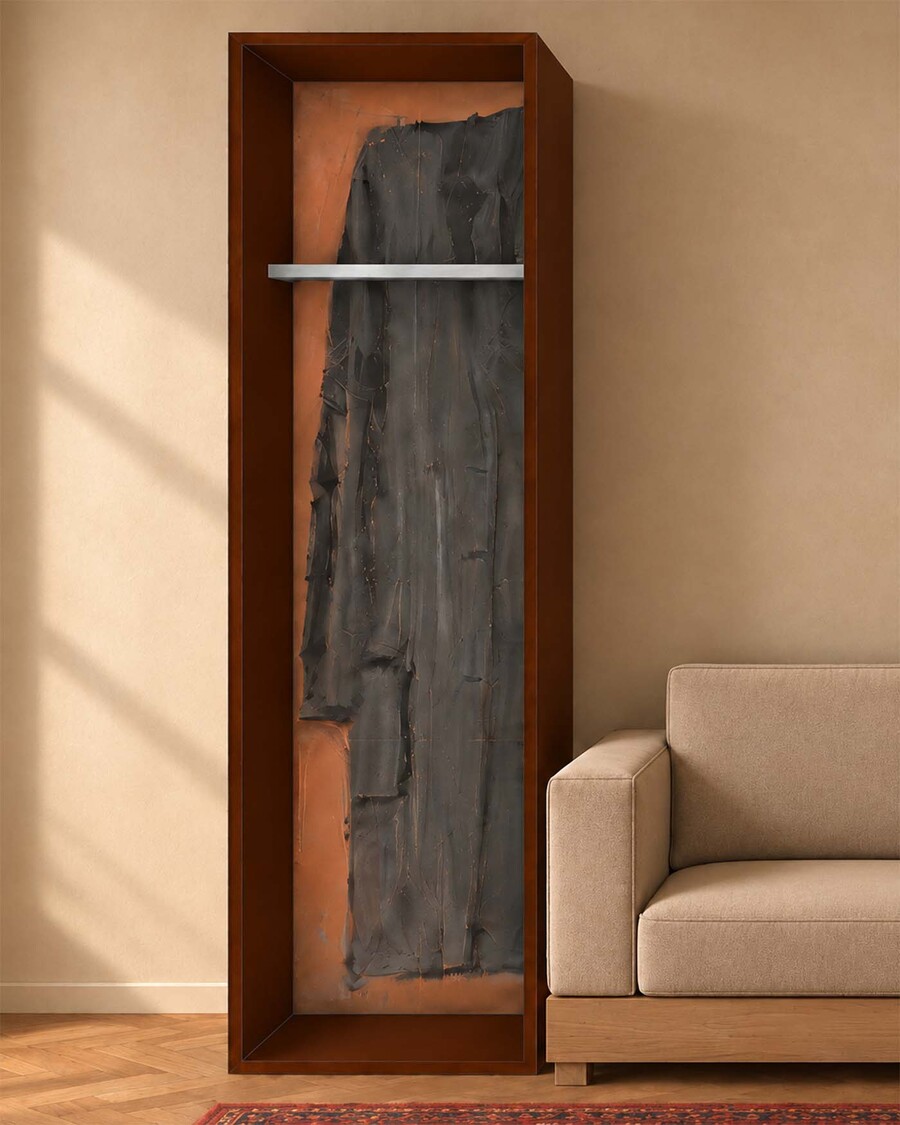
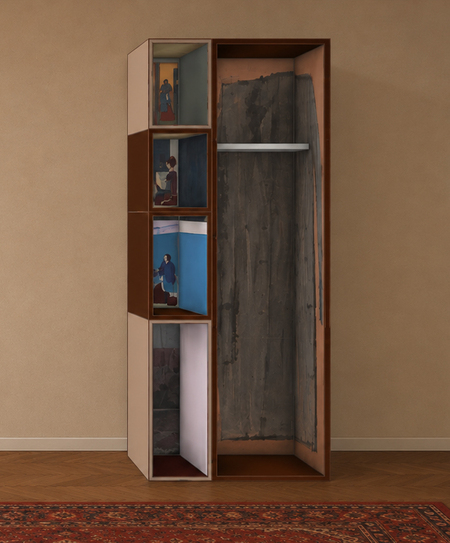
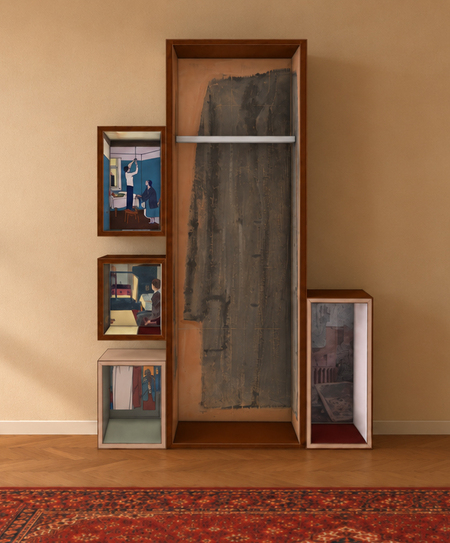
The wardrobe is a communal space—a Petersburg communal apartment assembled into a single object.
· It consists of individual cubic drawers of various sizes.
· The drawers are not rigidly secured: they can be moved, stacked, and swapped.
· Each time, a new configuration emerges.
· Modularity equals the communal apartment: room by room, neighbor by neighbor.
· The whole is built from parts that are constantly interchanging positions.
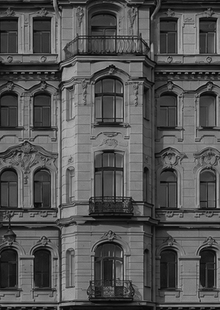
· The fronts are a multitude of doors, just like in a communal flat.
· Behind each door is a separate world: a shared corridor outside, a private life within.
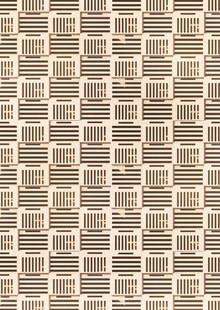
· The inside walls of the cabinets are covered in wallpaper. · The wallpaper is not a pattern, but rather scenes: vignettes of communal life, neighbors, conversations, and the silence behind a door. · The imagery is built upon the language of Moscow Conceptualism: Pivovarov, Roginsky. · The tone: irony, memory, the absurdity of daily life, and a person’s existence within shared space. · The St. Petersburg communal apartment—a city in miniature: density and isolation, the shared corridor versus the closed door, foreign lives living side-by-side. · The wardrobe replicates this logic. · It is a piece of furniture that can be assembled and reconfigured, much like a communal apartment itself. · It is an object where storage becomes narrative—an entry into another’s world. · Target audience: The wardrobe should be displayed where it is used—at exhibitions, in cafés, and among art aficionados.
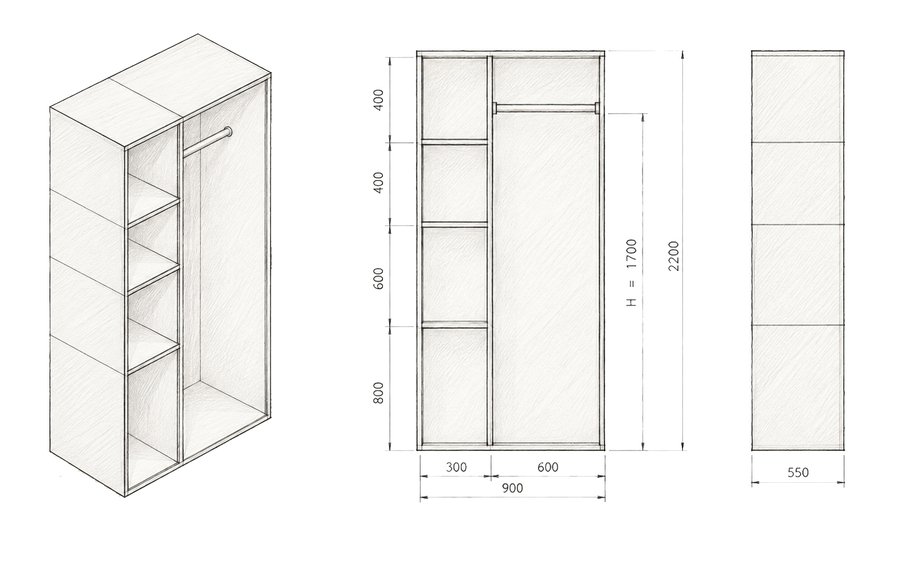
drawings
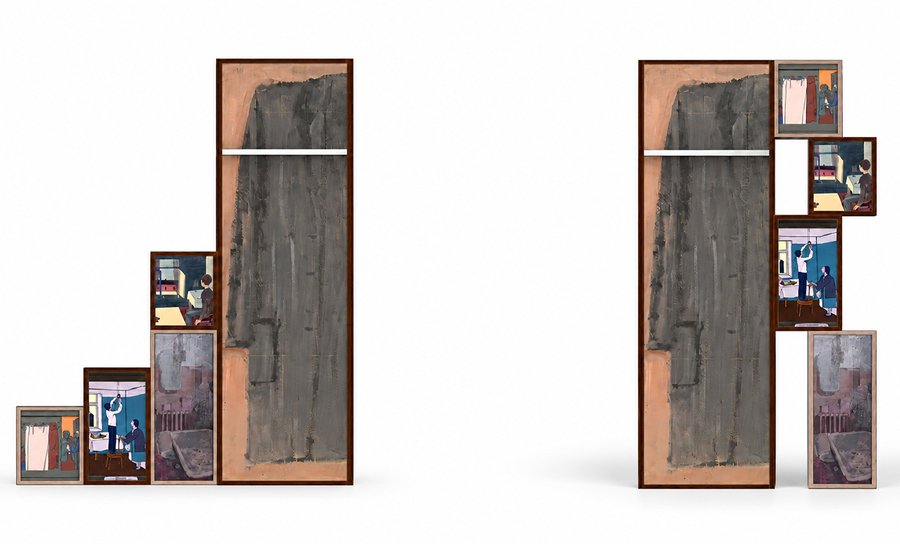
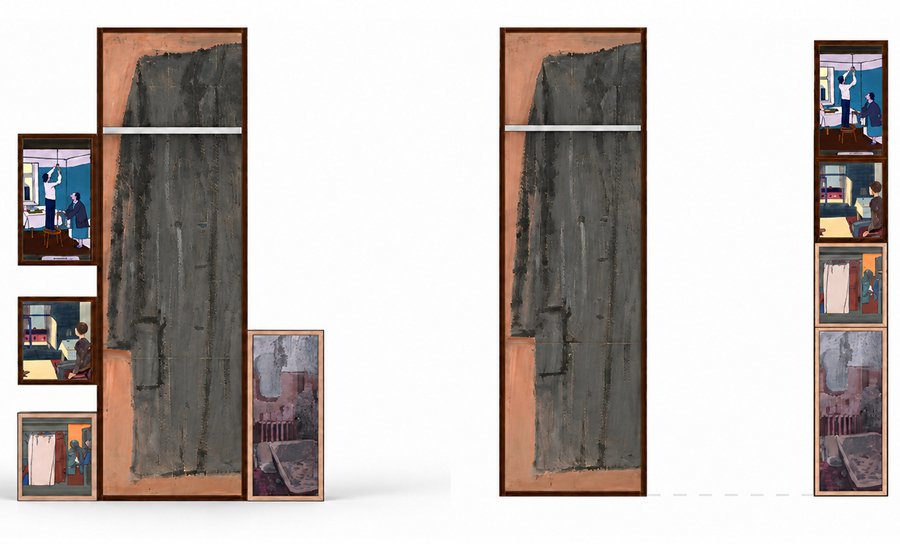
Non-standard assembly options
Visualizations
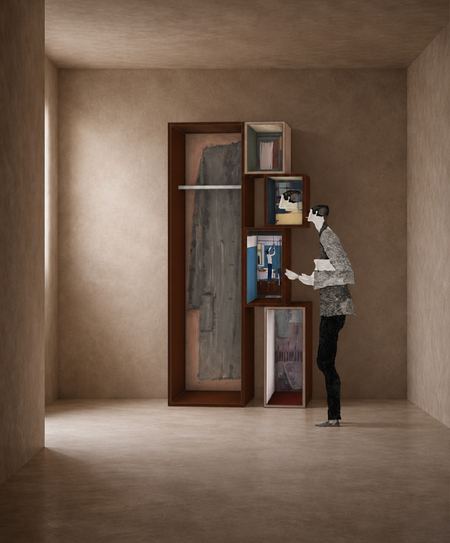
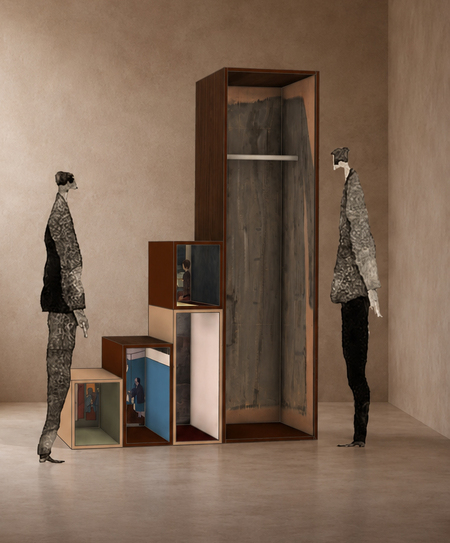
Exhibition
Department
apartment
apartment