Contents
1. Introduction
2. A Familiar Fairy Tale and a New Perspective
3. Heather Marshes and the Castle: Space and Power
4. The Image of Maleficent
4.1. Flight and Awakening
4.2. The Silhouette After Loss
5. Symbols
6. The Image of Aurora
6.1. Existing Among the Swamp Creatures
6.2. Guardians
6.3. Two Kisses
7. Digital Environment, Editing, and Sound
7.1. Two Ways to Use Computer Graphics
7.2. Scene Tempo and Soundscape
8. Finale
9. Conclusion
10. Sources
Introduction
On the poster for «Maleficent, ” Angelina Jolie’s face resembles a mask: pale skin, red lips, a black headpiece, and horns against a light background. The high contrast makes the figure instantly recognizable. For a viewer familiar with Disney’s „Sleeping Beauty“ from 1959, this is enough to identify her role. Robert Stromberg’s film retains the villainess’s hallmarks but alters the sequence in which the audience learns about her actions. Before the curse scene, viewers catch glimpses of Maleficent flying over the Heather Moors, protecting them, and trusting a man who will later steal her wings.
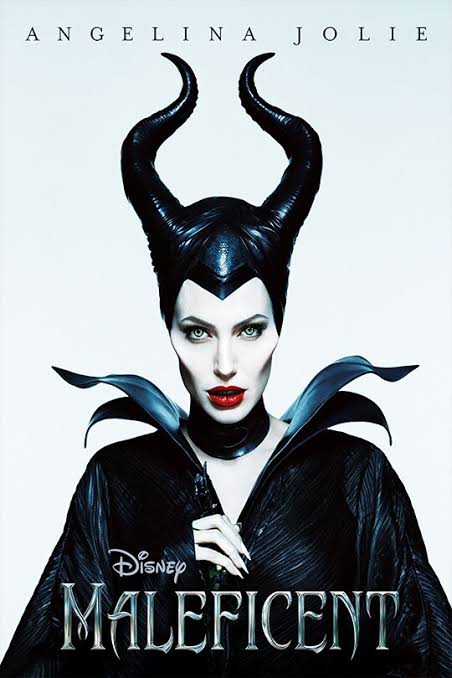
Poster for the film «Maleficent» (2014), directed by Robert Stromberg
This study focuses on the film «Maleficent» (2014), a 97-minute adventure fantasy. Director Robert Stromberg transitioned into directing from his background in art design and visual effects. The script was written by Linda Woolverton, with cinematography by Dean Semler and music composed by James Newton Howard. The lead roles were played by Angelina Jolie (Maleficent), Elle Fanning (Aurora), Charlize Theron (Stefan), and Sam Riley (Diaval). The American release began on May 30, 2014. The object of study is the film’s artistic world. The subject is the ways in which composition, light, color, costume, movement, sound, and digital effects alter the perception of the heroine and the relationships between the two worlds. The goal of this work is to determine how Stromberg transforms a familiar curse story into a narrative about betrayal, power, and care, without substituting the villain’s image with that of an impeccable victim. The working hypothesis is that the film reinterprets fairytale evil not so much by replacing one set of visual signs with another, but by altering their function. The dark cloak, horns, and staff remain, but Maleficent stops seeing Aurora solely as the enemy’s daughter. Her position relative to other figures, the meaning of gestures, the nature of touch, and the way she wields her power all change. This hypothesis is supported by internal comparisons within the film: flight and awakening after losing her wings, Aurora’s baptism and awakening, and the emergence and disappearance of the thorn wall. The primary material for this work is the film itself and its accompanying visual sequence. Production notes, interviews, and critical publications are used only when necessary to clarify the origin of a specific design choice or to separate the director’s intent from the audience’s interpretation. The analysis is built upon comparing shots and episodes within the single picture: first, what is visible or audible is described, and then the role of the specific detail within the scene is elaborated upon. For instance, a green glow accompanies a threat, but in itself, it does not allow us to label green as the sign of evil throughout the entire film.
Still from the film «Maleficent» (2014), directed by Robert Stromberg
A Familiar Tale and a New Perspective
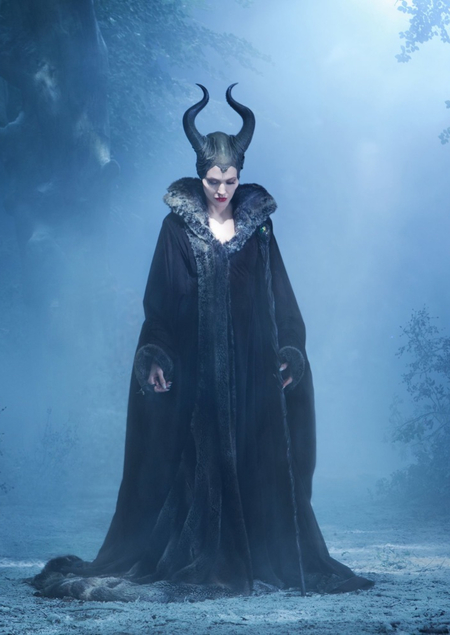
The production notes connect the motif of the sleeping princess to several literary versions: the French «Persephone Forest, ” known from a 16th-century publication, Giambattista Basile’s „Sun, Moon, and Talia“ from the 17th century, Charles Perrault’s 1697 fairy tale, and the Brothers Grimm’s „Rose Briar“ from 1812. The Screen Maleficent, which Stromborg reinterprets, appeared in Disney’s „Sleeping Beauty“ in 1959. For comparison, what matters here is not the entire narrative arc of the fairy tale, but the shift in the role of the character from whom the curse originates. In the 2014 version, her own story precedes that of the sleeping princess. The voiceover at the beginning invites the viewer to hear a familiar fairy tale anew. The film answers this invitation not with an explanation, but with the choice of the initial space: the audience is first allowed to acclimate in the Swamp. Young Maleficent flies, makes contact with the forest inhabitants, and meets Stefan. Here, her horns and wings do not signal danger—they belong to a being who feels at home. When a silhouette with the same horns appears later in the royal hall, the viewer will already know what the court members do not see.
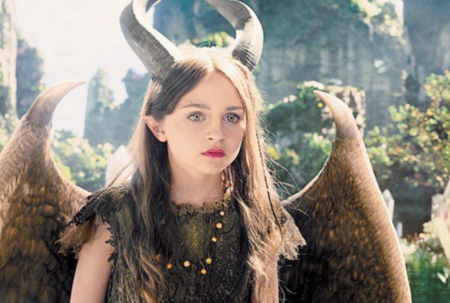
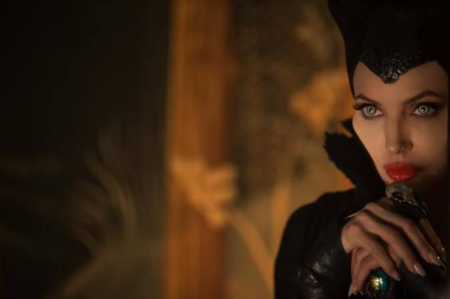
Stills from the film «Maleficent» (2014), directed by Robert Stromberg
Shifting perspective is vital for understanding Stefan. As a child, he crosses the boundary out of curiosity; his relationship with Maleficent is not dictated by the crown’s interests. The adult Stefan approaches the same heroine with the intention of gaining power. The gulf between the boy and the king does not allow for an explanation of the conflict through innate enmity between humans and magical beings. The film demonstrates how the possibility of negotiation yields to the drive to control another’s space and another’s body. This version features its own vested narrator. In the finale, the voice connects with Aurora, who knows Maleficent and the author of the curse, and who acts as her protector. Therefore, the final return to a familiar fairy tale does not mean that the previous story was entirely fabricated. The baptism, the curse, and the slumber did happen, but in themselves, they do not explain the origin of the hostility, nor do they account for who was by Aurora’s side when she could not be awakened.
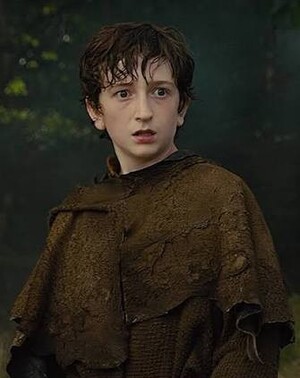
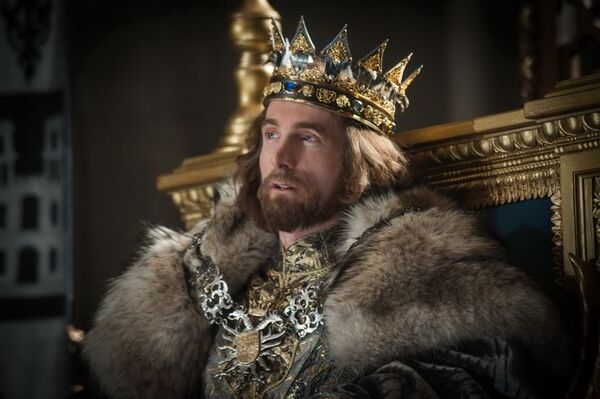
Stills from the film «Maleficent» (2014), directed by Robert Stromberg
Heather Moorlands and the Castle: Space and Power
In general, the gaze is not fixed on a single point. It moves from the water to the branches, from the dark trunks to the glowing creatures in the depths. The difference in scale here is significant: the silhouette of the tree is immediately apparent, while the local lights and small figures are discovered later. The environment is not merely defined by what the main character does within it. Life that is indifferent to her remains in the frame.
Still from the film «Maleficent» (2014), directed by Robert Stromberg
The daytime landscape is constructed differently: it features a discernible horizon line and tree silhouettes, with light filtering through breaks in the clouds. In the nighttime Marshes, blue, turquoise, and violet patches are scattered among the water, vegetation, and creatures. Such lighting provides the eye with orientation points but does not fully reveal the space. A cool tone can appear serene as long as the character faces no threat, and it can intensify a sense of alienation during a perilous scene. A saturated palette signifies a specific mode of existence for the environment, not its moral superiority.
A still from the film «Maleficent» (2014), directed by Robert Stromberg
In two nocturnal shots, it is clearly visible how diffused light alters the visibility of forms. In one, purple and pink points appear among the trunks and do not lead to a single center. In the other, a bluish patch first allows the figure to be distinguished, and then the space surrounding it. Both frames are dark, but the darkness here is not synonymous with emptiness—it holds details that the eye processes non-simultaneously.
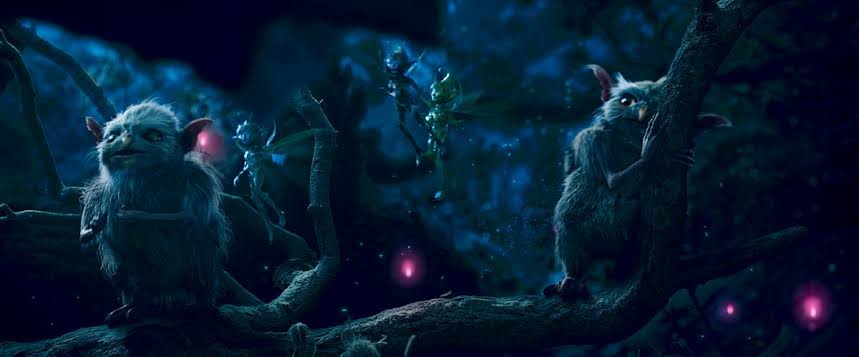
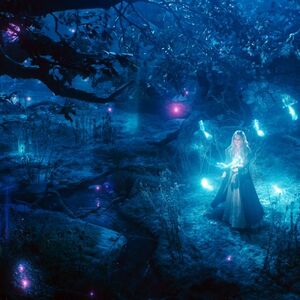
Stills from the film «Maleficent» (2014), directed by Robert Stromberg
In the castle, the gaze is organized by the architecture. The verticals of the columns, massive details, and elongated passages establish an axis around which the guards and courtiers are positioned. Directional light from the windows isolates individual figures and surfaces. The cool stone, metal, and marble emphasize the weight of the interior, yet they do not preclude a sense of solemn brilliance. In the frame featuring the courtiers, the light illuminates the central passage, while the flanking groups define its boundaries. Even without explanatory dialogue, it is clear that not everyone present can occupy the space with equal ease.
Still from the film «Maleficent» (2014), directed by Robert Stromberg
The contrast between two worlds is particularly evident in the scene of King Henry’s invasion. Structure, armor, and weaponry give his troop strength through the repetition of uniform forms. Opposing them is an environment that cannot be assessed by formation or field boundaries: diverse creatures move in varied ways, and the natural terrain does not align with the order of the advance. Henry comes to conquer territory, while Maleficent defends a habitat. This does not imply that all power in the Marshes is free from imposition. Later, Maleficent herself creates an obstacle that dictates who may cross the boundary.
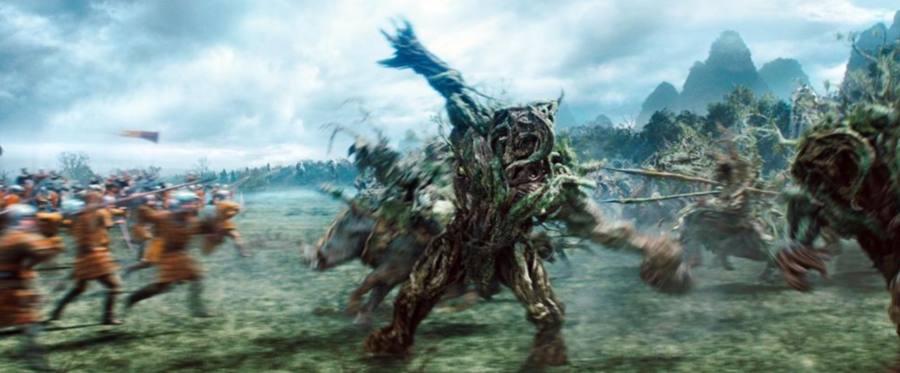
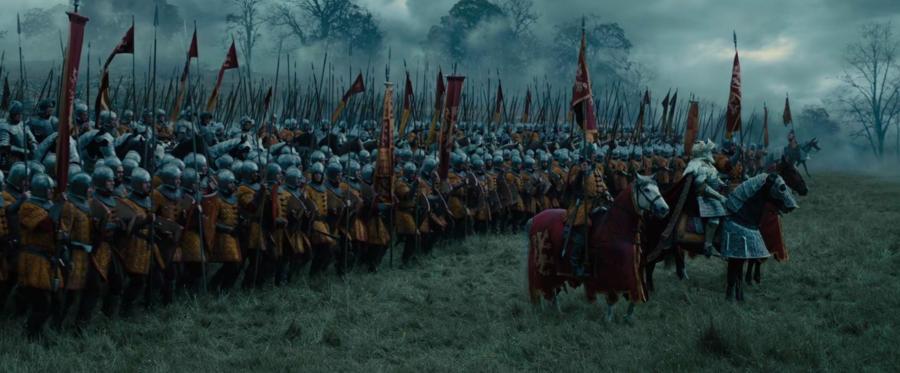
Stills from the film «Maleficent» (2014), directed by Robert Stromberg
In childhood, the boundary between Stefan and Maleficent was still permeable. In the frame of their meeting, the figures stand side-by-side, at the same level. The boy’s simple clothing and the fairy’s winged silhouette underscore the difference without turning it into a rift. The iron ring changes the nature of the scene: an object harmless to Stefan burns Maleficent. There is no direct moral equality between the decorative detail on the arm and the armor of Henry’s squad. The similarity lies elsewhere: the material that a person treats as an ordinary part of their world has physical consequences in the Moors. Later knowledge of such vulnerability becomes part of the logic of control.
Still from the film «Maleficent» (2014), directed by Robert Stromberg
Maleficent’s Wings, Staff, and Costume
Flight and Awakening
In the early scenes, the wings define how Maleficent utilizes space. She can choose altitude, change direction, and view the forest from above. In frames with the wings spread, the vertical line of her body intersects with the wide line of the feathers; her form becomes commensurate with the landscape. This is a different sign of power than Stefan’s crown: the wings demonstrate what the heroine can do, while the crown denotes the character’s place among people. In the initial episodes, flight simultaneously grants personal freedom and allows her to protect the Moors.
Still from the film «Maleficent» (2014), directed by Robert Stromberg
On the hill where Stefan puts Maleficent to sleep, there is no open combat. The danger arises from trust, not from a hostile environment. The scene itself is constructed so that the awakening becomes the decisive moment: the audience sees and hears Maleficent’s reaction before she can process the disappearance of her wings. Compared to wide shots of flight, this frame focuses on the face, the shoulder, and the attempt to understand what happened to her back. The void surrounding the body here is no longer a space for movement. The scream makes the loss palpable even in areas the frame does not show entirely.