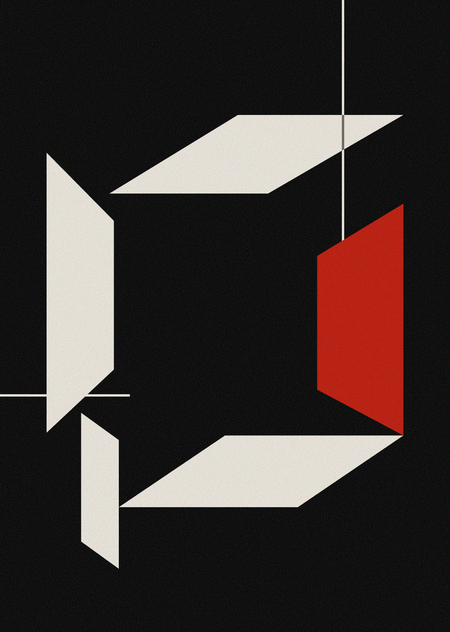
CONCEPT
A blank canvas. Externally: truly empty, appearing silent, indifferent. Almost intoxicated. In reality: full of tension with a thousand hushed voices, brimming with anticipation.
Rationale for Topic Selection
The theme of this visual exploration is emptiness and its significance in organizing composition in painting and graphic design, as it plays a crucial role in visuals and can serve multiple functions: creating balance, establishing rhythm, directing the viewer’s attention, and influencing the perception of form. Sometimes, a blank area in a visual composition is more than just a background—it is something greater.
In traditional painting, space often served as the environment in which the main subjects were placed. However, in 20th-century art, the relationship to space gradually shifted. Artists began to view unoccupied space as an independent expressive element.
In graphic design, empty space also evolves. Negative space, white space, margins, and the ratio between text and image are crucial tools of visual communication. They help establish hierarchy, convey mood, and direct the viewer’s attention where the designer intends.
Interest in this topic stems from the possibility of tracing how the perception of unfilled space has changed—from an artistic technique in painting to a conscious tool in graphic design.
Material Selection Principle for Visual Research
The research is based on paintings and graphic design from the 20th century, where empty space plays a significant role in compositional structure. The art portion features works by Kazimir Malevich, Piet Mondrian, and Josef Albers. The selection of these artists is motivated by their diverse approaches to spatial organization. In Malevich’s Suprematist compositions, the white background becomes an independent medium for the existence of geometric forms. In Mondrian’s works, the unfilled areas interact with lines and color planes, forming a system of visual equilibrium. Albers’s experiments with color and geometry allow us to examine how surrounding space influences the perception of form.
In the graphic portion of the research, the primary material consisted of posters, print graphics, and other visual works by representatives of the Swiss Style, particularly Josef Müller-Brockmann. This allowed for an examination of how the principles of organizing negative space are applied when creating visual messages. During the selection of works, the main focus was on compositional characteristics: the ratio of filled versus empty areas, element placement, scale, proportion, and visual balance. The material was chosen to allow for a comparison of artistic techniques in painting and their application in graphic design.
Research Structuring Principle
The study is structured as follows: it will begin by examining the understanding and perception of negative space in painting, followed by its application in graphic design. In each section, we will explore different ways form interacts with empty space.
The first part will focus on the concept of empty space and its role in visual composition. It will examine the notions of figure and ground, filled and unfilled space, and their impact on image perception.
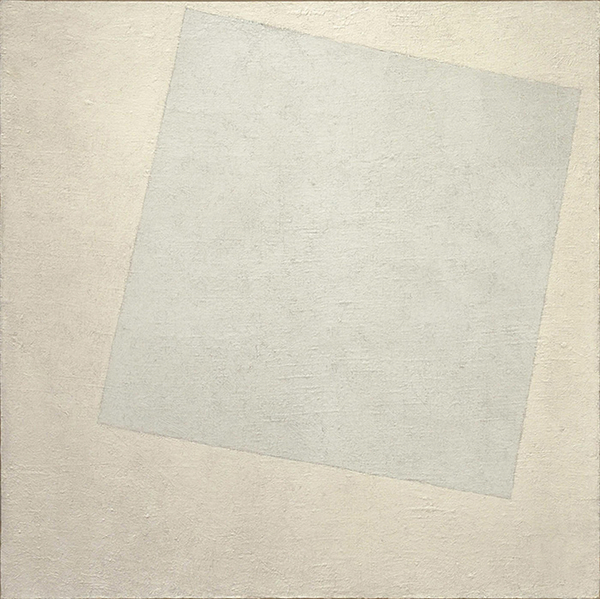
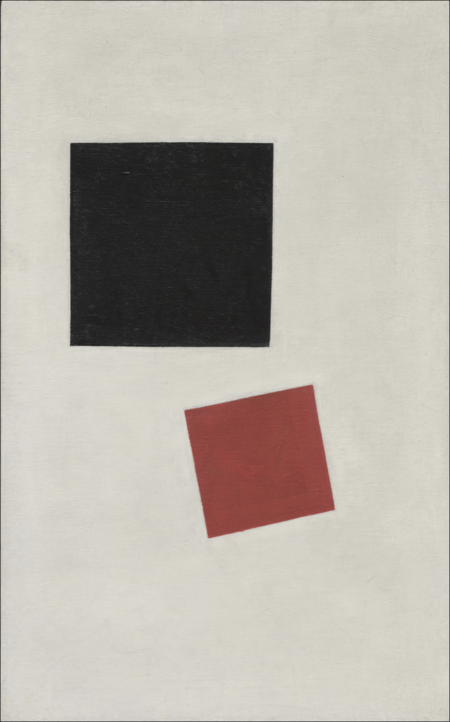
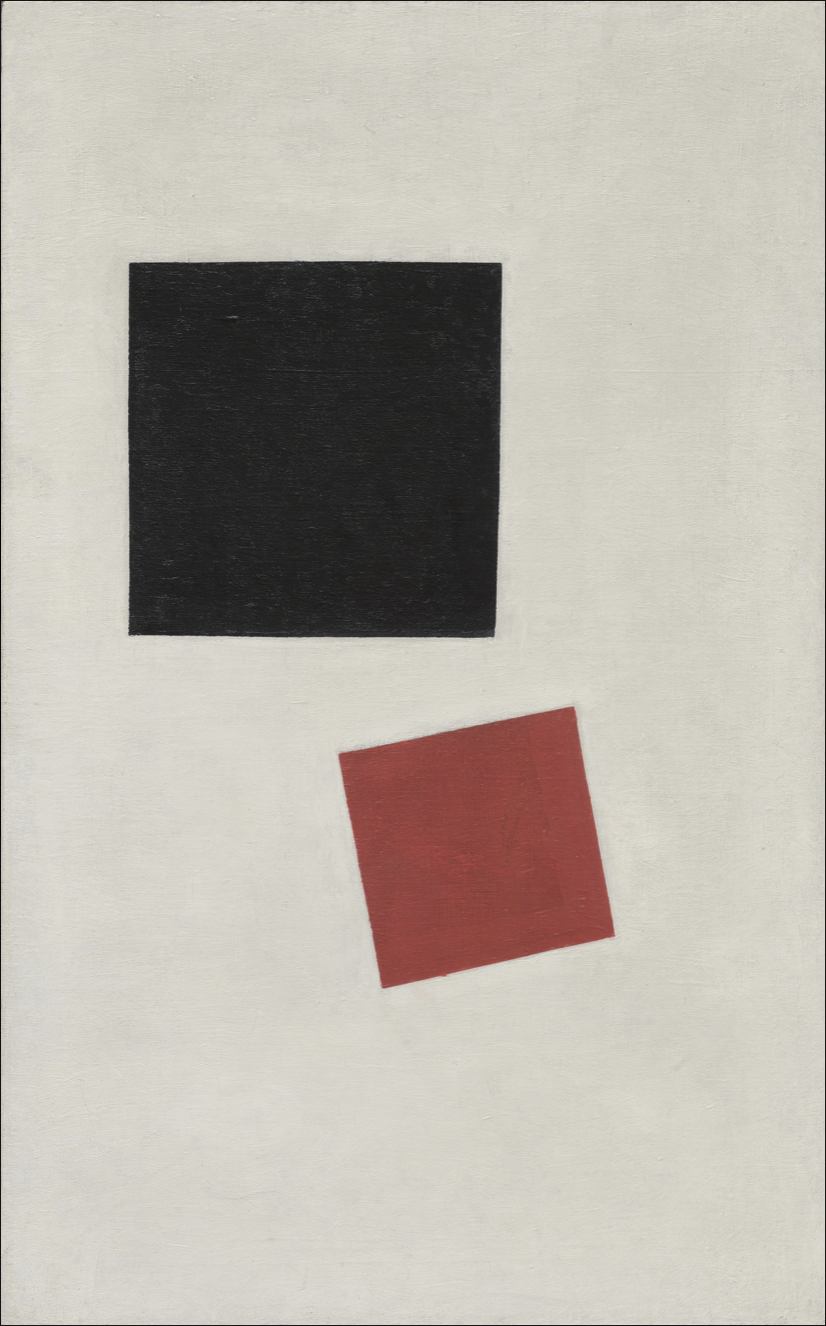
The second part will be dedicated to Kazimir Malevich’s Suprematism. Using examples from his works, it will be explored how the white background ceases to be perceived solely as a base for the image and becomes an essential part of the artistic concept.
The third part will explore the principles of Piet Mondrian’s Neoplasticism. The primary focus will be on the interaction between lines, color planes, and unfilled areas, as well as the role of proportion and balance. The fourth part will be dedicated to the experiments of Josef Albers. Using his geometric compositions as an example, we will examine how surrounding elements and color environment influence the perception of form and space.
The fifth section will focus on the use of negative space in poster design and printmaking. Using the work of Josef Müller-Brockmann and other representatives of the Swiss Style, we will examine the principles of compositional balance, visual hierarchy, and information organization. The concluding section will compare artistic and design practices. This will allow us to identify universal principles of spatial organization and determine how the meaning of space has evolved when transitioning from pictorial composition to visual communication.
Principle of Selecting and Analyzing Textual Sources
For the textual foundation of the research, scholarly articles on art history and graphic design, museum catalogs, and various works by art critics from journals dedicated to visual composition were selected. These sources will be utilized to study the historical context, the characteristics of artistic movements, and the principles of compositional organization. Special attention will be given to theoretical materials concerning the interaction of figure and ground, negative space, visual balance, and compositional grids.
Key Research Question and Hypothesis
Key Question:
How did the perception of empty space in 20th-century painting evolve, and how were its organizational principles applied to graphic design?Hypothesis:
In 20th-century art, unoccupied space gradually shifted from being perceived as a secondary background to becoming an independent expressive element of the composition. Artistic experiments with the relationship between form and space influenced the development of visual organization principles, which were later adopted in graphic design. In graphic design, empty space became a tool for establishing compositional balance, visual hierarchy, and directing viewer attention.Navigation Menu
1. Concept
2. Navigation Structure
3. Empty Space as a Visual Composition Element
4.
5.
6.
7. Conclusion
8. Image Sources
9. Bibliography
Empty space as an element of visual composition
The foundation of any visual composition lies in the interaction between the objects depicted on the canvas and the space surrounding them. Free areas, the distances between elements, and unfilled regions influence the perception of the image as much as the forms themselves.
Composition theory utilizes the concepts of positive and negative space. Positive space is formed by the primary elements of the image, while negative space encompasses the areas around and between them. These parts do not exist independently; rather, they form a unified compositional structure.
Negative space is the empty, un-pictured area surrounding and within an object, which helps to define that object.
Thus, empty space is not merely the absence of an image, but a complete compositional element that helps organize forms and define their spatial relationships.
Figure-Ground Interaction
One of the fundamental principles of visual perception is the interaction between the figure and the ground. The figure is perceived as the main object, standing out against the surrounding surface, while the ground forms the space upon which it is situated.
However, their roles are not always static. In some images, the ground can acquire an independent form and become an object of perception itself. This demonstrates that the viewer perceives not only the depicted objects but also the space between them.
рис. 1

рис. 2

«Rubin Vase» is a well-known example of ambiguous or bistable two-dimensional forms, developed around 1915 by the Danish psychologist Edgar Rubin. (Fig. 1) «Kanizsa Triangle» is a classic optical illusion with apparent contours, first described by the Italian psychologist Gestalt Kanizsa in 1955. (Fig. 2)
The Relationship Between Form and Void
The perception of form depends not only on its inherent characteristics but also on the space surrounding it. The size of the negative space, the distance to other elements, and its placement relative to the format boundaries all influence the object’s visual meaning. If a form is surrounded by a large amount of open space, it becomes more noticeable, and its placement takes on particular significance. Conversely, if elements occupy nearly the entire image area, the composition is perceived as denser and more saturated. Therefore, altering the proportions between occupied and unoccupied areas can significantly impact the perception of even the simplest composition.
The Evolving Role of Negative Space in 20th-Century Art
In 20th-century art, the relationship to unfilled space gradually shifts. Artists begin to move away from traditional subject matter representation, focusing instead on the interaction between color, line, geometric forms, and the canvas plane.
Consequently, negative space is no longer perceived solely as a backdrop. It becomes an integral part of the artistic concept—influencing the placement and perception of forms, and sometimes acquiring independent meaning.
Супрематическая композиция: Белое на белом Казимир Малевич 1918
Чёрный квадрат и красный квадрат Казимир Малевич 1915
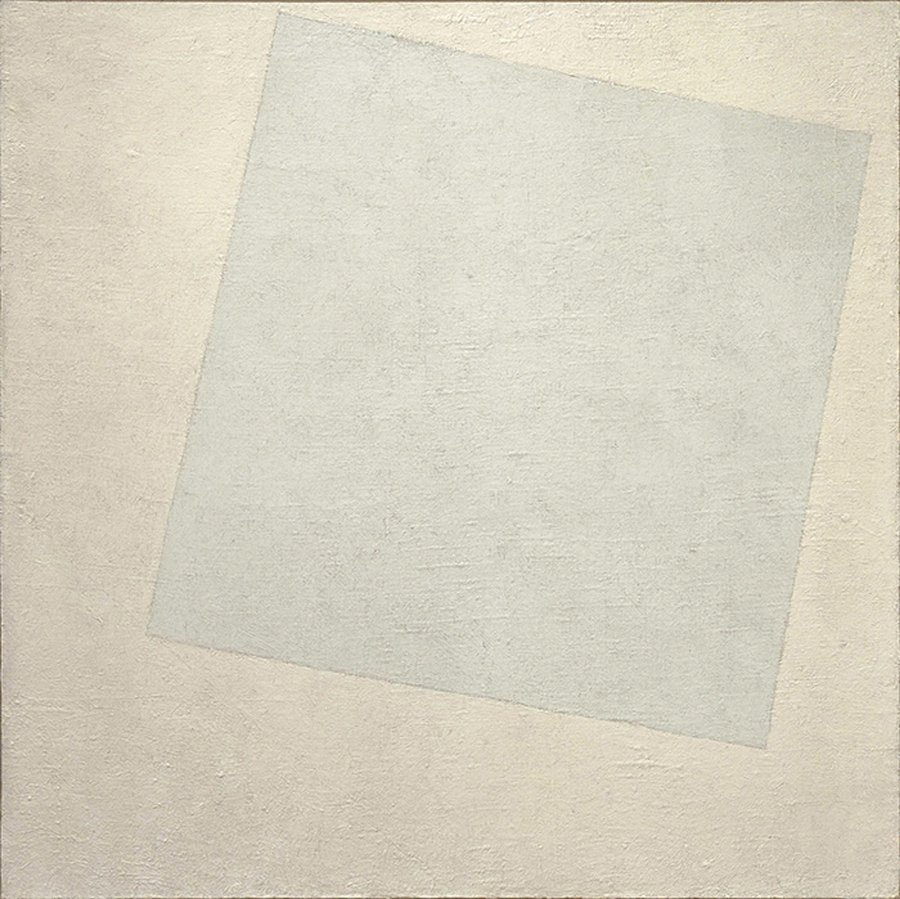
Suprematist Composition: White on White Kazimir Malevich 1918