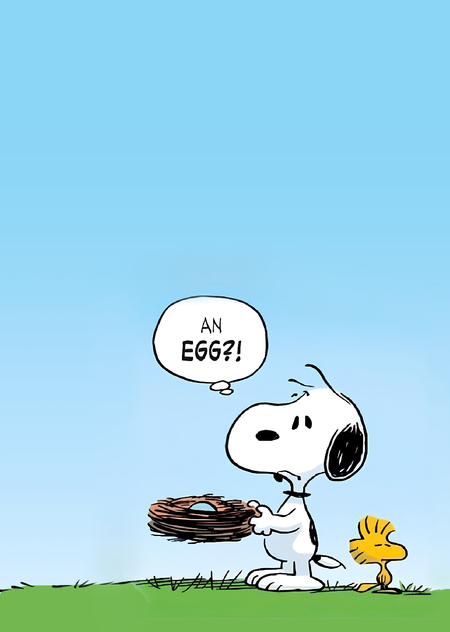
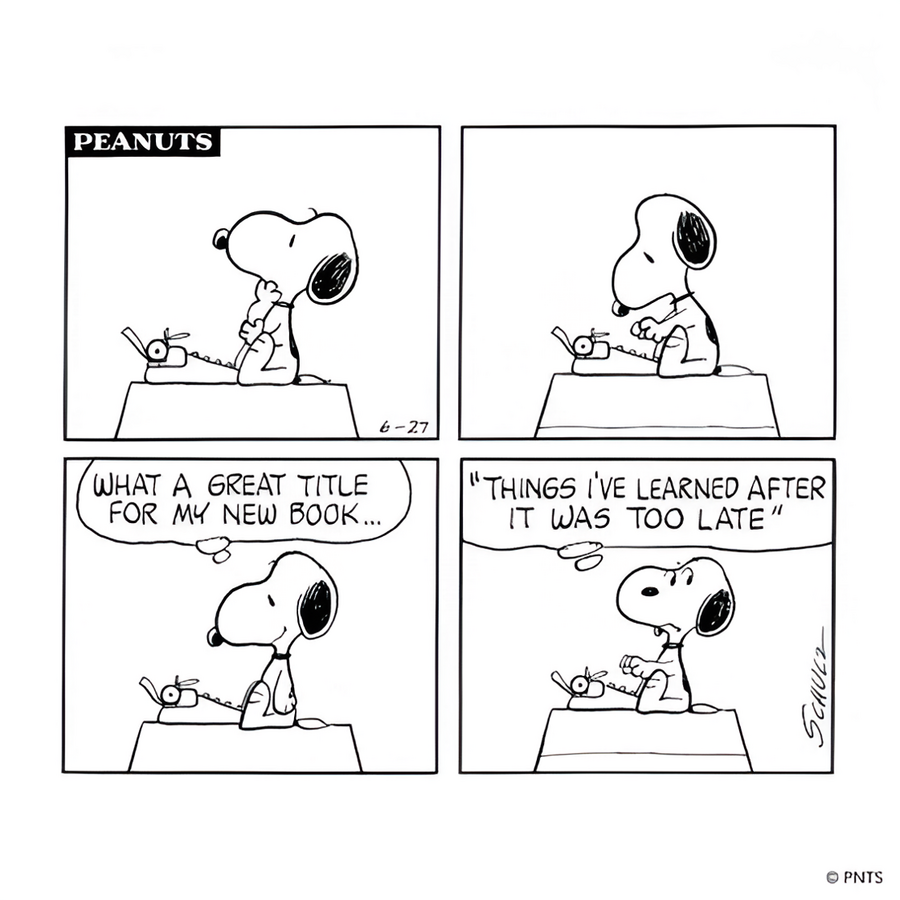
Charles Schulz. Peanuts.
In American newspaper comics, animals often become complete stand-ins for humans: they talk, work, form relationships, and participate in public life. While some characters almost completely acquire human features, others retain natural anatomy and behaviors. The interesting element is not only how artists imbue animals with human traits but also why they choose animals to depict human characters and social relationships. Anthropomorphism allows one to tap into cultural associations, exaggerate character traits, create humor, and develop social satire. From a visual perspective, it is crucial to explore how stylization, graphic design, facial expressions, and composition help create such figures. Comparing these characters helps us understand why animals have become a convenient medium for representing human behavior and how their appearance influences the perception of the narrative.
For the analysis, strips were selected that particularly highlight changes in animal anatomy, the use of human gestures and facial expressions, and the interaction of characters with their surrounding environment. Five American newspaper comic strips from the 20th and 21st centuries were chosen: George Herriman’s Krazy Kat, Walt Kelly’s Pogo, Charles Schulz’s Peanuts, Jim Davis’s Garfield, and Patrick McDonnell’s MUTTS.
The primary selection criterion was the presence of animal characters possessing human qualities. The chosen works demonstrate varying degrees of anthropomorphism—from animals that create their own semblance of human society to domestic pets that retain their natural forms. Individual strips that most clearly illustrate the artistic solutions will be used for the research.
The study is divided into three chapters.
The first chapter, «The Artistic Image of the Animal: From Natural Form to Human Character, ” is dedicated to the artistic tools of anthropomorphization: stylization, graphic design, and composition.
The second chapter, „Why Animals? The Artistic and Semantic Functions of Anthropomorphism, ” examines the reasons for using animals to represent human character, social relations, and satire.
The third chapter, „Models of Anthropomorphism in American Newspaper Comics, ” is dedicated to comparing different approaches to depicting animals in human roles.
Jim Davis. Garfield. 1980.
The source material will consist of academic publications on the history and theory of comics, studies on anthropomorphism, museum artifacts, archives of newspaper strips, and interviews with artists. Textual sources will be used to examine the historical context, familiarize ourselves with the artistic approaches, and study the statements of comic creators. The primary focus will be on the visual analysis of original strips, and the resulting observations will be compared with existing research.
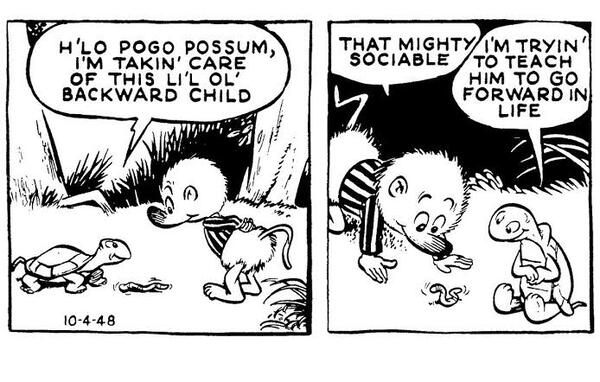
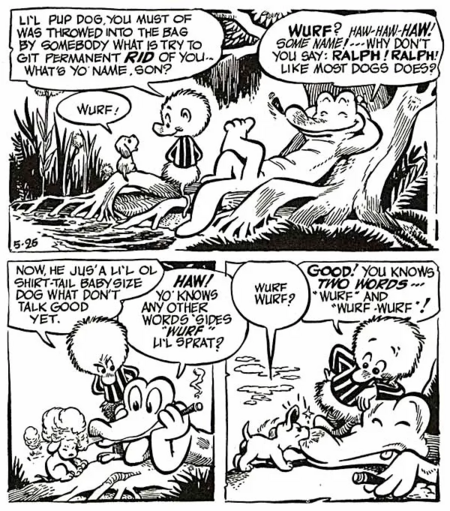
What visual devices are used in American newspaper comics to grant animals human traits, and why are animal images specifically used to depict human characters, relationships, and social roles?
The use of animals allows artists to create expressive and conventionalized representations of human character and social relationships. Stylization, facial expressions, gestures, and composition help convey human qualities, while cultural associations with specific animals amplify a character’s personality or create comic contrast. Even if a character visually bears little resemblance to a real animal, they can possess a complex human nature.
Chapter 1. The Artistic Image of the Animal: From Natural Form to Human Character
In American newspaper comics, animals often behave like humans while still maintaining the appearance of cats, dogs, mice, or other beasts. Artists combine these characteristics in various ways: some drastically alter the proportions of the characters’ bodies and movements, while others remain very close to the animal’s natural form.
The drawing itself plays a major role in this. The body shape, facial expression, line quality, and character placement within the frame all help convey emotion and reveal personality. Sometimes, simply changing the position of the ears or the tilt of the head is enough to make an animal look thoughtful, irritated, or content.
This chapter examines how artists create these images using stylization, graphic design, and composition.
1.1. Stylization and Transformation of Animal Forms
In newspaper comics, artists often simplify animal anatomy: they enlarge heads, alter body proportions, and make limbs more dynamic. This allows characters to perform human actions while maintaining a recognizable appearance. In George Herriman’s Krazy Kat, the cat Crazy has an elongated torso and flexible limbs that allow it to stand upright and gesture. Its proportions can change from panel to panel, giving its movements greater freedom.
George Herriman. Krazy Kat, circa 1928.
In Walt Kelly’s Pogo, the animals appear rounder. For example, the alligator Albert maintains a long snout and massive body, but can stand on his hind legs and hold objects. Thus, the natural form blends with human movements.
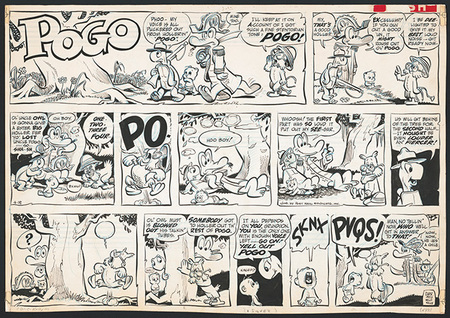
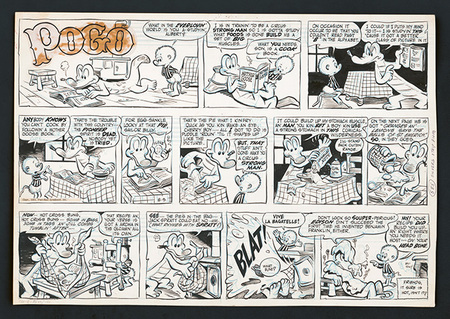
Walt Kelly. Pogo, August 5, 1951
In Charles Schulz’s Peanuts, the changes are especially noticeable in the character of Snoopy. In the early strips, he moved on four paws, but gradually he began to walk upright and adopt human postures. Despite this, his long ears and distinctive snout remained unchanged.
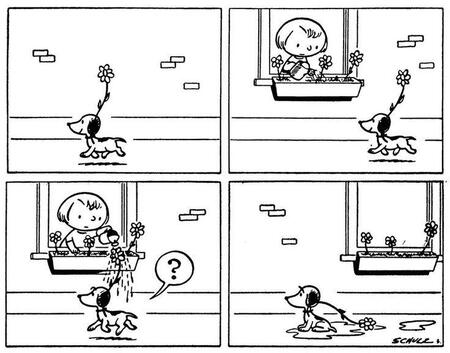
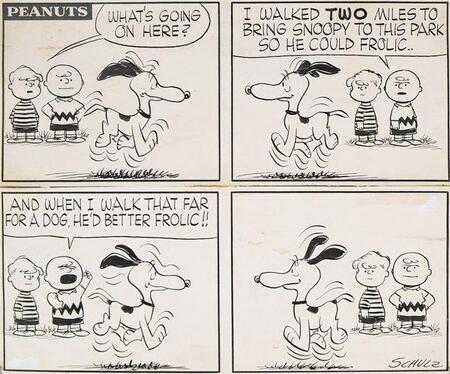
Charles Schulz. Peanuts. 1950–1960
In Jim Davis’s Garfield, stylization helps accentuate the character’s personality. His round body, short legs, and large eyes make Garfield visually heavy and lazy. Over time, his physique became more compact, but the characteristic rounded silhouette remained.
Jim Davis. Garfield, June 19, 1978.
Thus, altering proportions helps not only to adapt animals to human actions but also to emphasize the peculiarities of their characters.
1.2. Composition and Visual Storytelling
Composition helps illustrate the relationships between characters and control the narrative progression. The placement of figures, the distance between them, and the sequence of panels all play a vital role. In Krazy Kat, Herminghaus frequently experiments with the scale and arrangement of panels. For example, in the April 19, 1942, issue, the sequence of images gradually reveals the comedic situation involving Ignatz, who is performing on a trapeze.
George Herriman. Krazy Kat. Giddil opp, June 8, 1941.
Walt Kelly’s Pogo frequently features group scenes. Animals of various sizes are positioned next to each other, and the direction of their gazes and gestures helps reveal the relationships between them.
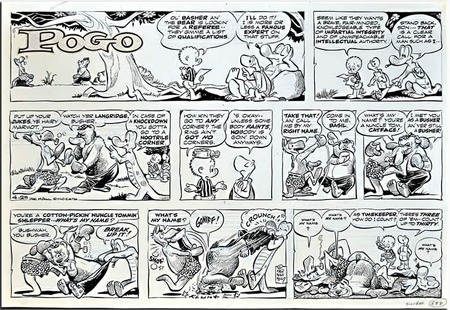
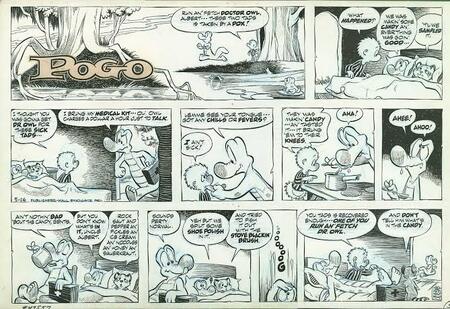
Walt Kelly. Pogo, April 12, 1953.
In Garfield by Jim Davis, the action most often takes place in familiar domestic settings. The constancy of the environment allows the focus to remain on the characters' behavior and dialogue.
Jim Davis. Garfield. 1980
In Patrick McDonnell’s MUTTS, an almost empty background is frequently used. This allows the viewer’s attention to focus on the animals' movements, and the distance between them helps convey the mood of the scene.
Patrick McDonnell. MUTTS. January 10, 2011
Chapter 2. Why Animals? Artistic and Semantic Functions of Anthropomorphism
Animals in American newspaper comics are not just used to create unusual or amusing characters. Their figures allow for the depiction of human characteristics through familiar associations, the representation of society in a symbolic form, and the satire of human habits. Moreover, the choice of a specific animal often influences how the reader perceives the hero even before learning about their personality.