PART I. INTRODUCTION
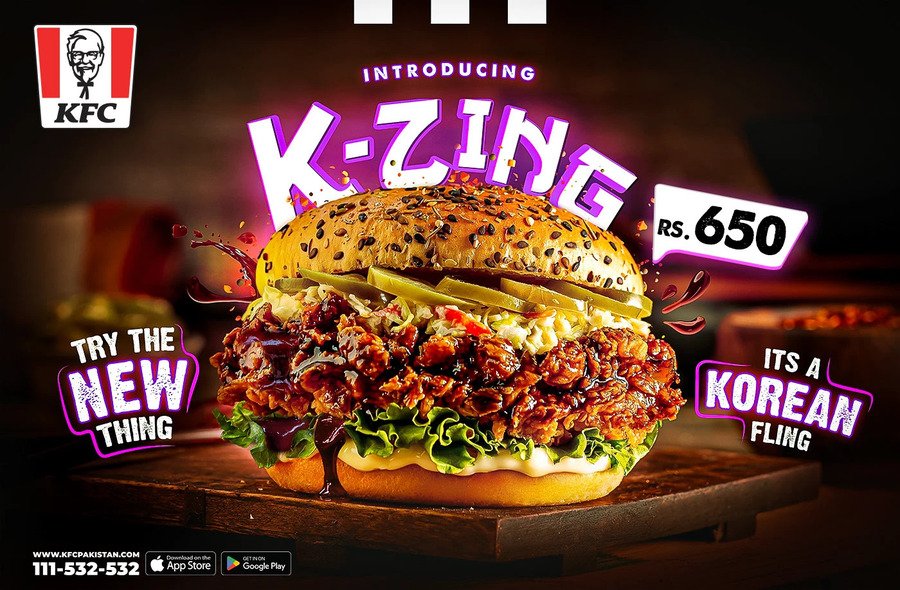
Advertising food traditionally aims to stimulate appetite. Manufacturers use appealing imagery, saturated colors, and carefully constructed compositions to generate a desire to try the product.
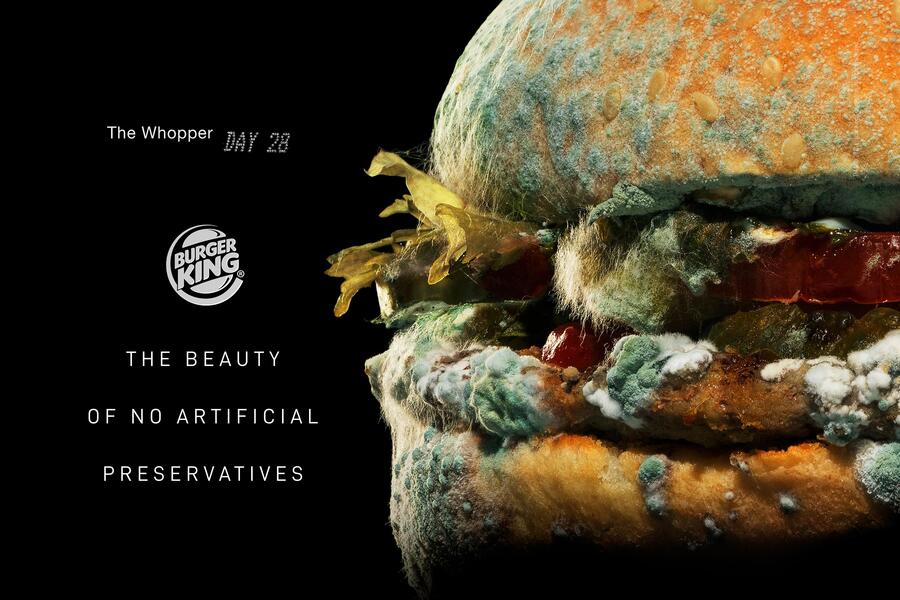
In 2020, Burger King broke this rule. Instead of the usual mouth-watering burger, the brand featured a Whopper slowly becoming covered in mold. The campaign, titled «Moldy Whopper, ” became one of the most discussed advertising projects of the year.
This raises a question: how did an image intended to repel the consumer become viable for product promotion?
Research Subject
The object of the study is the Moldy Whopper advertising campaign, presented by Burger King in February 2020.
The central material of the campaign was a video demonstrating the decomposition of a Whopper over 35 days. This concept was also realized in outdoor, print, and digital advertising.
The project was developed with the participation of the agencies INGO Stockholm, DAVID Miami, and Publicis. The campaign received international recognition and several prestigious awards in the fields of advertising and design.
Subject and Relevance of the Study
Research topic: the use of a visually repulsive image as a tool of commercial communication.
The Moldy Whopper is interesting because it challenges conventional notions of advertising appeal. The brand consciously displays its product in a state that is usually hidden from the consumer.
This example allows us to examine how violating visual expectations affects audience attention, how an image acquires advertising meaning, and under what conditions a provocative tactic can be effective.
Research Question
How did Burger King manage to turn an image of a spoiled product into an argument for its quality?
To answer this, we must examine the context of the campaign’s launch, the advertising objective, the logic of the creative solution, and the perception mechanisms.
A particular focus should be given to the question of effectiveness: is an unusual image enough to capture attention, or does successful communication require a deeper connection between the visual image and the advertising message?
Research Hypothesis
A visually repellent image can become an effective tool for commercial advertising if the negative emotional response is linked to a genuine product advantage and helps convey the advertising message. The success of Moldy Whopper is hypothesized to stem not from the use of a shocking image itself, but from its underlying conceptual justification. To test this hypothesis, we will examine the original advertising materials, the characteristics of their perception, published campaign results, and the limitations of the chosen strategy.
PART II. CONTEXT AND MARKETING OBJECTIVE
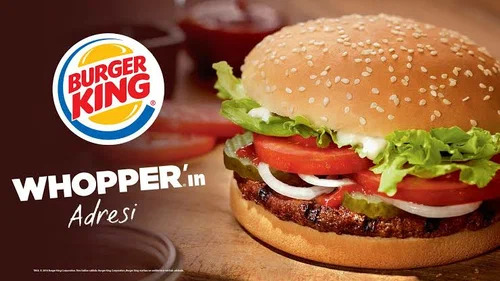
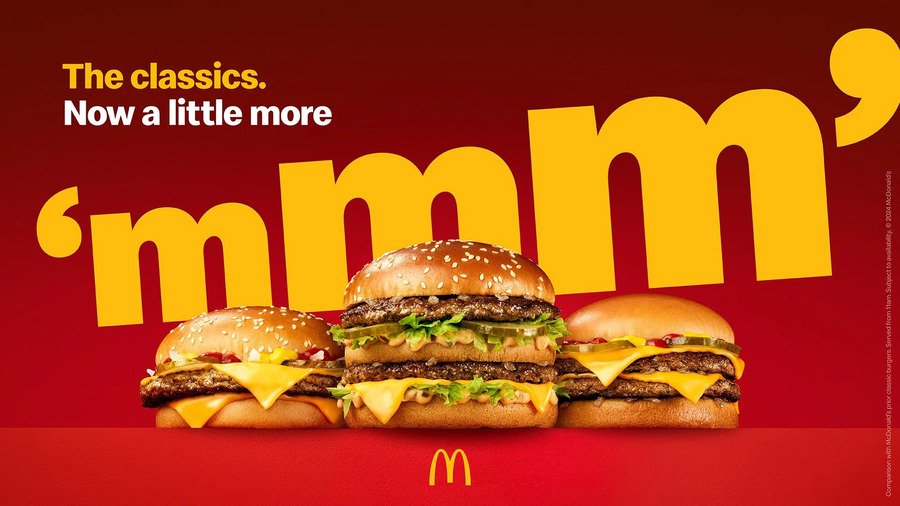
Food product advertising is traditionally built around visual appeal. This is especially noticeable in the fast-food category, where close-ups, vibrant colors, and meticulously arranged lighting are designed to stimulate appetite and the desire to purchase the product. This visual language has long become standard for the category. While differing in brand identity and communication style, brands employ similar methods to showcase food: they emphasize the freshness of ingredients, the juiciness of the meat, and the attractiveness of the finished dish.