Table of Contents
01. Concept
02. The Genesis of Burlesque
03. 1900s–1920s: From Musical Theater to Stage Routines
04. 1930s–1950s: The Flourishing of Classic Burlesque
05. 1960s–1980s: The Entry of Strip Music into Mass Culture
06. 1990s–2000s: The Revival of Burlesque and Its Influence on Pop Music
07. 2010s–2026: Modern Burlesque and Musical Freedom
08. Burlesque’s Influence on Musical Culture
09. Conclusion
Concept
Burlesque is a performing art that merges music, dance, theatrical presentation, and character play. Today, it is most often associated with striptease, cabaret aesthetics, lavish costumes, and a jazzy sound. However, behind this familiar presentation lies a much more diverse history, where music has always held a distinct place.
The interest in this topic arose from a desire to understand why burlesque is so closely associated with a specific musical aesthetic. When we imagine a classic burlesque show, our minds immediately conjure images of the saxophone, upright bass, slow jazz melodies, and the characteristic rhythm of a striptease. But has jazz always been the foundation of the musical accompaniment for burlesque? What did performances sound like before this established image took hold? And why can artists perform today not only to jazz pieces but also to heavy rock, electronic music, or modern pop hits?
Moreover, music in burlesque serves more than just a background function: it dictates the pacing of the performance, builds tension, emphasizes the performer’s movements, and helps reveal the intended character. The same piece of music, whether performed in a concert setting or within a burlesque act, can be perceived in entirely different ways.
Of particular interest is the relationship between burlesque and popular music. On one hand, the genre constantly borrowed musical works and adapted them to its own stage objectives. On the other hand, its aesthetic gradually moved beyond theatrical venues to become part of mass culture. Elements of cabarets, theatrical provocation, costumed performances, and a distinctive manner of audience engagement have been reflected in music videos, concert shows, and the work of individual artists. Therefore, it is important to examine not only how the music within burlesque itself has changed, but also what influence its performance culture has had on other musical genres.
Central research question: How did the musical sound of the burlesque evolve from the 19th to the 21st centuries, and was this genre able to influence music culture beyond its own stage?
The chronological scope of this research covers the period from 1900 to 2026. The theoretical foundation of the study will be built upon works dedicated to the history of American burlesque, the evolution of striptease, and contemporary stage culture. Robert K. Allen’s book, Horrible Prettiness: Burlesque and American Culture (1991), examines the development of American burlesque within the context of mass culture and the theatrical industry. Rachel Steyr’s Striptease: The Untold History of the Girlie Show (2004) will allow for an investigation into the history of striptease, the formation of classic burlesque, and its flourishing in the 20th century. To understand the genre’s original musical components, the article From Satirical Piece to Commercial Product: The Mid-Victorian Opera Burlesque and its Bourgeois Audience by Joanne Cormack (2020) will be utilized, which focuses on the use of operatic and popular music in Victorian burlesque. The modern phase will be examined by referencing Lynn Sally’s study, Neo-Burlesque: Striptease as Transformation (2021), which explores the resurgence of burlesque, its theatricality, and the reinterpretation of traditional striptease.
The Origins of Burlesque
Burlesque developed as a theatrical genre rooted in parody, comedy, and exaggeration. In American theater, it gained widespread recognition thanks to British actress Lydia Thompson and her troupe, British Blondes, who arrived in New York in 1868. Their performances combined music, dance, comic dialogue, and satire targeting famous literary works, ancient myths, and societal norms.
Music held a significant place in burlesque from the very beginning. Productions utilized already famous tunes, adapted song lyrics, and combined operatic arias with folk motifs and popular compositions. For instance, in the production Po-ca-hon-tas; or, the Gentle Savage (1855), the musical segment accounted for more than a third of the show and incorporated reworked folk songs and melodies from Mozart’s Don Giovanni.
The original musical characteristic of the burlesque was not in a specific sound, but in the way music was used—familiar melodies became a tool for comic reinterpretation. [1]
1900s–1920s: From Musical Theater to Stage Performances
In the early 20th century, American burlesque gradually evolved into an entertainment theater comprised of individual musical, dance, and comedic acts. Music began to become a self-sufficient part of the performance. During this time, ragtime gained popularity, followed later by jazz, which shaped the sound of American popular entertainment.
We can gauge the musical arrangements of burlesque through theatrical press coverage. For example, an issue of The Billboard from March 13, 1920, describes the production The Singing Girl at the Brooklyn theater Casino. Hal B. Dyer is credited with the music, and the performances were accompanied by Dr. Messenger’s Orchestra, choral singing, and dancing.
In the early 20th century, burlesque music had not yet established a unified genre sound. It followed the popular musical trends of its time, and the main objective was to create a rhythmic and diverse entertainment program. [2]
1930s–1950s: The zenith of classic burlesque
During the 1930s–1950s, the most recognizable image of American burlesque began to take shape. Performances became more theatrical, and the solo acts of female artists gradually moved to the forefront. Music started playing an especially vital role in setting the atmosphere and directing the audience’s attention.
One of the most famous performers of this period was Sally Rand, who became renowned for her dancing with enormous feather fans—the Fan Dance. Her act first gained wide recognition at the 1933 World’s Fair in Chicago. It was accompanied musically by Claude Debussy’s composition, Clair de Lune.
The choice of classical music was crucial. Instead of an energetic dance melody, a slow, fluid, and dreamy composition was used. Its extended musical phrases allowed movements to build gradually, creating the sensation of continuous dance. Fans became an extension of the choreography, and the music helped sustain the illusion upon which the entire performance was built. In later versions of her act, Rand also utilized Frédéric Chopin’s Waltz in C-sharp Minor. [3]
Another significant figure is Gypsy Rose Lee. Her performances differed from traditional striptease: the artist emphasized humor, theatricality, facial expression, and audience interaction. A recording of her number, The Psychology of a Stripteaser, survived in the film Stage Door Canteen (1943).
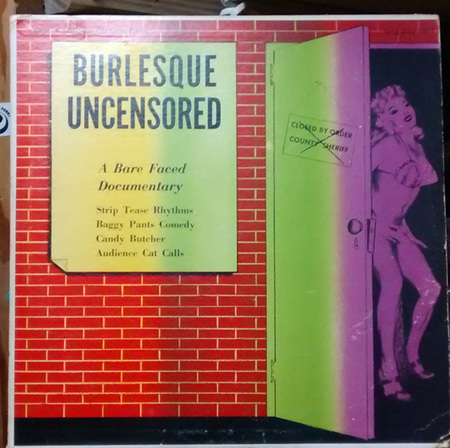
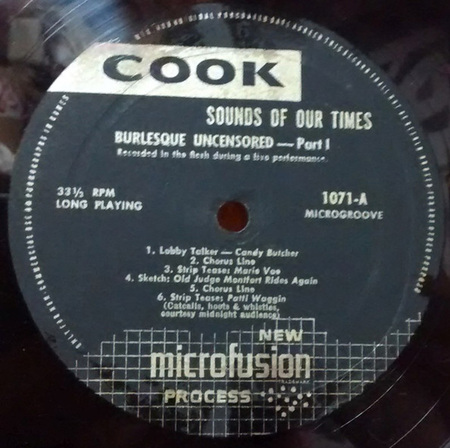
A significant sonic artifact of the era is the record Burlesque Uncensored (1954), released by Cook Records and later archived by Smithsonian Folkways. The recording features performances by artists Marie Voe and Patti Waggin, musical interludes, and individual compositions intended for striptease acts.Unlike the performances of Sally Rand, this recording presents a sound more familiar to American vaudeville: brass instruments, saxophone, clarinet, piano, and drums. The music becomes more rhythmic and more closely tied to the performer’s movements. It doesn’t just set a mood—it actively helps delineate specific moments within the performance. [4]
In 1955, the films Varietease and Teaserama were released, featuring Bettie Page and Tempest Storm. These films preserve the visual elements of classical burlesque—the stage costumes, dance routines, sets, and performance style. They also offer a glimpse into the growing importance of the artist’s individual image.
It is during this period that burlesque finally transforms from predominantly comedic musical theater into a performing art where music, movement, and costume function as a unified whole.
1960s–1980s: Striptease enters mass culture
In the 1960s, an interesting shift occurred: music associated with burlesque began to exist beyond the performances themselves.According to Fred Bronson’s book, The Billboard Book of Number One Hits (1988), David Rose composed the initial musical segment in 1958 for the television show Burlesque, which starred Dan Daly and Joan Blondell. The music was intended for a scene where characters were talking behind a dressing room door while a stripper performed on stage. Rose composed a short melody that was later developed into a full instrumental piece.In 1962, The Stripper was released on the B-side of the single «Ebb Tide.» Unexpectedly, the composition became a hit and reached number one on the American Billboard Hot 100 on July 7, 1962.
The Stripper, a musical piece, is an orchestral instrumental composition featuring expressive brass parts and the characteristic gliding transitions of the trombone. Its rhythm, deliberately theatrical sound, and comedic intonations create the recognizable image of a stripper. It is particularly noteworthy that the piece became popular not only among patrons of burlesque theaters. It crossed over into popular culture and transformed into a unique musical symbol of undressing. Even people who had never attended a burlesque show could recognize it by its distinct sound.