Navigation: [0] Concept [1] Historical Context [2] Project Goal [3] Film Examples [4] Conclusion
Research Concept
Fritz Lang’s «Metropolis» (1927) is one of the most significant examples of the interaction between music and image in silent cinema. Gottfried Huppertz, who wrote the original orchestral score for the film, utilized a leitmotif system to characterize characters, social groups, and key narrative conflicts. The music was created during the production of the film and was intimately tied to the editing process. The surviving 1927 piano score contains 1,028 cues for synchronizing the music with the visuals, testifying to its importance to the original artistic conception.
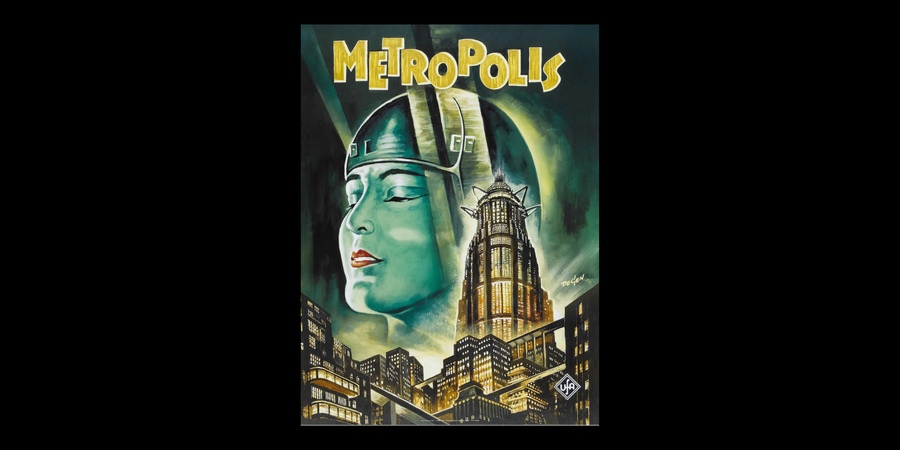
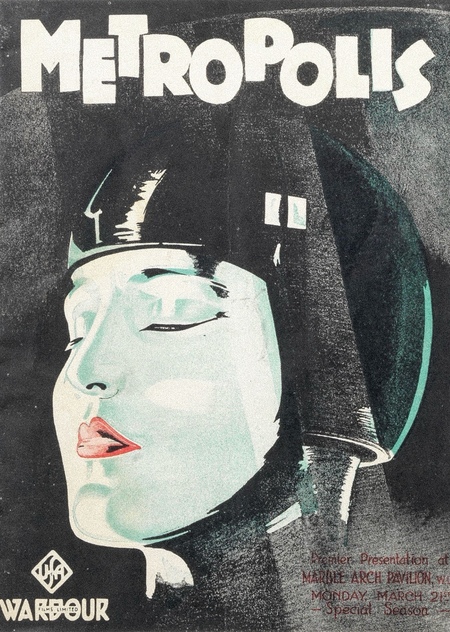
Poster for the film «Metropolis,» 1927
The score was based on a system of recurring musical themes that evolved depending on the action’s development. Hoppert utilized principles of late Romantic symphonic music and leitmotif dramaturgy, concepts that were further developed in the operas of Richard Wagner. The musical characteristics in «Metropolis» are assigned not only to individual characters but also to abstract concepts such as rebellion, love, and mediation.
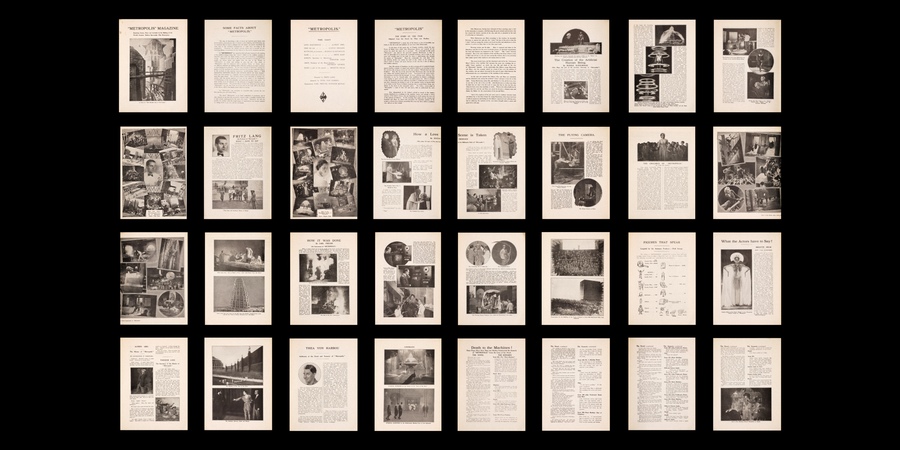
«Metropolis, ” film program, United Kingdom, 1927
The thematic connections highlighted by conductor Frank Strobel during the score reconstruction are particularly significant. The motifs of Rotwang and Moloch unite the imagery of technical power and destruction; the musical kinship between the mechanical man and the uprising links the creation of artificial Mary to the subsequent riots, and the themes of Freder, the mediator, and the film’s central adage reveal the idea of social class reconciliation.
Research Hypothesis: Music in «Metropolis» serves not only a supplementary role but also an independent narrative function. The repetition and variation of leitmotifs allow for the unveiling of relationships between characters, the highlighting of social contradictions, and the foreshadowing of plot development.
How does the system of leitmotifs in Hupperthz help reveal the content of «Metropolis» and form semantic connections between the imagery, characters, and events?
The visual materials for this study consist of film footage, excerpts from the original score, historical photographs, and comparative diagrams. The selection is based on correlating musical motifs with specific cinematic images. Particular attention is given to scenes involving machinery, the appearance of Moloch, the creation of Mechanical Maria, the workers' revolt, and the final reconciliation.
The research is divided into thematic blocks dedicated to the musical characterization of the city and machines, the system of personal leitmotifs, doppelgänger imagery, collective action, and the idea of mediation. The primary sources are Hupperitz’s original score, the reconstruction materials by Frank Strobel, publications from the Friedrich Wilhelm Murnau Foundation, and musicological studies by Francesco Finocchio.
Goal of the work
The goal of this work is to illustrate how musical motifs interact with a film’s visual composition and evolve into a tool for revealing its artistic content. Special attention is paid to how the repetition of musical themes corresponds to recurring visual imagery, and how their transformation mirrors changes in the conflict’s development.
Historical Context. Film Created for Music
The premiere of Metropolis took place on January 10, 1927, in Berlin. Gottfried Huppertz’s original score was designed for an orchestra, not for improvised accompaniment with individual musical pieces. This fundamentally distinguishes the film from many early cinematic practices, where performers selected pre-existing compositions to match specific scenes.
Huppertz created the score in close collaboration with Lang and screenwriter Thea von Harbou. Surviving manuscripts attest to the work on the music during the film’s production. It is particularly striking that the piano roll printed in 1927 contained 1,028 synchronization points. These points linked the musical performance to specific moments of on-screen action.
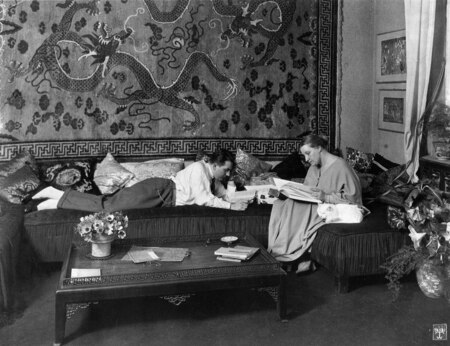
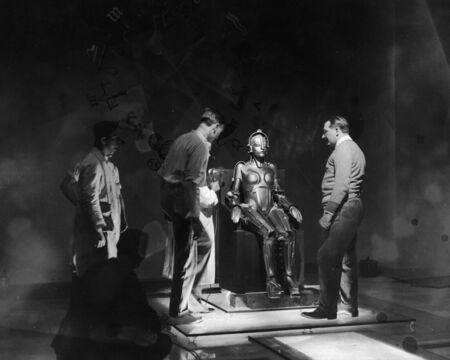
Archival photos from the making of the film «Metropolis,» 1927
This implies that the music may have determined not only the emotional tone of the scene but also its temporal organization. For further study, it is particularly significant that the score was later used in the film’s restoration. It preserves information about the work’s original structure, part of which was lost due to numerous film edits.
«Metropolis,» 1927
The Leitmotif as the Musical Equivalent of a Visual Symbol
A key feature of the score is the use of recurring musical themes. Just as a film features the return of specific shot compositions, architectural forms, and symbolic objects, recognizable motifs appear in the music. Their repetition helps establish enduring associations between sound and image.
Frank Strebel identifies six components in the music of Metropolis: leitmotifs, themes of individual scenes, relatively independent musical sections, ostinato figures, musical imagery, and quotations. This distinction is important because not every recurring rhythmic figure constitutes a full-fledged leitmotif.
City and Machine. Music of Mechanical Order
«Metropolis, ” 1927
The mechanical motion is conveyed through rhythmic ostinatos, accented beats, and a dense orchestral texture. The repeating figures create a sense of continuous mechanical operation. In the scene of Moloch, the intense orchestral drama underscores the transformation of the machine into a symbol of destruction.
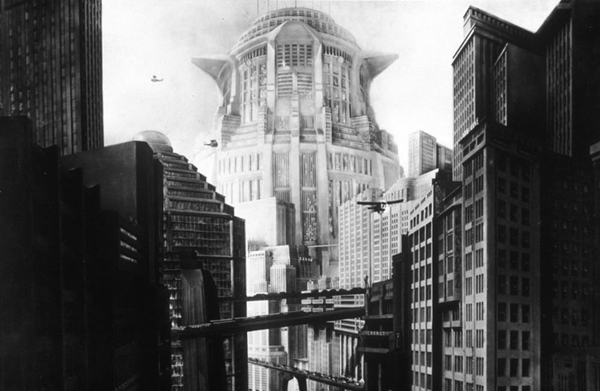
«Metropolis,» 1927
«Metropolis,» 1927
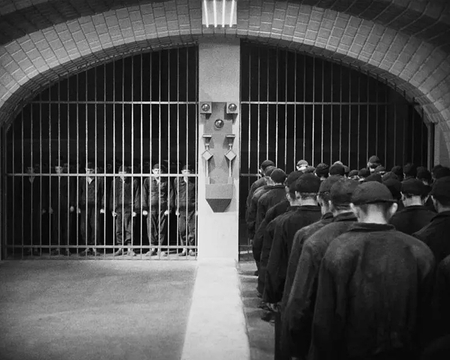
Workshop. Collective image over individuality
«Metropolis,» 1927
The musical character of the workers is built upon rhythmic repetition and the collective nature of movement. Ostinato and metric regularity correspond to the synchronous plasticity of mass scenes. Changes in tempo, dynamics, and texture help convey the transition from subservience to rebellion.