Controlling Attention and Dramaturgy Through the Example of the Film «Conclave» (2024)
Introduction
Visual Research Concept
Music in cinema does more than just accompany the image—it actively participates in the creation of meaning. It directs the viewer’s attention, shapes expectations, signifies hidden conflicts, and influences the perception of events. Even a seemingly tranquil scene can feel unsettling due to its rhythm, timbre, dynamics, or the sudden absence of sound.
The visual study, «Music as an Invisible Director, ” focuses on the interaction between music and imagery, using the film Conclave (2024) by director Edward Berger as a case study. The film’s expressive language is built upon symmetrical compositions, enclosed spaces, restrained acting, and the tense music of Volker Bertelmann (Hauschka). This contrast allows us to trace how sound impacts the interpretation of the frame.
The plot unfolds around the election of a new Pope. Amidst the outward order of the church rituals, struggles for power, contradictions, and distrust gradually emerge. The visual rigor creates a sense of control, while the musical score is capable of conveying instability even before the conflict is overtly apparent.
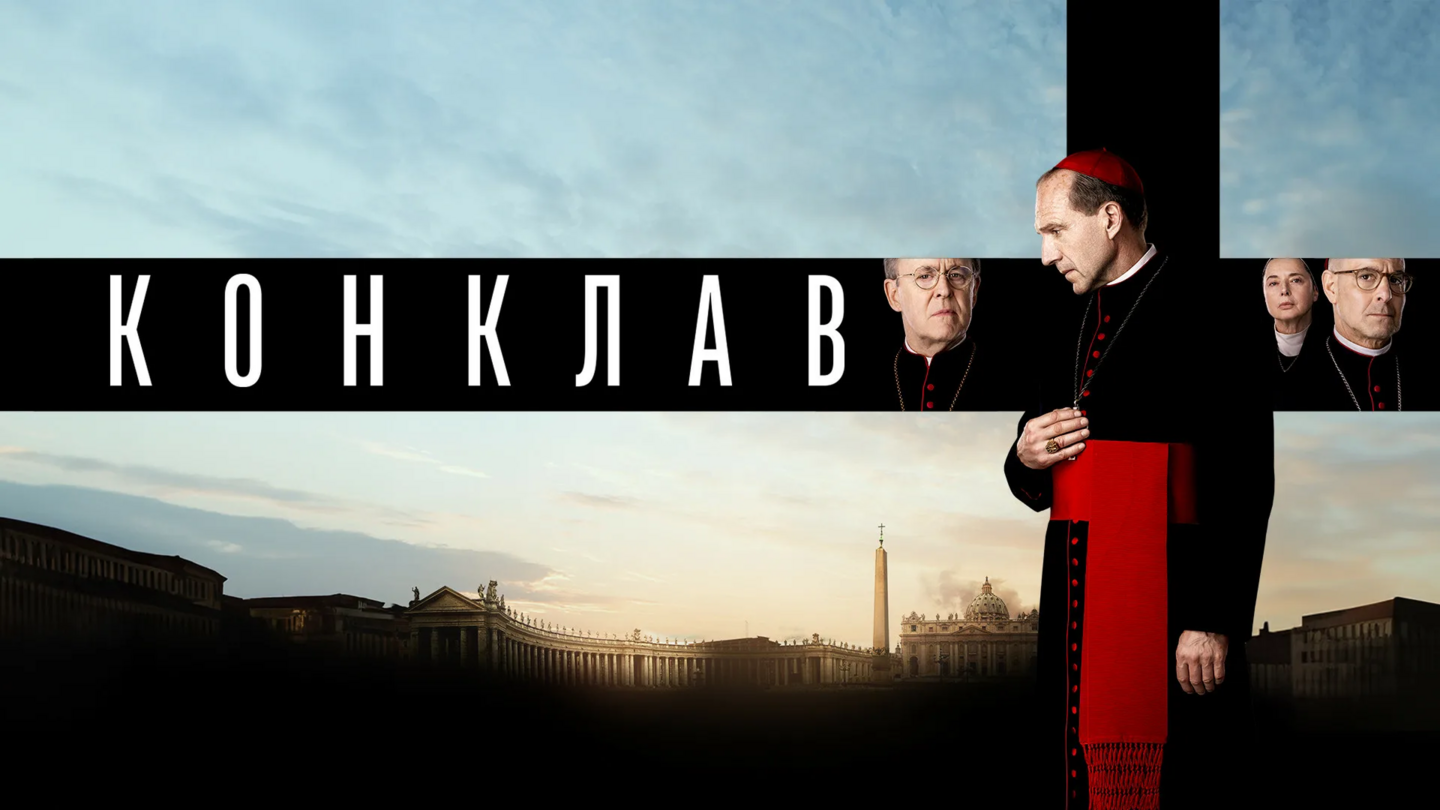
Official poster for the film «Conclave, ” directed by Edward Berger, 2024.
The core material of the research consists of shots and episodes selected based on the nature of the interaction between visual composition and sonic dramaturgy. The material is organized into several thematic sections: anxious anticipation, attention management, hidden conflict, rhythm and repetition, and pauses and silence. The comparison of shots and image sequences is accompanied by brief commentary on the role of music, editing, movement, and acting.
The theoretical foundation draws upon Michel Chion’s approaches to audiovisual perception and Claudia Gorbman’s work on the narrative functions of film music. Their ideas are used to analyze specific episodes and to explain the interaction between the sound and visual sequences.
The research is presented in the format of a visual longread, where the primary argumentation is built through the images, their sequence, and their juxtapositions. The textual commentary elucidates the identified patterns and helps connect visual observations to musical dramaturgy.
How does music direct the viewer’s attention, shape expectations, and influence the perception of cinematic scene dramaturgy?
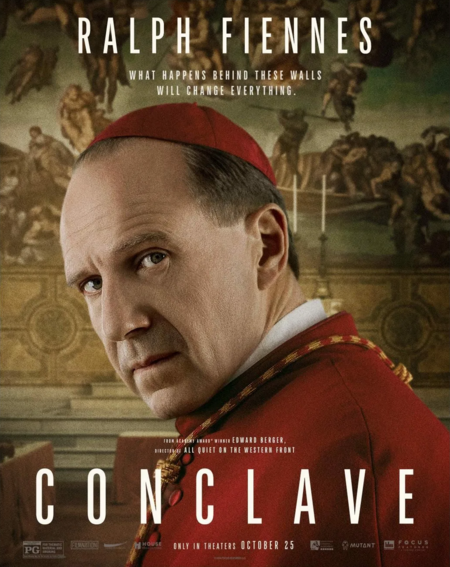
Hypothesis: Music in «The Conclave» does more than just amplify the emotional impact of the image—it functions as an independent narrative tool. Through rhythm, timbre, repetition, and silence, it helps reveal underlying conflict, manage anticipation, and direct the viewer’s attention.
The musical score is not a decorative layer added to a finished image, but an integral part of the film’s audiovisual structure. Furthermore, music does not operate in isolation—its effect arises from its interaction with editing, frame composition, movement, and narrative context.
The Sound That Doesn’t Belong to the Vatican
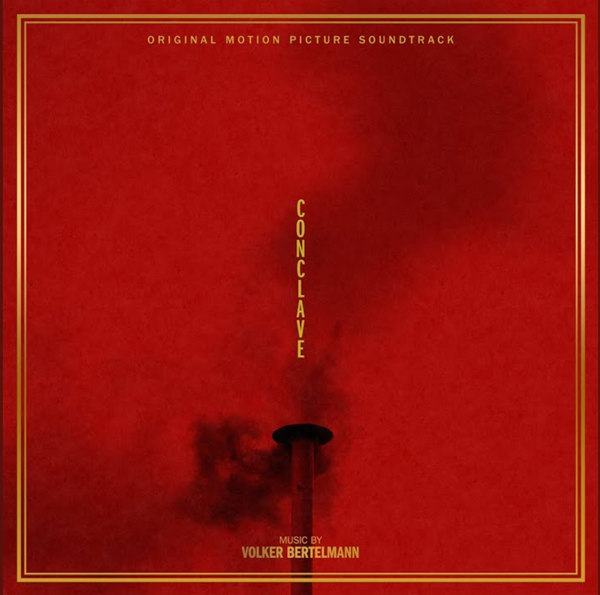
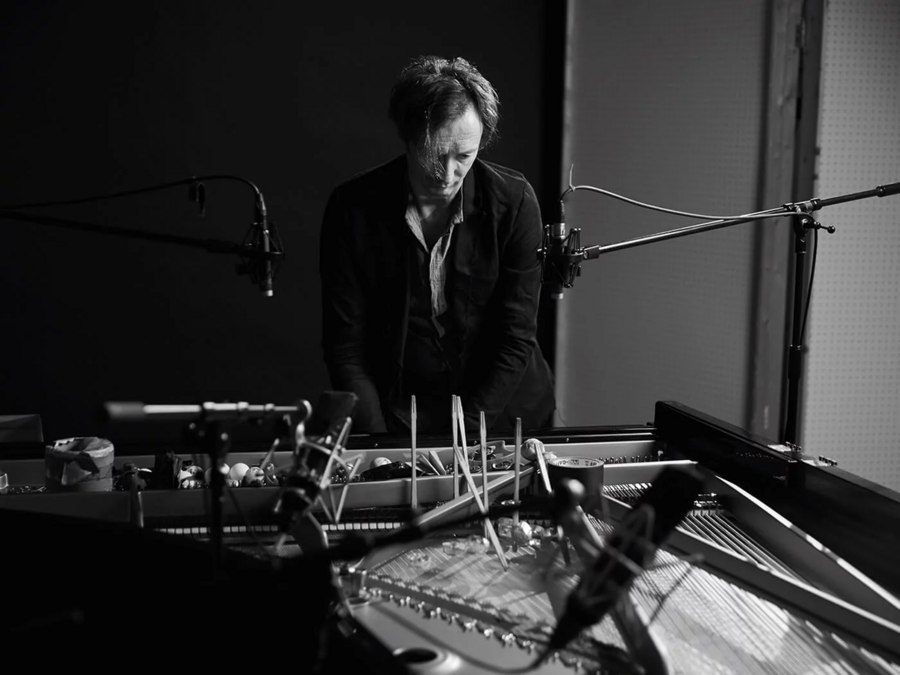
When composing the music for «Conclave, ” Volker Bertelmann deliberately avoided conventional associations with church musical tradition. Instead of referencing Renaissance or Baroque tonalities, the composer utilized experimental timbres and unconventional sound production methods.
One of the characteristic instruments in the score was the Cristal Baschet—an acoustic instrument featuring glass rods and metal resonators. Its unusual sound helps create a sense of spirituality while simultaneously lacking traditional musical comfort.
Combined with string textures and polyrhythmic structures, this sound shapes a distinct atmosphere for the film: the solemnity of the church ritual coexists with a sense of anxiety and uncertainty.
The Order Concealing the Conflict
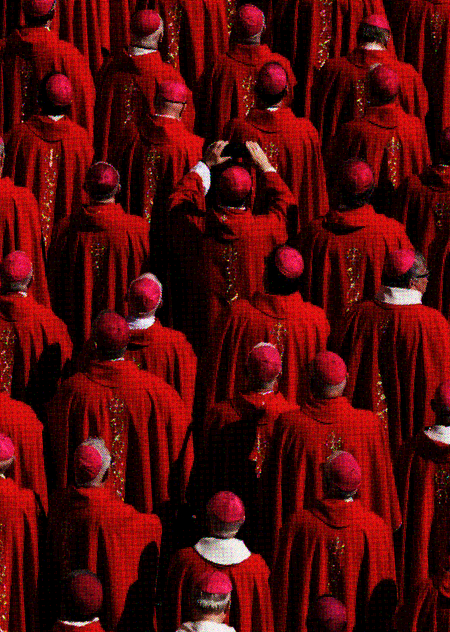
The Conclave space is organized according to strict rules: symmetry, repeating cardinal figures, a unified color palette, and a ritual sequence of actions create an impression of stable order. The visual world of «The Conclave» seems subject to rules. Yet, behind this external order unfolds a struggle for power, trust, and the right to make decisions.
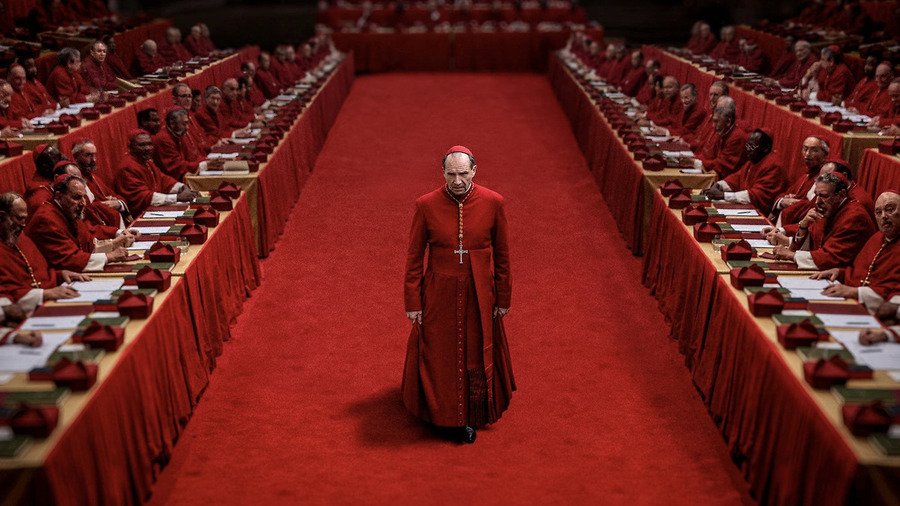
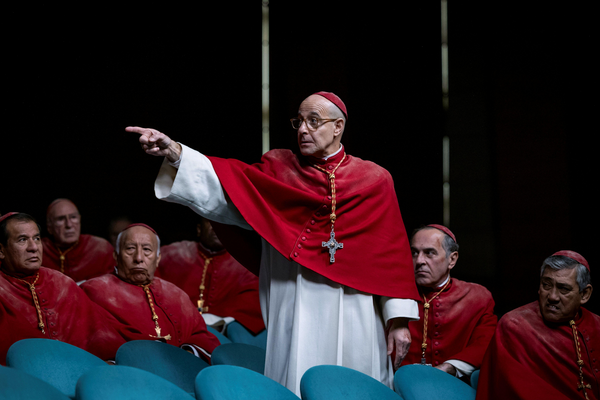
Visual: A close-up shot overlaid with guiding lines emphasizing the central axis and the repetition of shapes. Shot from the film «Conclave, ” directed by Edward Berger, 2024.
The image maintains a sense of calm. The music does not.
The musical score allows us to amplify the divide between external discipline and internal instability. Unconventional timbres and rhythmic structures can disrupt the feeling of balance even when the compositional structure remains steady.
The Calm Before the Storm
A scene at the body of the deceased father. A frame from the film «Conclave,» directed by Edward Berger, 2024.
The film opens with the death of the Pope—an event that simultaneously concludes one narrative and launches another.
There is almost no movement in the frame. The body of the deceased dominates the foreground, while the cardinals are arrayed behind him. The subdued lighting, reserved postures, and confined space create a sense of stillness and solemn tranquility.
However, the soundscape contradicts the visual imagery. Low, drawn-out tones merge with short rhythmic pulses and sharp accents. Against the static composition, the music generates a feeling of motion and mounting anxiety.
The contrast between the measured visual pace and the agitated musical rhythm builds tension even before the main conflict develops. The viewer witnesses the completion of a church ritual, yet they hear the premonition of impending change.
The pontiff’s death signifies not only the loss of a spiritual leader but also the beginning of a struggle for his successor. The music foreshadows this hidden threat, transforming an outwardly placid scene into a harbinger of political confrontation.
The image captures the end of one story, while the music already anticipates the beginning of the next.
Two cardinals stand next to the lion sculpture. Still from the film «Conclave,» directed by Edward Berger, 2024.
Monumental architecture and the spatial distance between characters emphasize the closed nature of the world in which the action unfolds. However, the emotional significance of such an image is determined not only by composition; in a moving image, it is also shaped through sound, editing, and the scene’s context.
Music as a Source of Anxiety
Anxiety in cinema isn’t necessarily linked to fast editing, sharp movements, or overt conflict. Sometimes, the source of that anxiety is the sound itself. Unstable timbres, repetitive rhythmic structures, and shifts in dynamics can create a sense of an impending event, even when the visual composition remains nearly static. In the score for Conclave, experimental sound becomes one of the tools used to generate uncertainty. The music doesn’t always tell the viewer exactly what to fear, but it can compel them to perceive what is happening as potentially threatening.
Lawrence near the red door. A still from the film «Conclave,» directed by Edward Berger, 2024.
Tension Arises Before ActionA closed door, a still figure, and subdued lighting create an atmosphere of anticipation.It is crucial here to explore not only what the camera shows, but also how the musical score can transform a static composition into a premonition of danger.
Stalled Conflict
Two cardinals facing each other. A frame from the film «Conclave, ” directed by Edward Berger, 2024.
The confrontation between characters is conveyed through composition: the figures are positioned facing each other, and the space between them becomes the visual boundary of the conflict. In such compositions, music can amplify the sense of antagonism through dynamics, timbre, and rhythmic instability, even if the characters themselves are nearly motionless.