
Navigation Menu
1// Introduction 2// Perception of Absurdity 3// Tools and Techniques 4// Conclusion
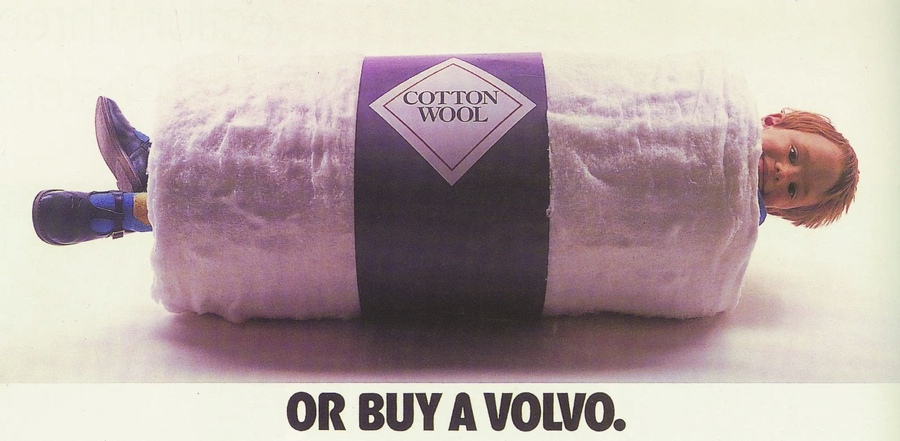
Volvo — Or Buy a Volvo (1980s)
Introduction
Today, individuals are exposed to a massive volume of advertising messages daily. These messages appear on streets, the internet, social media, in stores, and in various media. Most of them employ familiar attention-grabbing tactics, such as product demonstrations, listing benefits, using appealing imagery, and direct appeals to the consumer.
However, in the constant stream of information, brands are finding it increasingly difficult to stand out among competitors.
In an effort to stand out, advertisers opt for unexpected and unconventional solutions. Instead of simply showcasing a product, they create impossible scenarios, combine incompatible objects, violate the laws of physics, and present viewers with illogical narratives.

McDonald’s — Real Milkshake (2009)
Absurdity is the disruption of conventional logic.
Absurdity can be described as a phenomenon that contradicts conventional notions of reality, common sense, or expected developments.
In this study, I will analyze absurdity as a marketing technique—its impact on perception and methods of embodiment.
How does a violation of logic and inherent contradiction help advertising attract attention and stick in the audience’s memory?
Perception of the Absurd
Knees to Chin — Bring Your Own Lunch (2026)
Human perception relies on accumulated experience and familiar patterns. We know how objects should look, how they interact with each other, and what to expect in routine situations. Because of this, the brain quickly interprets what it sees without dwelling on specific details.
Unpredictable elements can capture attention because they disrupt the expected flow of logic. In advertising communication, this allows a message to stand out against a monotonous stream of information. When a person notices something unusual, they pause to take a closer look, leading to better retention of the advertisement they’ve seen.
In psychology, this mechanism is linked to the theory of incongruence. It is often the collision of incompatible elements that forms the basis of absurdity, prompting individuals to reflect and experience positive emotions.
Advertisers use incongruity to disrupt the habitual perception of a product. Instead of showing the item in the expected context, they place it in an unusual situation.

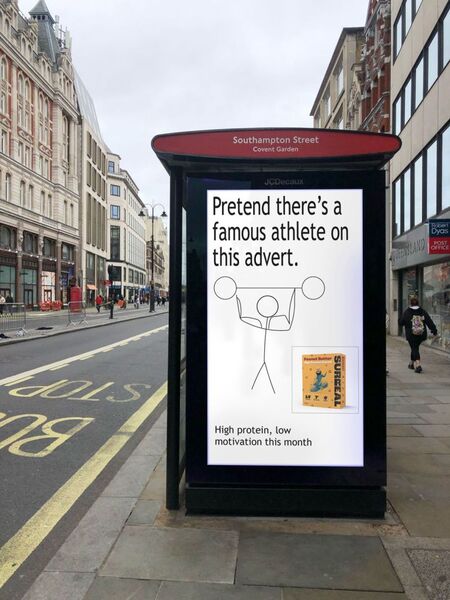
Classic Protein Advertising / Absurdist Protein Advertising Gold Standard Whey (2022) / Surreal (2024)
Tools and Techniques
Visual Absurdity
Altering conventional proportions transforms ordinary objects into the extraordinary. A colossal object can dominate a large portion of the space, while a tiny person standing beside it creates a comedic effect.
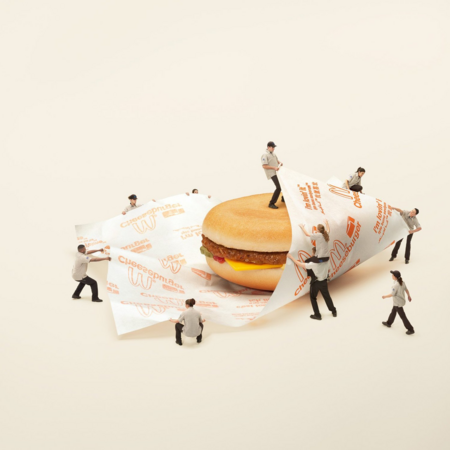
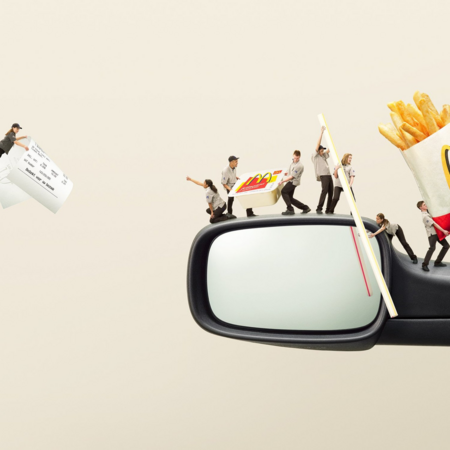
Scale Distortion McDonald’s (2013)
In one image, objects that typically do not belong together collide. For example, a plant transforms into a mechanism, while food takes on the appearance of a household item.


Integration Talabat — Hungry? Don’t wait (2026)
The composition is constructed to present the viewer with a visual contradiction: an impossible perspective, an optical illusion, or mutually exclusive elements.


Optical Illusions Pepsodent — Polygon, Rectangle, Triangle (2013)
Situational Absurdity
Inanimate objects are imbued with human characteristics, emotions, and behavior. This technique allows for the creation of unusual characters and comedic scenarios. For instance, in an Electric advertisement, a vacuum cleaner relaxes in a foam bath like a person, dreaming of becoming a successful new model.
Humanizing «Now you can dream big» Electric, Technology industry — Vacuum Cleaner (2007)