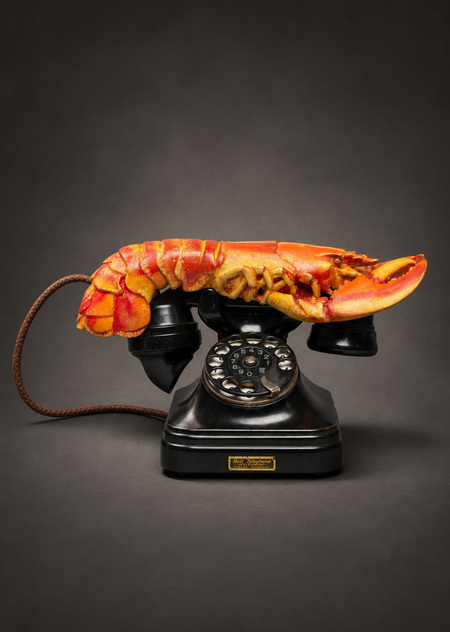
Disruption of the habitual functions of everyday objects in the works of Man Ray, Meret Oppenheim, and Salvador Dalí
Everyday Objects: From Dada to Surrealism
1921–1938
Polina Stortcheva, 2nd Year, Contemporary Art
Concept:
How do artists disrupt the conventional logic of everyday objects, and how does this affect their use and perception?You bring a cup to your lips, you run an iron over fabric, you hold a phone receiver to your ear. Based on the form of these objects, it is usually immediately clear how to use them.In Man Ray’s «Gift,» Meret Oppenheim’s «Object,» and Salvador Dalí's «Telephone-Lobster,» the objects are easily recognizable.
Hypothesis:
First, the recognizable shape suggests a familiar action. An iron with tacks presses into fabric, the point where lips touch a cup is altered, and a phone allows you to lift the receiver and speak.To check this, it is important to distinguish between the gesture itself and its outcome.The handle still suggests how to grasp an object, even when the fabric snags after that, the lips encounter a nap, or a textured shell appears in the hand.
Material:
For each case, a general view or a close-up detail, along with a household item of the same type, was selected.For the iron, the handle and the soleplate are compared. For the cup, the rim, the saucer, and the spoon are important.Household objects serve as analogs in form and method of use.The original «Gift» from 1921 disappeared at the exhibition opening. The photographs show later authorial versions—those from 1963 and 1970.
INDEX
How Things Are Constructed 1.1. The Smooth Sole of a Household Iron 1.2. The Rim of a Cup and its Inner Surface 1.3. The Phone Casing and Detachable Tube
Tacks on an Iron — Man Ray’s «Gift» (1921) 2.1. The Tacks on the Sole and the Loss of Ironing Function 2.2. The First Exhibition and the 1963 and 1970 Artist Versions
Fur on a Cup — Meret Oppenheim’s «Object» (1936) 3.1. Fur on a Cup, Saucer, and Spoon 3.2. The Texture of the Cup and the Anticipation of Touch 3.3. The Paris Show and the MoMA Exhibition Catalog
Lobster on a Tube — Salvador Dalí and Edward James’s «Lobster Telephone» (1938) 4.1. The Plaster Lobster Over the Working Tube 4.2. The Telephone in Edward James’s Interior 4.3. The Red and White Versions
Three Transformations 5.1. Comparing the Sole, Cup Rim, and Tube 5.2. Loss of Function, New Texture, and Preservation of Function
Conclusion
Familiar subject
Unknown manufacturer. Iron, c. 1900.
On a household iron, the handle is positioned above the heavy body. The hand holds it from the top while the bottom plate glides across the fabric. In this orientation, the handle and the soleplate perform different functions.
Unknown maker. Cup and saucer, Great Britain, c. 1895.
The cup has a rim for drinking and a handle for lifting. The gilding on this museum example changes the surface pattern. The white rim and the smooth interior wall remain recognizable.
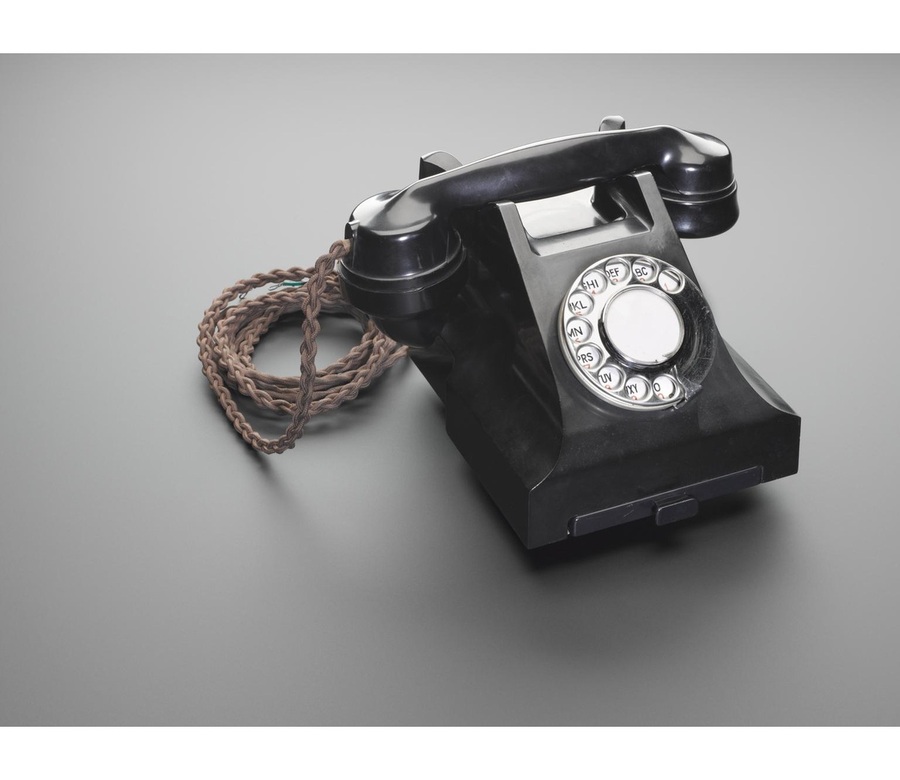
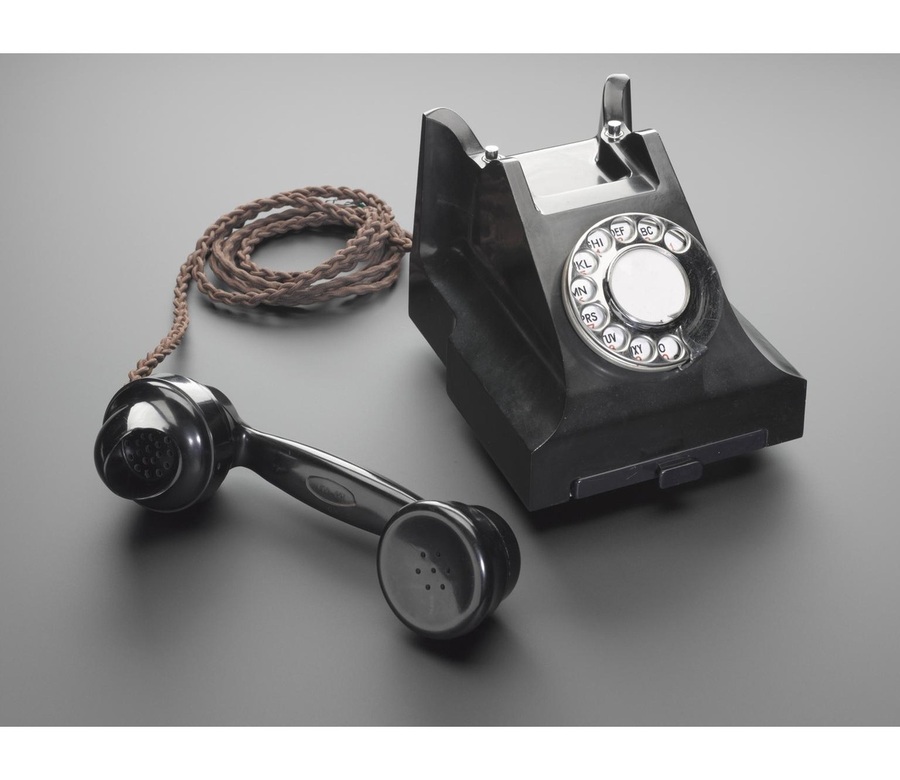
Unknown manufacturer. Post Office phone 332, 1938. Two angles.
The same phone is shown with the receiver in place and next to the body. The dial remains on the desk, and the movable part on the cord ends up near the face. These two frames allow the action to be reconstructed.
Man Ray «Gift»
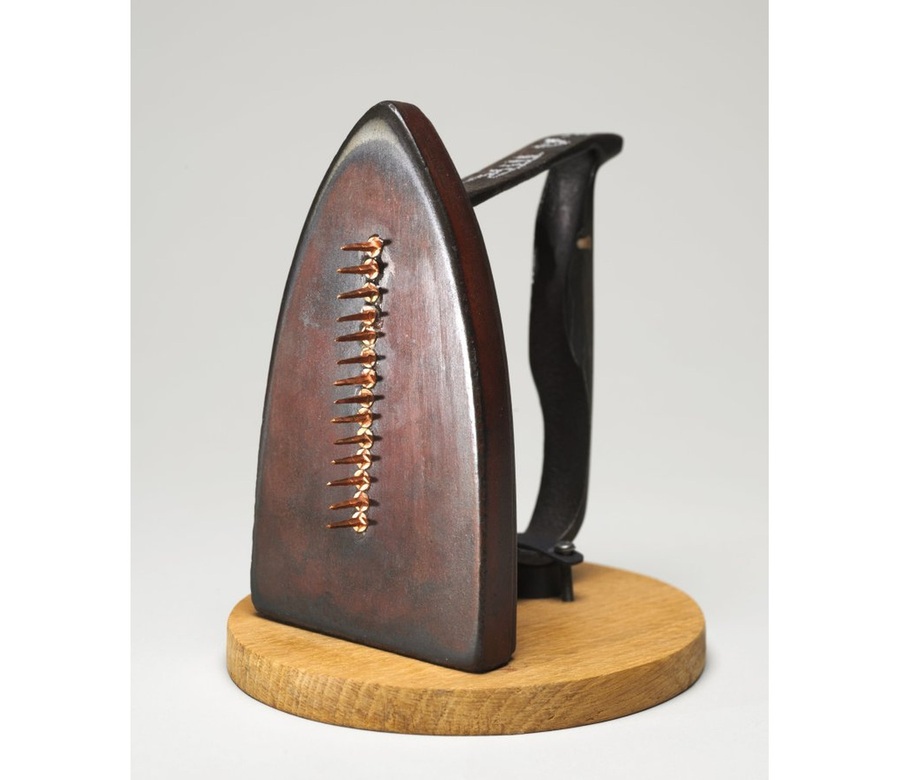
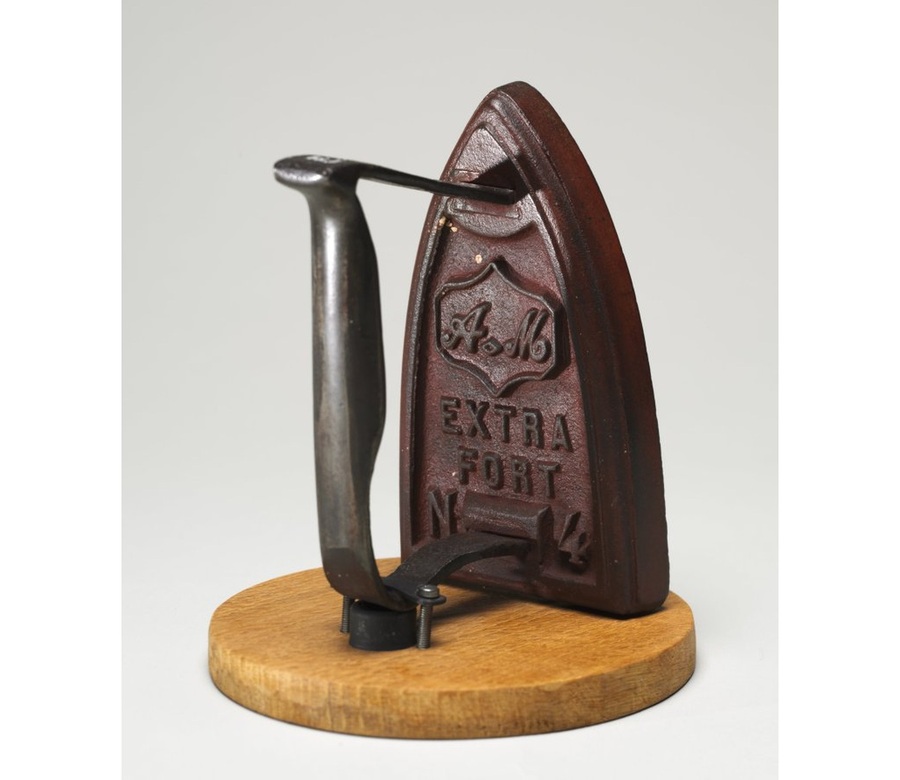
Man Ray. «Gift,» 1921, 1963 version. Two perspectives.
On the front, a row of tacks is immediately visible. The back shows the familiar handle and the cast surface of the body. Two views of the same object explain why it remains easily recognizable even after modification.
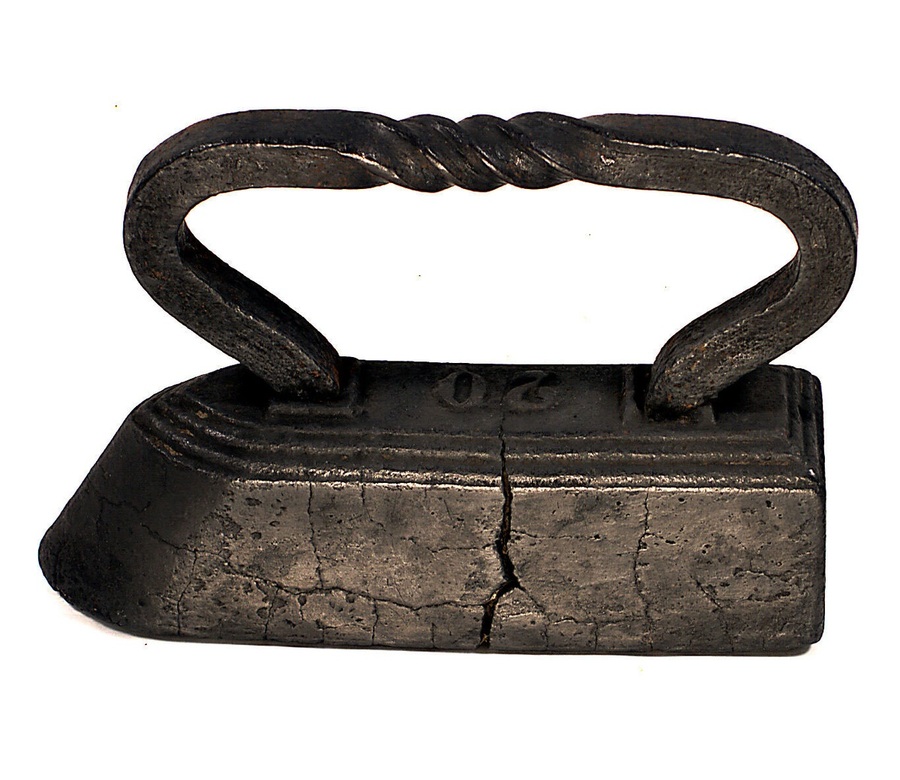
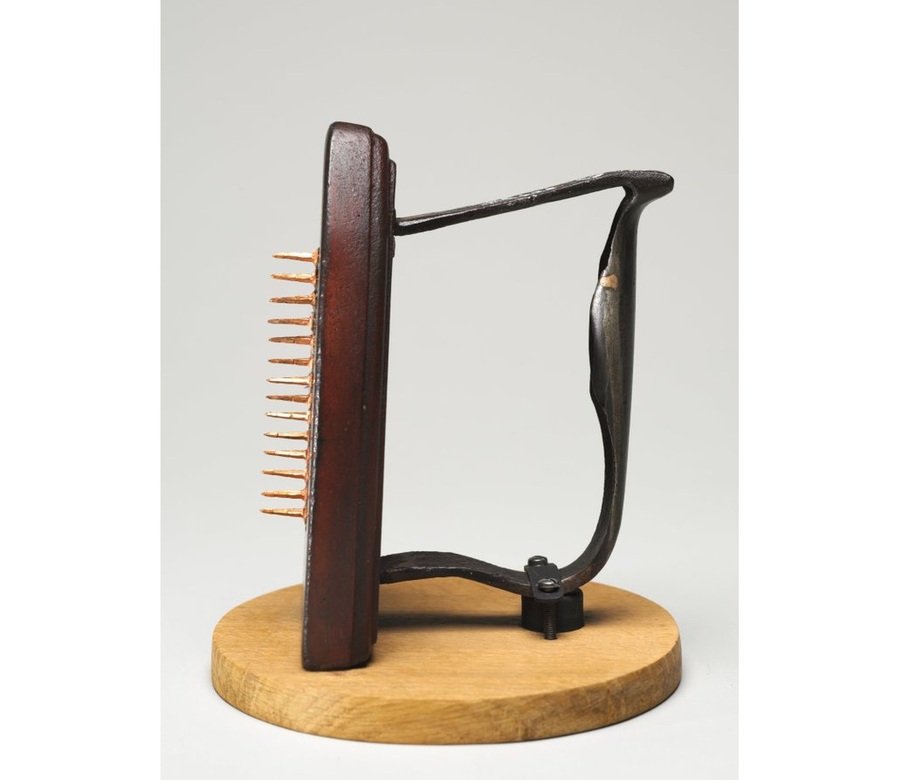
Left: Unknown manufacturer. Iron, c. 1900. Right: Man Ray. «Gift, ” 1921, 1963 version.
Looking at the handles, it is clear that both irons can be held in the same way. The domestic iron has the fabric surface running along the bottom edge. On the Man Ray iron, the thumbtacks stick out from this side.
From the front, it is visible that the tacks run down the center of the sole. In the previous angle, you can see how much the points protrude. When moving over the fabric, this line will be the first to make contact. The change becomes noticeable even before the iron is lifted.
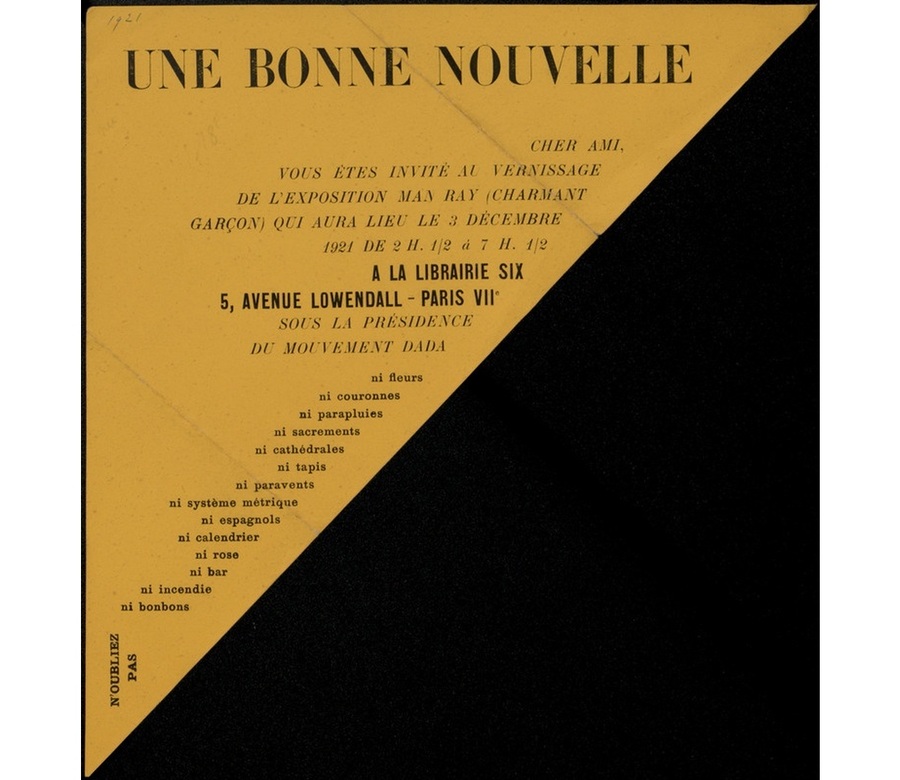
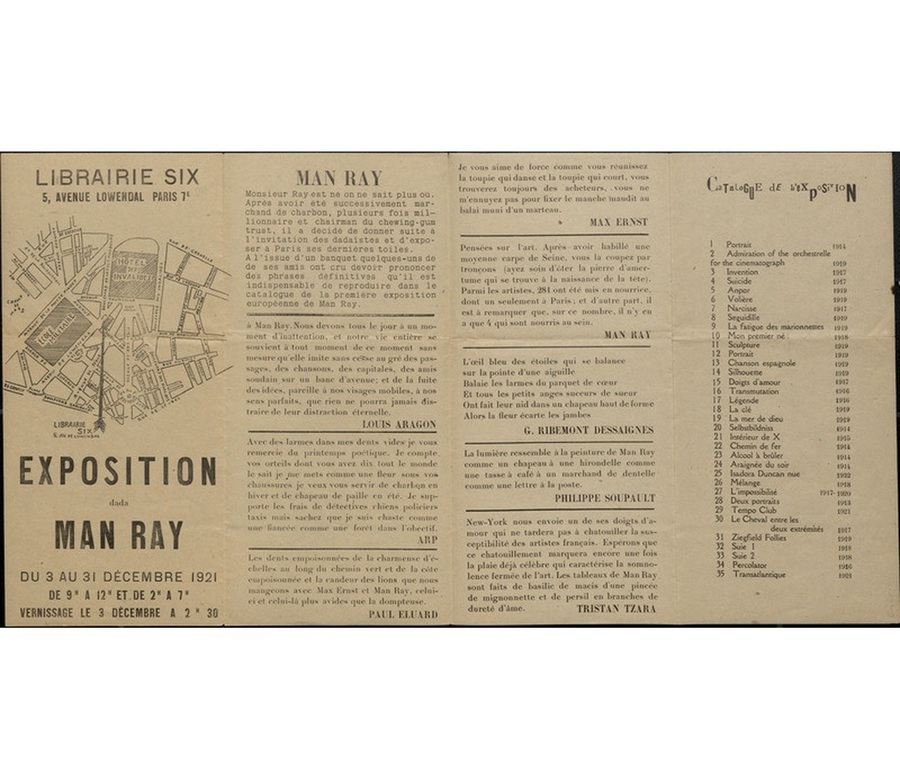
Left: Librairie Six. Invitation to the Man Ray exhibition, 1921. Right: Librairie Six. Man Ray exhibition catalog, 1921.
In December 1921, the Parisian bookstore Librairie Six hosted a Man Ray exhibition. According to the Cleveland Museum, the artist intended to give away a clothespin iron to visitors. While the opening was taking place, the object vanished. An invitation and catalog from that show remain.
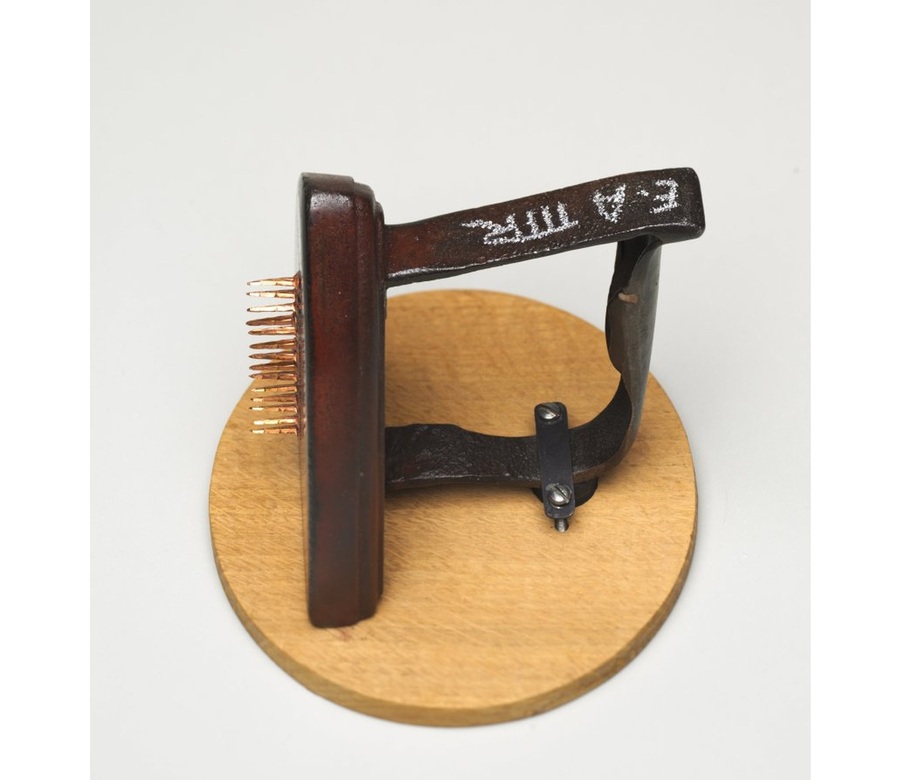
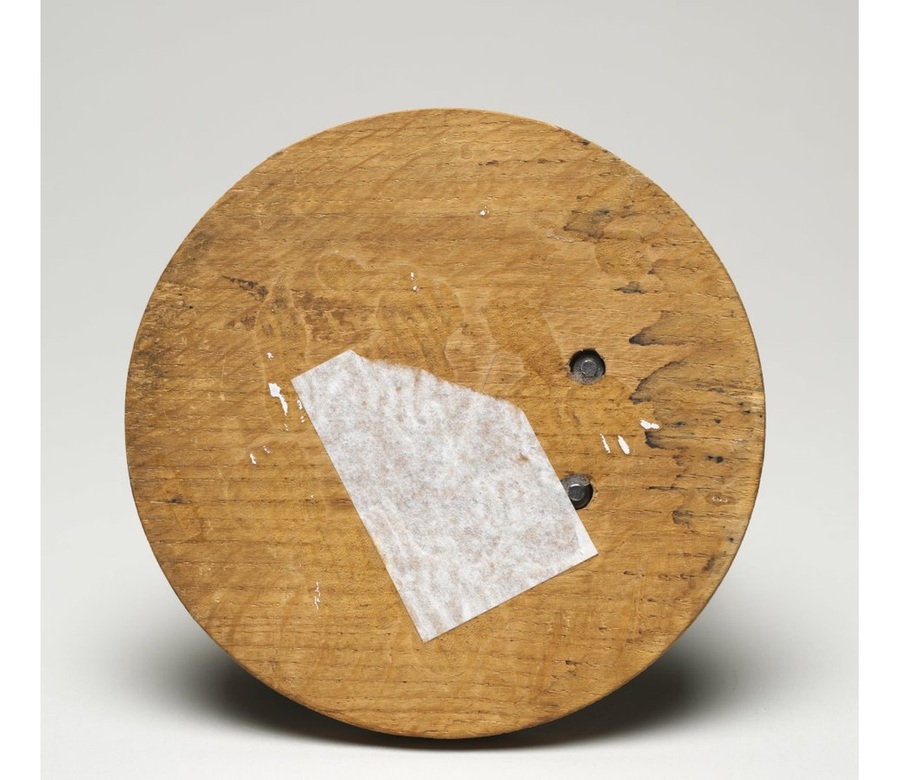
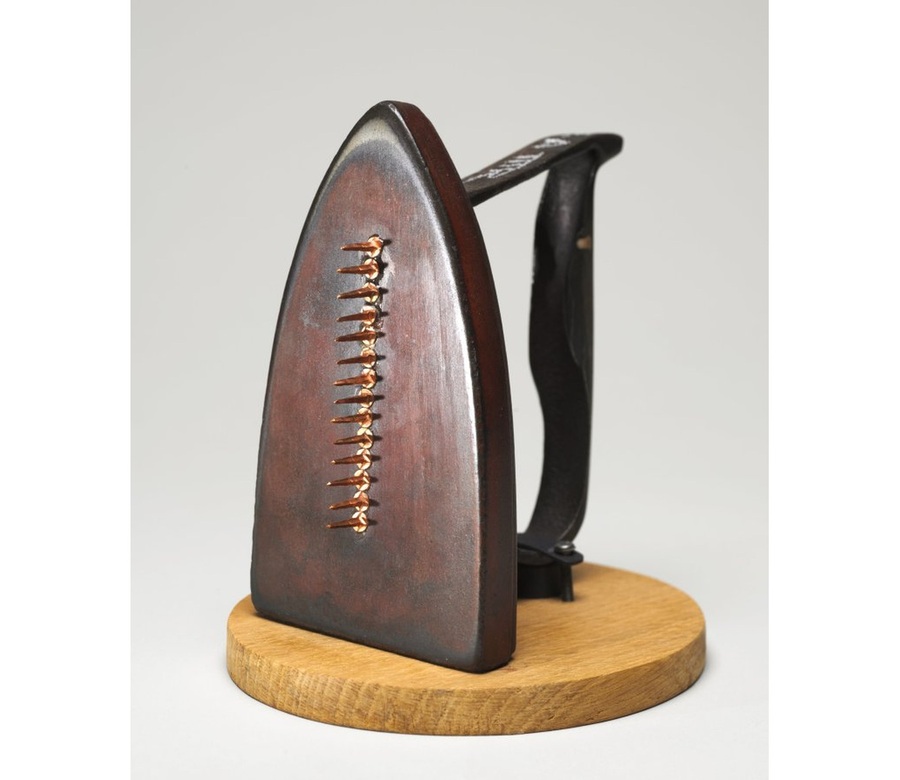
Man Ray. «Gift, ” 1921, 1963 version. Two perspectives.
In the 1963 version, the wooden stand holds the iron vertically, allowing the entire soleplate to be viewed at once. On a domestic iron, this side faces the fabric and is almost hidden during ironing.
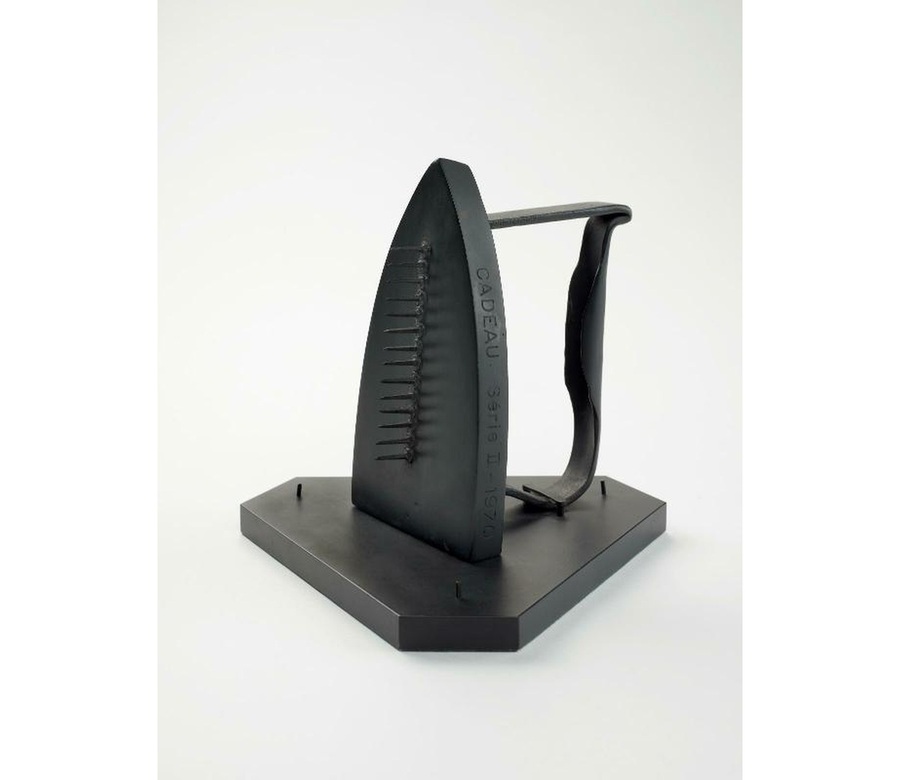
Left: Man Ray. «Gift,» 1921, 1963 version. Right: Man Ray. «Gift,» 1921, 1970 version.
The two versions have different stands and metal colors. The main point for comparison remains the same: one line of tacks occupies the same area of the iron. In 1963 and 1970, Man Ray reassembled the work first made in 1921.